





The five-day ‘wildlife viewing’ road trip through some of Colorado’s most stunning terrain
Colorado offers a variety of wildlife-watching opportunities – including chances to see bighorn sheep, bald eagles, mountain goats, moose, deer, bison, and elk.
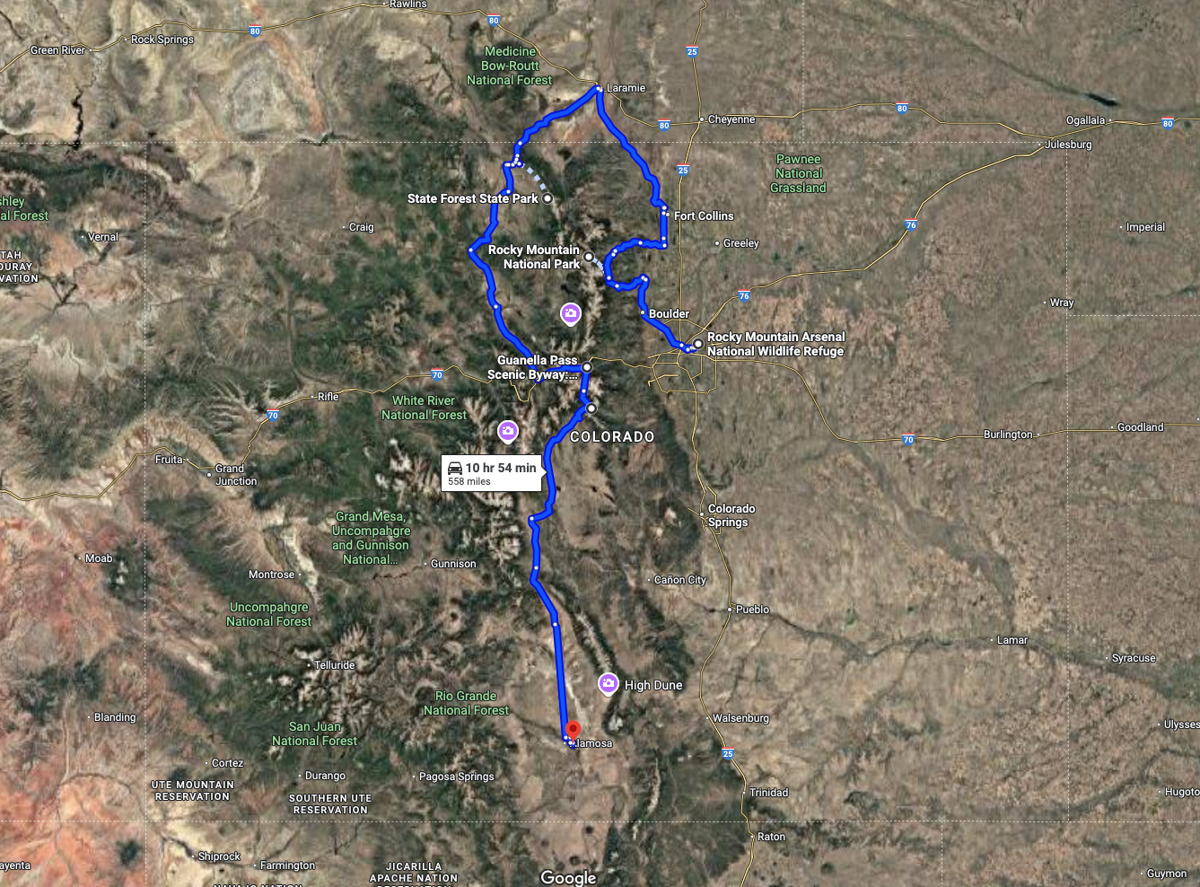
Here’s a road trip that will take you to some of the best places to view wildlife in Colorado:
EDITOR’S NOTE: Remember, wildlife is indeed wild, thus unpredictable. Sightings are far from guaranteed, but if you are lucky enough to spot an animal, keep a safe distance. For larger animals, that’s typically a distance of at least 100 yards. Even if you don’t happen to spot the animals you’re looking to see on this trip, it’s a great tour of some of the state’s most beautiful terrain.
Day One: Rocky Mountain Arsenal National Wildlife Refuge
Start your trip by making your way to Rocky Mountain Arsenal National Wildlife Refuge. Located just outside Denver, Rocky Mountain Arsenal National Wildlife Refuge is home to more than 300 species, including mule deer, coyotes, bison, songbirds, and bald eagles. As one of the largest urban refuges in the country, it offers expansive views, wildlife viewing opportunities, and recreation activities. You can explore 20 miles of easy hiking trails, drive the 11-mile wildlife drive auto tour, go fishing, or even practice archery.
Where to eat
Stop for food at Cuba Cuba Sandwicheria or El Jardin.
Where to stay
Stay at La Quinta Inn & Suites by Wyndham Denver Gateway Park while enjoying Rocky Mountain Arsenal National Wildlife Refuge.
Day Two: Rocky Mountain National Park

Elk in Horseshoe Park, part of Rocky Mountain National Park, Colorado. Photo Credit: milehightraveler (iStock).
From Rocky Mountain Arsenal, head on over to Rocky Mountain National Park (RMNP). According to the National Park Service, RMNP is home to over 60 species of mammals, 280 species of birds, six species of amphibians, and 11 species of fish. You’ll likely be able to find marmots, moose, pika, and bighorn sheep. RMNP is the perfect place to spot some elk bugling and sparring in meadows, especially during the fall rut season. Sheep Lakes is a great place to search for bighorn sheep.
Where to eat
Enjoy Bird & Jim or Trailhead Restaurant for lunch or dinner.
Where to stay
Stay at the McGregor Mountain Lodge or Castle Mountain Lodge.
Day Three: State Forest State Park
Continue on to State Forest State Park by heading up through Fort Collins or cutting across to Grand County via Rocky Mountain National Park’s Trail Ridge Road. According to Colorado Park and Wildlife (CPW), State Forest State Park is known for its opportunities for moose viewing throughout the year, with a population of over 600 moose observed year-round. The park also offers camping, hiking, horseback riding, fishing, hunting, and more.
Where to eat
Enjoy a meal at River Rock Cafe or Howling Coyote Mexican Restaurant.
Where to stay
Stay at the Antlers Inn in Walden.
Day Four: Guanella Pass Scenic Byway
From State Forest State Park, head on down to Georgetown for the drive over Guanella Pass Scenic Byway to enjoy views of Mount Bierstadt. Don’t drive this pass too fast though – you may have a chance to spot bighorn sheep, beavers, mountain goats, and a variety of birds.
Where to eat
Enjoy lunch or dinner at The Happy Cooker or Cooper’s on the Creek.
Where to stay
Stay at the Clear Creek Inn, located in Georgetown.
Day Five: Alamosa National Wildlife Refuge and Visitor Center
The Alamosa National Wildlife Refuge is located along the banks of the Rio Grande. The refuge was created as a haven for migratory birds and other wildlife. You also might spot some elk, deer, coyotes, and porcupines moving along the Rio Grande Walking Trail.
Where to eat
Grab lunch or dinner at The Friar’s Fork or Nino’s Del Sol LLC.
Where to stay
Alamosa has plenty of hotels to stay in while visiting the refuge, including the Best Western Alamosa Inn and Comfort Inn of Alamosa.
Get OutThere
Signup today for free and be the first to get notified on new updates.

PREV
PREVIOUS

The largest alpine valley in the world spans 8,000 square miles in Colorado
Facebook Twitter WhatsApp SMS Email Print Copy article link Save Facebook Twitter WhatsApp SMS Email Print Copy article link Save Stretching 122 miles long and 74 miles wide, the San Luis Valley is the world’s largest alpine valley with a depositional basin of approximately 8,000 square miles. Making this massive valley even more unique is […]
Here's a look at the 10 steepest mountain passes in Colorado
One aspect of Colorado that often shocks visitors is how wild some of the roads around the state can get. From massive drop-offs to never-ending switchbacks, drivers in Colorado must be comfortable with a number of variables. Another tricky factor drivers in the Centennial State encounter can be steep grades. Here’s a look at 10 […]