








Farewell, Farwell: True gentleman of the Fort Collins stage has died at 93
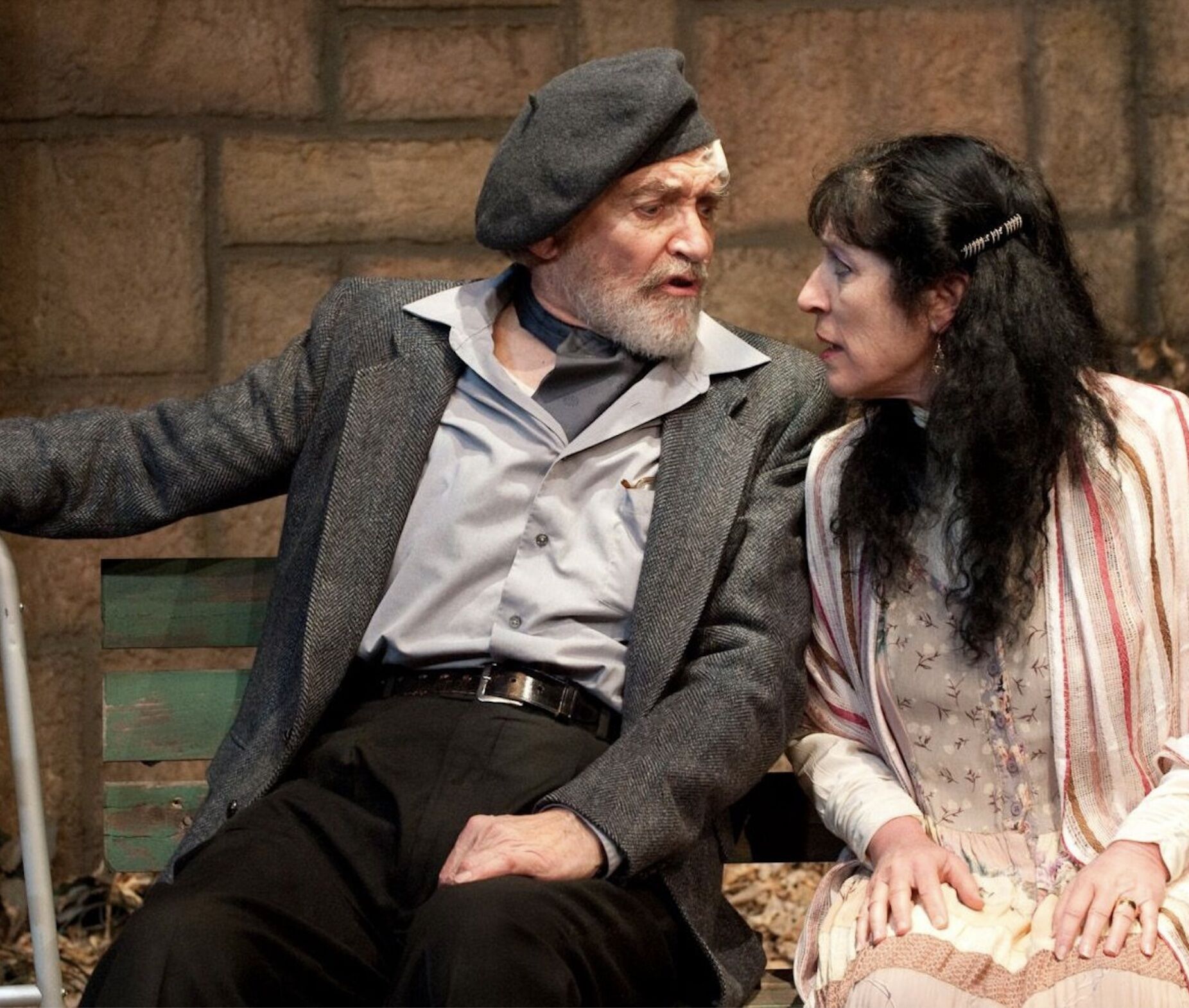
A Colorado Life: Actor Jonathan Farwell leaves a stage legacy of more than 60 years
Jonathan Farwell is really gone. There’s no understudy for a man like him.
Farwell, a true gentleman of the American theater, performed a remarkable array of award-winning roles over 60 rock-steady years as an actor – Salieri in “Amadeus,” Sir in “The Dresser,” the deranged daddy in “King Lear.”
Perhaps you remember Farwell from the 1980s as George Rawlins, the revenge-bent old cuckold on the enduring CBS daytime serial “The Young and the Restless.” Or as Captain Walker Keel on “Star Trek: The Next Generation.”
Farwell was the first-ever actor to play El Gallo in “The Fantasticks.” It’s true: He created the role of the seductive narrator bandit in a college workshop production that went on to become the world’s longest-running musical.
Over the decades, he appeared alongside Marlon Brando, James Earl Jones, Maggie Smith, Richard Chamberlain and Patrick Stewart.
And yet, Farwell was perhaps best known for the role he never played, at least not on Broadway: He was the unofficial understudy to Yul Brynner for 1,246 performances of “The King & I” from 1951-54, and he was the official understudy for 207 more in 1985.
Farwell never went on for Brynner. Not even once.
The fix was in.
“That’s because if Yul were ever to miss a show, they would simply cancel,” Farwell once told me. And he understood exactly why. “Those audiences came to see Yul. If I ever tried to take his place, they would eat me for lunch!”
When Farwell died Saturday from complications of a broken hip at Pathways Hospice in Fort Collins, he was legally blind, deaf, and 93 years old. And, to think: He was still going strong as an actor through age 91. Farwell was developing a one-man stage memoir called “Why Is An Actor (A Mildly Verbose Overdose of Ham on Rye).”
For goodness’ sake – this man won two Colorado Theatre Guild Henry Awards as the outstanding leading actor in a play – after turning 80 years old.
He was, in a word, unstoppable. Farwell might have played second fiddle to Brynner on Broadway, but to most anyone who ever saw him on a Colorado stage, he was the King.
(And he did eventually get to play The King a few times himself, notably at Littleton’s Town Hall Arts Center in 2006 opposite the Broadway-bound Elizabeth Welch.)

Friends and fans all have their own favorite Farwell roles. For Bas Bleu Theatre founder Wendy Ishii, it was his career-capping 2015 performance as Gunner Concannon, a father facing his own deteriorating mental state in “The Outgoing Tide.” For daughter Alison Garrigan, it was as Chief Bromden in “One Flew Over the Cuckoo’s Nest” at the Cleveland Playhouse in 1975.
For retired Colorado State University theater professor Morris Burns, it was as Dr. Feldmann in Bas Bleu’s “Duet for One” in 2008. Farwell played a psychiatrist to a famous concert violinist who’s just gotten a terminal diagnosis. “Time stood still at each performance as Jonathan defined the art of acting,” Burns said.
“Jonathan was a genuine talent who touched an endless number of audiences with his ability to share the souls of the characters he brought to life.”

For Farwell himself, it was likely playing 80-year-old King Lear for OpenStage & Company of Fort Collins in 2011. When Farwell was cast to play the paranoid Shakespearean king with the seriously warped metrics for assessing his daughters’ affection, he called the role “the hardest ever written, no matter how you look at it.” And there was a problem: He was too young for it.
OK, at 79, he was only one year too young, but still, Farwell was not your average 79-year-old.
“If anything, I probably have too much energy for my age,” he told me at the time. “Sometimes, I feel myself being so energetic on stage, in fact, that I wonder if people might think I’m too young for the part.”
Oh, the crosses we bear. And, to think: That was 14 years ago.
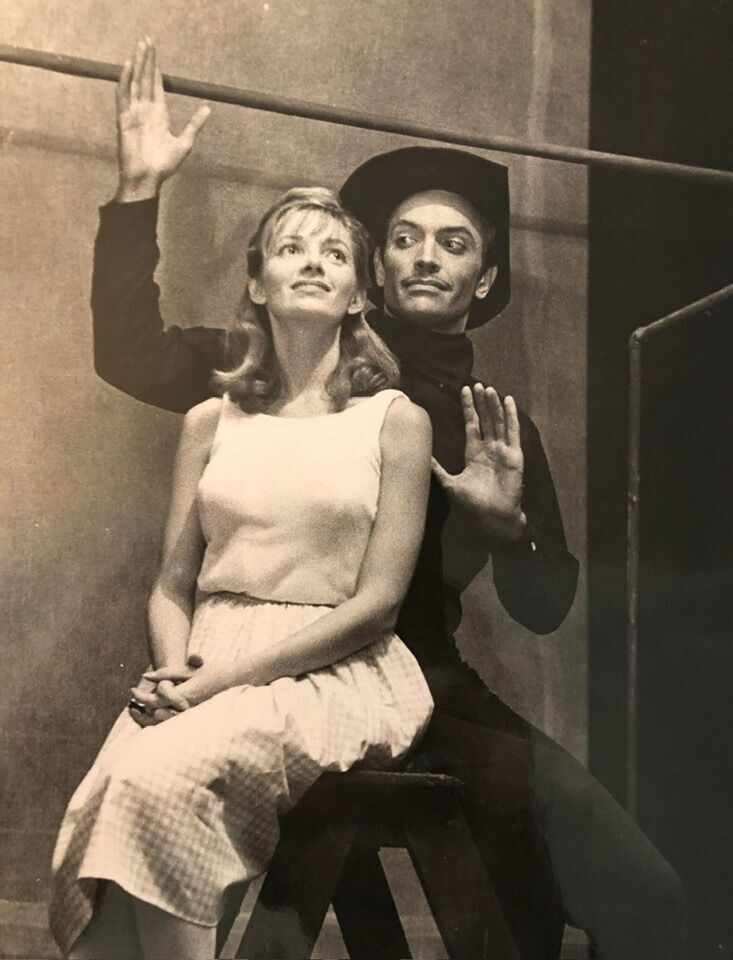
You could list a plethora of Farwell’s attributes as an actor: The mellifluous precision of his words. The Yale-trained voice that sounded more British than Michigander. His ability to spontaneously respond to anything that happened on stage. He just had panache.
But then there was this, his daughter points out: He was hot.
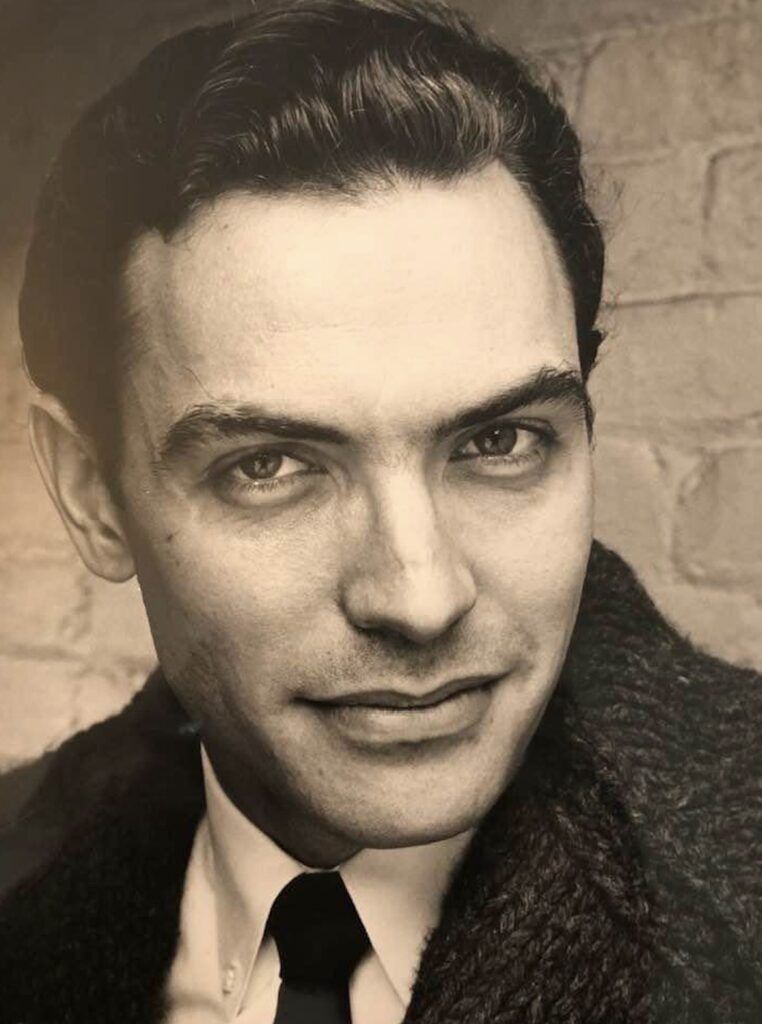
“Let’s be honest: My father was 6-foot-3 and looked like a movie god,” said Garrigan. “He was a matinee idol, literally, who could stop traffic. But he was never saddled by his looks. He was such a good actor that he did not get pegged. He could do Shakespeare. He could do Chekhov. He could do modern plays. He could do satire. And he had a gorgeous singing voice. He could play anything.”
Like, say, in 1985, when he played Judge Marvin Martel on “All My Children.” That’s where he met Ishii, who played an attorney whose client was none other than Oscar winner Melissa Leo.
“I lost my case, but I gained one of the best and longest friendships of my life in Jonathan,” Ishii said.

Not far from the tree
Farwell was born Jan. 9, 1932, to composer Arthur Farwell and actor Gertrude Everts Brice. After a stint in the Air Force, he graduated from Ithaca College in New York and pursued his graduate degree at Yale for a year until the original GI Bill unceremoniously expired in 1956. “And in 1961, he got snapped up by Joe Papp,” Garrigan said of the Public Theatre legend who founded New York’s enduring Shakespeare in the Park tradition.
He married actor Jo Anne Gaines on July 23, 1955, and together they welcomed Alison in 1958, followed by Elisabeth in 1961.
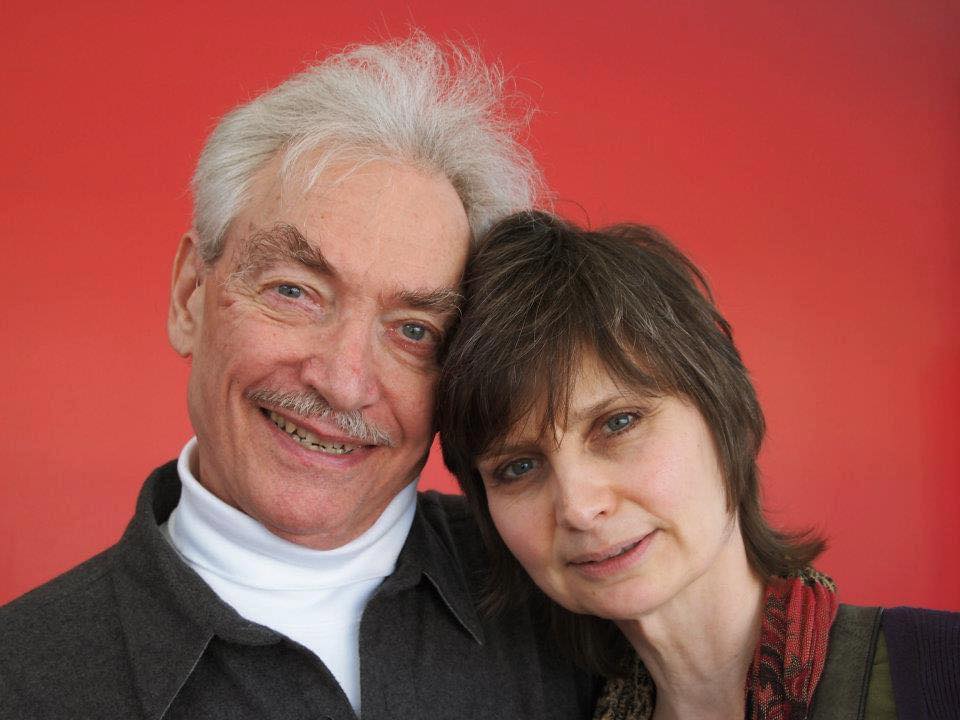
Talk about DNA. Alison grew up to found the Talespinner Children’s Theatre in Cleveland. Elisabeth Farwell-Moreland ran was recently named interim artistic director of the Union Arts Center, the merged home of the ACT Contemporary Theatre and the Seattle Shakespeare Company.
Four years after Jo Farwell died of breast cancer in 1990, Farwell was cast in a 1993 production of “Shadowlands” in Sonoma, Calif. That’s the May-December love story of “Narnia” author C.S. Lewis and his much younger wife, the Jewish-American poet Joy Gresham, which ends with her shocking death from cancer.
They didn’t hit it off right away. He thought she was a musical-comedy diva. She thought he was “a big-time Broadway blah-blah-blah.” By then, Farwell had appeared in four Broadway shows, had spent 11 years at top regional theaters across the country and headlined a national tour as Salieri in “Amadeus.” She was an advertising copywriter at the time who had found a second life performing in musicals for the Columbia Actors Rep.
When British director Peter Craze cast Note as Gresham, Farwell vehemently protested. If he were to play literature’s great Christian apologist, Falwell ballasted, nothing less than a serious dramatic actress would do.
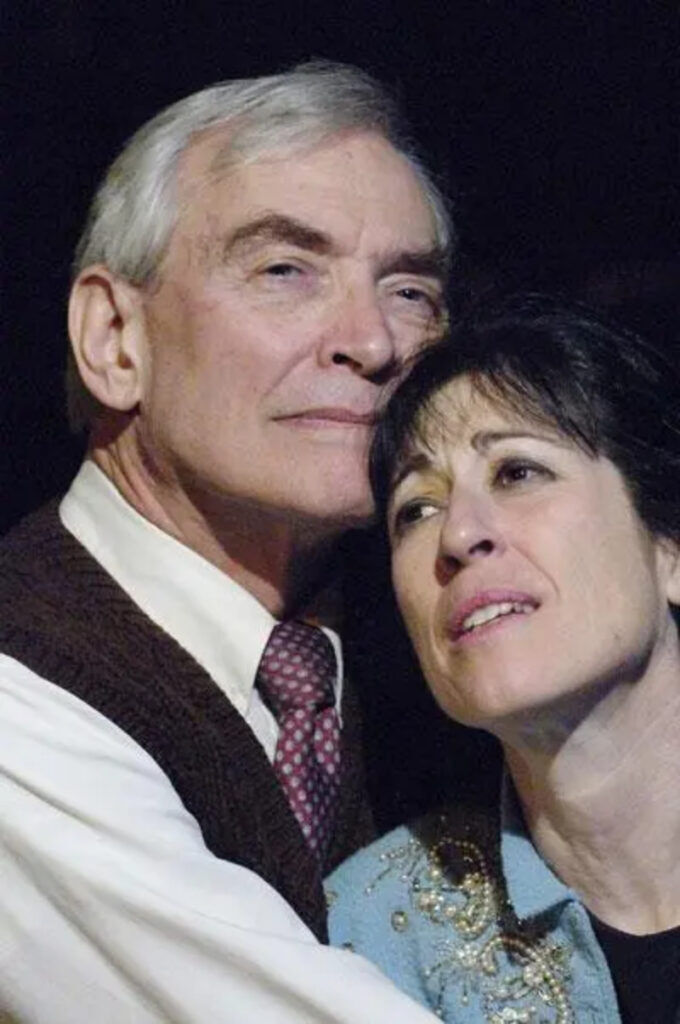
So why did he relent? “I did my homework,” Falwell said. “I asked around about her.”
Then he took the plunge that would lead to “the plunge.”
They made for an unlikely pair, these two. There was also a 21-year age difference. And yet: “Within three nights, we pretty much knew we were destined to be together forever,” Note told me in 2005. Soon after, Garrigan called Note and said: “We have to meet you because whatever you have done to this man, we are totally in favor of it.”
A year after meeting, the couple married on the set of their second “Shadowlands” engagement for a theater company just outside Ashland, Ore.
“And, to think: If I had a little bit more of the courage of my misguided (casting) convictions – we never would have met,” Farwell said.
In 1995, Ishii contacted her old friend from their “All My Children” days and coerced Farwell to come to Fort Collins and perform his one-man show, “An Evening with Mozart and Salieri.” It was a condensation of “Amadeus” and readings from Mozart’s letters, set to an orchestral quintet.
“Bas Bleu was going down financially at the time,” Ishii said, “and when Jonathan sold out three shows, he kept our theater alive.”
For the next decade, Farwell and Note were the Lunt and Fontanne of southern Oregon. Then they moved to Colorado and became the Hepburn and Tracy of Fort Collins. It was a 2004 visit to see Bas Bleu’s ambitious co-production of “Angels in America” that convinced the pair to move to Northern Colorado permanently. A year later, they opened their third “Shadowlands” go-round, this time at Bas Bleu in Fort Collins. And for their 10th anniversary, the pair renewed their vows on that set, with Ishii officiating.
Farwell and his wife quickly became foundational actors and directors in the Fort Collins community. Together, they curated Bas Bleu’s Readers’ Theatre series, which Farwell remained active in through 2022.
Many believe Farwell’s greatest stage accomplishment was playing the old man who fights to determine his destiny with dignity in Bas Bleu’s “The Outgoing Tide,” which Note directed in 2015. As I said at the time: Farwell had such control of the part at the time, he could have played it blind – and he did.
“That was the zenith of their work together here in Fort Collins,” Ishii said.

Note died in 2018 of ovarian cancer. At her celebration, her husband again embodied Lewis himself in speaking of their love: “So, why love if losing hurts so much?” Farwell said, quoting “Shadowlands.” “The pain now is part of the happiness then. That’s the deal.”
Farwell found love once again in his final years, with partner and caretaker Ann Vermel. Farwell was grandfather to Jessica Moreland, a Kennedy Center Award-winning playwright; and Christopher Michell. He was great grandfather to Lorelei Mitchell.
Garrigan said she’d like her father to be remembered as a wildly intelligent man who was genuine and kind. Ishii said she already misses the great man on the stage. But more so the great man who would sit up until 3 in the morning with her own husband, the late Doug Ishii, talking philosophy and literature and science.
“I would mostly just sit there and listen to the two of them,” she said. “I miss those conversations.”
For a man who could make the stage thunder, Garrigan said, Farwell departed this life with very little drama or fanfare. “No, he died peacefully and gracefully with family by his side,” she said. “He was surrounded by love – and he gave us love in return. That was his gift to us.”
He was only in hospice for a few days, she added, but they were impactful.
“He was laughing,” Garrigan said with a, well … laugh. “We asked him about it, and my father just said, ‘Well, why wouldn’t I laugh?
“Always be laughing.’”
A celebration of life is being planned. In lieu of flowers, Farwell’s wishes were to encourage donations in his memory to any arts organization of one’s choice. Donations to Bas Bleu in particular can be made to basbleu.org.
John Moore is the Denver Gazette’s Senior Arts Journalist. Email him at john.moore@denvergazette.com.



PHOTOS: National Western Stock Show Kickoff Parade in Denver
Stephen Swofford
stephen-swofford@denvergazette.com
Updated 2 days ago

Stephen Swofford
Reporter
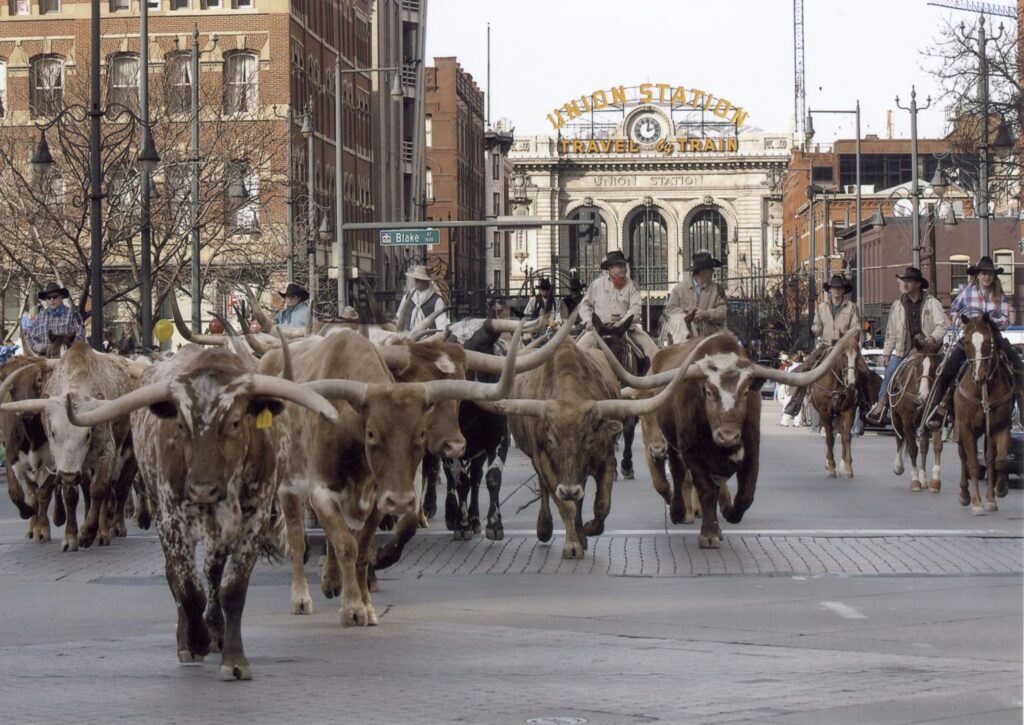
Know Before You Go: The National Western Stock Show
Emily Bejarano
emily-bejarano@gazette.com
Updated 2 days ago
Saddle up and get ready for the 120th year of the National Western Stock Show. If this is your first rodeo, then here’s everything you need to know to enjoy yourself The National Western Stock Show is the ultimate western event each year in Denver,...

Emily Bejarano
Reporter

Veteran-owned Sushi Mori brings artful sushi to Colorado Springs | Table Talk
Teresa Farney
teresa-farney@denvergazette.com
Updated 3 days ago
In late November, Liyan Jin, a U.S. Army veteran, opened Sushi Mori at 4980 Edison Ave., in a newly constructed building in the parking lot in front of Asian Pacific Market. Jin designed the modern, minimalist space herself, anchored by...

Teresa Farney
Reporter

Diamonds are forever: Buntport commits to next 25 years of stage fun
John Moore
john.moore@denvergazette.com
Updated 1 week ago
2025 COLORADO THEATER PERSON(S) OF THE YEAR Colorado College pals made a bold move in 2025 to buy the Denver warehouse that has been its home for quirky, smart theater since 2001 Here’s the thing about the Buntport Theater collective:...
John Moore
Reporter

Attention must be paid to these Colorado theater stories of 2025
John Moore
john.moore@denvergazette.com
Updated 2 weeks ago
2025 DENVER GAZETTE TRUE WEST AWARDS: DAY 30 David Nehls created and debuted two original musicals in 2025; that and other stories from the year in Colorado theater Christmas in Golden is starting to look a lot like Christmas with...
John Moore
Reporter

2025: A year of living ferociously for area actors
John Moore
john.moore@denvergazette.com
Updated 2 weeks ago
2025 DENVER GAZETTE TRUE WEST AWARDS: DAY 29 Here is a representative look at some of the Denver actors who were on fire from start to finish this year When I say Noelia Antweiler was everywhere this year, I mean...
John Moore
Reporter

Arrive in ’25: Take a look at the year’s emerging class
John Moore
john.moore@denvergazette.com
Updated 2 weeks ago
2025 DENVER GAZETTE TRUE WEST AWARDS: DAY 28 Here is a representative look at some of the many breakout performances on Colorado stages this year Sure, it’s cheating to suggest that a man who has been directing and performing with...
John Moore
Reporter

In one remarkable documentary, Creede is the center of the U.S.A.
John Moore
john.moore@denvergazette.com
Updated 2 weeks ago
2025 DENVER GAZETTE TRUE WEST AWARDS: DAY 26 Could the example of a tiny Colorado mountain town lead America out of its ongoing ideological divide? As I was watching the remarkable new documentary “Creede U.S.A.” at this year’s Denver Film...
John Moore
Reporter
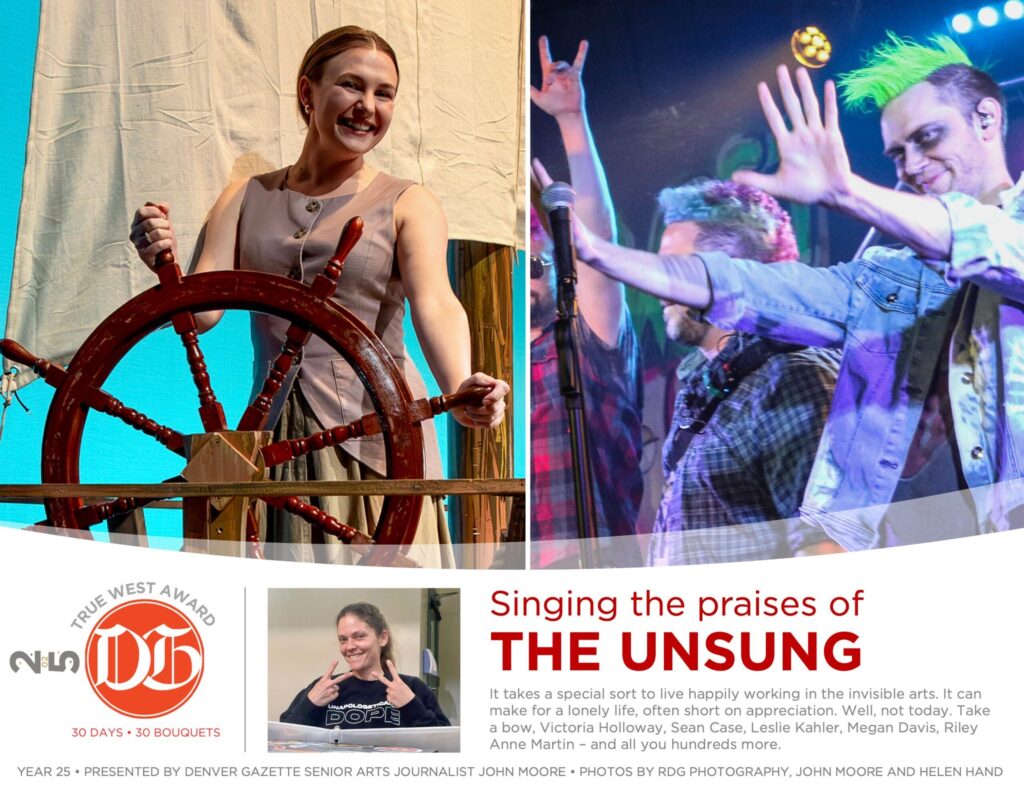
Banging the drum loudly for unsung heroes of the invisible stage arts
John Moore
john.moore@denvergazette.com
Updated 2 weeks ago
2025 DENVER GAZETTE TRUE WEST AWARDS: DAY 25 Victoria Holloway is ready to be her own princess, while musicians Sean Case and Leslie Kahler have struck a sweet chord through cancer Victoria Holloway’s friends talk as if the young actor...
John Moore
Reporter
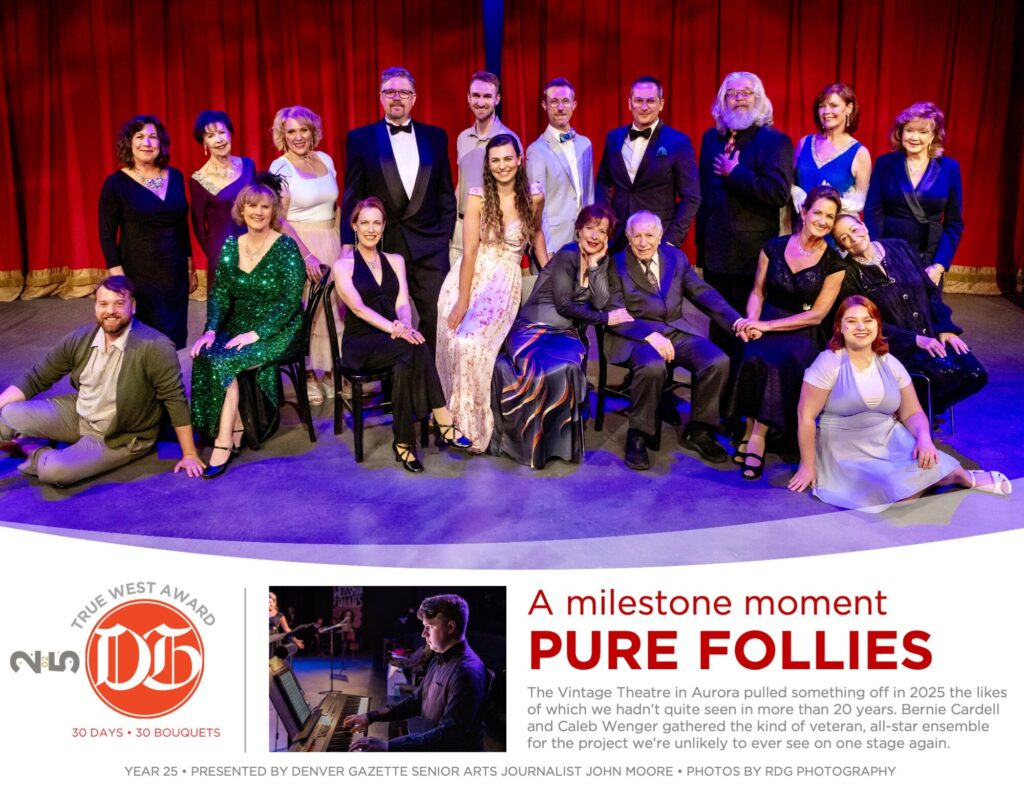
With ‘Follies,’ Vintage makes no concession to age
John Moore
john.moore@denvergazette.com
Updated 3 weeks ago
2025 DENVER GAZETTE TRUE WEST AWARDS: DAY 22 Directors assemble a huge cast of seasoned and starting performers for historic, first local run at Sondheim’s ‘Follies’ The Vintage Theatre in Aurora pulled something off in June the likes of which...
John Moore
Reporter
PREV
PREVIOUS

Denver City Council approves single-stair building ordinance
Members of the Denver City Council approved an ordinance on Monday that adds provisions allowing five-story single-stair buildings into Denver’s building and fire code amendments. The ordinance also makes additional revisions to support building projects by extending expiration timeframes, easing barriers to adaptive reuse, simplifying neighbor notification options, and coordinating cross-departmental requirements. Additionally, the approval […]

Denver area events for Nov. 25
If you have an event taking place in the Denver area, email information to carlotta.olson@gazette.com at least two weeks in advance. All events are listed in the calendar on space availability. Tuesday Nathan Burak Trio, Jazz — 6 p.m., Rosetta Hall, 1109 Walnut St., Boulder; rosettahall.com. Three Visitors – Edward Simon, Scott Colley and Brian Blade — […]