





PERSPECTIVE: Restoring Colorado’s roads
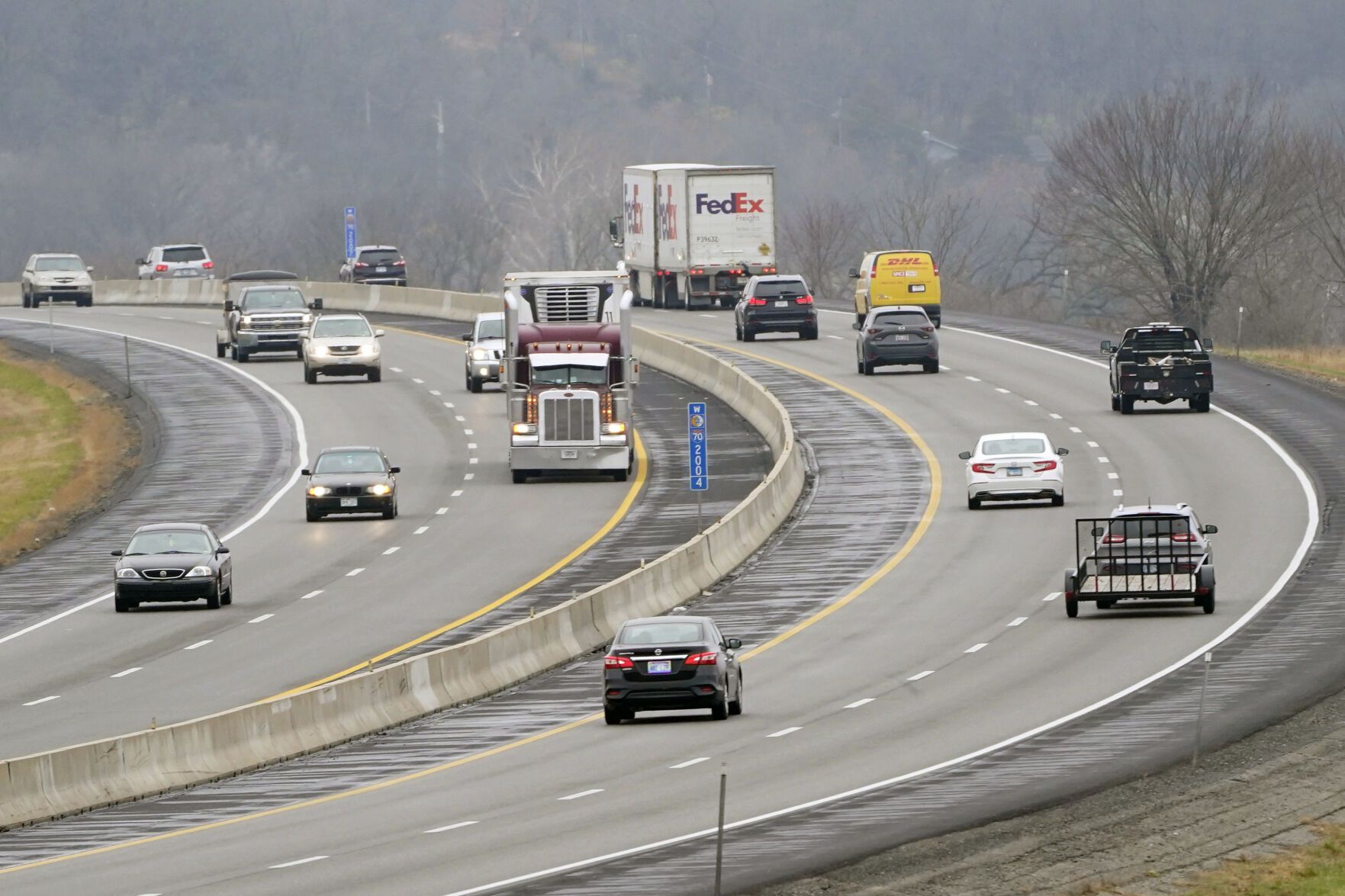


Colorado’s roads are crumbling, and the problem stretches far beyond potholes and cracked pavement. Whether you live in the rural valleys of the Western Slope or the bustling neighborhoods along the Front Range, our state’s transportation system is in critical condition.
The reasons for the years of neglect are relatively straightforward. The state’s gas tax, the main transportation revenue source, has not changed since 1991. Meanwhile, road construction and maintenance costs have soared due to inflation, leading to chronic underfunding for both upkeep and upgrades. Colorado’s explosive population growth — nearly 40% since 2000 — has dramatically increased traffic volume, accelerating wear and tear and congestion without a corresponding increase in infrastructure investment.
In both rural and urban communities, local governments rely on state support for major roadwork, but those dollars are often unstable, raided to cover budget gaps elsewhere, or prioritized for non-road projects. Small counties simply lack the tax base to rebuild highways or address deferred maintenance, while large city systems are overwhelmed by traffic and the infrastructure demands of growth.
Meanwhile, the Colorado Department of Transportation (CDOT) faces a $350 million annual shortfall just to maintain existing conditions. Of that amount, at least $200 million is needed solely for pavement maintenance.
There is broad consensus that something must be done. But each and every year, roads are moved to the bottom of the priority list as lawmakers contend that we can’t fund education, public safety, health care and roads. During budget challenges earlier this year, lawmakers pulled $140 million from CDOT’s budget, including $65 million specifically designated for highway funds.
That’s why it’s up to Colorado voters to step in to provide the consistent, long-term funding our transportation system needs — without raising taxes.
A proposed ballot measure would shift the transportation taxes Coloradans already pay on cars, tires, and gas to fund roads and bridges. Instead of this money disappearing into the general fund to pay for whatever shortfall the state faces each budget year, the money generated from motor vehicles would go to roads.
This measure accomplishes two things neither rural nor urban Coloradans have enjoyed for decades: It locks in sustained investment of an additional $700 to $900 million per year, without raising taxes, and it ensures that every region receives its fair share to address the most urgent local priorities.
Across Colorado, both rural and urban communities experience the daily impacts of a severely underfunded transportation system, but the challenges often look different depending on where you live.
In rural counties, critical farm-to-market roads, school bus routes, and lifelines for emergency responders are deteriorating at an alarming rate. The long stretches of highways connecting small towns and agricultural supply chains are increasingly riddled with safety hazards: potholes, failed shoulders, and bridges “posted” for reduced weight limits. For families living miles from the nearest hospital or ranchers moving goods by the truckload, these degradation issues are not merely an inconvenience — they are a threat to livelihood and public safety.
In Colorado’s urban centers, the challenges are equally stark, though driven largely by population growth, congestion and the sheer volume of daily trips. Denver and the Front Range struggle with clogged arterials and high rates of motor vehicle collisions, exacerbated by rough pavement and outdated infrastructure.
Only about 34% of Colorado’s roads are in “good” condition — far below the national average — with urban drivers bearing some of the highest costs in America for vehicle repair and time lost to commuting, according to the American Society of Civil Engineers’ 2025 report that gave Colorado a D+ for its road conditions.
The safety implications are troubling. Poor road conditions contribute to traffic crashes throughout Colorado. Deteriorated pavement, inadequate shoulder width, and missing safety features create hazards for motorists, cyclists, and pedestrians alike. Colorado’s traffic fatality rate has increased significantly since 2019, and while driver behavior remains the primary factor, inadequate roadway infrastructure is often a contributing element, particularly in areas where failing infrastructure collides with rising population and weather extremes.
For emergency responders in rural and urban areas, every minute counts. When ambulances, fire trucks, and police vehicles must navigate deteriorating roads and congested corridors, response times suffer. In rural counties, where distances between communities are vast, road conditions can mean the difference between life and death. In the Denver metro area, where suburban growth continues to accelerate, traffic congestion compounds the challenge of delivering critical services. Our farmers, first responders, school buses, and commercial fleets are all at risk on crumbling and congested roads that should be safe, reliable corridors.
Beyond personal costs and safety concerns, our road crisis undermines Colorado’s economic competitiveness. The trucking industry alone loses over $1.2 billion annually due to congestion on Colorado’s highways — a 19% increase in just two years. Those costs don’t disappear; they’re passed directly to businesses and consumers through higher prices on everything from groceries to construction materials.
In more rural counties, agricultural and energy sectors depend on reliable transportation corridors to move products to markets. Delayed shipments and damaged goods from rough roads cut into already thin profit margins. Along the Front Range, major distribution centers and manufacturing facilities require dependable freight movement. When roads fail, businesses look elsewhere.
Small businesses throughout Colorado suffer disproportionately. A landscaping company whose trucks need constant suspension repairs; a delivery service burning extra fuel on congested routes; a contractor whose materials arrive late because of highway delays — are the everyday realities of inadequate road infrastructure.
Statewide, unsafe and failing roadways cost Colorado motorists an estimated $11.4 billion each year in wasted fuel, vehicle repairs, insurance and time. In rural counties, those costs hit working families especially hard, as distances are longer and options for public transit are few, if any. In small towns from Fruita to Walsenburg to Sterling, the cost per driver often exceeds $800 per year in additional repair bills. Meanwhile, urban workers lose hours each week to congestion. In Denver, repairs, fuel and lost time cost drivers more than $3,000 a year.
If passed, Initiative 75 would start addressing these issues head on. Funding would be sourced from all state sales, use and excise taxes or fees on motor vehicles and fuel, along with two-thirds of state sales and use taxes collected on vehicle parts, equipment, materials and accessories that are installed on vehicles.
The money would be distributed according to the current Highway Users Tax Fund formula, which allocates revenue to the state, counties, and municipalities and safeguards funding for the Colorado State Patrol.
For rural Colorado, this could be transformative. Roughly 75% of the state’s total lane mileage is in rural counties, the majority of which is maintained by local county and municipal governments. This amendment means dedicated, protected dollars can’t be diverted away from the gravel and blacktop roads connecting small towns, farms, and critical supply routes.
Urban and suburban communities will also see real, immediate benefits. Many of the state’s biggest traffic bottlenecks can be addressed through investment in road capacity and safety upgrades. For instance, the stretch of I-25 between 84th Ave. and 104th Ave. is known as the “crash corridor” because it averages more than two accidents/crashes per day and contributes to more fatalities than any other interstate section in Colorado. Yet, fixes to this area continue to get pushed back year after year because of a lack of funding.
Local governments across the state would be put in the driver’s seat to set priorities and plan for both maintenance and safety upgrades based on real engineering needs, not changing political winds. This provides stability and flexibility to plan long-term repairs instead of limping from year to year on unreliable one-time grants. It’s a step toward restoring our entire transportation system, not just piecemeal fixes.
Years of deferred maintenance and competing priorities have brought Colorado’s transportation system to a breaking point. Without stable, dedicated funding, Colorado’s transportation network will continue to fall behind, costing taxpayers more in repairs, limiting economic opportunity, and compromising personal safety.
Initiative 175 ensures that the dollars collected for transportation stay where they belong: rebuilding the roads, bridges, and systems that keep Colorado connected and moving forward.
Cody Davis is a Mesa County commissioner, a small-business owner and fifth-generation native of Colorado’s Grand Valley. Jan Kulmann is serving her second term as mayor of Thornton and is a licensed professional engineer.

Closing a processing plant hits a community hard
Rachel Gabel
rachel-gabel@denvergazette.com
Updated 3 days ago
Black Swan is apparently on the menu this holiday season for people across the cattle and beef value chains. Last week, Tyson announced the closure of a processing plant in Lexington, Nebraska. This plant processes about 5,000 head of cattle...

Rachel Gabel
Reporter

Go. Polis’ silence deafening on Peters’ prison transfer | Dick Wadhams
Dick Wadhams
dick-wadhams@denvergazette.com
Updated 3 days ago
Hed: Polis’ silence deafening on Peters’ prison transfer | Dick Wadhams Pull quote: As long as Colorado Republicans are defined by stolen election conspiracy theories as promulgated by Trump, Peters and a host of other Republican leaders, unaffiliated voters who...

Dick Wadhams
Reporter

COLUMN: Good news and bad, about a complaining nation
Ruben Navarette
ruben-navarette@gazette.com
Updated 2 days ago
SAN DIEGO — With all due respect to baseball, the real national pastime is complaining. Oblivious to how soft and comfortable our lives are compared to those of millions of other people around the world, Americans love to gripe....

Ruben Navarette
Reporter
I give thanks that we live in a democracy | Pius Kamau
Pius Kamau
pius-kamau@denvergazette.com
Updated 3 days ago
“Forever, the optimist,” a friend commented on reading my latest column — “It’s an amazing time to be alive.” This optimist’s column emphasized how fortunate we are not to have pain as our ever present Sword of Damocles. I am...

Pius Kamau
Reporter

Colorado’s fake ‘fees’ beg for legal challenge | Jimmy Sengenberger
Jimmy Sengenberger
jimmy-sengenberger@denvergazette.com
Updated 5 hours ago
Whenever I hear Colorado politicians pitch a new fee, I think of Inigo Montoya’s line from, “The Princess Bride”: “You keep using that word. I do not think it means what you think it means.” All too many fees assessed...

Jimmy Sengenberger
Reporter

Gambling is better than polling in predicting elections | CALDARA
Jon Caldara
jon-caldara@denvergazette.com
Updated 3 days ago
You’ve heard the term, “click bait.” It’s those wonderful, tempting links all over websites like “The top-10 sexiest actors,” or “You’ll never believe what she looks like now.” For political junkies, our click bait is the latest poll numbers. We...

Jon Caldara
Reporter
Sometimes feeding the hungry takes a village, and a colonel | Vince Bzdek
Vince Bzdek
vince-bzdek@denvergazette.com
Updated 2 days ago
When Nate Springer, the retired Army colonel who is now head of the Care and Share Food Bank in Colorado Springs, attended the opening ceremony for a new American-led water project in Afghanistan in 2007, he was approached by an...

Vince Bzdek
Reporter
Crow’s stunt wasn’t seditious — but was dangerous | George Brauchler
George Brauchler
george-brauchler@denvergazette.com
Updated 3 days ago
This Thanksgiving, when millions of military members sit down with their families to eat turkey, they will likely discuss Crow. Colorado U.S. Rep. Jason Crow’s media lust led him to create an unprecedented video designed to instill doubt in our...

George Brauchler
Reporter

Will counterfeit compassion destroy Aurora? | Michael A. Hancock
Michael Hancock
michael-hancock@gazette.com
Updated 6 days ago
There is a particular kind of civic ruin that arrives not by malice but by moral confusion. It comes dressed in benevolence, cloaked in the language of empathy, and sold as “the right thing to do.” It flatters our instincts...

Michael Hancock
Reporter

Redistricting and the race to the bottom | Sondermann
Eric Sondermann
eric-sondermann@denvergazette.com
Updated 1 week ago
Per Merriam-Webster, one of the definitions of the word “politics” is, “The total complex of relations between people living in society.” Otherwise put, politics, when managed correctly, constitutes the organization of society for maximum peace, tranquility, prosperity and thriving. It...

Eric Sondermann
Reporter
PREV
PREVIOUS

Gambling is better than polling in predicting elections | CALDARA
You’ve heard the term, “click bait.” It’s those wonderful, tempting links all over websites like “The top-10 sexiest actors,” or “You’ll never believe what she looks like now.” For political junkies, our click bait is the latest poll numbers. We mostly use them to reinforce our already held beliefs, because nothing is as addictive as […]

COLUMN: Good news and bad, about a complaining nation
SAN DIEGO — With all due respect to baseball, the real national pastime is complaining. Oblivious to how soft and comfortable our lives are compared to those of millions of other people around the world, Americans love to gripe. Whether it’s harvest time or not, we make “whine” year-round. We complain about the […]