








A ‘dinosaur tree’ and its prehistoric journey to a Colorado greenhouse
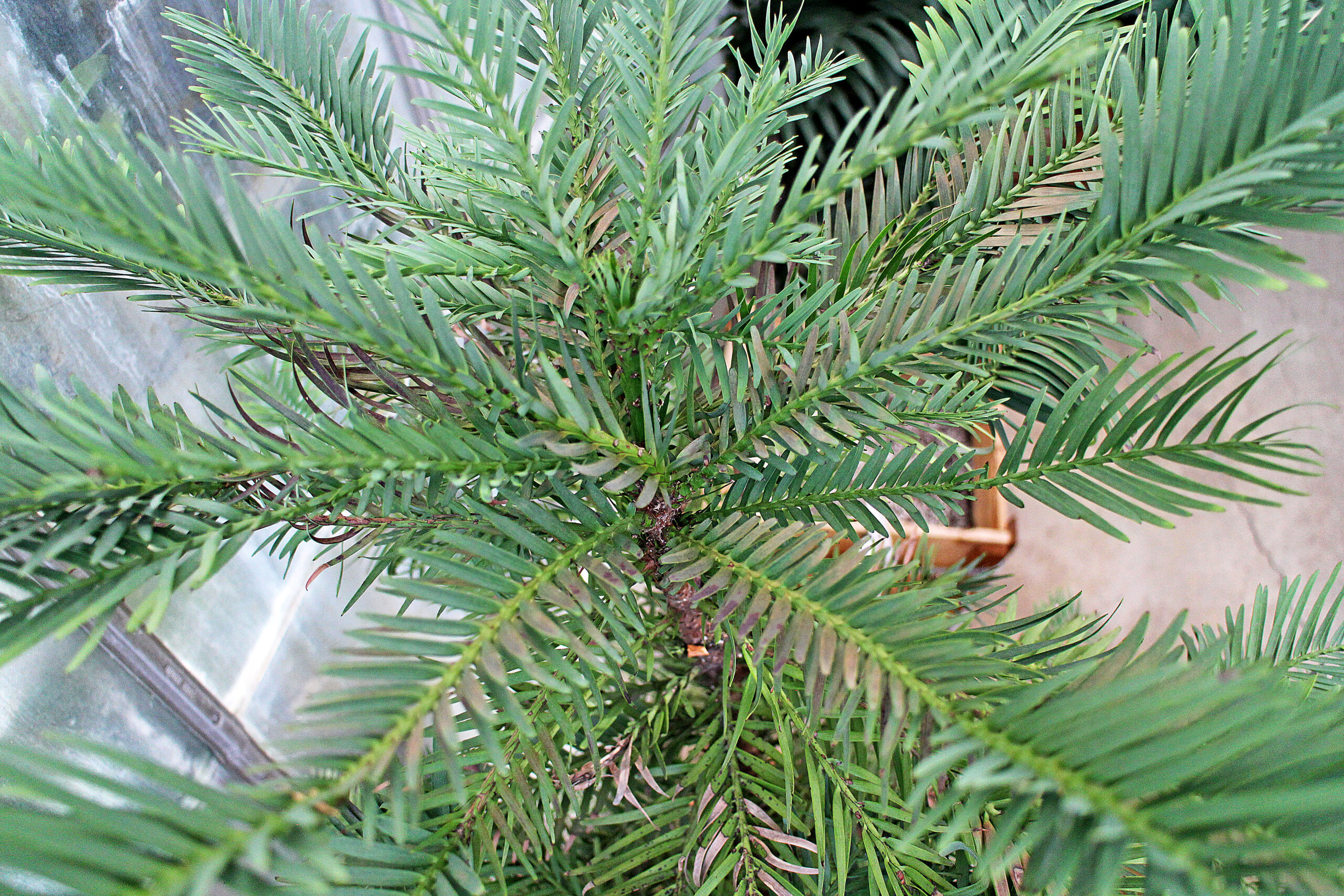
Back in September, Malinda Barberio received an email from someone claiming to have a Wollemi pine.
No way, thought Barberio, the University of Colorado greenhouse manager. “Because I know what they are,” she said.
She knew the Wollemi pine to be extremely rare, previously thought to be gone with the dinosaurs, which are believed to have munched on the fern-like leaves. Then came a 1994 discovery in a remote Australian canyon. Then came a conservation effort around the prehistoric trees, which slowly reached some of the finest botanical gardens and research centers around the world.
As well as someone’s backyard in Boulder? No way, Barberio thought as she read that email.
“But she had attached photos,” Barberio said. “I was like, ‘Oh, she does.'”
Now the greenhouse on 30th Street is home to what the university has called a “dinosaur tree.”
That woman, CU Boulder alum Judy McKeever, had emailed about donating the Wollemi she and her husband came to call Wally. Barberio gladly accepted. And Wally has received curious visitors ever since.
“It’s a very rare opportunity to see something that most people will never see and will never know about,” Barberio said, “and that we’re just lucky that one guy found.”
That guy was David Noble, a ranger who was rappelling in the Blue Mountains of New South Wales one day in 1994.
“He suddenly came upon an extraordinary sight: a canyon filled with strange, massive pines,” reads an account from Australia’s National Parks and Wildlife Service. “The sight would have felt like a scene from The Land Before Time.”
Indeed, the Wollemi pine has been traced back to the land of dinosaurs, the Cretaceous period. Before Noble’s drop into that strange forest, the tree had only been noted in the fossil record spanning some 90 million years.
Once rediscovered, “conservation efforts started almost immediately,” Barberio said.
These efforts took a rather odd turn with National Geographic’s holiday catalog, starting in 2006. Saplings were listed at $99.95. The Wollemi was listed as “a survivor from the age of the dinosaurs, a miraculous time traveler and one of the greatest living fossils discovered in the twentieth century.”
And there was a purpose beyond profits.
The idea was to get the endangered tree “to more botanical gardens, universities, as well as in the private sector,” Barberio said. “By dispersing material, you are allowing it to grow and hopefully grow to maturity, which increases and maintains genetic diversity.”
This was what she later learned upon that email from McKeever.
The Boulder woman was one customer of that catalog, drawn to what she saw as “a love story about finding a dinosaur in an Australian canyon,” as she explained in a CU Boulder article.
She thought Wally would be “the perfect addition” to her husband’s bonsai collection. “But he never got bonsaied or really trimmed at all,” McKeever said, “and just kind of grew out of control.”
Wally was no bonsai tree, though the two might share a trait from Barberio’s view: “very funky.” She calls Wally and fellow Wollemi “very charismatic,” quite different from other pines we see in Colorado: broad instead of triangular, with a more round crown instead of a pointy one, and with foliage that brings to mind a much more tropical environment. A comparison easily comes to mind this Christmas season: “Charlie Brown style,” Barberio said.
But taller than your typical Charlie Brown tree. This was another thing Barberio could not believe while reading that email from McKeever: “She was like, ‘I have a 6-foot Wollemi.'”
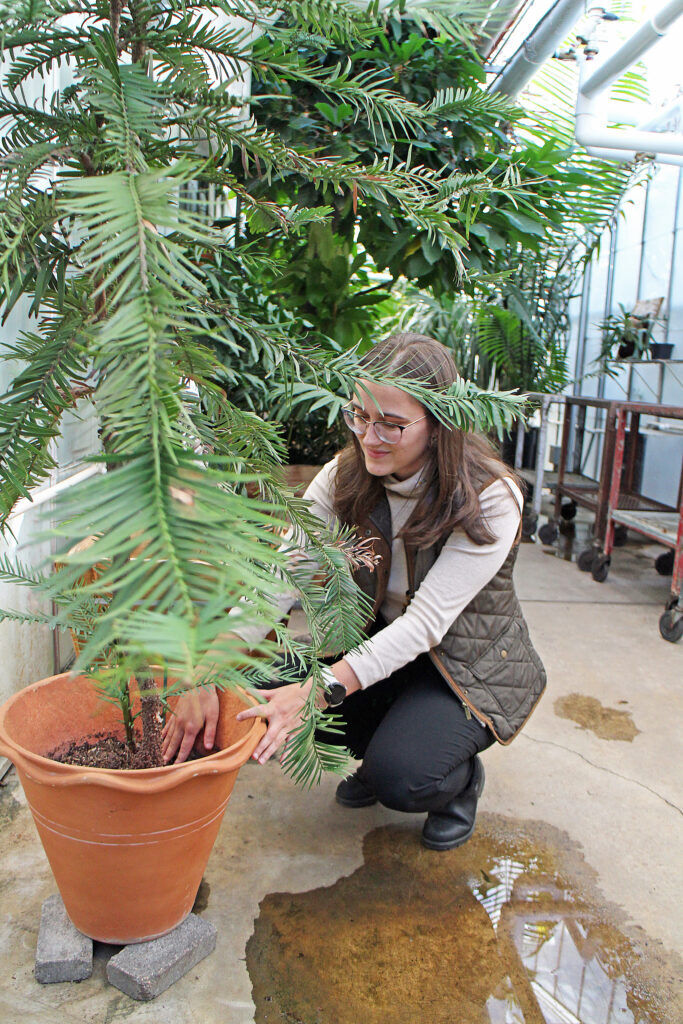
Yes, McKeever and her husband watched Wally grow and grow from his south-facing, summertime place on their deck to his sheltered, wintertime place under a light in their basement.
“We just loved Wally,” McKeever said in the CU Boulder article, “but he grew a few inches every year, and with the soil and pot, he just got to be too heavy to take down to the basement every winter.”
Wally remains in that pot at the 30th Street greenhouse.
“We’ve just been maintaining very steady. We have not repotted it,” Barberio said. “We’ve put it in a place that doesn’t receive direct sunlight, that doesn’t receive extreme temperature fluctuations.”
That, she explained, is in taking notes from the McKeevers and also from that ancestral canyon in Australia seemingly protected from such fluctuations. Barberio is thinking sunlight but not direct sunlight, some water but not a lot, along with “very diluted fertilizer.”
The hope is to keep Wally alive for years to come ー for his story to reach generations of visitors.
“It’s a really fantastic story,” Barberio said, “and it’s a really good story to tell people who are not botanically inclined.”
Maybe they’ll come for the eye-catching billing ー “the dinosaur tree.” And maybe they’ll leave having learned something about conservation, genetic diversity and a world the Wollemi has watched change for millions of years.
“If they can walk away having learned something, then they have accomplished our goal,” Barberio said.
There’s another goal with Wally: to one day see cones on the branches.
“We would be able to harvest those and grow more seedlings,” Barberio said.
The seedlings could be sent to other collections, she said. And the story could continue.
Visiting Wally
For tours, group visit requests and questions about CU Boulder’s Department of Ecology and Evolutionary Biology greenhouse on 30th Street, email ebiogreenhouse@colorado.edu.
Events, open volunteer slots and more information is posted at the greenhouse website: colorado.edu/lab/greenhouse

Year-round gardening: Take these steps to ensure dahlia blooms next season
Debra Stinton Othitis
debra-stinton-othitis@gazette.com
Updated 3 months ago
Dahlias are not winter-hardy in our climate so they must be lifted for repeated use. The success of this process involves careful digging, curing, and storage to prevent the fleshy tubers from freezing or rotting.After the first frost, the dahlia...

Debra Stinton Othitis
Reporter

In University Hills, semi-custom home in a new-urban enclave
Mark Samuelson
mark-samuelson@denvergazette.com
Updated 4 months ago
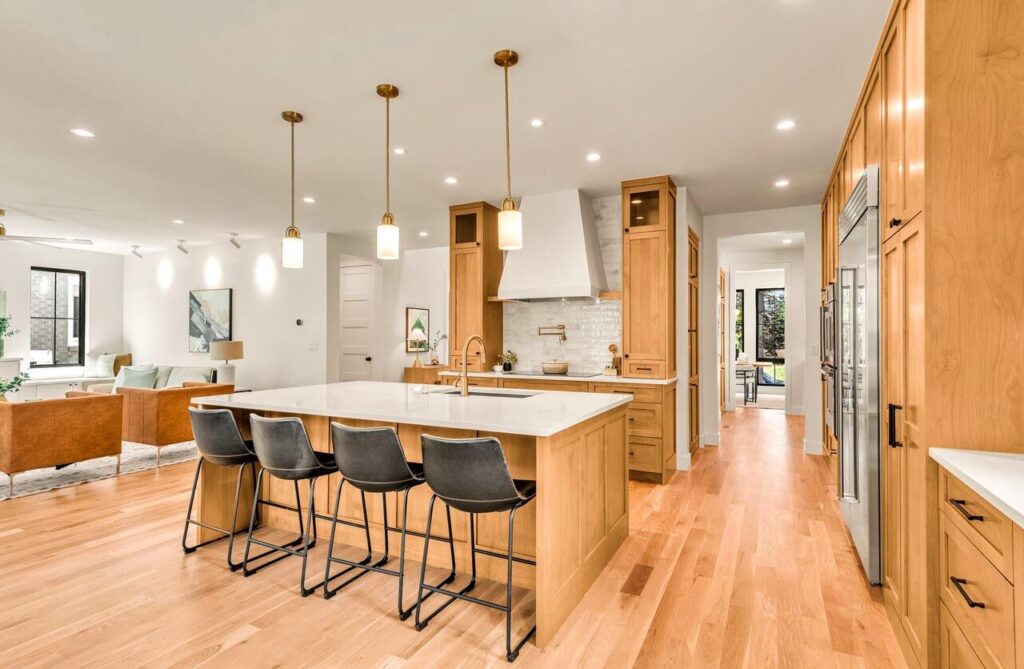
On Saturday, interested home shoppers can tour a 4-bedroom semi-custom home in Denver’s University Hills area that might cost a million dollars more if it were located just a few blocks west of where it is, closer to Observatory Park....

Mark Samuelson
Reporter
Colorado Realtors have low expectations as Fed is set to meet
Mark Samuelson
mark-samuelson@denvergazette.com
Updated 4 months ago
While the Federal Reserve prepares for a long-anticipated meeting next week that will likely cut the federal lending rate, Colorado real estate agents are putting a damper on any hopes for coming improvements in the state’s housing market. “I can’t...
Mark Samuelson
Reporter
In Cory-Merrill, couple gets in the habit of new-urban custom building
Mark Samuelson
mark-samuelson@denvergazette.com
Updated 4 months ago
ON THE HOME FRONT Mark Samuelson Neither Peter nor Megan Fredricks of Denver makes a living in the home building business, but you can see how good the pair has become at it when their newest project stages an open...
Mark Samuelson
Reporter
PREV
PREVIOUS
Westminster murder suspect released from jail a week before woman went missing
A newly released affidavit in the killing of a Westminster mother describes a disturbing sequence of events in the days before police found her body and raises new questions about why the man now accused in her death was released from jail just one week before she disappeared. Annette Marie Valdez, a 37-year-old mother of […]

Woman fatally shot in Aurora Tuesday evening, suspect at large
A woman died in the hospital Wednesday after she was shot in a south Aurora parking lot Tuesday evening. The suspect of the shooting, who remains at large, is described as a man riding a bicycle while wearing red sweatpants and a black jacket, according to a news release from the Aurora Police Department. Officers […]