








Colorado defense company wins huge incentives to stay in state for expansion
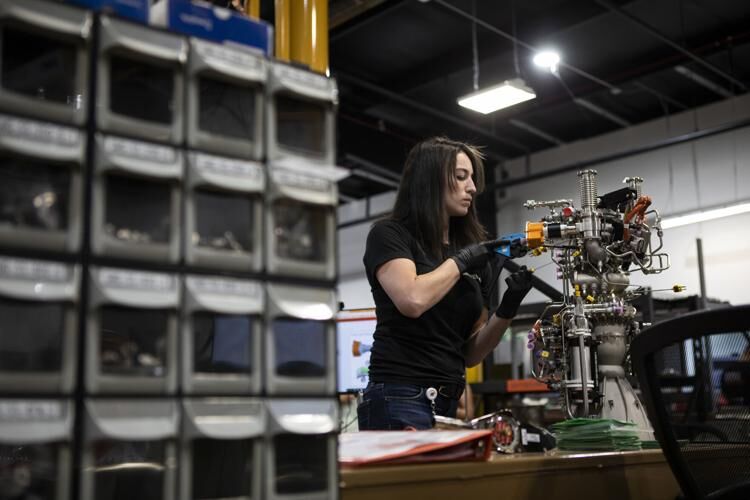
The Colorado Economic Development Commission awarded a large package of incentives to a growing aerospace and defense company in order to keep a majority of its operations within the state.
The unnamed company dubbed “Project Ladybug” plans to make a major expansion that would add about 1,850 new jobs over eight years, making it one of the largest projects for Colorado in recent years.
The EDC approved two sets of incentives on Thursday for the company’s expansion: $35 million in job growth tax incentives and $8 million in CHIPS Refundable Tax Credits.
The commission also uniquely designated another $15 million in refundable tax credits to give to the company in 2027, though it still needs to be approved in the next budget cycle.
“We want to maintain their headquarters and center of gravity in Colorado,” according to an EDC memo. “It is critical that we secure projects like this to ensure companies not only start here but are able to scale and stay here.”
In most cases, the EDC does not disclose company names to protect confidentiality amidst the competitive process between states to attract businesses. While the project would be the expansion of a Colorado-based company, the EDC said Project Ladybug is also considering going to Ohio, Mississippi or California.
Yet several clues point to rocket manufacturer Ursa Major as the potential recipient of the tax incentives.
Project Ladybug is described as a company that “builds propulsion systems for hypersonics, solid rocket motors, in-space mobility, and space launch,” matching Ursa Major’s description on its website nearly word-for-word. It’s a Colorado-based company, and Ursa Major is headquartered in Berthoud.
The company’s website says it delivers “flight-proven capabilities for hypersonics, solid rocket motors, space mobility and launch.”
Ursa Major also has a manufacturing operation in Ohio, one of the other states Project Ladybug is considering expanding to.
The company did not immediately respond to a request for comment.
The state also gave Project Ladybug an advanced industries grant in 2017 for $250,000, according to the EDC.
Ursa Major was awarded an early-stage grant totaling $250,000 for fiscal year 2019, though the Colorado Office of Economic Development and International Trade announced it publicly in 2018.
Ursa Major is growing and planning to scale its manufacturing capabilities after securing $100 million in its Series E funding round, according to a company news release last month.
The company said it would use the funding to “address urgent needs” in the U.S. and “scale hypersonics, solid rocket motors and space mobility” at a cheaper and faster rate than legacy suppliers.
“This investment gives us the tools to solve critical strategic industrial base and national security challenges for the United States and our allies,” said Dan Jablonsky, CEO of Ursa Major, in the release.
Ursa Major secured more than $115 million in contracts in the first three quarters of the year with public and private partners such as the U.S. Department of Defense, Stratolaunch and BAE Systems.
Project Ladybug’s expansion plans to add both office and production jobs, the EDC said. The expansion would add jobs to two locations, including its current home and a new site that could be in Colorado, Ohio, Mississippi or California.
The company is considering expanding in the metro Denver area if it chooses Colorado for the expansion.
The company plans to make a decision in the first half of 2026, said Rachel Gradner, a commercial real estate at CBRE who spoke on behalf of Project Ladybug.
Splitting up tax credits
It would be one of the largest expansions for the state in terms of high-paying jobs, number of jobs and workforce training commitments in recent years, the EDC said, and it’s critical to keep it in state to help Colorado grow its manufacturing industry and continue its lead in science and engineering.
The EDC signaled strong support for the company and made a special promise regarding the CHIPS refundable tax credits.
The state plans to split the tax credits created to lure semiconductor and advanced manufacturing companies to Colorado across two fiscal years, a first for the state.
The Colorado EDC can only allocate $15 million a year for CHIPS refund tax credits.
OEDIT recommended the EDC approve $8 million in the CHIPS tax credits for fiscal year 2026 to ensure there were enough tax credits for other projects in 2026. The state economic development agency also plans to give $15 million in tax credits from 2027’s budget.
The EDC is not allowed by state statute to legally bind the $15 million tax credits from 2027 to the project, at least not yet, said Sean Gould, OEDIT’s deputy director of financial analysis for business funding and incentives.
“You’re kind of making a moral commitment to the company,” he said. “They’re going to take that into strong consideration.”
The EDC signaled its plans to strongly consider awarding the $15 million in tax credits to Project Ladybug at a later date.

Coming into a new year, apartment market shows a city-suburban rift
Mark Samuelson
mark-samuelson@denvergazette.com
Updated 2 days ago
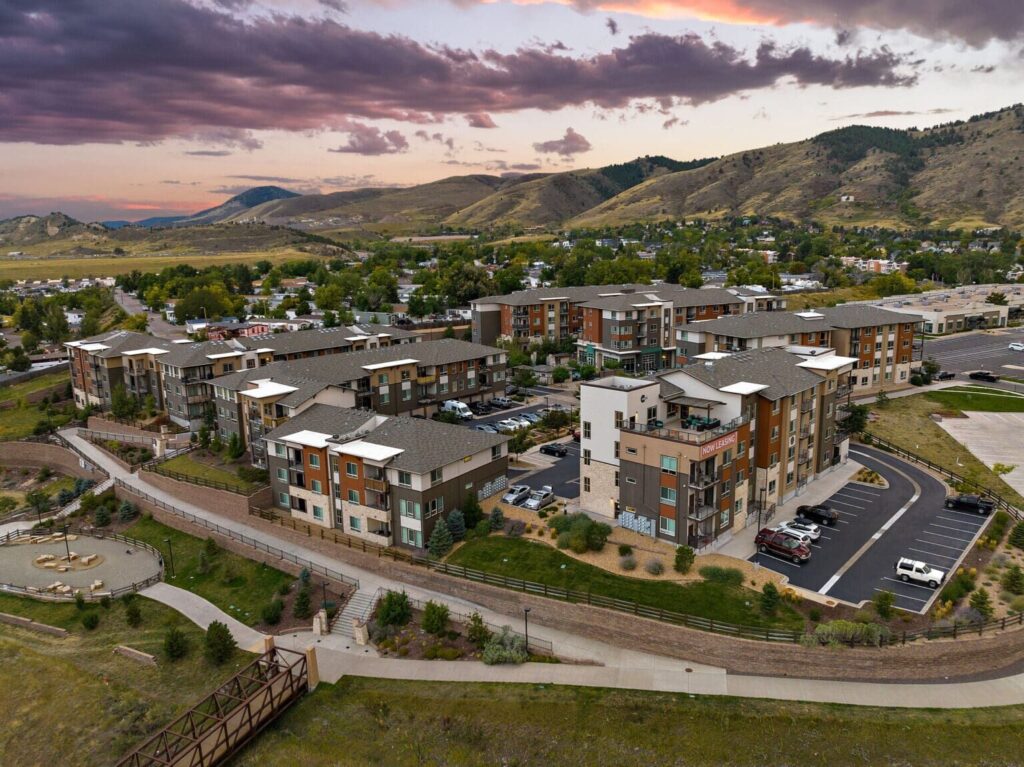
Coming into 2026, commercial brokers are seeing an apartment market in Denver that’s looking overbuilt, with a higher vacancy rate and falling rents. But not all investors are shunning the apartment projects coming available now. The oversupply follows a flood...

Mark Samuelson
Reporter

For 80 years, Denver’s Cherry Cricket has resisted change with burgers, bits of magic | Craving Colorado
Seth Boster
seth-boster@denvergazette.com
Updated 8 hours ago
DENVER • What made the Cherry Cricket so great? This is a question Lee Driscoll has often considered throughout his two decades of ownership. “Fairy dust” was the answer he came up with upon stepping into the Cherry Creek institution...

Seth Boster
Reporter

Farmers can now learn how much aid they will get from government
The Associated Press
the-associated-press@denvergazette.com
Updated 4 days ago
OMAHA, Neb. — Farmers are now learning how much aid they can expect to receive from a $12 billion package that President Donald Trump announced last month. The U.S. Department of Agriculture released the figures Wednesday for how much aid per acre farmers can...

The Associated Press
Reporter

Saks Global prepares for bankruptcy after missing debt payment, WSJ reports
Reuters
reuters@denvergazette.com
Updated 4 days ago
Saks Global is preparing to file for bankruptcy in the coming weeks after missing a debt payment tied to its Neiman Marcus acquisition, the Wall Street Journal said Wednesday, citing people familiar with the matter. The parent of high-end department...

Reuters
Reporter
Lee Enterprises stabilizes finances with $50M investment
The Associated Press
the-associated-press@denvergazette.com
Updated 4 days ago
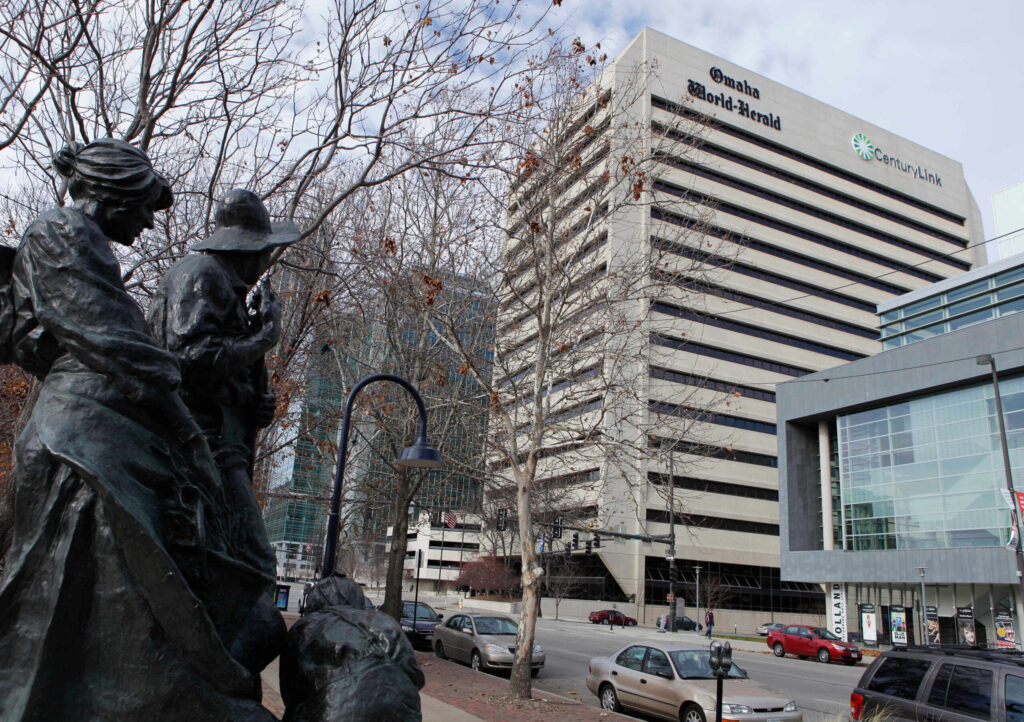
Lee Enterprises announced a compromise Tuesday with billionaire investor David Hoffmann, who offered to take over the nation’s third-largest newspaper chain this year, to help stabilize the company’s finances with a $50 million investment and set Lee up for the...
The Associated Press
Reporter

Some Warren Buffett wisdom on his last day leading Berkshire Hathaway
The Associated Press
the-associated-press@denvergazette.com
Updated 4 days ago
OMAHA, Neb. — The advice that legendary investor Warren Buffett offered on investing and life over the years helped earn him legions of followers who eagerly read his annual letters and filled an arena in Omaha every year to listen to him at Berkshire Hathaway’s annual...
The Associated Press
Reporter

After a rough 2025, Las Vegas gaming and tourism should have a mixed ’26
Tribune News Service
tribune-news-service@gazette.com
Updated 4 days ago
Las Vegas Review-Journal LAS VEGAS — For gaming and tourism in Las Vegas, news will be a mixed bag in 2026. The construction outlook is weak — but the city could still have its best convention year in history. Air...

Tribune News Service
Reporter

Denver Design District is a hub for home decor, but new businesses joining look a bit different
Bernadette Berdychowski
bernadette.berdychowski@denvergazette.com
Updated 1 day ago
Since the 1980s, the area north of where Interstate 25 and South Broadway meet has been a hotspot for home furniture and decor showrooms where interior designers go to sort through fabric swatches and cabinet finishes. But over the last...
Bernadette Berdychowski
Reporter
Feds order coal-fired Craig power plant to remain open
Scott Weiser
scott-weiser@denvergazette.com
Updated 3 days ago
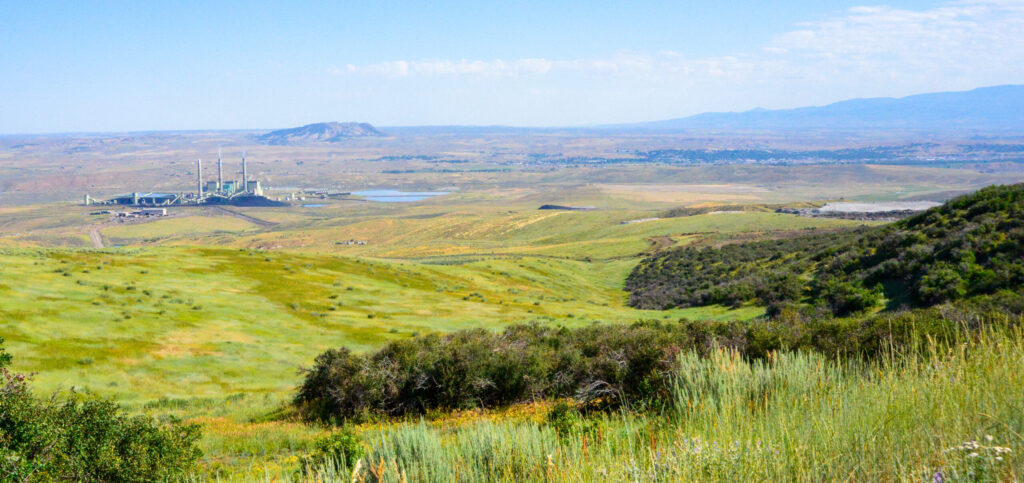
The Trump administration’s energy agency has ordered one of three generating units at a Colorado power plant to remain available for operation amid an impending shutdown of the station and its supplying coal mines. The move is one of the...

Scott Weiser
Reporter

Pentagon to pay Boeing $8.6B to make fighters for Israel, raising concerns
The Seattle Times
the-seattle-times@gazette.com
Updated 4 days ago
Boeing will design and produce 25 new fighter jets for the Israeli Air Force under a new contract with the U.S. Department of Defense, reigniting concern about the aerospace manufacturer’s connection to the ongoing violence in Gaza. The Pentagon said...

The Seattle Times
Reporter
PREV
PREVIOUS

Colorado justices splinter over approach to sentencing review
Members of the Colorado Supreme Court were divided on Monday about whether vehicular homicide stemming from intoxicated driving is “grave and serious” in every possible scenario, with two justices suggesting the court reconfigure its approach for determining the proportionality of criminal sentences. The Eighth Amendment’s prohibition on cruel and unusual punishment means sentences cannot be […]

Pulitzer Prize-winning correspondent Peter Arnett, who reported on Vietnam and Gulf wars, has died
LOS ANGELES — Peter Arnett, the Pulitzer Prize-winning reporter who spent decades dodging bullets and bombs to bring the world eyewitness accounts of war from the rice paddies of Vietnam to the deserts of Iraq, has died. He was 91. Arnett, who won the 1966 Pulitzer Prize for international reporting for his Vietnam War coverage […]