








Xcel’s blackouts show it’s behind the times | Jimmy Sengenberger

Driving into Golden with my fiancée on Wednesday night, we entered what felt like a ghost town. Streetlights vanished. Buildings went dark. Darkness surrounded us.
For several minutes, we experienced what tens of thousands of Coloradans were feeling — life without power in the night. And not the sweet, romantic, candlelit kind.
Xcel Energy’s planned Public Safety Power Shutoff (PSPS) — triggered by wicked winds and impacting roughly 100,000 people — is having real-world consequences.
Businesses shut down, losing customers. Employees have been sent home, losing hours. Students in a few districts — most notably Jeffco Schools, Colorado’s second largest — are losing classroom time just before Christmas break. Families have lost untold amounts of spoiled food. And on it goes.
Xcel and its government partners brush it off as an unavoidable “inconvenience.” That’s an understatement.
These are real-world harms thrust upon real Coloradans, especially lower-income families already struggling to make ends meet.
Xcel isn’t reimbursing them for ruined groceries or lost wages. It isn’t handing out backup chargers to families that can’t just swing one on a moment’s notice, especially when they’ve spent their holiday budgets.
To be fair, there’s an understandable reason: the threat of wildfire.
Almost four years ago, Coloradans endured the Marshall Fire, the most destructive wildfire in state history. Nearly 40,000 people were forced to evacuate. Two lives were lost, and more than 1,000 structures, mostly homes, were destroyed.
The fire ignited from week-old embers at the Twelve Tribes site, amid extremely dry conditions, abundant dry grass and fierce 115mph winds, rapidly spreading the flames. An hour later, a spark at an Xcel powerline accelerated the disaster.
Xcel faced hundreds of lawsuits over that spark, including suits brought by Boulder County, Superior and Louisville. The company ultimately settled, paying out millions.
PSPS is Xcel’s big response — a safety mechanism to reduce wildfire risk by cutting power during extreme weather conditions.
It’s the kind of thing we’ve seen in California, where PSPS is no longer a last resort but the standard fire-season practice. Is this what’s in store for Colorado?
Xcel would never admit it, but let’s be honest: This is as much about dollars, cents and liability as it is about public safety — if not more.
Other utilities have taken a different approach, emphasizing proactive fire mitigation. As the Longmont Leader reported, Longmont Power & Communications contracts year-round with a tree-trimming company “to minimize the risk of vegetation damaging power lines during storms.” The city has also begun moving electrical lines underground where feasible.

(Stephen Swofford, Denver Gazette)
These investments matter. Longmont and Lyons didn’t need to shut off electricity this week — largely because of their enhanced powerline safety settings, which automatically cut off a powerline when a fault is detected. In most cases, that’s all it should take.
With shutoffs, crews must manually inspect every foot of the line before restoring power. That can take 48 to 72 hours, which is why many people may still lack power as you read this.
Without more modern solutions — such as drones used in other states — shutoffs can make the solution worse than the problem.
Xcel Energy is behind the times.
In fact, Xcel’s turn to PSPS is a flashing sign that the company hasn’t sufficiently hardened its electric grid against known risks. Its potential liability exposure now outweighs the cost of outages. Regulators are all too willing to accept that tradeoff, preferring blackouts no matter the social and economic fallout.
Therein lies the bigger issue. This isn’t about Xcel being a private, shareholder-bound company while Longmont’s utility is municipally owned. Xcel is extraordinarily regulated — operating as a government-guaranteed monopoly.
Xcel had to seek approval from the Public Utilities Commission just to invest over $1 billion in grid upgrades. Approval was only granted on Monday.
Putting power lines underground is the gold standard. It’s expensive, but it’s the utility’s responsibility. Xcel should begin doing so in select locations.
Let’s be real: In Colorado, the state’s regulatory focus isn’t on hardening the grid against wildfire and wind. It’s on electrification — electric vehicles and trucks, electric homes and electric appliances.
No more gas stoves to cook your soup — when the power’s out for days.
At the very moment electricity demand grows, regulators have mandated the closure of Xcel’s coal-fired power plants in Pueblo. Comanche 1 is already shuttered. Comanche 2 was set to close next year and received only a one-year reprieve because Comanche 3 — scheduled for shutdown in 2030 — is offline for repairs.
“The state’s aggressive renewable energy targets, including those compelling Comanche’s closure, ignore the state’s long-term needs,” The Gazette recently editorialized — noting Xcel’s Clean Energy Plan will cost $12 billion to meet extraordinary greenhouse emission mandates for state utilities.
Exactly. As Colorado shrinks reliable energy sources by government edict, electricity demand keeps increasing with the population — all while Xcel pours billions into electrification mandates.
Xcel could invest more aggressively in grid hardening. But when the state’s priorities don’t align, those investments get pushed aside. Thus, preemptive power shutoffs, blamed on weather — while ratepayers foot higher bills for less reliable power.
This is insane. Xcel Energy — pushed by its government enforcers — is willfully disregarding the actual harm from actions meant to advance a political agenda.
That agenda isn’t safety or reliability. It’s electrification.
Get ready for more shutoffs. They’re about to become routine.
Jimmy Sengenberger is an investigative journalist, public speaker, and longtime local talk-radio host. Reach Jimmy online at Jimmysengenberger.com or on X (formerly Twitter) @SengCenter.

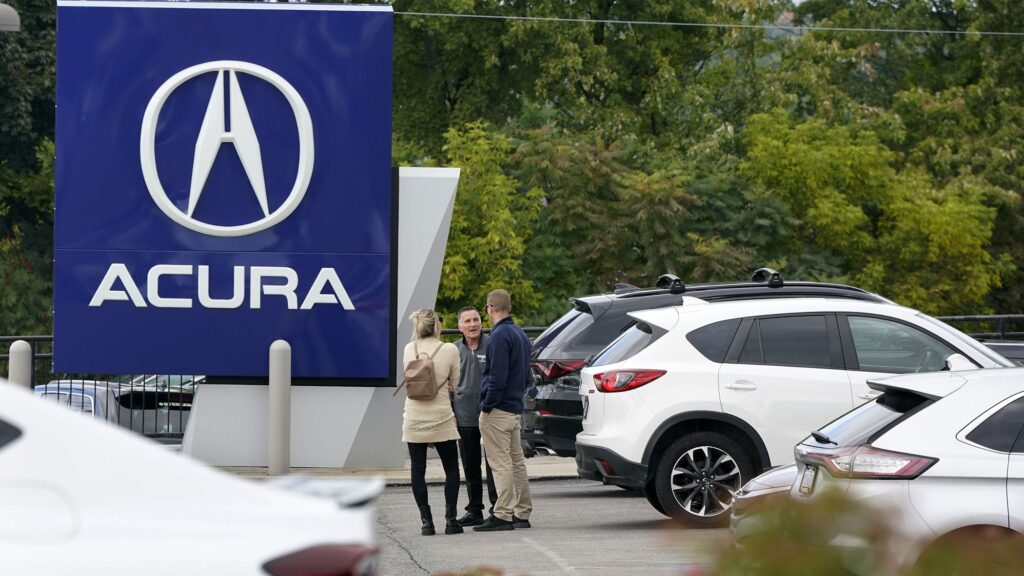
Vince Bzdek: Coloradans are fed up with the high price of cars
Vince Bzdek
vince-bzdek@denvergazette.com
Updated 1 hour ago
Car buyers in Colorado – and America – are fed up. Cars are too damn expensive. The average price of a new car broke the $50,000 barrier last fall, according to Kelley Blue Book stats. The Wall Street Journal recently...

Vince Bzdek
Reporter

Boebert takes on Trump over Colorado water | Jimmy Sengenberger
Jimmy Sengenberger
jimmy-sengenberger@denvergazette.com
Updated 1 day ago
Congress failed Thursday to override President Donald Trump’s veto of a Colorado water project that has been in the works for over 60 years. It’s one of two back-to-back vetoes, the first of his second term. But Colorado Republican 4th...
Jimmy Sengenberger
Reporter
Take time today to thank a first responder
Michael Hesse
michael-hesse@denvergazette.com
Updated 3 days ago
New Year’s Day marked the beginning of a significant number of celebrations planned across the nation and our state in recognition of the 250th anniversary of the founding of America and the 150th anniversary of Colorado statehood. As a young...

Michael Hesse
Reporter

Aurora’s new progressives rewrite reality | Michael A. Hancock
Michael Hancock
michael-hancock@gazette.com
Updated 3 days ago
Progressive politics rarely arrives announcing itself as ideology. It arrives as emergency, not to solve a problem, but to justify a savior. The language is familiar: equity, justice, compassion, fairness. The tone is moral. The urgency is absolute. And the...

Michael Hancock
Reporter

The lie that persists five years later | SONDERMANN
Eric Sondermann
eric-sondermann@denvergazette.com
Updated 5 days ago
Some dates require no explanation. September 11. October 7. And to the subject of today’s column, January 6. Simply mention the calendar number and the images flood to mind, still vivid and raw. The fifth anniversary of that dark, dismal...

Eric Sondermann
Reporter
A year later, still no accountability in Jeffco schools | Sengenberger
Jimmy Sengenberger
jimmy-sengenberger@denvergazette.com
Updated 5 days ago
One year ago, Jefferson County Schools descended into turmoil after former Chief of Schools David Weiss was found dead by suicide amid a child pornography investigation conducted by the Jeffco Sheriff’s office. Weiss was fired two weeks earlier after a...
Jimmy Sengenberger
Reporter

Campbell was a unique political character
Rachel Gabel
rachel-gabel@denvergazette.com
Updated 1 week ago
There are many things to appreciate about the late Ben Nighthorse Campbell, but one of the items at the top of the list is his belief that it’s more important to kill bad bills than to sign onto a mediocre...

Rachel Gabel
Reporter
Are we all post-liberals now? | Luige del Puerto
Luige Del Puerto
luige.delpuerto@gazette.com
Updated 7 days ago
Three decades after the end of World War II, a Japanese soldier finally returned to his home country after holding out in the jungles of the Philippines. Cut off from his unit, Hiroo Onoda had no way of knowing that...

Luige Del Puerto
Reporter
GUEST COLUMN: State Supreme Court hinders cities’ crime fight
Dan Nordberg
dan-nordberg@gazette.com
Updated 6 days ago
In the days before Christmas, the Colorado Supreme Court decided to dump a heap of coal into the stockings of home-rule cities across our state. In a unanimous decision, the Court ruled that municipalities may not impose “harsher sentences than...

Dan Nordberg
Reporter
Polis is a mixed bag on public ed | Jimmy Sengenberger
Jimmy Sengenberger
jimmy-sengenberger@denvergazette.com
Updated 6 days ago
Gov. Jared Polis deserves real credit for being the first Democrat to opt his state into the Trump administration’s federal school choice program. Even as activists in his own party howled in protest, Polis ignored the noise and chose what’s...
Jimmy Sengenberger
Reporter
PREV
PREVIOUS

GUEST COLUMN: Colorado’s ‘competency’ loophole imperils public safety
By Elizabeth Caven The evening the video of the brutal attack went viral, a wave of disbelief washed over Colorado: How could a man charged with attempted murder be free on the streets, not by bail or a plea deal, but because the law declared him unfit to stand trial and therefore not required to […]
Leadership in the age of artificial intelligence | Tom Cronin
The Wall Street Journal recently ran a feature story asking about when and if AI humanoid robots will be able to be chief executives and manage companies. AI evangelists Sam Altman of Open AI and Elon Musk of Tesla and xAI say AI robots already do remarkable engineering and logistical activities, and we can expect […]