








Tocqueville would have been a Broncos fan | Vince Bzdek
We hear much wailing and lamenting that America has lost its common ground, that social media and its algorithms are pushing us apart from each other, that we don’t gather together across race and class in bowling leagues and sewing circles like we used to.
But last Sunday, I got to re-experience what feels a lot like a thriving, healthy American commons, rubbing elbows with a wide cross-section of Colorado in a weekly ritual that binds its participants in collective effervescence.
I‘m talking about a home Broncos game, of course.
Before we totally give up on America, let’s remember that every Sunday, MAGA Republicans and Democratic socialists, plumbers and doctors, Muslims and Catholics, Black, Brown and White put on something orange and become a single possessed mass cheering the Donkeys on to victory.
Talk about E Pluribus Unum (Out of the many, one).
When Coloradans assemble in droves to watch the Broncos, they are exercising a quintessentially American activity. In the 1830s, Alexis de Tocqueville, French author of “Democracy in America,” identified one key factor above all others that sets Americans apart: We are a nation of joiners.
“In Democratic countries the science of association is the mother science; the progress of all others depends on the progress of that one,” Tocqueville wrote. In America in particular, there exists an immense “sum of associations.”
Our impulse to form ad hoc independent associations is one of the strongest manifestations of our “we the people” DNA. I’m thinking that’s one reason we are drawn so powerfully to team sports here in America, circa 2025.
In other words, I think Tocqueville would have been a Broncos fan.
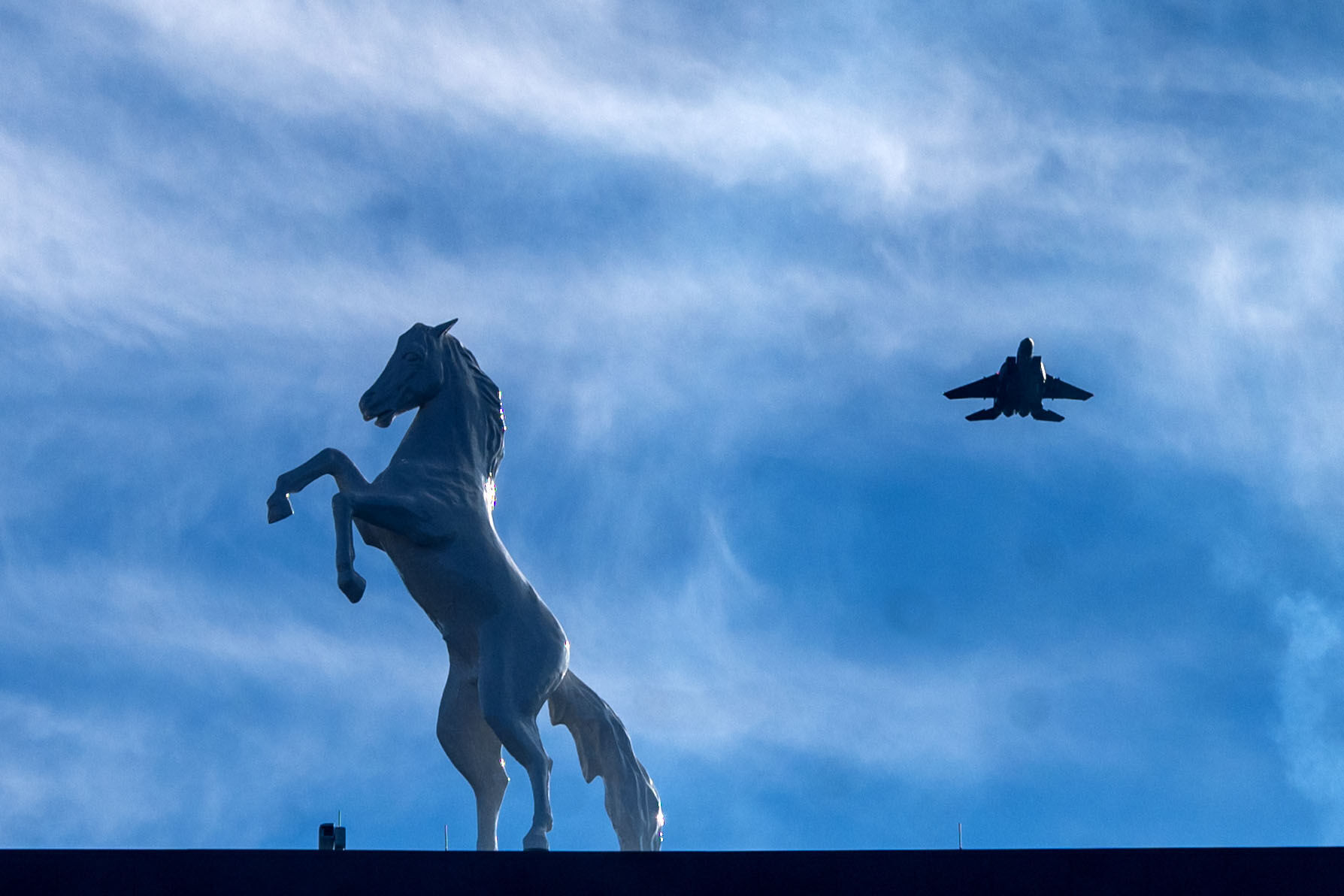
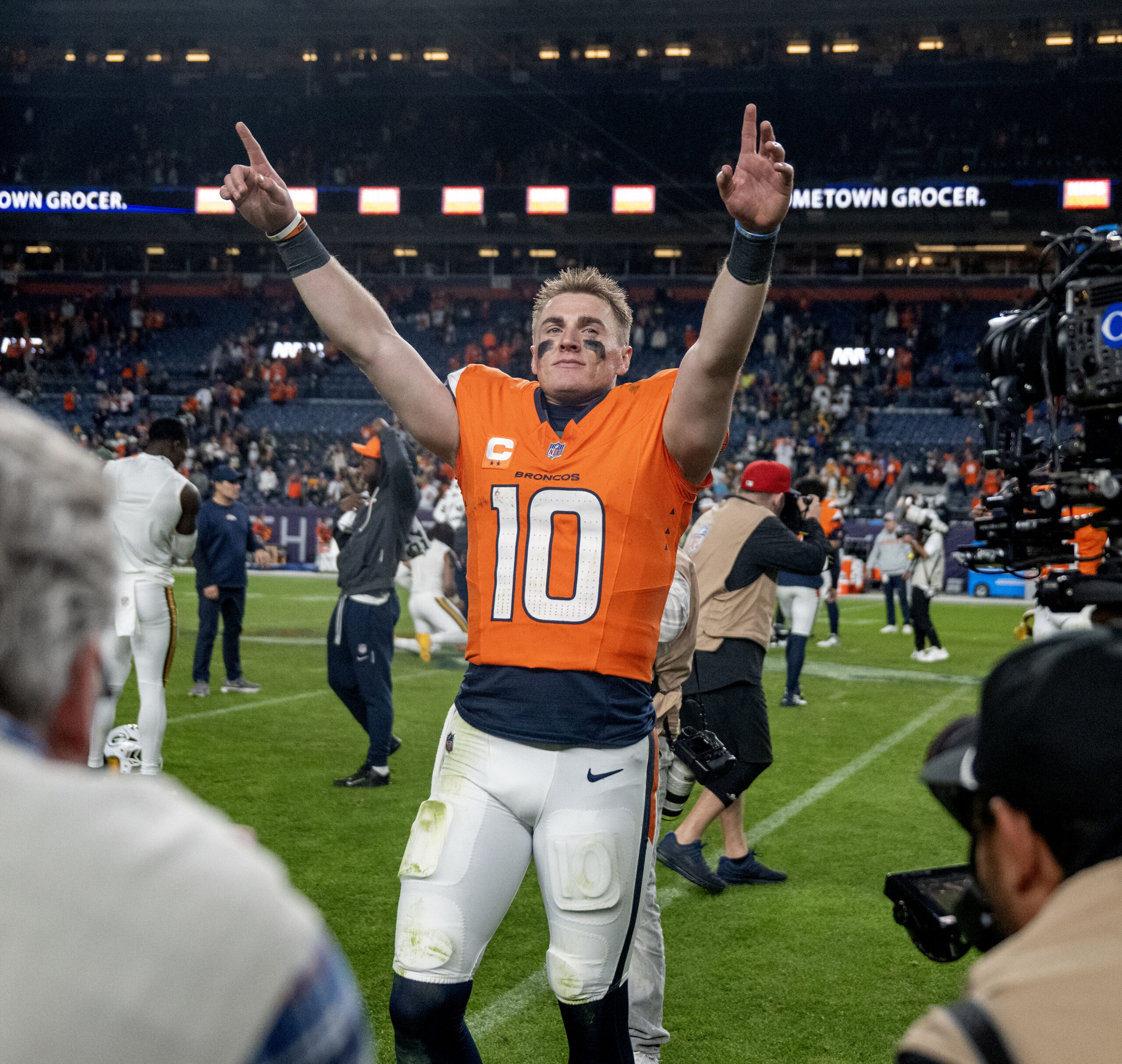
On game day, people who otherwise wouldn’t interact all feel part of the same group. Games become meeting points, sparking conversations and friendships among neighbors who might not otherwise connect. We all take on shared symbols – the great white horse – shared ritual – the parachute drop – and shared values. The Broncos teach us teamwork, loyalty, and cooperation, promoting a culture of working together for a common good.
Psychologists associate the shared emotional experience of a sports event with increased empathy, stronger in-group bonds, greater willingness to cooperate afterward (except with those Green Bay cheeseheads in the stands).
All that has a spillover effect for our state, resulting in higher civic pride and a greater attachment to place. As a result, I would argue that one of the great unspoken functions the Broncos serve in this state is social cohesion.
Especially when we’re winning.
(The Broncos have not lost a single home game this season.)
“Americans of all ages, all conditions, all minds constantly unite,” Tocqueville observed. “Not only do they have commercial and industrial associations in which all take part, but they also have a thousand other kinds: religious, moral, grave, futile, very general and very particular, immense and very small.”
And sporting.
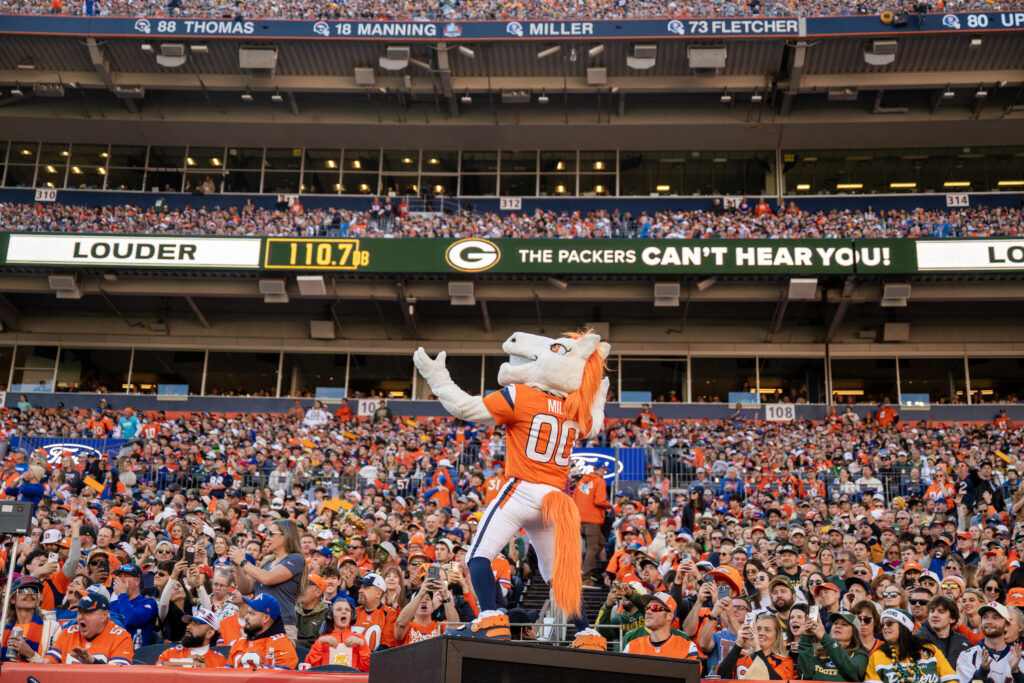
Through these associations, we learn how to play well with others. In a stadium of 75,000 cheering souls, we are building community.
Without really realizing it, we fans are combating runaway individualism, we are modeling cooperative relations across race and class, we are demonstrating the unique social benefits of bonding over a cause. As a result of regular mass associations like a Broncos game, “the heart is enlarged, and the human mind is developed,” Tocqueville wrote. (That last part clearly doesn’t work for the Las Vegas Raiders, alas.)
In a great essay in “Law and Liberty” on the topic, political scientist Andrew Carico wrote: “At the heart of Tocqueville’s analysis is an important truth about the human desire to communicate and collaborate with others. Americans, (Tocqueville) contended, had elevated that art above other democratic countries.”
Football games may be the state of that art right now. Football games may be one of the few remaining unifying forces in the country.
Emma Green, in another wonderful essay in the Atlantic entitled, “Would Alexis de Tocqueville Have Joined a High School Football Team?” makes the point that playing on a sports team or even just rooting for one can be a transformative experience that strengthens a person’s sense of both local and national community.
“Whether of the field or in the stands, coaching a team or running the field, everyone at a game can feel part of something local – this team, this game, this town – and something abstract and national – a land where young people are free to run, the home of strong, exceptional, brave athletes.”
If Tocqueville were to come again to America today, he’d surely lament the divisiveness of our politics, tongue-lash the scourge of social media and make note of the general decline of associations compared to the 1830s.
But I think he’d see hope at Empower Field.

Are we all post-liberals now? | Luige del Puerto
Luige Del Puerto
luige.delpuerto@gazette.com
Updated 2 days ago
Three decades after the end of World War II, a Japanese soldier finally returned to his home country after holding out in the jungles of the Philippines. Cut off from his unit, Hiroo Onoda had no way of knowing that...

Luige Del Puerto
Reporter

Pedestrian dies in Aurora crash on Colfax
Noah Festenstein
noah-festenstein@denvergazette.com
Updated 16 hours ago
A man was struck and killed by a vehicle while crossing an intersection along Colfax Avenue on Saturday night, according to the Aurora Police Department. Aurora police officers responded to the crash at around 10:57 p.m. at East Colfax Avenue...

Noah Festenstein
Reporter
‘Everything happens for a reason’: Veterans Trauma Court aims to help military members in times of need
Mackenzie Bodell
mackenzie-bodell@denvergazette.com
Updated 14 hours ago
Five years after he separated from the Army, Mark Bisset found himself in the Colorado criminal justice system. Bisset’s story started on April 9, 2022. According to past Gazette coverage of the case, the arrest stemmed from an alleged incident...

Mackenzie Bodell
Reporter

Douglas County School District employee arrested on child exploitation charges
Noah Festenstein
noah-festenstein@denvergazette.com
Updated 14 hours ago
Douglas County deputies arrested a new school district staff member for allegedly possessing child pornography. On Thursday, deputies arrested John Michael Beccia Jr., 35, of Highlands Ranch. He faces charges including aggravated incest, sexual assault on a child by a...
Noah Festenstein
Reporter

Teen dies, 3 injured in Denver shooting involving group celebrating Venezuelan president’s capture, police say
Noah Festenstein
noah-festenstein@denvergazette.com
Updated 13 hours ago
A teen boy has died and three men are injured in Denver following a shooting on Saturday night that involved a group celebrating the capture of Venezuela’s president, according to the Denver Police Department. A Denver police spokesperson said a...
Noah Festenstein
Reporter

Limited seating as Denver Council mulls Skyline Park, Peña Boulevard
Deborah Grigsby
deborah.smith@denvergazette.com
Updated 13 hours ago
The Denver City Council begins the new year in a new location as renovations in the Cathy Reynolds City Council Chamber get underway. The Council will now meet in the Parr-Widener Community Room through June 2026. Seating is very limited,...

Deborah Grigsby
Reporter

U.S. Fish & Wildlife threatens to terminate Colorado’s authority to manage wolves
Marianne Goodland
marianne-goodland@denvergazette.com
Updated 13 hours ago
With no apparent plan in place to bring in more wolves to Colorado for 2026, Colorado Parks and Wildlife may have an even bigger problem. A Dec. 18 letter from Brian Nesvik, director of the U.S. Fish & Wildlife Service...

Marianne Goodland
Reporter
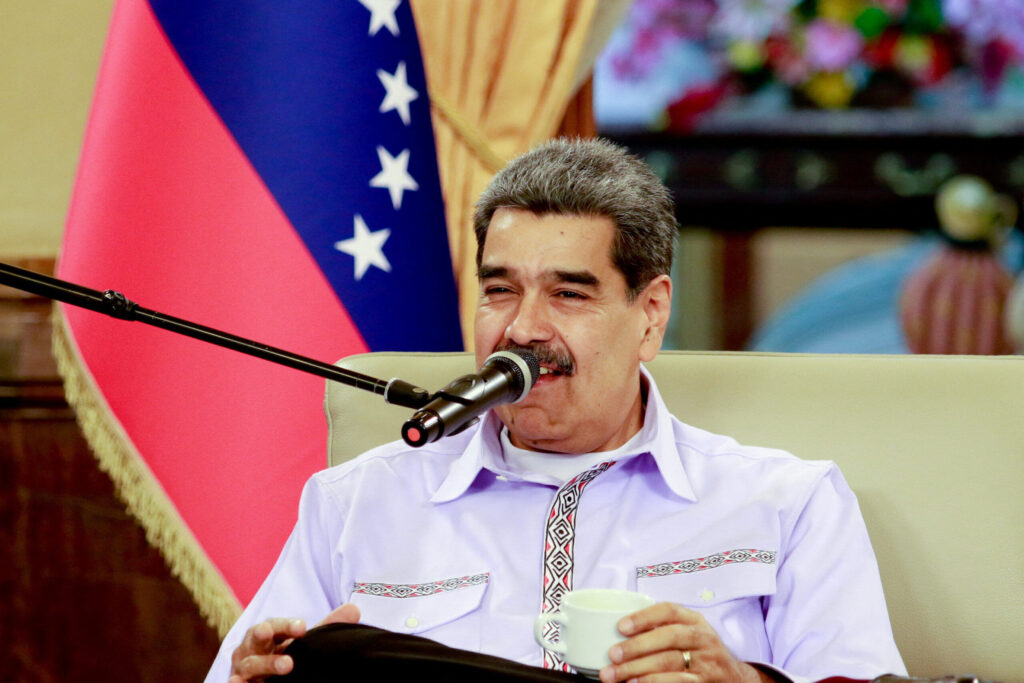
Maduro capture brings surprise, hope to Venezuelan community in Denver
Nico Brambila
nico-brambila@denvergazette.com
Updated 13 hours ago
The announcement that U.S. military personnel arrested Venezuelan President Nicolás Maduro and took him to the United States sent a shockwave through Denver’s Venezuelan community Saturday. Jimmy, an asylum seeker who came to Denver last year, said his phone blew...

Nico Brambila
Reporter
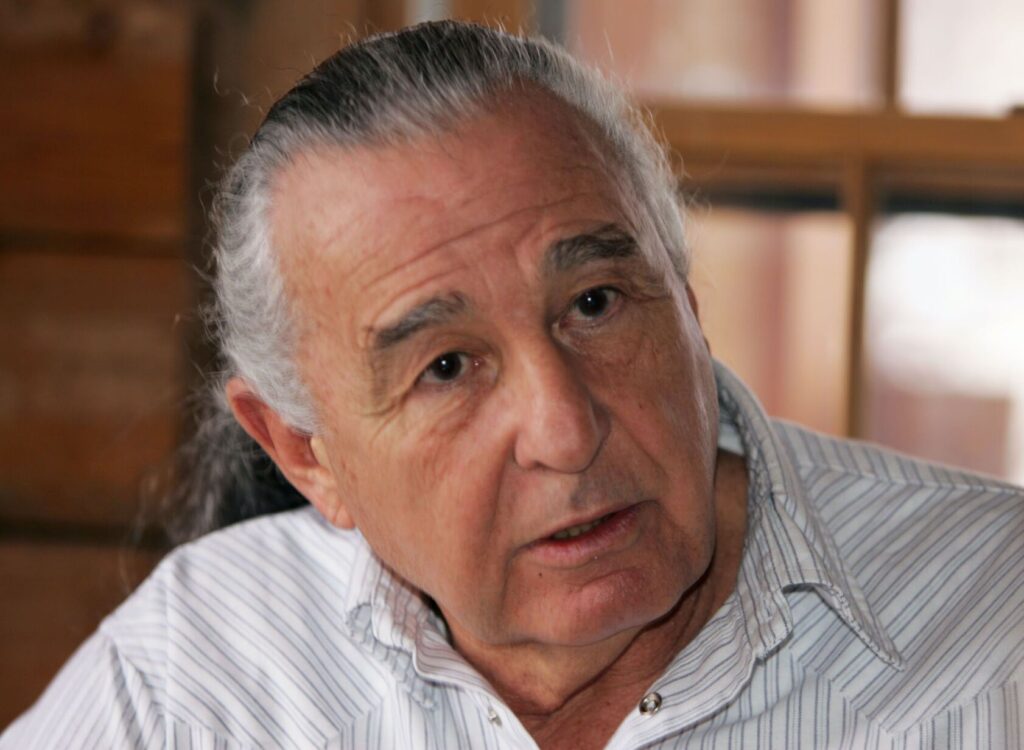
Ben Nighthorse Campbell was a Colorado original | Vince Bzdek
Vince Bzdek
vince-bzdek@denvergazette.com
Updated 22 hours ago
One day in 1982, Ben Nighthorse Campbell walked into a political caucus in Colorado to kill time after thunderstorms grounded his flight. He ended up volunteering to run for office that day and wound up serving two terms as a...
Vince Bzdek
Reporter
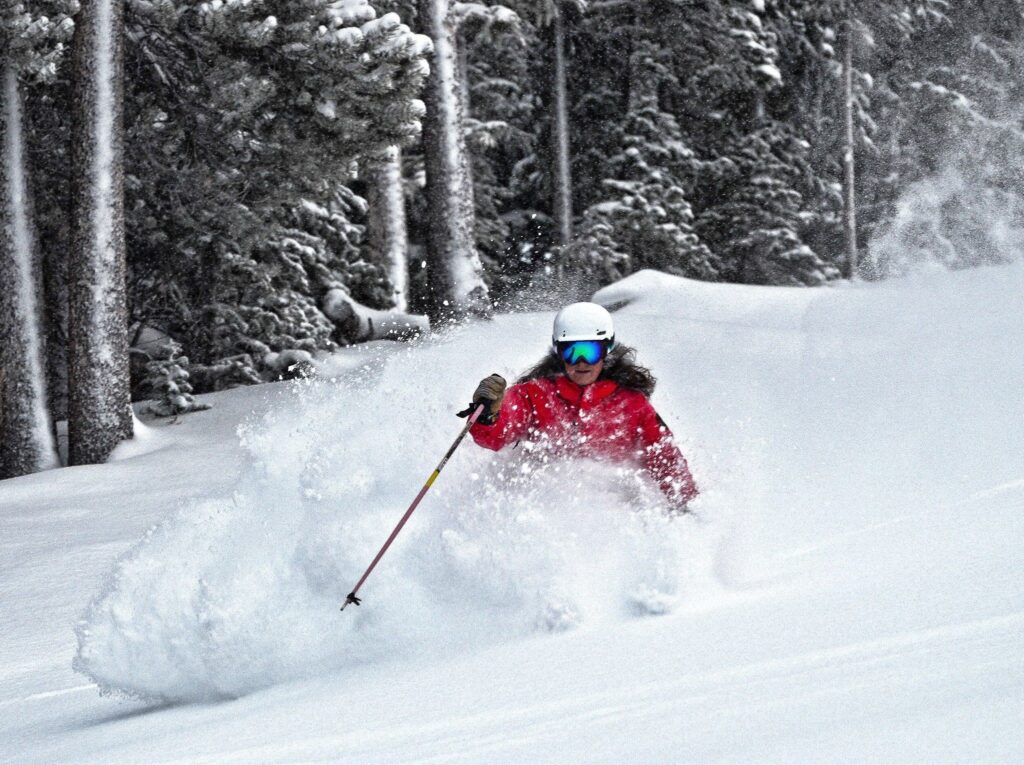
Winter Park Resort sets opening date for Mary Jane side, 50th birthday party to ensue
Jonathan Ingraham
jonathan.ingraham@denvergazette.com
Updated 19 hours ago
The wait is over Colorado skiers and riders, Winter Park Resort in Grand County is opening the Mary Jane side of the ski area for the season on Friday, Jan. 9. The timing is perfect as the ski area is...

Jonathan Ingraham
Reporter
PREV
PREVIOUS
Leadership in the age of artificial intelligence | Tom Cronin
The Wall Street Journal recently ran a feature story asking about when and if AI humanoid robots will be able to be chief executives and manage companies. AI evangelists Sam Altman of Open AI and Elon Musk of Tesla and xAI say AI robots already do remarkable engineering and logistical activities, and we can expect […]

Tomasson's scouting report: Broncos vs. Jaguars
The Denver Gazette’s Chris Tomasson gives his scouting report for Sunday’s game between the Broncos (12-2) and Jaguars (10-4) at Empower Field at Mile High. Offense Broncos quarterback Bo Nix is coming off perhaps the best game of his second season, having thrown for 302 yards and four touchdowns in last Sunday’s 34-26 win over […]