








No TABOR refunds this year, as Colorado Gov. Polis warns of tight fiscal outlook
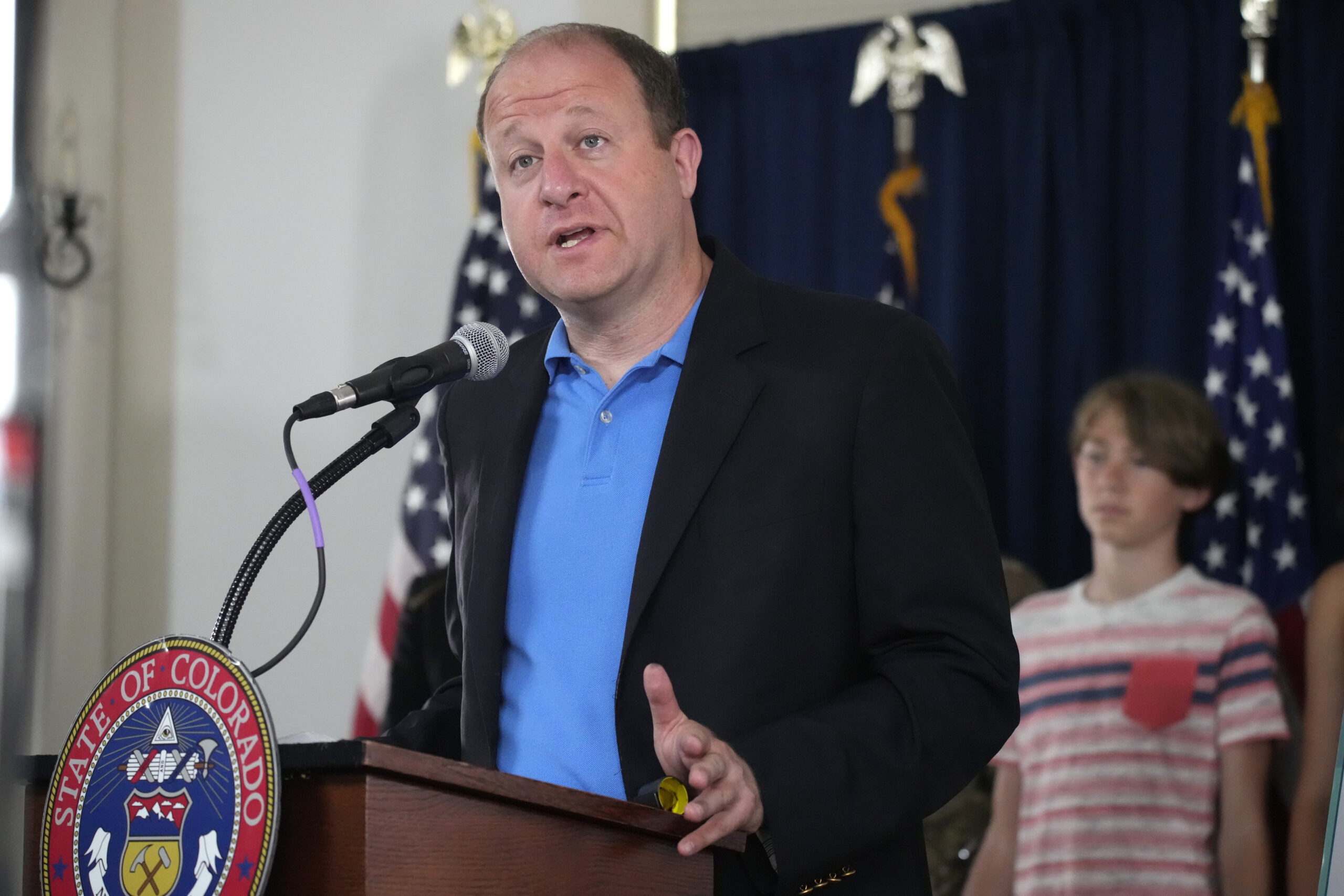
Gov. Jared Polis on Friday submitted revised budget requests for the next two fiscal years, calling for new public safety spending, changes to Medicaid growth, and renewed efforts to privatize Pinnacol Assurance.
Notably, the governor said Colorado residents won’t get refunds from the Taxpayer’s Bill of Rights (TABOR).
“We are focused on protecting the issues that Coloradans care most about – education, access to health care and safety — while delivering a balanced budget for Colorado,” he said. “In this difficult budget environment, we are doing everything we can to deliver the best possible results for Colorado and know that the Joint Budget Committee will have challenging decisions to make in the months ahead. We look forward to working with them and the rest of the General Assembly.”
The new requests totaled $48.6 billion, with $18.2 billion in General Funds for fiscal year 2025-26, and $50.5 billion for 2026-2027.
Polis said the state will be about $308 million below the TABOR cap, meaning Coloradans will not receive a refund in 2026.
However, the governor’s office expects General Fund revenue to grow in the 2026-27 fiscal year, resulting in a TABOR surplus of $208.2 million.
Polis said the state is expected to bring in approximately $87 million less, blaming the Congressional budget bill known as H.R. 1 for that predicament.
Polis again asked for a 13% budget reserve, consistent with his budget request late 2025.
“This is a prudent proposal that reflects the current fiscal environment and
the negative impacts that H.R. 1 imposes on Colorado while maintaining a budget reserve that will help insulate us from a heightened recession risk,” he said.
Democrats have argued that Colorado’s fiscal woes are the result of the actions of Republicans in Congress and the Trump administration. Republicans have countered that Colorado’s fiscal challenges are the result of years of incessant government growth and overspending under the Democratic majority.
Will Colorado privatize Pinnacol Assurance?
Since the last session, Polis has floated the idea of privatizing Pinnacol Assurance, a workers’ compensation company that acts as a political subdivision of the state. The governor said disaffiliating Pinnacol from the state would allow Colorado to continue to fund its senior property tax reduction and extend the portable Homestead Property Tax exemption, which is set to expire next year.
Under Polis’ proposal, Pinnacol would pay the state about $400 million for fiscal year 2026-27. It would also have to buy out its share of the Public Employees’ Retirement Association (PERA) pension plan covering its employees.
“Without revenues derived from a disaffiliation of Pinnacol, the state would likely be unable to maintain the Homestead exemption next fiscal year, when the state projects no TABOR surplus in the current fiscal year,” Polis said.
Members of the Joint Budget Committee have expressed skepticism about the deal, with only one member — Sen. Judy Amabile, D-Boulder — voicing her support outright during a meeting last month.
$34 million to address competency issues
Polis also requested additional funding to address the lack of appropriate placement for individuals who have been found incompetent to stand trial and are unlikely to be restored to competency.
In recent months, a state policy governing people found incompetent to proceed to trial has come under scrutiny after several cases in which individuals accused of violent crimes were released back into the community following such determinations. Some have reoffended after their release.
In November, Polis announced the state will invest up to $12 million to fund additional commitment beds for individuals declared incompetent to proceed to trial.
“When individuals are found incompetent to proceed and pose a danger to themselves or others, they should not be released to the street,” he said. “They need secure commitment, including services and supports in order to protect public safety.”
The governor is requesting approximately $160 million and money for another 151.8 full-time employees over the next three fiscal years to fund community-based supervision resources and opportunities for individuals found incompetent to proceed to trial.
“My administration is committed to working with the General Assembly and stakeholders to make progress to strengthen our competency system so that individuals have better assessments of restorability and the support they need to thrive without falling through the cracks,” Polis said.
Slowing the growth of Medicaid spending
In his October budget request, Polis noted that the rate of growth in state Medicaid spending over the last decade has exceeded both the state’s revenue growth rate and the TABOR cap.
“This threatens the long-term sustainability of Medicaid, jeopardizes our ability to continue to fund all eligible Coloradans, and has serious and unacceptable consequences for the entire state budget,” Polis said.
While his proposal still results in a 5.6% year-over-year increase in General Fund spending on Medicaid, it’s about half of what is currently projected for FY 2026-27, Polis said.
Medicaid accounts for about one-third of total General Fund spending, Polis said, which means it’s one area where the state can reduce spending without seeing extremely significant impacts.
“We would need to reduce operating expenditures across all other parts of state government by 23 percent in order to achieve the same level of
Medicaid reductions we are proposing in our budget,” he said. “This would also have severe negative consequences for Colorado human services and public safety, jeopardize our commitments to K-12 education, and require sweeping legislative changes to eliminate programs and responsibilities across multiple departments.”
To slow Medicaid spending growth, Polis proposed cracking down on duplicate or fraudulent claims, increasing federal match rates for certain services, and reducing costs for the indirect medical education adjustment, which is an extra payment Medicare provides to teaching hospitals.
Read the full request here.


Former Colorado wildlife director heads to Wyoming
Marianne Goodland
marianne-goodland@denvergazette.com
Updated 19 hours ago
Jeff Davis, the former director of Colorado Parks and Wildlife who oversaw the introduction of wolves in Colorado, is headed to Wyoming, where he will take on a new job as deputy director for that state’s game and fish agency....

Marianne Goodland
Reporter
Former Rep. Rose Pugliese vies for Mesa County Treasurer
Marianne Goodland
marianne-goodland@denvergazette.com
Updated 6 hours ago
Former Republican Leader Rose Pugliese has jumped into the 2026 primary for Mesa County Treasurer. Pugliese moved to Grand Junction after resigning from the Colorado House in September, citing a “collapse of integrity” within the Colorado House. She previously served...
Marianne Goodland
Reporter

Primary challenges surge as Colorado lawmakers head into 2026 election cycle
Marianne Goodland
marianne-goodland@denvergazette.com
Updated 5 hours ago
As the 2026 election cycle begins, an unusually large number of Colorado lawmakers — many appointed through the vacancy process — are facing primary challenges that reflect deepening divisions within both major parties. But it isn’t only open seats that...
Marianne Goodland
Reporter

Trump freezes child care funding for Colorado, 3 other states
Thelma Grimes
thelma.grimes@coloradopolitics.com
Updated 1 day ago
Colorado was swept up in a $10 billion federal child care funding freeze announced on Monday by the Trump administration, a move state officials said they learned about through media reports. The Trump administration said it would freeze child care...

Thelma Grimes
Reporter
U.S. House weighs override of Trump veto on Colorado water project
Marianne Goodland
marianne-goodland@denvergazette.com
Updated 23 hours ago
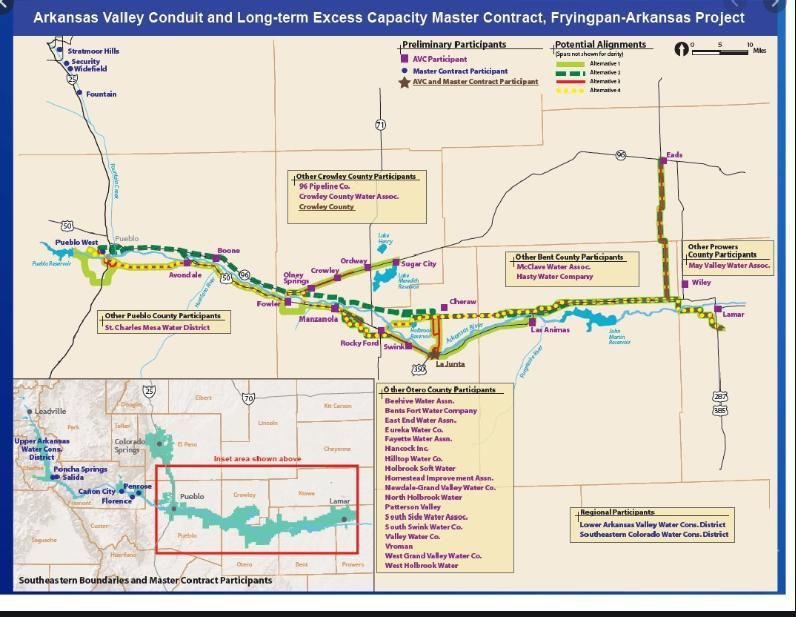
The U.S. House is expected to consider on Thursday whether to override President Donald Trump’s veto of a bill aimed at helping finance a water pipeline in Colorado. Should it happen, it would be the first attempt at an override...
Marianne Goodland
Reporter
Colorado legislators eye ramping up penalties for child trafficking
Marianne Goodland
marianne-goodland@denvergazette.com
Updated 2 days ago
Colorado legislators on Monday announced a proposal to ramp up the penalties for human trafficking of children. The proposal, which received the backing of Democratic and Republican leaders in the House, will address one of the many problems when dealing...
Marianne Goodland
Reporter
Colorado Republican Mark Baisley exits gubernatorial race, launches US Senate campaign
Ernest Luning
ernest-luning@denvergazette.com
Updated 2 days ago
Republican state Sen. Mark Baisley on Monday withdrew from the Colorado gubernatorial race and announced his candidacy for the U.S. Senate seat held by Democrat John Hickenlooper. His departure leaves 20 Republicans running for the office held by term-limited Democratic...

Ernest Luning
Reporter

Are we all post-liberals now? | Luige del Puerto
Luige Del Puerto
luige.delpuerto@gazette.com
Updated 4 days ago
Three decades after the end of World War II, a Japanese soldier finally returned to his home country after holding out in the jungles of the Philippines. Cut off from his unit, Hiroo Onoda had no way of knowing that...

Luige Del Puerto
Reporter

Colorado’s ski bums on strike vs. ‘Big Ski’ | CALDARA
Jon Caldara
jon-caldara@denvergazette.com
Updated 2 days ago
Hopefully, by the time you read this, the strike up at Telluride Ski Resort is over, ski patrollers are again joyfully sliding down mountains and getting paid for it, and tourists are once again being overcharged for… well, everything. But...

Jon Caldara
Reporter

U.S. Fish & Wildlife threatens to terminate Colorado’s authority to manage wolves
Marianne Goodland
marianne-goodland@denvergazette.com
Updated 10 hours ago
With no apparent plan in place to bring in more wolves to Colorado for 2026, Colorado Parks and Wildlife may have an even bigger problem. A Dec. 18 letter from Brian Nesvik, director of the U.S. Fish & Wildlife Service...
Marianne Goodland
Reporter
PREV
PREVIOUS

U.S. pushes oil majors to invest big in Venezuela
White House and State Department officials have told U.S. oil executives in recent weeks that they would need to return to Venezuela quickly and invest significant capital in the country to revive the damaged oil industry if they wanted compensation for assets expropriated by Venezuela two decades ago, according to two people familiar with the outreach. […]

U.S. factory sector slumped to 14-month low as 2025 ended, ISM says
U.S. manufacturing activity contracted more than expected in December, extending its slump to 10 straight months as new orders fell again and input costs kept grinding higher as the sector continues to bear the imprint of President Donald Trump’s import tariffs. The Institute for Supply Management said Monday its manufacturing PMI dropped to 47.9 in […]