







U.S. House weighs override of Trump veto on Colorado water project
The U.S. House is expected to consider on Thursday whether to override President Donald Trump’s veto of a bill aimed at helping finance a water pipeline in Colorado.
Should it happen, it would be the first attempt at an override in Trump’s second term.
Trump vetoed H.R. 131 on Dec. 30, saying the project is a “taxpayer handout” and is expensive and unreliable. He also said Colorado residents — not federal taxpayers – should pay for the Arkansas Valley Conduit.
Some have accused Trump of playing politics with his veto, which came on the heels of his administration’s decisions to close the National Center for Atmospheric Research in Boulder, the cancellation of hundreds of millions in energy grants, and, on Tuesday, the freezing of child care funding.
Some also suggested Trump’s actions are tied to his efforts to free former Mesa County Clerk Tina Peters, who was sentenced to nine years in prison for tampering with election equipment after the 2020 presidential election.
Trump issued a pardon to Peters, but experts said it has no legal effect because a president cannot pardon someone convicted on state charges.
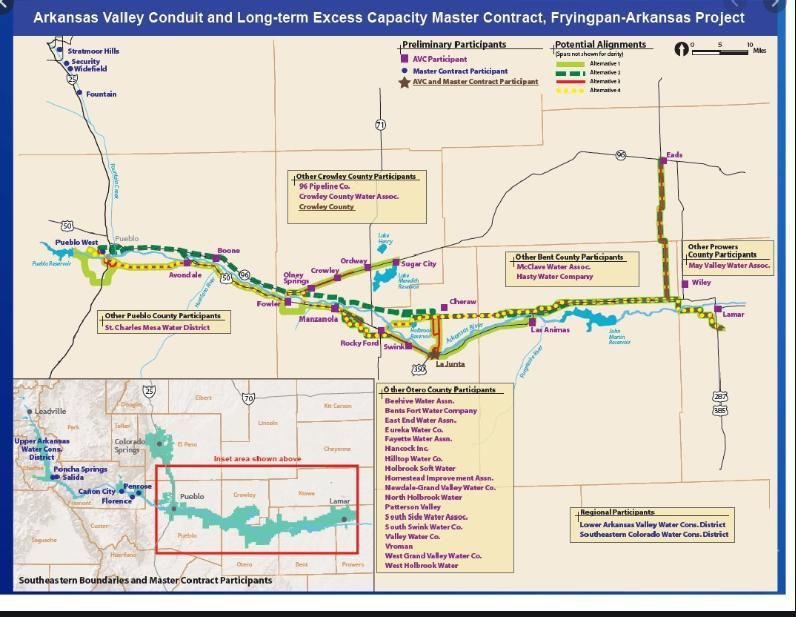
The Arkansas Valley Conduit is a 130-mile pipeline that has been under construction for the past two years. The pipeline, which will run from Pueblo Reservoir to Lamar, would provide clean drinking water to 39 communities in the lower Arkansas Valley.
H.R. 131, sponsored by U.S. Rep. Lauren Boebert, R-Windsor, whose 3rd Congressional District includes a substantial portion of the project, extends the repayment on loans to local water providers from 50 years to 100 years. It would also waive the interest on those loans.
Under current federal law, local water providers and the state are responsible for 35% of the cost. The project’s total cost is estimated at $1.39 billion, more than double the estimate just a few years ago.
The state has already contributed $100 million in grants and loans, and the federal government has invested about $500 million since 2010. Then-President John F. Kennedy approved the project in 1962 but was not funded until 2010, when the first federal dollars were awarded.
Boebert called out the president for vetoing the legislation, vowing she would push U.S. House Speaker Mike Johnson to call for an override vote last week.
In his veto message, Trump said the project was not built after its approval in 1962 because it was economically “unviable.”
He said H.R. 131 “would continue the failed policies of the past by forcing Federal taxpayers to bear even more of the massive costs of a local water project — a local water project that, as initially conceived, was supposed to be paid for by the localities using it.”
Local water providers are still on the hook for more than $450 million in project costs, he said.
H.R. 131 passed by voice vote in both the U.S. House and Senate, indicating strong support. Politico reported on Tuesday that the House will likely override the president’s veto, plus on another measure tied to the Miccosukee Tribe of Florida, both sponsored by Republicans.
The bigger question is whether the U.S. Senate will do the same. That requires 67 out of 100 votes.
“It’s Southeast Colorado today — your district tomorrow,” U.S. Sen. John Hickenlooper, D-Denver, earlier said on X. “If any member from either party wants actually to deliver for their constituents, they’ll stand up and send a clear message. Congress should overturn Trump’s veto on our unanimous, bipartisan bill to finish the Arkansas Valley Conduit.”
Trump lost one veto override in his first term, on the National Defense Authorization Act for fiscal year 2021.

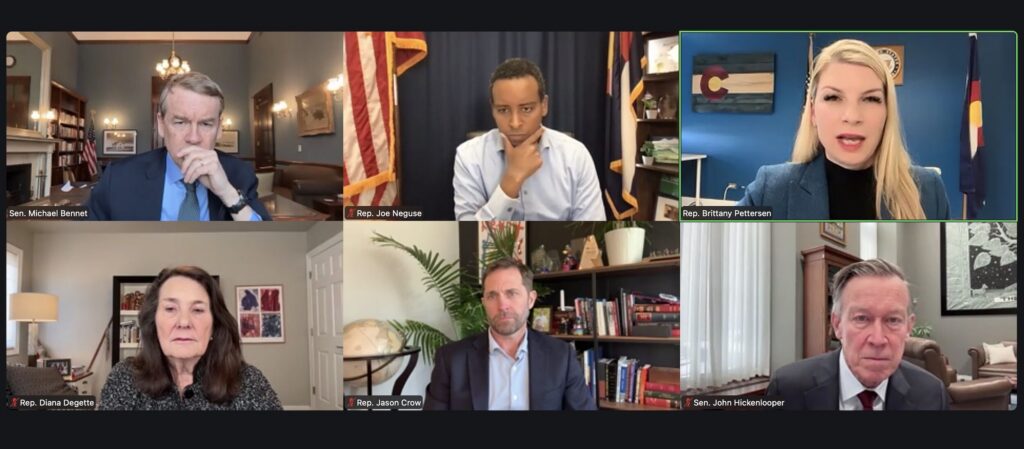
Colorado’s Democratic delegation calls for Noem’s removal, ICE overhaul
Ernest Luning
ernest-luning@denvergazette.com
Updated 7 hours ago
The Democratic members of Colorado’s congressional delegation on Tuesday called for Department of Homeland Security Secretary Kristi Noem to resign or be impeached in the wake of the second fatal shooting by federal immigration agents in Minnesota this month amid...

Ernest Luning
Reporter

Greenland is now Colorado’s problem. And that’s a good thing. | Vince Bzdek
Vince Bzdek
vince-bzdek@denvergazette.com
Updated 1 day ago
The conclusion to the dizzying odyssey over Greenland this week reminded me a little of the ending of the “Wizard of Oz.” If you recall, Dorothy, the Scarecrow, the Lion and the Tin Man finish a great and frightful quest...

Vince Bzdek
Reporter

Colorado Democrat John Hickenlooper raises over $1.1 million in 4th quarter for reelection bid
Ernest Luning
ernest-luning@denvergazette.com
Updated 6 days ago
U.S. Sen. John Hickenlooper’s reelection campaign raised over $1.1 million in the fourth quarter of 2025 and finished the year with more than $3.8 million in the bank, the Colorado Democrat’s campaign said Thursday. The fundraising haul brings Hickenlooper’s total...
Ernest Luning
Reporter

Colorado farmers warn U.S. Sen. John Hickenlooper tariffs and research cuts endanger agriculture
Marianne Goodland
marianne-goodland@denvergazette.com
Updated 6 days ago
Northern Colorado farmers told U.S. Sen. John Hickenlooper this week that tariffs and President Donald Trump’s decision to import $40 billion worth of beef from Argentina have hurt Colorado’s agricultural industry. But the administration’s cuts to scientific research are almost...
Marianne Goodland
Reporter

Democrats Michael Bennet, Phil Weiser and their backers bank $9 million for Colorado gubernatorial race
Ernest Luning
ernest-luning@denvergazette.com
Updated 7 days ago
Democratic gubernatorial candidates U.S. Sen. Michael Bennet and Attorney General Phil Weiser, and the campaign committees that support them, entered the election year with almost $9 million on hand, as the race to succeed term-limited Colorado Gov. Jared Polis heats...
Ernest Luning
Reporter
Colorado oilmen may play key role in Trump’s Venezuelan oil takeover plan
Vince Bzdek
vince-bzdek@denvergazette.com
Updated 2 weeks ago
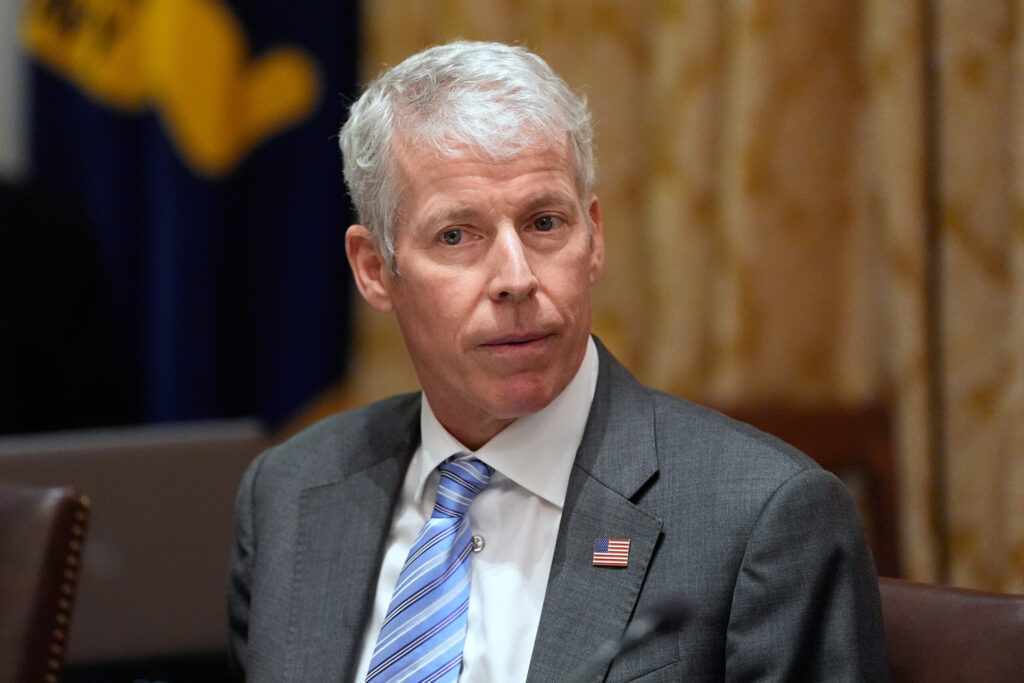
When President Donald Trump summoned oil executives to the White House recently to push for major investment in Venezuela, an interesting sprinkling of smaller independent companies from Denver was invited along with the big names of American oil. One of...
Vince Bzdek
Reporter

Impeachment articles filed against Kristi Noem with backing from Colorado Democrats DeGette and Pettersen
Rachel Schilke, Washington Examiner
rachel.schilke.washington.examiner@gazetteedit.wpenginepowered.com
Updated 2 weeks ago
House Democrats introduced three articles of impeachment against Homeland Security Secretary Kristi Noem on Wednesday, coming after an Immigration and Customs Enforcement-involved shooting in Minneapolis and DHS operations across the country. Signing on to the proposed articles of impeachment were...

Rachel Schilke, Washington Examiner
Reporter

U.S. Sen. Michael Bennet, Colorado Attorney General Phil Weiser clash at Democratic gubernatorial forum
Ernest Luning
ernest-luning@denvergazette.com
Updated 2 weeks ago
Things got a little chippy Saturday at a union hall north of Denver, as Democratic gubernatorial candidates U.S. Sen. Michael Bennet and Colorado Attorney General Phil Weiser sparred over the effectiveness of their respective responses to President Donald Trump’s second...
Ernest Luning
Reporter

Frozen funds, vetoes and lawsuits: Why Colorado says it’s in Trump’s crosshairs
Thelma Grimes
thelma.grimes@coloradopolitics.com
Updated 2 weeks ago
Colorado Democrats have accused President Donald Trump of deliberately targeting their state, arguing his administration is using federal powers to punish it for its policies and resistance. But whether Colorado is being singled out — and why — depends largely...

Thelma Grimes
Reporter
Vince Bzdek: Coloradans are fed up with the high price of cars
Vince Bzdek
vince-bzdek@denvergazette.com
Updated 3 weeks ago
Car buyers in Colorado – and America – are fed up. Cars are too damn expensive. The average price of a new car broke the $50,000 barrier last fall, according to Kelley Blue Book stats. The Wall Street Journal recently...
Vince Bzdek
Reporter
PREV
PREVIOUS

1 dead, highway closed after head-on crash near Silverthorne
One person died and U.S. Highway 9 is closed Tuesday morning after a head-on crash between two cars about 13 miles northwest of Silverthorne. The crash, which took place just before 8 a.m. Tuesday, was between a Dodge Dakota and a Ford F350, according to a news release from Colorado State Patrol. One occupant of […]

Trump freezes child care funding for Colorado, 3 other states
Colorado was swept up in a $10 billion federal child care funding freeze announced on Monday by the Trump administration, a move state officials said they learned about through media reports. The Trump administration said it would freeze child care funding for four states, including Colorado, citing reports of widespread fraud at child care centers […]