







Colorado ‘un santuario’ for drug activity, DEA chief says

Colorado’s “sanctuary” laws, notably its prohibition against cooperating with federal authorities, are having a “chilling effect” on law enforcement’s ability to go after drug cartels operating in the state, an official of the U.S. Drug Enforcement Agency said.
That situation sits atop Colorado’s “pervasive drug culture stemming back to the marijuana initiation,” said David Olesky, the special agent in charge of the Drug Enforcement Administration’s (DEA) Rocky Mountain Field Division.
That “drug culture” is sustained by how Colorado and its political subdivisions treat criminality, he said, adding he is not making a “political” statement — just describing the challenges his agents face on the ground.
Of particular worry, he said, is that Denver is “on the verge of breaking” drug activity records, while the rest of the country is headed in the other direction.
He noted how some have cited Colorado’s transportation corridors — I-25 and I-70 — as serving as main arteries for drug activity.
But these highways have existed for a long time, he said.
“That didn’t change,” he said.
What changed, he said, is Colorado’s approach toward crime and illegal immigration.
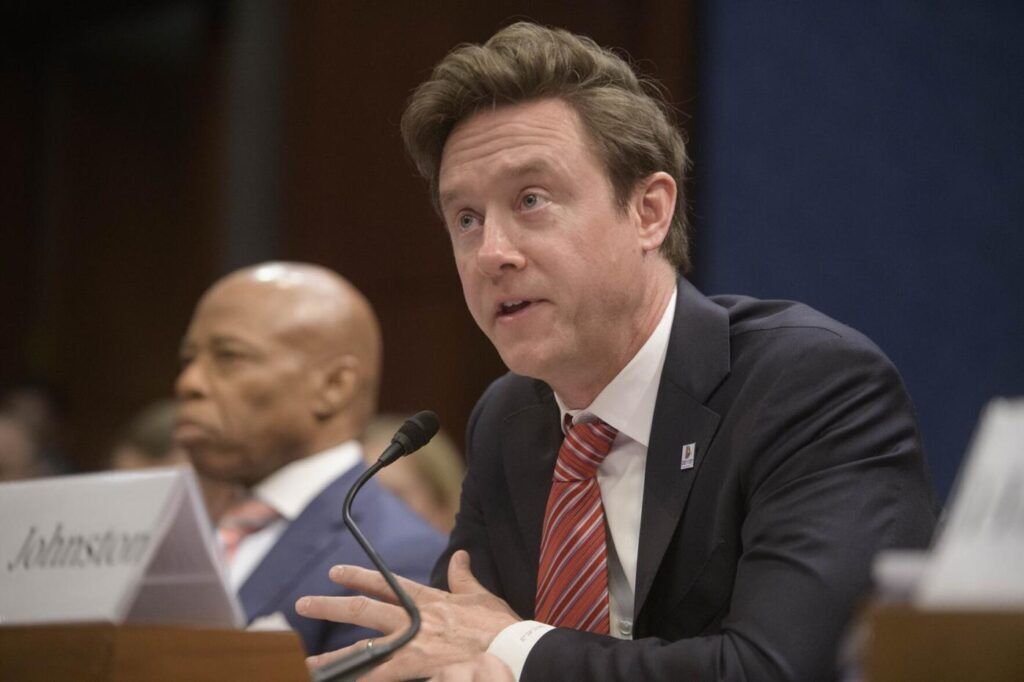
“(Cartel members) said Colorado es un santuario … Colorado is a sanctuary,” said David Olesky, the special agent in charge at the Drug Enforcement Administration’s (DEA) Rocky Mountain Field Division. “They know Denver es un santuario. If they get arrested by the feds here, they know they will go. But if they get arrested by the state, their immigration status means nothing.”
The state’s drug “sanctuary” label comes amid rising tensions between local and federal law enforcement in Colorado, especially after the state filed a lawsuit against a Mesa County sheriff’s department deputy for providing a woman’s personal information to federal officials during a traffic stop.
The woman arrested, a University of Utah student, was born in Brazil, came to the U.S. under a tourist visa when she was 7, and has been living in Utah for 12 years. She overstayed her visa about a decade ago and has a pending asylum case.
“The state law says that they cannot collaborate on immigration,” Olesky said. “That case that happened in southwest Colorado has caused a chilling effect, where they are fearful they might get prosecuted, even if they have the best of intent.”
The lawsuit against the Mesa County deputy — filed by Colorado Attorney General Phil Weiser — pointed to the Colorado law that limits the authority of state agencies and employees to cooperate with federal immigration officials. Weiser earlier said he is focused on preventing the deputy sheriff from aiding federal immigration enforcement rather than on a monetary settlement.
On May 23, Gov. Jared Polis signed into law Senate Bill 25-276, which, at its core, reemphasized existing state law that precludes local law enforcers from detaining an individual based on an “immigration detainer.”
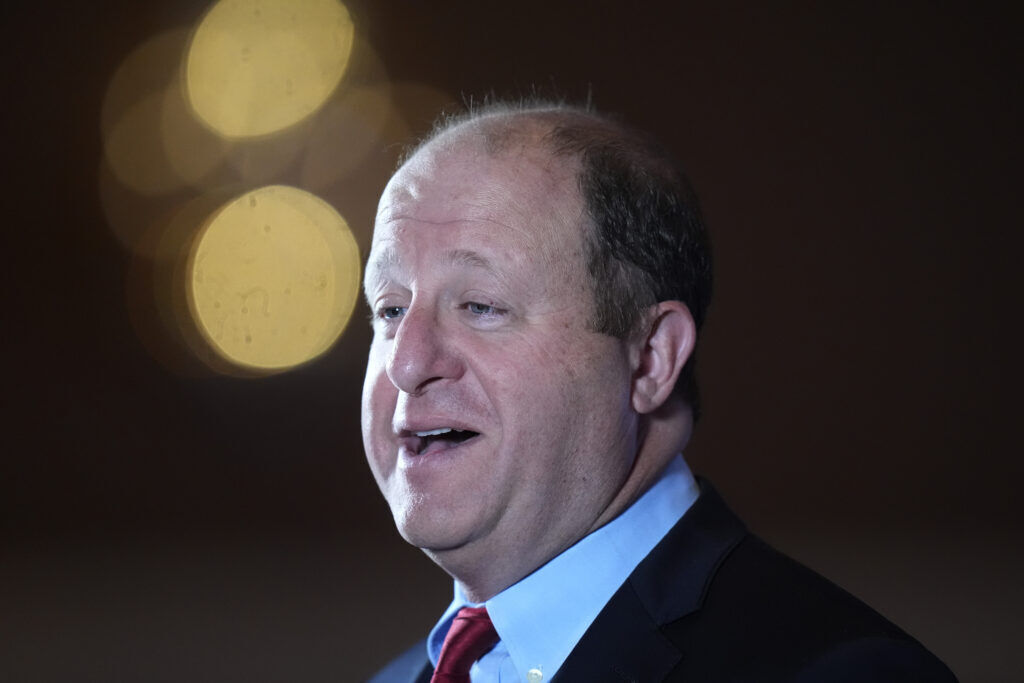
State law already prohibits an employee of a state agency from disclosing any identifying information of a person to assist with immigration enforcement. The new legislation extended that to employees of all political subdivisions, such as “home rule” counties and municipalities. The law includes an exemption for criminal investigations. A traffic infraction is a civil case in Colorado.
Backers of the non-cooperation law have long argued that Colorado’s local police officers should not be commandeered to conduct the work of federal immigration authorities. Others have raised worries about violating due process rights for immigrants living illegally in the country who might be swept up in the Trump administration’s illegal immigration crackdown.
Critics of the “sanctuary” statutes, meanwhile, countered that they made it more difficult for local law enforcement to work with federal agents to interdict crime, and that, ultimately, negatively affects residents, whether they are in the country illegally or not.
Polis has long insisted Colorado is not a “sanctuary” state. He has said he is “frustrated” by the label, which is typically applied to cities and states that either discourage or actively prevent cooperation by local agencies with immigration agents.
“The governor continues to be frustrated by this mistaken and incorrect label and the lack of transparency from the federal administration on this and many other items,” his office said back in August, when U.S. Attorney General Pam Bondi and federal officials ramped up efforts against states and cities with “sanctuary” policies.
“In Colorado, we are improving public safety, apprehending dangerous criminals, cooperating with federal law enforcement on criminal investigations, and keeping our communities safe,” his office added. “The governor encourages the federal administration — and Congress — to focus on actually securing the border, decreasing violent crime, increasing transparency, and passing real immigration reform.”
Over the last several months, the federal administration and the state of Colorado have engaged in a series of lawsuits and countersuits over various issues, with the latter’s sanctuary policies serving as a backdrop for much of the tension.
Olesky said local law enforcers are now hesitant to even ask for standard information, such as the name and date of birth of those possibly affiliated with drug activity, out of fear that the information could later be used against them by their own state.
“Local and state authorities are fearful that the state is going to come back to them — that the passing of their information, even though it originated in drugs, is going to cause civil liability, where they can get sued up to $50,000,” Olesky said.
While new state laws in recent years have made it increasingly difficult for local and federal collaboration on drug-related offenses, the state has been restricting that ability, in some form, for nearly half a decade, Olesky said.
The local DEA chief said people know that if they get arrested for possession of a large quantity of fentanyl and booked in the city of Denver, “they will get released on a PR bond because of a philosophy that says drugs is a victimless crime.”
“This is not going out, trying to again politicize anything. If you want to know why Colorado, the best person to explain it is the cartels themselves. It’s not me,” he said.
“I’m not surprised with the seizures in general, but about breaking records at this quantity,” Olesky added. “The cartels continue to come here, and year over year, we’re breaking records.”
Supporters of lessening penalties for crimes, including for drug offenses, have perennially argued that the tough-on-crime approach has failed to solve criminality, while only increasing incarceration costs. The opposition to that approach has countered that this mindset has made Colorado less safe, with grave repercussions for businesses and residents alike.
Federal authorities earlier announced the seizure of more than one million fentanyl pills during a four-state operation in October.
Between Colorado, Utah, Montana and Wyoming, officials seized over 1.05 million individual pills, over 3.5 kilograms of fentanyl powder — enough to yield more than 1.7 million additional pills — and over $500,000 in U.S. dollars, according to a news release from the Rocky Mountain Field Division of the U.S. Drug Enforcement Agency.
Members of the Mexican Sinaloa and Jalisco cartels, both designated as foreign terrorist organizations, were involved in the supply chain network that brought the pills to the Rocky Mountain region, according to the DEA.
The announcement followed a recent string of drug busts by the agency. In mid-November, the RMFD, along with the Colorado Bureau of Investigation and the Douglas County Sheriff’s Office, announced the seizure of nearly 2 million fake fentanyl pills from an abandoned storage unit.
A week later, the agency announced it had seized more than 1,000 pounds of methamphetamine in a string of operations over 11 months, including a state record 733 pounds from an April bust. Members of the same cartels involved in the October fentanyl operation were also involved in the methamphetamine trafficking network, the authorities said.
The RMFD October operation was part of a nationwide effort to crack down on fentanyl trafficking and distribution networks, according to the DEA. As of early December, DEA officials have seized more than 45 million fentanyl pills and over 9,000 pounds of fentanyl powder during similar operations.
Several local and state law enforcement agencies asked by The Denver Gazette to comment on the issue either declined to or did not reply.
Reporters Michael Braithwaite and Luige del Puerto contributed to this article.


‘Soul Power’: Long live the ABA
John Moore
john.moore@denvergazette.com
Updated 2 hours ago
Fifty years later, new documentary series takes nostalgic look at how the rebel American Basketball Association changed the NBA – and the world Three-point ABA trivia question: What do rapper-actor Common and Grammy Award-winning singer India.Arie have in common? Answer: Their...

John Moore
Reporter

Denver archdiocese announces new archbishop James Golka
Michael Braithwaite
michael.braithwaite@gazette.com
Updated 5 hours ago
The Denver archdiocese announced the appointment of its next archbishop Saturday morning. James Golka, 59, who received the appointment from Pope Leo XIV, will make a move up from Colorado Springs, where he has been serving as the third bishop...

Michael Braithwaite
Reporter

PHOTOS: Goldens in Golden
Stephen Swofford
stephen-swofford@denvergazette.com
Updated 9 hours ago

Stephen Swofford
Reporter
Deaths by suicide decrease at Royal Gorge Bridge following safety upgrades
Debbie Kelley
debbie-kelley@denvergazette.com
Updated 8 hours ago
CAÑON CITY – Jay Valusek stared at “that damned railing” for hours that bled into days after his beloved 28-year-old daughter jumped in 2018 from atop the metal edge of the Royal Gorge Bridge to her death 956 feet below....

Debbie Kelley
Reporter

9 great Colorado story lines to follow in the Olympics | Vince Bzdek
Vince Bzdek
vince-bzdek@denvergazette.com
Updated 8 hours ago
The Broncos may not have quite made it to the Super Bowl, but you know what, there’s another Super Bowl this weekend for a certain Colorado team. Boasting 33 athletes plus one alternate, Colorado has the most athletes of any...

Vince Bzdek
Reporter

Rich Cowden abruptly exits top job at Aurora Fox
John Moore
john.moore@denvergazette.com
Updated 1 day ago
Executive producer of city-owned theater organization says ‘it was clear it was in the best interest of the theater.’ Rich Cowden has abruptly left his position as executive producer of the city-owned Aurora Fox Arts Center after just 2½ years....
John Moore
Reporter

Aurora City Council to discuss tobacco retail license to address youth access
Kyla Pearce
kyla-pearce@denvergazette.com
Updated 1 day ago
On Monday night, Aurora City Council members will discuss a possible retail license that would limit and impose certain requirements on businesses that sell tobacco and psychoactive products. The intent of the license is to prevent youth access to such...

Kyla Pearce
Reporter
Record-low snowpack persists in Colorado, but two waves of snow should hit in upcoming days
Spencer McKee
spencer@outtherecolorado.com
Updated 1 day ago
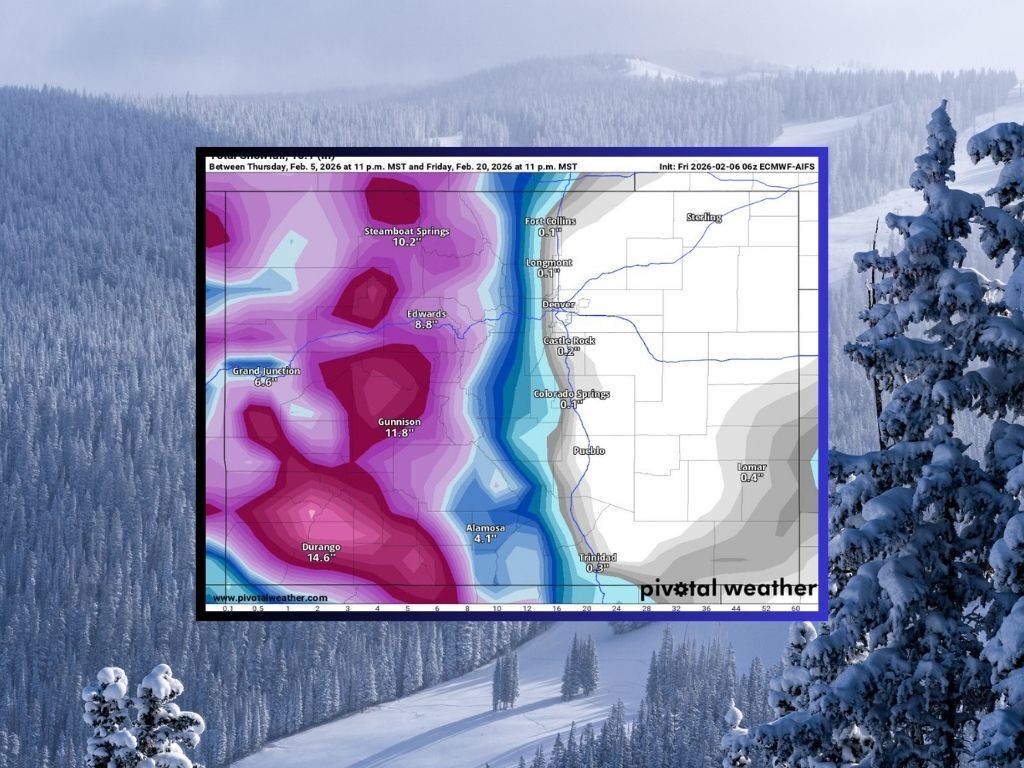
Colorado’s snowpack is the lowest it has ever been on Feb. 6 since tracking started in 1987, setting a new record-low for the 25th day in a row. That said, skiers and snowboarders can look forward to two winter storms...

Spencer McKee
Reporter

Angi Inc. lays off 350 workers, though only a small portion of Denver HQ hit
Bernadette Berdychowski
bernadette.berdychowski@denvergazette.com
Updated 1 day ago
A major company based in Denver laid off about 350 workers last month, according to a filing with the U.S. Securities and Exchange Commission. Angi Inc. announced it cut its global staff to save on operating costs and optimize its...

Bernadette Berdychowski
Reporter

PUC approves scaled-back Xcel renewable push amid ratepayer cost worries
Scott Weiser
scott-weiser@denvergazette.com
Updated 1 day ago
The Colorado agency that regulates public utilities approved wind, solar and battery storage projects for the state’s largest energy provider under an expedited near-term procurement process at a recent meeting. The decision by the Public Utilities Commission allows Xcel Energy...

Scott Weiser
Reporter
PREV
PREVIOUS

Listening first: How Routt County’s new co-response team responds to mental health crises
When Routt County launched its new Mental Health Response Team last fall, co-response models themselves were not new to Colorado. Teams pairing law enforcement with clinicians have operated for years in Colorado Springs and across the Front Range. What is new, local leaders said, is how urgently the model has been needed in this corner […]

Man found shot dead near Westminster's Wolff Run Park, police seeking help
Police are asking Westminster residents for help after they found a man shot dead in a parking lot near Wolff Run Park Saturday morning. Officers responding to a welfare check in the 4700 block of West 76th Avenue around 7 a.m. Saturday found a man in his late 20s lying face down in a parking […]