







Ag industry needs real-world solutions
The Fair Labor Standards Act of 1938 sets federal standards for employees including minimum wage, child labor, and overtime. Agricultural workers have been largely exempt from the overtime requirements because during key portions of the growing season, there is a small window of time that requires more hours and more labor than the majority of the year.
When Colorado passed a misguided labor bill, SB21-087 or the Farm Worker’s Bill of Rights, in 2022 led by Sen. Jessie Danielson, ag employers became required to pay overtime for 48 hours per week. Ag employers explained that farming doesn’t operate on bankers’ hours and many of the migrant workers who follow the harvest would circumvent Colorado in order to work more hours and take more money home with them at season’s end. Now, a study from UC Berkeley indicates that regulated overtime standards for ag workers negatively impacts the workers it aims to protect.

California began lowering overtime thresholds in 2017 and now recognizes a 40-hour work week and an 8-hour day. Hawaii, Minnesota, Oregon, Washington, New York, Maryland, and Maine have similar overtime laws for ag workers. The UC Berkeley study by Alexandra Hill, assistant professor of cooperative extension in the Department of Agricultural and Resource Economics, found that, no surprise, earnings decrease. Agriculture is a business and it must pencil, forcing many employers to cut hours rather than pay overtime.
Her study also found that hours decreased more for documented versus undocumented workers, English speakers versus non-English speakers, and piece rate paid workers relative to hourly. The weekly working hours were reduced, earnings were reduced, and no more domestic jobs were created.
In California in 2021-22 after overtime regulations were in place, the average crop employee worked four fewer hours and earned $65 less each week than they would have without the overtime law. Only 28% of crop workers worked more than 45 hours per week and 52% of crop workers would have worked this without the law in place. Only 48% of workers earned more than $600 per week, whereas 68% would have earned this without the law in place.
Many of the crop workers value income more than additional leisure time and many workers reported seeking a second job in response to losing hours. The labor laws force employers to hire additional workers, invest in labor-saving technologies, or even switch their operations to less labor-intensive crops.
It’s important, too, to recognize that this does not include H-2A workers who make up a large percentage of crop workers. The H-2A program is complicated and expensive, but many ag employers who utilize it have long working relationships with individuals and groups of workers.
One of the major flaws of SB21-087 was remedied last year by removing the portion that was an egregious private property rights overstep. Previously, ag employers could not restrict access to service providers to visit employees. Service providers were loosely defined and the biosecurity and safety issues all culminated in Gov. Jared Polis signing a bill to fix this portion.
Even so, overtime requirements are not the solution, especially in an industry that is absolutely strapped for labor. It is also an industry that includes a plethora of jobs that can only be done by hand and can only be done under a time crunch. Peach harvest and packing, for example, is fast and furious and labor-intensive, but it’s only a few weeks long. There is no substitution for range workers, like the Peruvian sheep herders at work alongside the sheep in the forest and on the desert in Western Colorado. There is no substitution for a rancher sitting in his pickup watching a heifer calve and potentially intervening to save them both at 2 a.m. There’s also no substitute for a safe, abundant, and affordable food supply of real food.
The business of food production is a business with expenses and factors beyond the control of growers. But, at the end of the day, it is the business of filling tummies and feeding our neighbors and fueling the Americans doing hard things every day and it’s the thing that makes us a country able to feed and defend ourselves.
Real solutions and common sense are going to have to make an appearance in any bill that seeks to remedy this challenge facing agriculture.
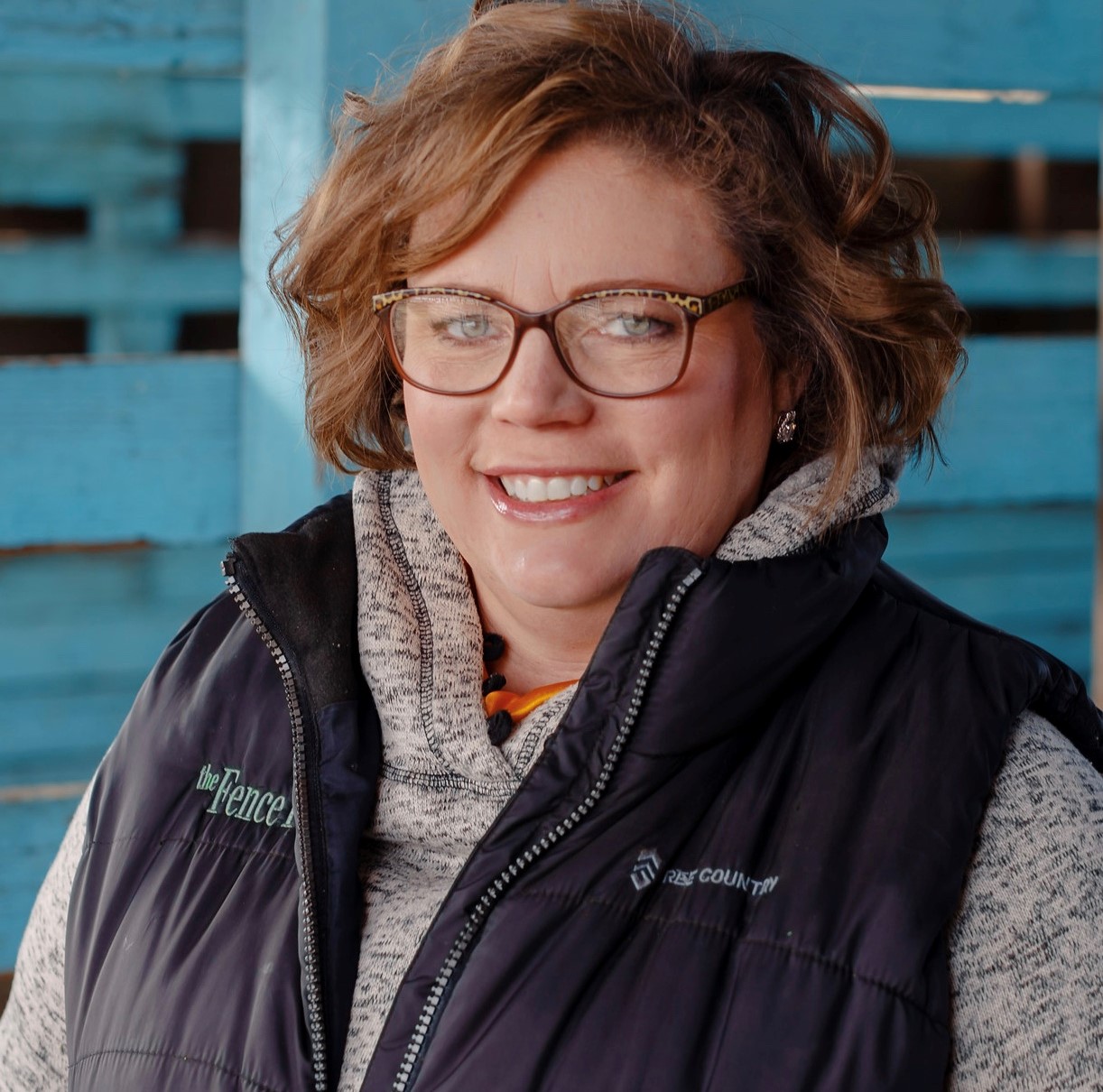
Rachel Gabel writes about agriculture and rural issues. She is assistant editor of The Fence Post Magazine, the region’s preeminent agriculture publication.

Colorado oilmen may play key role in Trump’s Venezuelan oil takeover plan
Vince Bzdek
vince-bzdek@denvergazette.com
Updated 14 hours ago
When President Donald Trump summoned oil executives to the White House recently to push for major investment in Venezuela, an interesting sprinkling of smaller independent companies from Denver was invited along with the big names of American oil. One of...

Vince Bzdek
Reporter

A partisan potshot at the CU regents | Jimmy Sengenberger
Jimmy Sengenberger
jimmy-sengenberger@denvergazette.com
Updated 2 days ago
At the University of Colorado, “bipartisanship” just became a four-letter word. Six months after being appointed to CU’s Board of Regents in Dec. 2021 by Gov. Jared Polis — who touted his “business experience and passion for CU” — Ken...

Jimmy Sengenberger
Reporter

A theater of the absurd at Aurora City Hall
Michael Hancock
michael-hancock@gazette.com
Updated 3 days ago
What unfolded at Monday night’s meeting of the Aurora City Council was not governance. It was performance. Carefully staged, morally theatrical, and intellectually thin. A civic chamber meant for deliberation became a stage, and a resolution presented as public business...

Michael Hancock
Reporter

It’s time to restore the military-industrial complex | Mike Rosen
Mike Rosen
mike-rosen@denvergazette.com
Updated 3 days ago
Historian Will Durant observed that peace is an unstable equilibrium which can be preserved only by acknowledged supremacy or equal power. War is a constant of human history and human nature and always will be. That’s not cynicism or defeatism,...

Mike Rosen
Reporter

GUEST COLUMN: When Colorado schools dump unions, they excel
Aaron White
aaron@gfreedom.com
Updated 3 days ago
Last fall, the Colorado Education Association boasted that over 80% of the candidates it endorsed statewide won their races. But scratch beneath the surface of that talking point and you’ll find a very different story — one that reveals not...

Aaron White
Reporter

Address the roots of Colorado’s affordability woes
Kelly Caufield
kelly-caufield@denvergazette.com
Updated 5 days ago
Colorado is at a crossroads just in time for today’s opening of the Colorado General Assembly. Individuals and families are not choosing to move here as much as they were. Statewide net migration was 52.5% lower in 2025 than it was in 2015, when Colorado...

Kelly Caufield
Reporter
A ‘defensible ’clemency for Tina Peters? | Jimmy Sengenberger
Jimmy Sengenberger
jimmy-sengenberger@denvergazette.com
Updated 6 days ago
Former Mesa County Clerk Tina Peters is scheduled for release from prison in February 2033, after serving 8.25 years for four felonies and several months in county jail for three misdemeanors — stemming from an election security breach and identity...
Jimmy Sengenberger
Reporter

Unsolicited advice to both Republicans and Democrats | Sondermann
Eric Sondermann
eric-sondermann@denvergazette.com
Updated 5 days ago
This even-numbered year will be one of political turnover in Colorado with the governor’s chair opening up along with the other state executive offices (attorney general, state treasurer and secretary of state), all due to term limits. A U.S. Senate...

Eric Sondermann
Reporter

Trump joins the assault on rural Colorado
Dick Wadhams
dick-wadhams@denvergazette.com
Updated 1 week ago
Ruling Colorado Democrats have assaulted rural Colorado for the past seven years under Gov. Jared Polis and the Democratic Socialists who drive their massive legislative majorities. They are destroying mining and oil and gas jobs while imposing wolves on Colorado...

Dick Wadhams
Reporter

Perspective: Some priorities for our lawmakers
Michael Fields
michael-fields@denvergazette.com
Updated 1 week ago
When legislators return to work at the Capitol this week, the question — as always — will be: Will they finally focus on issues that matter to people’s everyday lives? Polling and the results of recent ballot measures highlight the...

Michael Fields
Reporter
PREV
PREVIOUS

EDITORIAL: A needed reprieve for Colorado coal
The U.S. Department of Energy issued an emergency order on Dec. 30 keeping Unit 1 of the Craig Station coal-fired plant running at least through March of this year. It’s welcome news for Colorado consumsers. It would be better still if it were the first of many such orders — federal or state — to […]

Unsolicited advice to both Republicans and Democrats | Sondermann
This even-numbered year will be one of political turnover in Colorado with the governor’s chair opening up along with the other state executive offices (attorney general, state treasurer and secretary of state), all due to term limits. A U.S. Senate seat will also be on the ballot. The ultra-competitive 8th district to Denver’s north will […]