







In Tina Peters appeal, judges telegraph some degree of reversal | ANALYSIS

Former Mesa County clerk Tina Peters seems poised to walk away from the state’s Court of Appeals with her criminal convictions largely intact, even as a three-judge appellate panel raised concerns about her sentence and one specific conviction.
Peters, a Republican who served one term following her 2018 election, is serving a roughly nine-year prison sentence for a mixture of felony and misdemeanor offenses related to a security breach of her office’s voting equipment. Broadly, jurors found that Peters had used deception to enable unauthorized access to a “trusted build” update of her county’s election software, and that videos and images from the update were later posted online.
During an unusually long oral argument session on Wednesday, an interesting dynamic emerged. While the appellate judges were highly skeptical and even confused about Peters’ broad arguments that she had no criminal liability, their targeted questioning of the prosecution suggested that Peters may ultimately prevail on a handful of issues.
Doing her duty?
Peters’ leading argument is that, as clerk, she had a duty under federal law to preserve election records for 22 months, and the 2021 software update would have wiped away that information and caused her to violate the law. In essence, federal law gave her immunity.
Yet, puzzlingly, Peters’ attorneys argued the state trial judge had “no jurisdiction to decide” whether federal immunity applied.
“Who decides if she is right?” wondered Judge Craig R. Welling. “The problem with your argument is if you’re right, then we can’t decide it, and the convictions just stand.”
The judges also struggled to understand how, exactly, Peters was compelled to act under federal law when it was undisputed that she made a forensic copy of the records beforehand, which was not the basis of her convictions.
“If she just executed a duty but didn’t commit a crime, we wouldn’t be here,” said Welling. “The immunity is: you were doing something the federal statute said you had to do. And doing that, you violated state law.”
Jury instructions, sentencing
Peters gained more traction with the panel on narrower issues. For instance, she stands convicted of a felony count for conspiracy to commit criminal impersonation with an accompanying 15-month sentence, even though the jury instructions and indictment recited the language from the less-severe misdemeanor offense.
“Is it your position that a person can still be convicted of a crime with which they were never charged and with which the jury was never instructed, as long as the evidence is sufficient?” Judge Ted C. Tow III asked the Colorado Attorney General’s Office.

“I am baffled as to the position that’s being taken that somehow we can overlook that,” added Welling.
The panel was also receptive to the idea that District Court Judge Matthew D. Barrett, in sentencing Peters, relied on uncharged conduct or her First Amendment-protected views regarding election security when imposing her sentence. The panel pointed to inflammatory words like “charlatan” and “peddl(ing) a snake oil” that Barrett used to describe her.
“He can’t sentence her more because he doesn’t agree with what she’s saying,” said Tow.
Yet, the judges acknowledged that Peters presented a slideshow of other evidence at her sentencing that Barrett was responding to.
“Are you saying the court couldn’t address the slideshow presentation?” asked Judge Lino S. Lipinsky de Orlov.
He could, replied Peters’ attorney, John Case. But Barrett “couldn’t sentence her for it.”
If the panel does order a resentencing for some or all of Peters’ convictions, Case requested a judge other than Barrett handle it.
Other context
Since President Donald Trump returned to office, Peters’ criminal case has taken on outsize visibility. Last year, the U.S. Department of Justice asserted its interest in Peters’ attempt to be released on bond while her appeal proceeded, an unprecedented and ultimately unsuccessful move.
Then, in late 2025, Trump attempted to issue a pardon for Peters’ state convictions. Peters and the state both submitted briefs on the issue of the pardon’s validity, but it did not surface at oral arguments.
Although Peters’ attorneys maintained the constitutional power to pardon offenses “against the United States” necessarily includes state crimes, the attorney general’s office cited a 1925 decision of the U.S. Supreme Court drawing a line between “offenses against the United States, as distinguished from offenses against the States.”
Meanwhile, Gov. Jared Polis appears to be considering releasing Peters from prison before her parole eligibility date in three years. The day before the arguments, Secretary of State Jena Griswold and the county clerks’ association reiterated their opposition to such a move.


Douglas County Sheriff, DA sue Polis administration over immigration policy
Marissa Ventrelli
marissa-ventrelli@denvergazette.com
Updated 8 hours ago
Douglas County Sheriff Darren Weekly and District Attorney George Brauchler filed a lawsuit against Colorado Gov. Jared Polis, challenging the constitutionality of a state statute on immigration visas. Filed on Wednesday, the suit also named Colorado Attorney General Phil Weiser,...

Marissa Ventrelli
Reporter
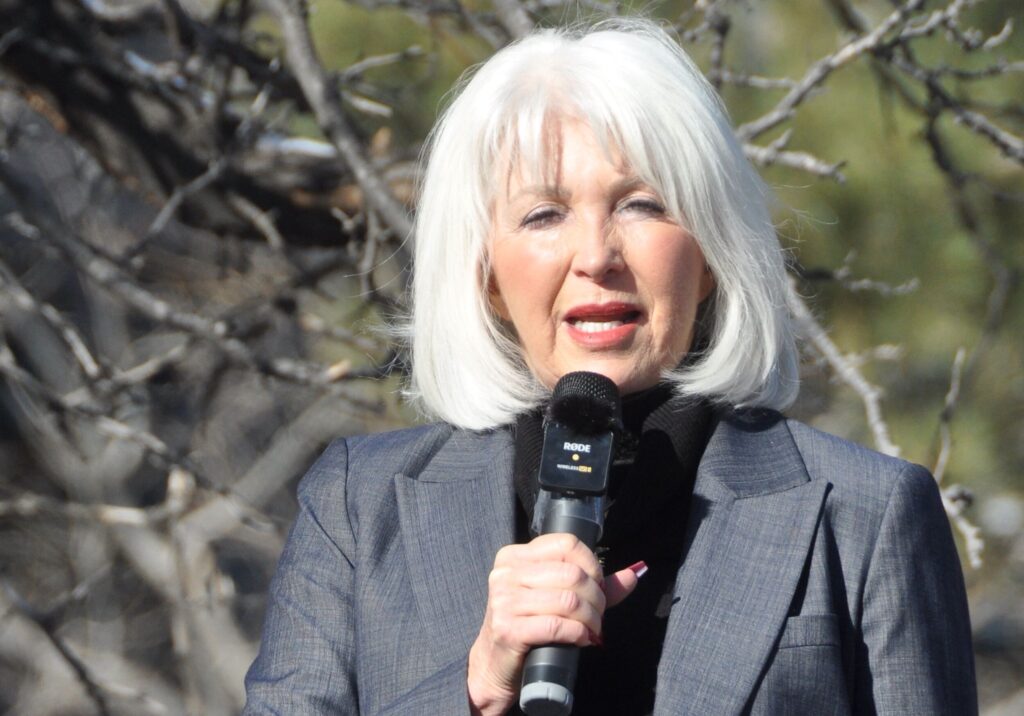
Tina Peters will ask appeals court to overturn her conviction today: Here’s what you need to know.
Colorado Politics
colorado-politics@denvergazette.com
Updated 20 hours ago
Lawyers for former Colorado elections clerk Tina Peters will try to convince a state appeals court on Wednesday afternoon to overturn her conviction in a case involving a security breach at the election office she ran. Mesa County jurors convicted...

Colorado Politics
Reporter
Lakewood man sentenced to 48 years in drunken murder retrial after appeal
Michael Braithwaite
michael.braithwaite@gazette.com
Updated 2 days ago
A Lakewood man was sentenced to 48 years in prison Tuesday after a Weld County jury convicted him of second-degree murder for the second time. Kenneth Hoschouer, 45, was found guilty in December of murdering Christopher Grau, who was dating...

Michael Braithwaite
Reporter

Ex-Jeffco school psychologist convicted in child sex assault case
Sage Kelly
sage.kelley@denvergazette.com
Updated 3 days ago
A Jefferson County jury found a former psychologist for Jeffco Public Schools guilty of five charges, including child sexual assault. The trial of 38-year-old James Michael Chevrier began on Jan. 5 and ended on Friday, with jurors deliberating until Monday...

Sage Kelly
Reporter
Colorado justices clarify procedure for defendants to access DNA analyst’s criminal file
Michael Karlik
michael-karlik@denvergazette.com
Updated 3 days ago
The Colorado Supreme Court ruled on Monday that trial judges may order Jefferson County prosecutors to disclose information related to the criminal prosecution of a DNA analyst accused of misconduct, but defendants seeking those files cannot rely on the order...
Michael Karlik
Reporter

Barry Morphew pleads not guilty to murder charge
R. Scott Rappold Special to the Denver Gazette
scottrappold@gmail.com
Updated 2 days ago
ALAMOSA — The Colorado man accused of killing his wife and leaving her body in a remote field in the San Luis Valley entered a plea to a murder charge on Monday and the judge set a trial date for...


Lakewood mother and boyfriend sentenced in infant drug death
Sage Kelly
sage.kelley@denvergazette.com
Updated 6 days ago
A mother and a man housing her face decades in prison after feeding her 11-week-old son a bottle containing methamphetamine. Jefferson County District Judge Tamara Russell sentenced both 35-year-old Alexander Avila and 33-year-old Lisa Johnson on Thursday and Friday, respectively,...
Sage Kelly
Reporter
San Miguel County judge intends to resign as discipline authorities seek alternate resolution
Michael Karlik
michael-karlik@denvergazette.com
Updated 1 week ago
A San Miguel County judge and the Colorado Commission on Judicial Discipline informed a disciplinary panel last week that new information about the judge’s health has come to light suggesting further proceedings may not be appropriate, and the judge will...
Michael Karlik
Reporter
Ex-Littleton bus aide pleads guilty in abuse case involving nonverbal student
Sage Kelley
sage-kelley@denvergazette.com
Updated 1 week ago
A former Littleton bus aide pleaded guilty to more than 10 child abuse charges almost two years after a video captured her striking a nonverbal student on a school bus. Kiarra Jones, 29, pleaded guilty to 12 counts on Monday...

Sage Kelley
Reporter

‘Everything happens for a reason’: Veterans Trauma Court aims to help military members in times of need
Mackenzie Bodell
mackenzie-bodell@denvergazette.com
Updated 2 weeks ago
Five years after he separated from the Army, Mark Bisset found himself in the Colorado criminal justice system. Bisset’s story started on April 9, 2022. According to past Gazette coverage of the case, the arrest stemmed from an alleged incident...

Mackenzie Bodell
Reporter
PREV
PREVIOUS

Weekend things to do around Denver and beyond: Broncos watch parties and more
Each Thursday, explore Denver’s essential weekend events curated by The Denver Gazette. Dive into cultural experiences and entertainment delights across the city. Whether you enjoy art galleries, pottery, or outdoor sports, there’s something for everyone in Denver’s vibrant cultural scene. To submit an event for consideration, email listings@gazette.com. SATURDAY Every popular Broncos watering hole, and they’re […]

This winter, treat yourself to theater with music, mirth or meat on its bones
The top 2026 trend in local theater: Companies are moving their plays from city to city staged for your enjoyment and convenience There is an embarrassment of riches on Colorado theater stages this winter. And, to a growing degree, you don’t even have to go all the way to the theater to see it all. […]