







Colorado governor pats himself on the back in final state address to lawmakers
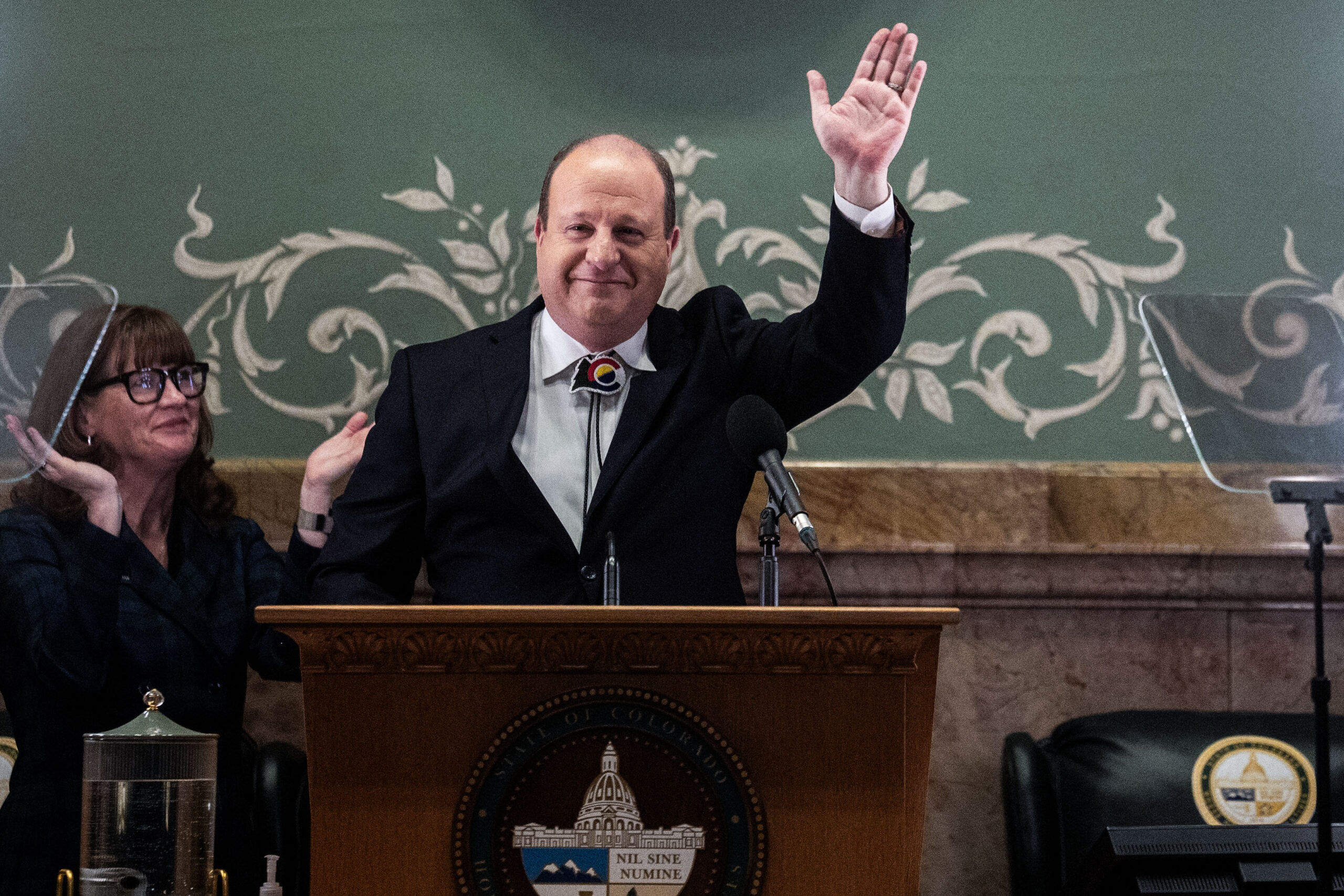
Gov. Jared Polis on Thursday took an 82-minute victory lap in his eighth — and final — State of the State address.
He touted his work in the areas of early childhood development, education, health care, housing and public safety, pointing to major initiatives he has launched.
He sought to paint a picture of a strong state under attack by the Trump administration. Indeed, he blamed much of Colorado’s woes on federal actions, notably funding cuts and a policy agenda from the White House that he described as “not the Colorado way.”
To Polis, policies coming out of Washington, D.C. — uncertainty over tariffs, an immigration crackdown, letting a key health care subsidy expire — are standing in the way of Colorado’s progress.
To critics, Polis has presided over a cooling economy that many in the business community attributed to a regulatory thicket that is driving up costs, stalling investment and pushing companies to look elsewhere in the country. Business leaders and others previously lamented that Colorado, once among the nation’s fastest-growing economies, now faces mounting challenges that threaten its momentum, the result of actions, they said, by Democrats who control the legislature and legislation the governor has signed.
In addition to a victory lap, Polis reflected on the difficulties in the past seven years, which saw the most devastating wildfires in state history, a global pandemic, and, in the past year, the loss of more than $1 billion in federal funding.
Polis: D.C. Republicans have ‘co-opted capitalism with cronyism’
The Colorado governor devoted a section of his speech to criticizing the Trump administration and Republicans in the nation’s capital.
He said Trump’s decisions, including funding cuts to child care, have compounded affordability problems and made life “more expensive and more difficult” for Colorado residents.

He said Washington, D.C. Republicans have now become the “party of socialism, overreach, and intrusion into people’s daily lives in ways wholly out of the scope of government.” He said they have been picking “corporate winners and losers, co-opting capitalism with cronyism.”
“It often feels like big government is in our wallets, our doctors’ offices, in our homes, bullying businesses of all sizes,” he said.
Republicans in Colorado have made the same lamentation — too much government interference in businesses and family life, an explosive growth in spending, a growing state bureaucracy — but directed at Polis and his party across the aisle that is in charge of Colorado.
Polis points to accomplishments
The governor spent much of his 82-minute speech patting himself on the back for the slew of initiatives that he has launched or instituted in the last seven years.
Among other things, he noted taxpayer-paid kindergarten and preschool, “low-cost clean energy” that will save Coloradans money on energy bills, new policies to facilitate more housing options, “fully funding” K-12 education and saving people money on health care through programs like reinsurance.
He claimed other achievements, such as reducing the state’s income tax three times — two of those were ballot measures sponsored, in fact, by the Independence Institute — and property taxes five times, accomplished via legislation and through ballot measures submitted by the Colorado General Assembly.
Last year, ballot measures seeking deeper property tax cuts than what the legislature already adopted compelled Polis and lawmakers to negotiate with Advance Colorado and Colorado Concern, which had argued that the policymakers’ response to soaring tax valuations had been insufficient. The parties reached a deal, which led to the passage of legislation that cut both residential and business property taxes.
The governor called for more reductions in the state income tax, a request he has made almost every year, though he has never supported any legislation — offered by Republicans — to do exactly that. After his speech, Polis said he supports income tax reductions that would be “paid for.” He did not elaborate on how that would happen.
It remains to be seen how Polis would position himself on a potential ballot measure to replace Colorado’s flat income tax rate with a graduated bracket, under which the upper tiers would face tax hikes of hundreds of thousands of dollars.
On transportation, Polis said the state had re-paved 2,500 miles of roads in the past five years alone.
That failed to impress Sen. Byron Pelton, R-Sterling, who noted most of the money in the state’s transportation plans is dedicated to transit, not roads.
The governor has ignored rural Colorado roads, Pelton said.
“It’s getting worse” in his district, where it is tougher to get products to market, the legislator said, adding the poor condition of rural roads is now the No. 1 concern in his region, along with healthcare and the rural hospital system.
‘Pinch me’ moments, Taylor Swift and Tina Peters
Polis also talked about what he called “pinch me” moments: Colorado winning the Sundance Film Festival, keeping the Broncos in Denver through a new football stadium, the creation of Fishers Peak state park, and bringing in the the major league baseball All Star game, which boosted the economy during the pandemic.
Republicans said they had their “pinch me” moments, too.
Senate Minority Leader Cleave Simpson of Alamosa told Colorado Politics his was on Polis’ less-than-complimentary comments about D.C. Republicans and the August special session that he said resulted in corporate income tax hikes.
Simpson also noted Polis’ energy policies, which, the minority leader said, translate to eliminating people’s ability to choose how to heat their homes.

Polis rolled out more cultural references than usual.
This time, they included the Beatles, Lord of the Rings, recent Saturday Night Live alumnus Bowen Yang, Matt Stone and Trey Parker of South Park, a nod to the words of a Kpop character with a Colorado voice, the Netlix series Stranger Things and a shout-out to “Colorado Rancher” Kevin Costner, who owns a luxury property near Aspen that includes a ranch he leases out to others.
Taylor Swift got three shout-outs, including a somewhat tongue-in-cheek request from Polis to officiate her wedding to Kansas City Chiefs tight end Travis Kelce.
House Minority Leader Jarvis Caldwell, R-Colorado Springs, noted that Polis mentioned Taylor Swift more than he talked about farmers and ranchers.
“I understand the setting, he wants to be jovial,” the Republican leader said. But when people across the street hear him reference Taylor Swift or Lord of the Rings more than the people of Colorado, that’s a problem, he said.
“I appreciate him acknowledging areas where we can work together, like competency,” Caldwell said, referring to the issue of suspects of crime getting released to the streets when declared incompetent to stand trial.
In his post-speech news conference, Polis addressed a persistent rumor about negotiations with the Trump administration to release Tina Peters in exchange for allowing Colorado to get more wolves.
Polis denied having such conversations with the Trump administration about Peters, although he said he believes her nine-year sentence is “unusual and harsh for a first-time offender and not a violent offender.”
There were moments of levity. The first occurred after the governor made a playful nod to lawmakers’ decision to change the word “excellency” to “honorable” in the resolution inviting the governor to address the legislature.
Polis addressed both the House Speaker and Senate President as their “excellency,” drawing laughs.
The use of “excellency” in the resolution on the State of the State address isn’t anything new. In fact, it goes back decades, although in the current political environment, the word has taken on a new meaning.
All eyes on housing
Polis talked about the barriers to accomplishing his signature issues, most notably in the area of housing — undermined, he said, by outdated laws and “piles of paperwork that slow or stop new housing, new transit, and new clean energy from even being built.”
It led to a dig against one of his critics on the housing issue.
“It reminds me of the words of Taylor Swift and, maybe Kevin Bommer, too: ‘I’ll sue you if you step on my lawn.’”
“Not us,” the governor said. “We say, ‘let us build!’”
That drew a mix of laughs and groans from the audience.
Bommer is the CEO of the Colorado Municipal League, which has challenged the governor on housing and zoning laws that the group and some lawmakers claim violate the constitutional rights of home-rule cities and towns. Six Front Range cities are suing the governor over 2024 housing laws on the home rule issue.
This year, Polis’ housing agenda includes the HOME Act, a follow-up to last year’s failed “In God’s Backyard” bill, which would have allowed churches and schools to build housing on unused land.
The 2026 bill, the governor said, will “open the door to more housing by partnering with higher education, nonprofits, transit agencies, school districts, and housing authorities to build on underutilized land.”
Budget, budget, budget
The state is facing budget shortfalls in both the current year’s budget—more than $300 million that still needs to be covered—and in 2026-27, starting at $850 million, which, according to Sen. Barbara Kirkmeyer, R-Brighton, will likely grow to more than $1 billion.
Polis noted his proposal to privatize Pinnacol Assurance, Colorado’s workers’ compensation insurer of last resort, as a way to raise new revenue. That proposal, however, has failed to gain traction with lawmakers on both sides of the aisle. It is now the subject of a ballot proposal, in which the state would not get any money to cover the shortfall.
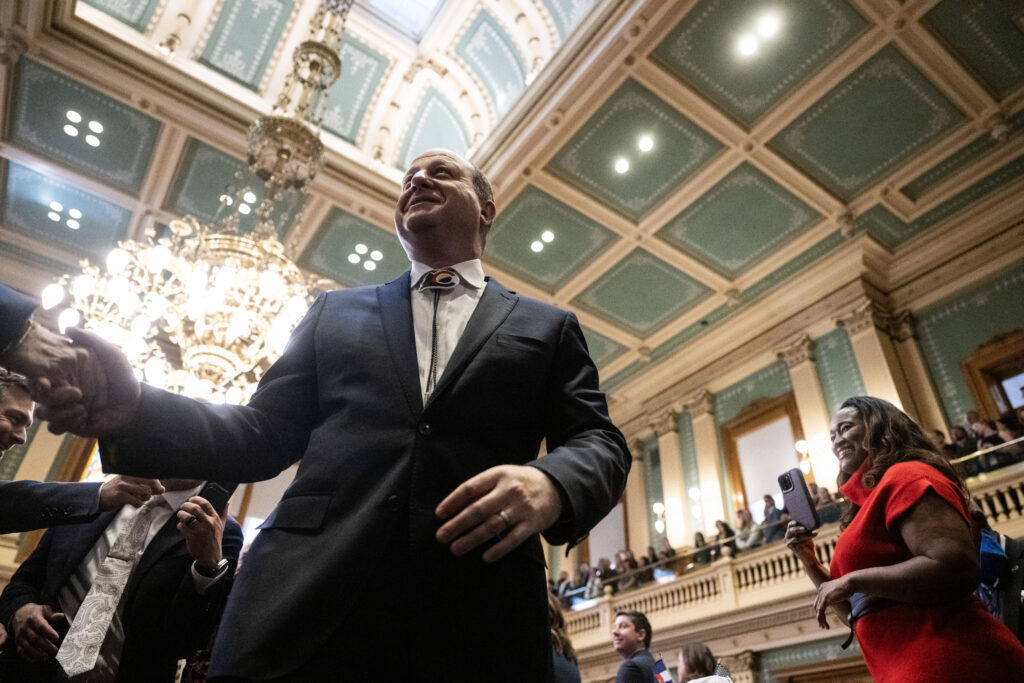
Rep. Kyle Brown, D-Louisville, the newest member of the Joint Budget Committee, noted that Polis’ budget proposal includes a lot of one-time money. Looming in the background, Brown acknowledged, is the state’s structural deficit, which state economists have been warning the legislature about for at least five years.
“We need to address that long-term, otherwise we’re going to be back in this situation year after year,” Brown said.
Kirkmeyer said she can’t take the governor’s budget proposal seriously. She said she had hoped to hear how Polis would make the state more affordable and safer.
“To me, this governor is just punting,” she said, using a football metaphor: “He’s in his fourth quarter. We’re down to the two-minute time clock, and he’s in defense, and he’s gonna punt the ball every opportunity he gets. And that’s what he’s doing with the budget and doing with policy in the state of Colorado.”


Colorado breweries win top awards in beer competition
Piper Russell
piper.russell@outtherecolorado.com
Updated 4 hours ago
The Colorado Brewers Guild has recently announced the winners of the annual Colorado Brewers Cup, which “showcases the exceptional quality of craft beer in Colorado.” Glenwood Canyon Brewing won small brewery of the year, which includes brewers with under 675...

Piper Russell
Reporter

Suspect arrested in hit-and-run that killed teen
Kyla Pearce
kyla-pearce@denvergazette.com
Updated 4 hours ago
Thornton police arrested a suspect in a hit-and-run crash that killed a 14-year-old boy late Saturday night, police said Sunday afternoon. The crash happened just before 9:45 p.m. Saturday near the intersection of Thornton Parkway and Huron Street, just west...

Kyla Pearce
Reporter

‘Soul Power’: Long live the ABA
John Moore
john.moore@denvergazette.com
Updated 9 hours ago
Fifty years later, new documentary series takes nostalgic look at how the rebel American Basketball Association changed the NBA – and the world Three-point ABA trivia question: What do rapper-actor Common and Grammy Award-winning singer India.Arie have in common? Answer: Their...

John Moore
Reporter

Denver archdiocese announces new archbishop James Golka
Michael Braithwaite
michael.braithwaite@gazette.com
Updated 1 day ago
The Denver archdiocese announced the appointment of its next archbishop Saturday morning. James Golka, 59, who received the appointment from Pope Leo XIV, will make a move up from Colorado Springs, where he has been serving as the third bishop...

Michael Braithwaite
Reporter

Evans challenger Evan Munsing qualifies by petition for Democratic primary ballot in Colorado’s 8th CD
Ernest Luning
ernest-luning@denvergazette.com
Updated 1 day ago
Thornton Democrat Evan Munsing, one of three major Democratic candidates challenging Republican U.S. Rep. Gabe Evans’ bid for a second term, became the first candidate to qualify for Colorado’s 8th Congressional District primary after submitting a sufficient number of valid...

Ernest Luning
Reporter

PHOTOS: Goldens in Golden
Stephen Swofford
stephen-swofford@denvergazette.com
Updated 1 day ago

Stephen Swofford
Reporter
Deaths by suicide decrease at Royal Gorge Bridge following safety upgrades
Debbie Kelley
debbie-kelley@denvergazette.com
Updated 1 day ago
CAÑON CITY – Jay Valusek stared at “that damned railing” for hours that bled into days after his beloved 28-year-old daughter jumped in 2018 from atop the metal edge of the Royal Gorge Bridge to her death 956 feet below....

Debbie Kelley
Reporter

Greeley’s StarRise Apartments offers permanent residency to the homeless
Hap Fry, Special to The Gazette
hap-fry@gazette.com
Updated 6 hours ago
GREELEY – Before 2025, Christine Taulman was not the biggest fan of the holidays. Her feelings were understandable — homeless, she was in and out of shelters for much of her life between 2015 and 2024. But the Greeley resident...

Hap Fry, Special to The Gazette
Reporter

9 great Colorado story lines to follow in the Olympics | Vince Bzdek
Vince Bzdek
vince-bzdek@denvergazette.com
Updated 1 day ago
The Broncos may not have quite made it to the Super Bowl, but you know what, there’s another Super Bowl this weekend for a certain Colorado team. Boasting 33 athletes plus one alternate, Colorado has the most athletes of any...

Vince Bzdek
Reporter

Novel medical-grade CBD pharmacy opens in Colorado, first of its kind in U.S.
Breeanna Jent
breeanna-jent@denvergazette.com
Updated 1 day ago
Inside an unassuming yet sprawling industrial building nestled within the high plains of Watkins, about a 30-minute drive southeast of Denver International Airport, step into Kazmira Therapeutics’ “hemp bay,” as it’s affectionately called. Stacked and lined on pallets and metal...

Breeanna Jent
Reporter
PREV
PREVIOUS

Contaminated gas fiasco impacts hundreds of motorists in Colorado
Hundreds of metro Denver motorists who filled their vehicles up with gasoline contaminated with diesel last week are scrambling to get them fixed, renting cars, and taking ride shares. They are also figuring out how to get reimbursed. Some service shops are grappling with a dozen or more cars towed, as state regulators seek to […]

Denver area events for Jan. 16
If you have an event taking place in the Denver area, email information to carlotta.olson@gazette.com at least two weeks in advance. All events are listed in the calendar on space availability. Friday King Cardinal — With Travis McNamara, Nina de Freitas, 8 p.m., Bluebird Theater, 3317 E. Colfax Ave., Denver, $32.54. Tickets: axs.com. Hairball — 8 p.m., […]