







No sale on BLM mineral lease highlights industry complaints of regulatory overload
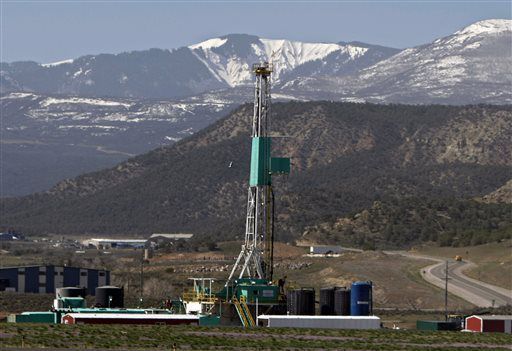
The Bureau of Land Management received zero bids on more than 20,000 acres offered in an oil and gas lease sale in early January in Jackson, Moffat and Garfield counties.
The result highlighted how federal mineral leasing policies collide with state regulations industry leaders said suppress production.
The auction drew no interest from the two companies that registered, with the BLM setting the minimum bid at $10 per acre.
The failed sale illustrates oil and gas industry regulatory burdens, American Petroleum Institute officials said during a press call and annual State of American Energy event in Washington, D.C., on Tuesday.
Officials advocated for comprehensive federal legislative permitting reform while Colorado imposes heavy state-level controls.
Dustin Meyer, API senior vice president of policy, economics and regulatory affairs, said federal permitting reform is the organization’s top priority.
“The permitting process is fundamentally broken,” Meyer said. “Red tape, delay, endless litigation all drive up costs, limit supply and strain reliability.”
Meyer highlighted foreign regulatory risks.
“At a moment of rising global demand, that kind of unprecedented overreach undermines competitiveness and weakens energy security,” Meyer said, referring to Europe’s Corporate Sustainability Due Diligence Directive.
During the API event panel, Houston-based liquefied natural gas company Cheniere Energy Inc. CEO Jack Fusco illustrated how regulatory overload by state, local and federal agencies creates duplicative demands that consume engineering time and slow progress.
“54 different regulatory agencies oversee our operations every fricking day,” Fusco said.
Alluding to burdensome swings in energy policy that change with every administration, Fusco demanded policy consistency.

“We need some stability, some durability in our policies,” Fusco said. “We’ve invested $50 billion in America and it would help to have some stability.”
API President and CEO Mike Sommers highlighted the skyrocketing demand for energy caused in part by the burgeoning AI data center industry.
“The status quo was not designed for the demand decade,” Sommers said. “We need durable policy that outlasts political cycles and supports long-term investment, reliability, and growth, especially when it comes to access, infrastructure, and international competitiveness.”
The One Big Beautiful Bill Act triggered the auction when 30,528 acres of nearly 51,000 offered were sold at a prior auction, generating nearly $4.9 million in revenue.
The Colorado Chamber of Commerce flagged regulatory risks.
“Our regulatory climate is now one of the greatest risks to Colorado’s business climate and future growth, and we believe it is the primary reason we’ve been losing momentum in economic competitiveness,” the chamber told The Denver Gazette.
The chamber calculated potential losses.
“Every 10% increase in regulations leads to an estimated loss of 36,000 jobs and 9,000 firms statewide,” the chamber said, adding regulations slow economic growth by at least 2% annually.
The Colorado Public Utilities Commission recently mandated a 41% carbon reduction for utilities by 2035, sparking cost worries.
“Meeting the approved goal will be … challenging and difficult to achieve,” said Michelle Aguayo, spokeswoman at Xcel Energy, in a statement.
Environmental advocates praised the PUC mandate.
“Regulators uphold strong clean heat standards despite pushback from state and utilities,” the Sierra Club said in a December news release.
The decision slates “Colorado’s major investor-owned gas utilities to achieve 41% reductions in emissions by 2035, compared to 2015 levels,” the group said.
Colorado’s Air Quality Control Commission voted 7-2 on Nov. 20 to adopt rules requiring a 50% reduction in nitrogen-oxide emissions from oil and gas operations by 2030, adding to the state’s already stringent oversight.
Gov. Jared Polis hailed the measure as a major step.
“The action will significantly improve air quality and contribute to Colorado’s efforts to achieve reduced and safer levels of ozone pollution, with immediate cuts in ozone-causing chemicals in Colorado’s air in the next two years and the largest regulatory reduction in NOx from oil and gas in Colorado’s history,” he said in a letter addressed to the executive directors of the Colorado Oil and Gas Conservation Commission and the Department of Public Health and Environment.
The Colorado Oil and Gas Association acknowledged the burden.
“The adopted rules represent significant new requirements for the industry, though it provides a workable path forward that avoids the most burdensome proposals,” the association said in November.
COGA officials declined a request from The Denver Gazette for comment on the lack of BLM land sales.
Dan Haley, former president of the Colorado Oil and Gas Association, noted prior progress.
“Emissions from the state’s oil and natural gas industry have been decreasing for the past several years and the industry continuously works to reduce ozone and protect air quality,” Haley said.
A state audit released Dec. 8, 2025, exposed gaps in oil and gas oversight.
“The state has an incomplete picture of oil and gas production, emissions, and severance taxes,” said Derek Johnson, audit manager at the Office of the State Auditor. “To address this, agencies would need to change reporting requirements for the oil and gas industry, and improve agency processes for collecting the data.”
The Energy and Carbon Management Commission responded to the audit findings.
“The audit identified areas of improvement regarding the administrative collection of data from a technology standpoint and the consistency by which ECMC enforces and collects conservation levies,” the commission said.
Sara Blackhurst, president and CEO of Action Colorado, warned of effects on residents.
“This will cause excessive collateral damage for those least able to afford it,” Blackhurst told The Denver Gazette in December.
Blackhurst challenged the mandate.
“The real-world data — including from climate-conscious Colorado homeowners who already use heat pumps — shows a different picture,” Blackhurst said. “If heat pumps were truly cheaper in Colorado winters, we wouldn’t have to mandate them. People would choose them voluntarily.”
State Sen. Barbara Kirkmeyer, a Republican from Weld County, opposed the shift.
“A mandate to transition away from reliable, affordable, clean natural gas to unreliable and more costly wind and solar energy just doesn’t make sense,” Kirkmeyer told The Denver Gazette.
BLM plans to offer more than 250,000 acres for oil and gas lease sales over the next six months.
Colorado Politics reporter Marissa Ventrelli contributed to this report.


PHOTOS: The National Western Stock Show 4-H Day Pro Rodeo Tournament
Stephen Swofford
stephen-swofford@denvergazette.com
Updated 10 hours ago

Stephen Swofford
Reporter

With home field advantage, Broncos playoffs could bring Denver economy millions
Bernadette Berdychowski
bernadette.berdychowski@denvergazette.com
Updated 13 hours ago
This weekend, there will be plenty of bills coming out of the wallets of both Denver Broncos and Buffalo Bills fans for the divisional round playoff game. The first playoff game played at Empower Field at Mile High on Saturday...

Bernadette Berdychowski
Reporter

Denver names director of community empowerment
Deborah Grigsby
deborah.smith@denvergazette.com
Updated 13 hours ago
Almost a year after its creation, the city’s Division of Community Empowerment has named its first director, Stephanie Laing, a longtime captain with the Denver Sheriff’s Department, according to a statement from the Office of Human Rights and Community Partnership,...

Deborah Grigsby
Reporter

Xcel cuts power in northern Colorado due to wildfire risk
Daniel Boniface
dan.boniface@denvergazette.com
Updated 17 hours ago
Xcel Energy shut off power in parts of northern Colorado on Friday due to high winds and dry conditions, the company said Thursday. The shutoff began at 8 a.m. and impacts people near Fort Collins and Loveland, along the Interstate...

Daniel Boniface
Reporter
PUC holds firm on ambitious 41% greenhouse gas cut for natural gas utilities
Scott Weiser
scott-weiser@denvergazette.com
Updated 15 hours ago
The Colorado Public Utilities Commission refused to ease a greenhouse gas reduction target for natural gas utilities, voting 2-1 to preserve a 41% cut in use by 2035 despite utility requests for a lower number and environmental groups pushing for...
Scott Weiser
Reporter

Rockmount — maker of Western wear for rock stars and truckers — turns 80 this year
Bernadette Berdychowski
bernadette.berdychowski@denvergazette.com
Updated 24 hours ago
While most clothing labels follow the latest trends or aim to make new ones, Rockmount Ranch Wear is content with the Western style it fashioned nearly 80 years ago. Its Lower Downtown shop — showcasing the Western wear it spread...
Bernadette Berdychowski
Reporter
Colorado EDC approves nearly $6 million in tax incentives for 3 companies
Bernadette Berdychowski
bernadette.berdychowski@denvergazette.com
Updated 17 hours ago
The Colorado Economic Development Commission approved a total of nearly $6 million in job growth tax incentives for three companies considering expansions in the state on Thursday. The largest incentive package went to an unnamed quantum company described as “Project...
Bernadette Berdychowski
Reporter

Polis delivers final state address to Colorado legislature
Colorado Politics
colorado-politics@denvergazette.com
Updated 24 hours ago
Gov. Jared Polis delivered his final State of the State address to the Colorado General Assembly this morning and outlined his agenda for this year’s legislative session, with a focus on housing, early childhood development, and the economy. He expectedly...

Colorado Politics
Reporter
New buildings debut as National Western Stock Show attractions
Michael Braithwaite
michael.braithwaite@gazette.com
Updated 2 days ago
What used to be in the shadow of the 70-year-old Denver Coliseum is now one of the National Western Stock Show’s newest and largest attractions. Officially opening at the end of 2025 and debuting to the public during this year’s...

Michael Braithwaite
Reporter
Xcel Energy considers planned outages in northern Colorado due to wildfire risk
Daniel Boniface
dan.boniface@denvergazette.com
Updated 2 days ago
Sunny skies and mild temperatures are on tap Thursday for Denver, but breezy winds and low relative humidity have meteorologists concerned about fire danger in Larimer and Weld counties and Colorado’s Eastern Plains. The National Weather Service in Boulder has...
Daniel Boniface
Reporter
PREV
PREVIOUS

Denver Summit FC schedule released for inaugural 2026 NWSL season
Now, it’s starting to feel real. Denver Summit FC on Thursday announced its full schedule for its inaugural season in the National Women’s Soccer League, featuring 15 home matches across three venues. Denver Summit will open its season with three straight road games, playing its first ever league match at Bay FC on Saturday, March […]

More RTD lines added for Saturday’s Broncos vs. Bills, Nuggets vs. Wizards matchups
More cars are being added to the E, W and N lines serving Mile High Stadium and Ball Arena to aid in the anticipated surge in traffic from this weekend’s sports matchups The Regional Transportation District expects a major surge in ridership Saturday, as fans converge on Empower Field at Mile High for the Denver Broncos’ playoff game against the Buffalo Bills […]