







Denver’s Florence Crittenton prepares teen moms for self-sufficient futures

For a first-time visitor, there is a lot to process at 96 South Zuni Street in Denver, where the omnipresent kinetic energy and stimulation can best be described as electric.
On this particular mid-December Thursday, there are no fewer than 20 volunteers from the American Waterworks Association, eager to ensure Christmas packages are distributed to the right people.
Phones are ringing off the hook, people are waiting to get buzzed into the office, visitor badges are being printed out and distributed, packages are being delivered at an accelerated rate, and kids, big and small, are running around.
Toddlers are being dropped off at the Early Education Center (ECE), while their teenage moms are hustling to class in the next building, with hopes of getting their high school diploma or meeting with their case managers.
Consider it another day at the office for receptionist Caroline Walden, who is doing her best to control traffic in the lobby.
“It will be like this all day,” Walden said. “It’s fast-paced and chaotic. I love it, but you’ve got to be able to move fast and juggle a lot of different things.”
According to the center’s website, Florence Crittenton Services (FloCrit) is the premier two-generation wraparound service for teen moms and their children in the Denver metro area. It serves 107 high school students and 102 toddlers ages 0-5.
FloCrit students hail from 58 different zip codes, some coming from as far as Douglas and Weld counties
Their campus is a year-round family resource center built on the belief that, when teen parents have access to education, care, and support all in one location, they can build healthy and self-sufficient futures for themselves and their children.
In addition to providing a high school and early childhood education center, FloCrit also offers a student and family support program, as well as the Alethia E. Morgan Health Center, further making it into a one-stop shop for teen mothers or pregnant teens.
There’s a lot of winning that takes place at 96 South Zuni Street and plenty of game balls to go around.
Only in the case of Florence Crittenton, game balls come in the form of roses, which signify the victory and triumph taking place. Established in Denver in 1893, the nonprofit organization began partnering with Denver Public Schools in 1984.
Every May, graduates give a rose to the person who inspired them the most in their quest to finish high school.
It does not take a rocket scientist to figure out where most of the roses end up.
“Most of them (graduates) give their rose to their kid,” said Desta Taye-Channell, Florence Crittenton President and CEO, fighting back tears. “It’s very moving and transformational. There are a lot of tears shed because there was so much sacrifice that took place.
“You know, some of them grow up really fast once they have a kid, and they look at them in their eyes and are like, ‘I’ve got to take care of this kid. I’ve got to get my act together.’ Those who stick with the program are pretty proud of their success and sacrifice.”
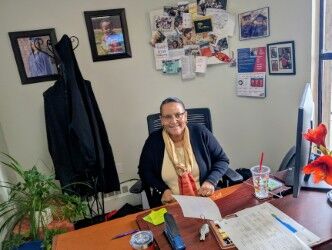
Desta Taye-Channell said there is a delicate balance between being reactive and proactive with her students and staff.
According to a 2024 report, the graduation rate at the school was 96%. Before partnering with DPS, the graduation rates hovered around 50%. The school’s website cited a three-year average graduation rate of 85%.
FloCrit Chief Financial Officer Samantha Deebs said the funding comes in three ways – through state and federal grants, and through private donations. She said 100% of FloCrit students qualify for financial assistance.
One potential roadblock in funding, Deebs said, has to do with the Childcare Assistance Program (CCAP).
“It has historically been a reliable source of funding for our Early Childhood Education Center (ECEP),” Deebs said. “Due to the state deficit, CCAP has been on a new enrollment freeze since December of 2024 and is estimated to continue through 2029. Because of this decrease in funding, we must rely more heavily on individual contributions to support the education of the children we serve.”
Finding their way
Zahara Ongalo, the mother of a one-and-a-half-year-old named Ceaskas, is one of those fortunate enough to find her way to FloCrit. She is a senior with big dreams and aspirations, thanks in large part to Ceaskas.
Ongalo got pregnant at 16, right before her sophomore year of high school. Suddenly, she was confronted by some pretty big decisions.
What drew her to Florence Crittenton from a DPS-based high school?
“This school had a lot of services,” Ongalo said. “They help with housing. They help you with your rent. They help you with your bills. They help you with diapers, wipes, clothes – anything for the kids, and anything you could possibly need. They are here to help you, and they pull through every time.”
Thanks in large part to Florence Crittenton, Ongalo has no shortage of confidence. She’s well- spoken, articulate, and has a firm plan moving forward.
She completed the school’s phlebotomy program last year and is in the medical assisting program this year. She has goals of becoming a Certified Nursing Assistant (CNA). She ultimately wants to be a nurse anesthetist.

Zahara Ongalo and her son have made the most of the opportunities provided by Florence Crittenton. They have a plan moving forward, she said.
Ongalo, though, is a bit of an outlier. She is still with her child’s father and also has the support of her parents. Not every teen or mom who finds her way to FloCrit is as fortunate as Ongalo.
Indeed, they are often some of the most at-risk and poverty-stricken youth in the state. The deck is stacked against them: They come from troubled homes, gang affiliations or abusive relationships.
“Teenagers are inconsistent people,” said Hezekia Carlstrom, who is the interim Family Services Manager. “They’re trying to figure out their identities. These kids are trying to navigate a world that really is set up for people 18 or older, and they’re 16 – they have a kid and now they have adult responsibilities.”
Carlstrom said emphasis is placed on each student’s particular situation when the school begins working with them.
“If we try and start in a place where hey, we’re expecting them to be on time, but they don’t have transportation – they’re taking public transportation, and they live an hour and a half away, we’re setting them up for failure,” Carlstrom said.
Purpose driven
Carlstrom, who grew up in Indiana and attended the University of Indiana before teaching at an alternative high school, worked as a case manager for Denver Rescue Mission prior to his current position with FloCrit.
“That was a great experience for me,” said Carlstrom, who received his bachelor’s degree in social work in December. “But I just really love teenagers. I think they’re hilarious, and they have a ton of potential … There’s just something really unique about who they are and how you can interact with them.”
If Carlstrom could pinpoint one thing most unique about FloCrit, it would be the organization’s mission.
“Our mission here is to educate, prepare, and empower teen parents and their children. It’s very purposefully driven.”
Reactive versus proactive
From behind her desk, Desta Taye-Channell, president and CEO, is thinking big picture
“We cannot do what we do without the support of the community,” Taye-Channell said. “Our community is deep and wide.”
And the support is not lacking. That much was evident on that December Thursday, when Caroline Walden ushered in two volunteer groups. Two other groups were on tap to make cameos on Friday and the following Monday to help out with the gift sorting and setting up.
“There is no way we would be able to process our donations without our volunteers,” Walden said.
Taye-Channell, meanwhile, offered this insight on why the community has been so supportive.
“Everyone can connect with someone who has a daughter, or they know someone who has a young kid,” she said. “They can relate to the fact that what if my kid had a kid? I also think most people can genuinely relate that parenting is hard.”
While FloCrit also needs to be reactive on a day-to-day basis, Taye-Channell hopes the organization and school can be more proactive.
She said the school is doing a much better job of analyzing attendance, success rates, and areas in need of improvement.
The school needs more early education center (ECE) classrooms than the 10 it has. She said the organization is exploring options on how and where to expand, with an emphasis on housing and the ECE classrooms.
“It really is all about intervention, especially from 0 to 3, when a child’s brain is doing the most developing,” Taye-Channell said. “We’re essentially trying to catch them up to people who have ‘normal’ resources – who can get education right away.”
Taye-Channell said FloCrit has a saying for its high school students: “It’s not three strikes and you’re out; it’s three strikes and it clicks.”
For FloCrit high school senior Zahara Ongalo, it didn’t take three strikes. It clicked immediately for her.
“Half of our school only speaks Spanish, so I feel like our population is very diverse. I like to be kept in the loop, so I’ve learned a lot more conversational Spanish than I ever did at my previous schools,” Ongalo said. “I feel really happy with where I’m at in life and the connections my son and I have made.”


House Speaker urges colleagues to fight Trump, who ‘would hold Colorado hostage’
Marissa Ventrelli
marissa-ventrelli@denvergazette.com
Updated 3 days ago
A top Colorado Democrat on Wednesday characterized Colorado as under siege by the Trump administration, as she invoked Winston Churchill and urged colleagues to fight back. “In this moment, when the White House would hold Colorado hostage, I’m reminded of...

Marissa Ventrelli
Reporter

Colorado graduation and dropout rates improve as student enrollment continues to slide
Eric Young
eric-young@denvergazette.com
Updated 4 days ago
Colorado’s graduation and dropout rates continue to go up while its overall enrollment continues to go down, according to new data released Tuesday morning. The Colorado Department of Education released student graduation data from the 2024-25 school year, with the...

Eric Young
Reporter

Colorado student enrollment continues to drop as graduation, dropout rates improve
Eric Young
eric-young@denvergazette.com
Updated 5 days ago
Colorado’s public school enrollment continues to decline, according to new data released Tuesday morning. The Colorado Department of Education (CDE) reported a total of 870,793 pre-K-12th-grade students enrolled in Colorado schools, a decrease of 10,272 from fall 2024. “Colorado continues to...
Eric Young
Reporter

Former Arvada teacher arrested for allegedly creating child sex exploitation material
Sage Kelly
sage.kelley@denvergazette.com
Updated 1 week ago
Boulder police arrested a former Arvada high school teacher for allegedly filming sexual exploitation videos of juveniles and distributing them on various websites. The Boulder County Sheriff’s Office arrested 39-year-old Patricio Alejandro Illanes after a four-month investigation by Boulder County...

Sage Kelly
Reporter

RTD to pause downtown light rail Thursday for Stock Show Parade
Scott Weiser
scott-weiser@denvergazette.com
Updated 2 weeks ago
The Regional Transportation District will pause L Line light rail service and modify D and H line service in downtown Denver beginning at 11 a.m. on Thursday, during the National Western Stock Show Parade, through about 2 p.m. when the...

Scott Weiser
Reporter

Ex-Littleton bus aide pleads guilty in abuse case involving nonverbal student
Sage Kelley
sage-kelley@denvergazette.com
Updated 2 weeks ago
A former Littleton bus aide pleaded guilty to more than 10 child abuse charges almost two years after a video captured her striking a nonverbal student on a school bus. Kiarra Jones, 29, pleaded guilty to 12 counts on Monday...

Sage Kelley
Reporter

Transparency and debt defined Denver’s education stories in 2025
Nico Brambila
nico-brambila@denvergazette.com
Updated 3 weeks ago
Denver Public Schools’ officials entered 2025 promising greater transparency and left the year defending how often they broke it. Board members on two-member committees — which must hold public meetings — met without notice to renegotiate the superintendent’s contract, and...

Nico Brambila
Reporter

Colorado sees record early applications for universal preschool
Nico Brambila
nico-brambila@denvergazette.com
Updated 4 weeks ago
Early preschool applications for the upcoming school year are breaking records for a program with 42,862 4-year-olds enrolled statewide. As of Monday, the program had received 12,886 applications. “Investing in high-quality early education is one of the most effective ways...
Nico Brambila
Reporter
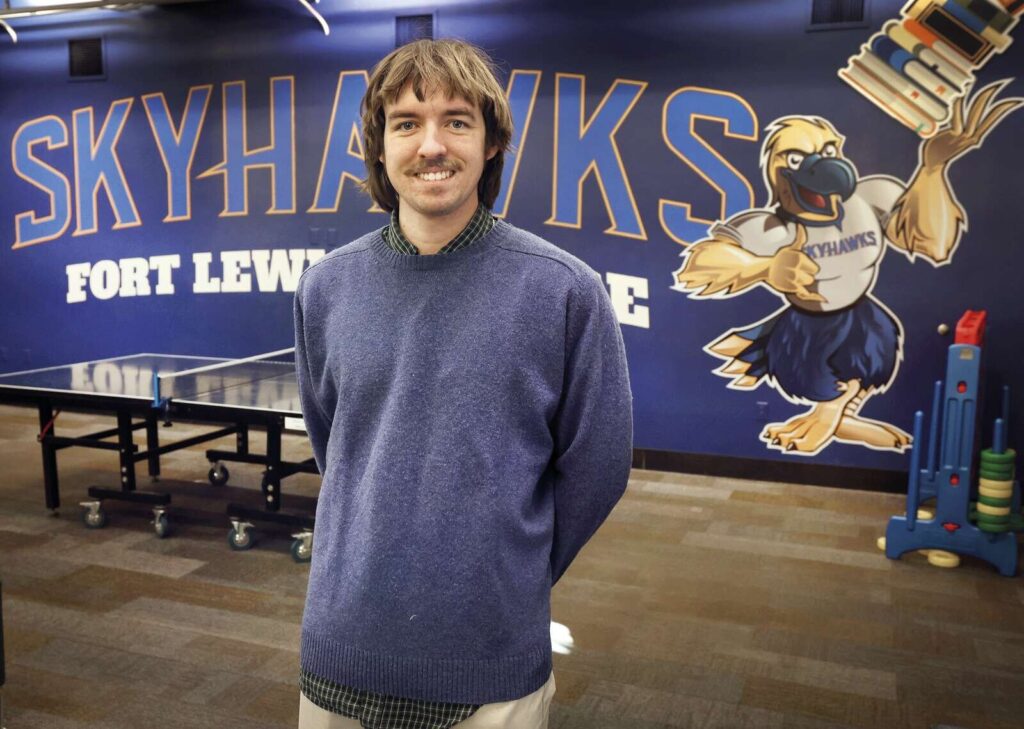
Fort Lewis College student proud of new Turning Point USA chapter despite backlash
Elizabeth Pond, Special to The Denver Gazette
elizabeth.pond@gazette.com
Updated 4 weeks ago
Before Fort Lewis College senior Jonah Flynn became president of the newly formed FLC Turning Point USA chapter, he described himself as a liberal-leaning atheist. Flynn, a senior studying philosophy and Spanish, gained local and national attention after the Associated...


Jeffco Public Schools parents thank school resource officers with gifts
Sage Kelley
sage-kelley@denvergazette.com
Updated 1 month ago
Those working to keep Jeffco Public Schools safe received a thank you gift Tuesday — a YETI mug with “Jeffco Hero” inscribed on it. Local organization Jeffco Kids First collected over $8,000 in two weeks to create around 200 mugs...
Sage Kelley
Reporter
PREV
PREVIOUS

Reclamation of historic Pikeview Quarry complete: 'A great day for Colorado Springs'
It began small, as some wounds begin ー something like a scratch on Colorado Springs’ northern mountainside. But over 100 years the people below watched it fester, that scratch becoming a scar that would grow and grow along with a population that looked helplessly on, unable to stop the bleeding. But now, finally, healing. Colorado’s […]

Colorado oilmen may play key role in Trump's Venezuelan oil takeover plan
When President Donald Trump summoned oil executives to the White House recently to push for major investment in Venezuela, an interesting sprinkling of smaller independent companies from Denver was invited along with the big names of American oil. One of those was Raisa Energy, which is based in Denver and Cairo and led by Luis […]