







10th Circuit orders lawyer to pay $1,000 for faulty AI citations
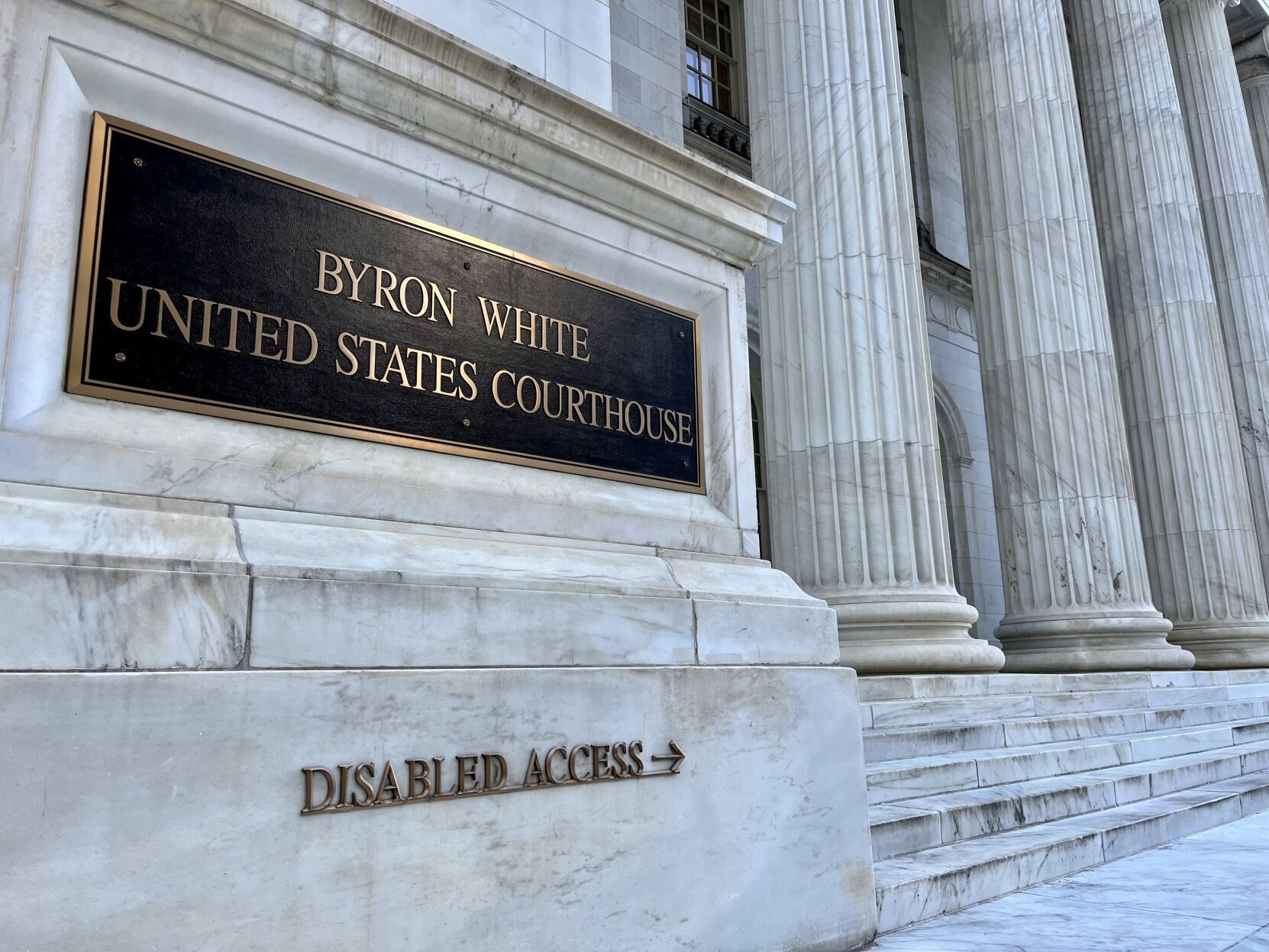
The Denver-based federal appeals court ordered a lawyer on Monday to pay $1,000 to the opposing side for submitting a legal filing with fake case citations generated by artificial intelligence.
A three-judge panel of the U.S. Court of Appeals for the 10th Circuit acknowledged Kusmin Linda Amarsingh had expressed remorse over using unverified ChatGPT citations. Although the panel declined to dismiss her appeal, it nonetheless concluded her inclusion of non-existent case law ran afoul of the prohibition on frivolous arguments.
“Amarsingh’s failings are quite serious and warrant a significant sanction,” wrote Judge Harris L Hartz in the Feb. 9 order. “Although there is nothing inherently problematic with the use of GenAI in the practice of law, careless use of the tool can waste both judicial resources and the opposing party’s time and money, and it can damage the credibility of the legal system.”
Case: Amarsingh v. Frontier Airlines
Decided: February 9, 2026
Jurisdiction: U.S. District Court for Colorado
Ruling: 3-0
Judges: Harris L Hartz (author)
Nancy L. Moritz
Veronica S. Rossman
In recent months, federal and state judges in Colorado have begun cautioning lawyers explicitly about the pitfalls of using generative AI in legal filings without verifying the output. The Colorado Supreme Court recently amended the rules of professional conduct to warn about the potential violations lawyers may trigger with improper AI use. Within weeks of each other last fall, two federal judges also called out fake citations that appeared in legal filings.
Amarsingh’s case appears to be the second involving false, AI-generated material that the 10th Circuit has addressed. In December, a three-judge panel dismissed the appeal of a self-represented plaintiff for her inclusion of 11 fictitious cases in her written brief.
Amarsingh, who described herself as a military lawyer with some state court experience, represented herself in suing Frontier Airlines for discrimination. Her lawsuit alleged that she was flying from Philadelphia to St. Louis, with a connection through Orlando, in June 2023, but Frontier had overbooked her flight.
When no one willingly gave up their seat, Amarsingh and others without assigned seats waited to see if there was room for them. She alleged the Frontier employees were rude and dismissive. Amarsingh did not get a seat on the flight, resulting in significant inconvenience for her.
She alleged that the Frontier employees, who were Black, allowed a large group of Black travelers onto the plane, but did not allow her because she was not Black. Among the other passengers bumped from the flight were multiple people who appeared Hispanic, another person who appeared Indian, one White man, and one man who appeared Black.

In August 2024, U.S. Magistrate Judge Kathryn A. Starnella recommended dismissing Amarsingh’s lawsuit because she had not plausibly alleged racial discrimination.
“By Plaintiff’s own admission, no matter which combination of passengers had been boarded and no matter which six passengers had been left behind, each group would have been racially diverse,” Starnella wrote. “Even if Defendant’s gate agents were unprofessional or rude to Plaintiff and other passengers, that does not demonstrate an intent to discriminate based on her race.”
Amarsingh objected to Starnella’s recommendation, but U.S. District Court Judge Gordon P. Gallagher agreed that dismissal was warranted.
“What Mrs. Amarsingh alleges happened is absolutely awful,” he wrote. But “it is plain from the alleged circumstances that there were legitimate permissible criteria for the selection of passengers allowed to board.”
On appeal to the 10th Circuit, the panel upheld Gallagher’s conclusion. If anything, wrote Hartz, Amarsingh’s allegations suggested “that the airline treats everyone poorly, which would undermine her claim that the poor treatment she received was because of race.”
The panel’s order also addressed an issue that Frontier mentioned in passing in its response to Amarsingh’s appeal. After the airline’s lawyers noted they were “unable to locate several cases cited by Plaintiff,” the panel issued an order in September asking Amarsingh to explain herself.
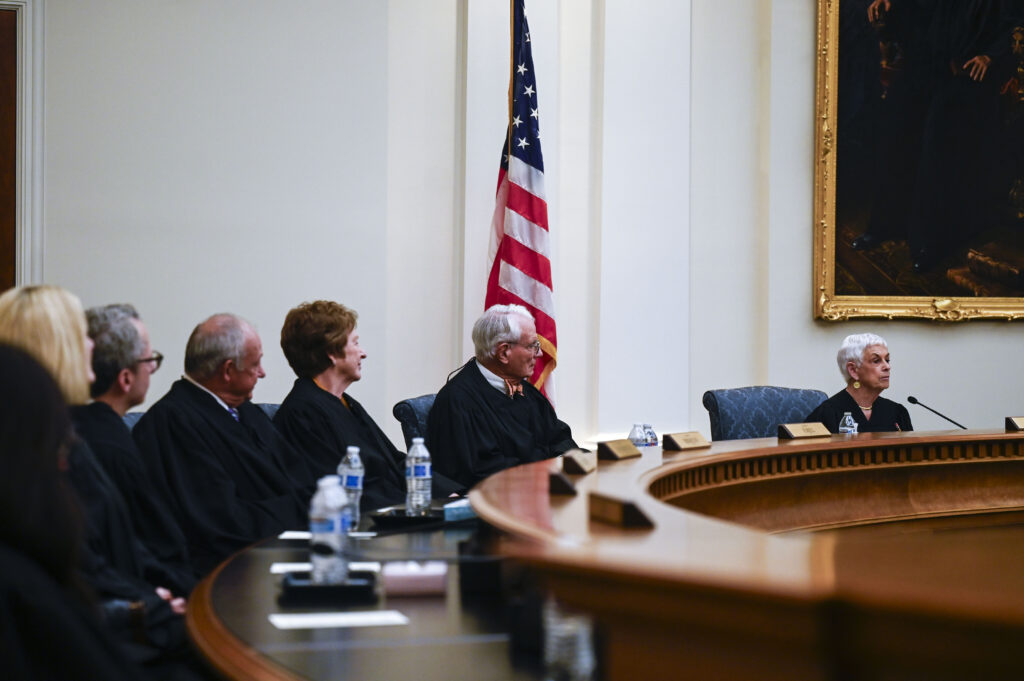
Specifically, wrote Hartz, the panel could not find seven cases Amarsingh had cited. Moreover, Amarsingh included a non-existent quote from a case, and there were “other anomalies” suggesting AI was the culprit.
“The court is hard-pressed to think of any reason other than the use of generative artificial intelligence that accounts for the peculiarities,” wrote Hartz. “Although there is nothing inherently problematic with the use of generative artificial intelligence in the practice of law, its careless use can waste both judicial resources and the opposing party’s time and money, and it can damage the credibility of the legal system. We therefore consider whether sanctions may be in order.”
Amarsingh responded, saying she took full responsibility for bringing “great discredit” upon herself and the practice of law. The seven nonexistent cases “were, regrettably, the result of my reliance on generative AI tools, specifically ChatGPT, to assist in legal research and drafting,” she wrote.
Amarsingh explained that the sophistication of AI tools and the prevalence of attorneys using them led her to believe the citations “seemed accurate at the time.”
“For instance, I made an argument and requested a 10th Circuit case to support it. AI returned a 10th Circuit sounding case name and made up a supporting argument attributed to the made-up case,” she wrote. “I mistakenly assumed that ChatGPT’s output was accurate and failed to cross-reference the quotations with the actual case texts.”
In the 10th Circuit’s decision, Hartz wrote that the panel appreciated Amarsingh’s honesty and her commitment to being more careful going forward. Nonetheless, the panel ordered her to pay Frontier $1,000 for its attorneys’ expenses in responding to the fake citations. It also directed the clerk to forward the order to the attorney regulators in Maryland, where Amarsingh is licensed.
“Amarsingh’s actions were reckless because of her complete failure to perform an attorney’s fundamental duty to the court — confirming that all the cited cases exist and stand for the propositions for which they are cited, and accurately quoting from the cited authorities,” Hartz wrote.
The case is Amarsingh v. Frontier Airlines, Inc.

10th Circuit upholds finding of no misconduct against Colorado federal judge
Michael Karlik
michael-karlik@denvergazette.com
Updated 7 hours ago
A judicial committee for the Denver-based federal appeals court upheld the chief judge’s finding last week that a federal judge in Colorado did not engage in misconduct by handling a civil case involving other attorneys and judges in the state....
Michael Karlik
Reporter

Suzanne Morphew’s family fighting for her remains
Carol McKinley, Special to the Denver Gazette
carol.mckinley@denvergazette.com
Updated 5 hours ago
Six years after she disappeared, Suzanne Morphew’s adult daughters are fighting to get her remains from the investigators who have them. Barry Morphew has been charged with first degree murder in his wife’s death. Mallory and Macy Morphew have asked...


Denver Police arrest man, 20, in fatal Maple Avenue house party fight, shooting
Michael Braithwaite
michael.braithwaite@gazette.com
Updated 1 day ago
Denver Police Department announced an arrest Tuesday in connection with a shooting a few weeks prior, during which one person was killed and another injured. Yeanbraiker Yriarte-Valera, 20, faces a first-degree murder charge after he allegedly shot and killed a...

Michael Braithwaite
Reporter
10th Circuit upholds violations, sanctions against Colorado Springs mental health hospital
Michael Karlik
michael-karlik@denvergazette.com
Updated 1 day ago
The Denver-based federal appeals court agreed earlier this month that the government properly cited and penalized a Colorado Springs psychiatric hospital for failing to protect its staff from known risks posed by patients. The Occupational Safety and Health Administration inspected...
Michael Karlik
Reporter
Supreme Court could decide the fate of foreclosure sales for unpaid taxes
Jack Birle, Washington Examiner
jack.birle.washington.examiner@gazetteedit.wpenginepowered.com
Updated 18 hours ago
The Supreme Court will soon decide whether a Michigan county violated a family’s constitutional rights by selling their property as part of a tax foreclosure for well under its market value, years after the high court ruled counties may not...

Jack Birle, Washington Examiner
Reporter

Parent group accuses DPS of racketeering in challenge to school financing structure
Nicole C. Brambila nico.brambila@denvergazette.com
nico.brambila@denvergazette.com
Updated 18 hours ago
The parent advocacy group that previously accused Denver Public Schools of financial misconduct in court documents has escalated its claims, alleging the district engaged in racketeering through its bond and lease-financing structures. Mamás de DPS filed a complaint in Denver...

Judge: CBI ordered to provide access to thousands of DNA cases
Jenny Deam
jenny-deam@denvergazette.com
Updated 1 day ago
Boulder County District Judge Nancy W. Salomone on Monday ordered the Colorado Bureau of Investigation to provide access to thousands of cases where past DNA analysis could be in question or show a pattern. The ruling came in a pre-trial...

Jenny Deam
Reporter

Staunton State Park ranger sentenced after stabbing hoax
Sage Kelley
sage.kelley@denvergazette.com
Updated 3 days ago
The former Colorado Parks and Wildlife seasonal ranger who faked being stabbed was sentenced to probation Monday morning. Jefferson County District Judge Diego Hunt sentenced 26-year-old Callum Heskett to three years of probation and at least $16,700 in restitution for the...

Sage Kelley
Reporter
U.S. Supreme Court strikes down Trump’s tariffs, upending central plank of economic agenda
LINDSAY WHITEHURST
lindsay-whitehurst@denvergazette.com
Updated 6 days ago
WASHINGTON • The Supreme Court struck down President Donald Trump’s global tariffs on Friday, handing him a major loss on an issue crucial to his economic agenda. The 6-3 decision centers on tariffs imposed under an emergency powers law, including...

LINDSAY WHITEHURST
Reporter

TdA members sentenced, fined for Denver jewelry store robbery
Michael Braithwaite
michael.braithwaite@gazette.com
Updated 6 days ago
Two members of the Tren de Aragua gang were sentenced and fined Thursday after pleading guilty to robbing a Denver jewelry store. Jean Torres-Roman, 22, and Newman Castillo Delgado, 23, each from Venezuela, pleaded guilty to charges relating to an...
Michael Braithwaite
Reporter
PREV
PREVIOUS

23-year-old arrested in fatal Thornton hit-and-run; GoFundMe identifies 14-year-old victim
Thornton police identified the suspect in Saturday night’s fatal hit-and-run as 23-year-old Jeremy Nobles. Police officials arrested Nobles on Sunday in connection with the incident, which killed 14-year-old boy, a Monday afternoon news release from the Thornton Police Department said. Officials have not yet identified the victim, but two GoFundMe fundraisers created by the victim’s […]

Lindsey Vonn says she has complex tibia fracture requiring multiple surgeries after Olympic crash
CORTINA D’AMPEZZO, Italy (AP) — Lindsey Vonn sustained a “complex tibia fracture that is currently stable but will require multiple surgeries to fix properly” after her devastating crash in the Olympic downhill, the skier said in a social media post late Monday. Vonn posted on Instagram about her left leg injuries following her fall in […]