







Democrats Michael Bennet, Phil Weiser make their cases to be Colorado’s next governor ahead of primary
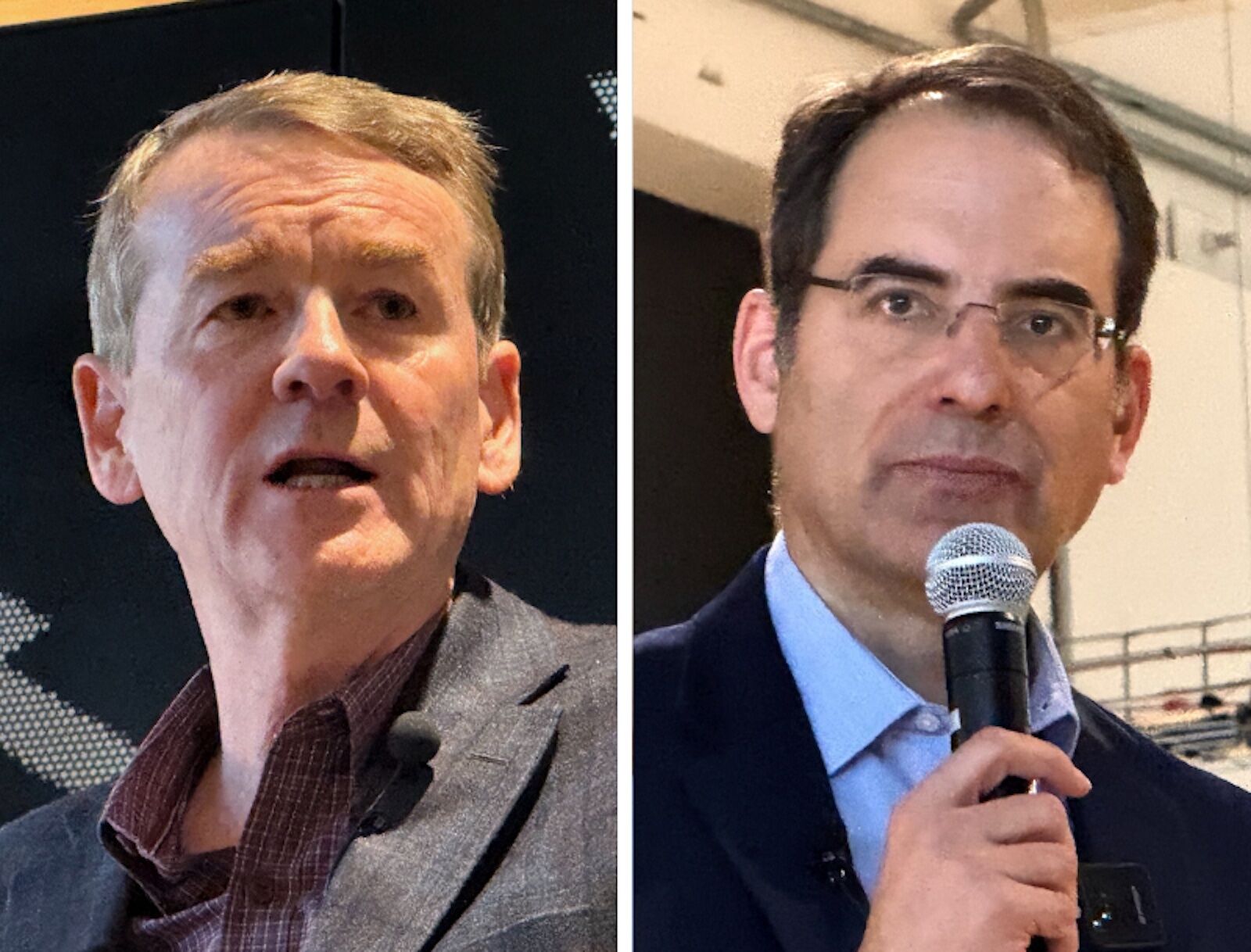
Nearly eight months before ballots will be counted in Colorado’s race for the its open gubernatorial seat, voters are lining up behind two of the state’s leading Democrats, who are facing off in a primary that will likely determine which of them will serve as the state’s top executive officer for the rest of the decade.
U.S. Sen. Michael Bennet and Attorney General Phil Weiser, who both live in Denver, are running to succeed Gov. Jared Polis, their term-limited fellow Democrat.
More than two dozen Republicans are also seeking their party’s nomination for governor, which hasn’t been won by a GOP candidate since 2002, when voters reelected the only Republican to occupy the office in the last 50 years.
While national forecasters don’t consider Colorado’s general election for governor to be competitive — it’s listed as one of the safest Democratic seats in the country this year — the June 30 primary between Bennet and Weiser is shaping up to be a barnburner, pitting two well-funded, veteran politicians with competing visions for how best to lead a state at a time both describe as perilous.
The process to pick candidates for the fall ballot begins in the first week of March, when both major parties hold precinct caucuses and elect delegates to subsequent district and state assemblies. Candidates can qualify for the primary by winning the support of at least 30% of the delegates at their nominating assemblies, or by gathering a sufficient number of signatures on petitions, which are due in mid-March.
Among the prominent Republican gubernatorial candidates, state Sen. Barb Kirkmeyer, R-Brighton, missionary leader Victor Marx and former congressional candidate Joshua Griffin are circulating petitions to access the ballot. Kirkmeyer’s and Marx’s campaigns have said they could also go through the assembly. Other GOP hopefuls are taking the assembly route, including state Rep. Scott Bottoms, R-Colorado Springs, Teller County Sheriff Jason Mikesell, and conservative podcaster Joe Oltmann.

Bennet and Weiser are both going through the caucus and assembly process, though Bennet is also circulating petitions, as he has in previous runs for his current office. If he submits enough valid signatures, Bennet only needs 10% support at the Democrats’ state assembly, which is set to be held on March 28 in Pueblo.
Ahead of caucuses, the two Democrats have been criss-crossing the state, each holding dozens of town hall-style meetings, roundtables and meet-and-greets, making their cases in community centers, churches and living rooms.
Weiser, who is term-limited as attorney general, was the first Democrat to announce at the beginning of 2025. Bennet, serving his third full term in the U.S. Senate — he boasts the longest tenure of any Colorado senator since the early 1970s — effectively cleared the rest of a large potential field a few months later when he stunned observers by declaring his candidacy.
Since then, the two candidates have traded criticism, outlined detailed policy platforms and raised millions of dollars, all while pitching themselves as the Democrat best equipped to stand up to President Donald Trump and the Republican’s administration, though both also stress that they’ll tackle the deep problems that opened the way for Trump’s return to the White House.
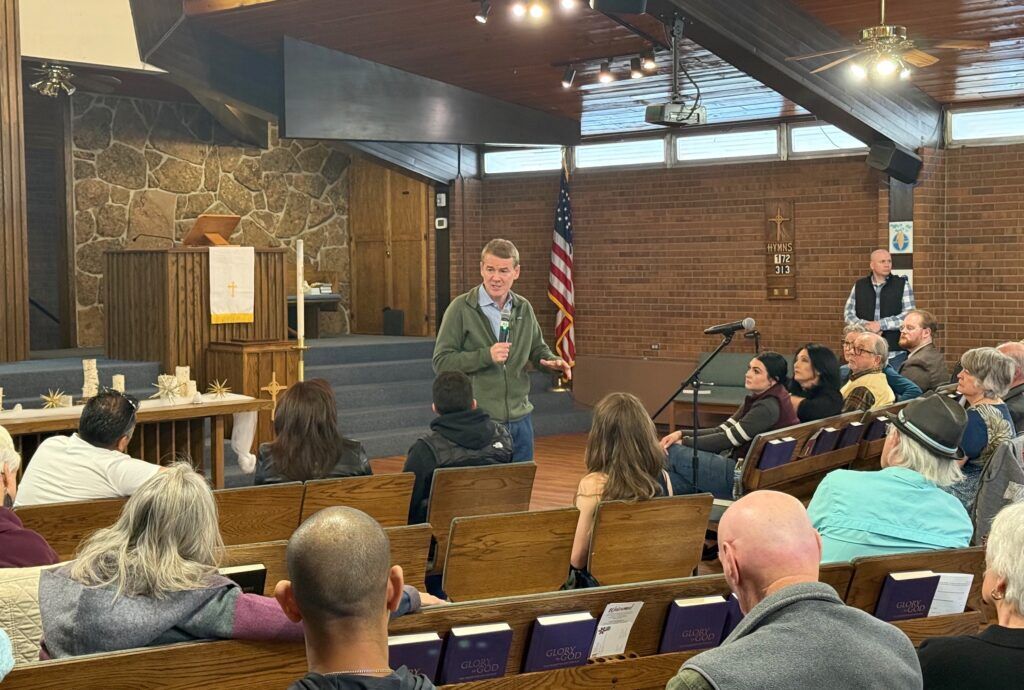
“Fighting Trump is not enough,” Bennet said to an audience of about 75 people at a town hall on Feb. 7 at a church in Northglenn. “It’s necessary, but it’s not sufficient. We need a vision about where we’re headed, where we’re going, and this state can provide that for the rest of the country.”
Bennet argued that Democrats have to rise to the occasion by building coalitions to address the concerns that fueled Trump’s rise.
“I have colleagues in the Senate who spend all day sending out text messages and emails to people saying, ‘Trump’s corrupt, Trump’s corrupt, Trump’s corrupt, send me money, Trump’s corrupt,’ and we’ve lost two national elections by doing that,” he said. “It is obvious to the American people that Trump is corrupt, and some reason that’s actually why they sent him there. And he built the coalition that is now, I hate to say it, governing our country, and our job is to build that as well.”
Weiser, who has sued the Trump administration in his capacity as attorney general more than 50 times since the Republican took office last year, scoring wins in more than half of the cases, said at a town hall on Jan. 24 at a Lakewood community center that the way to counter Trump is to build a better Colorado.
“In this moment, we all have a question — do we choose to give in to fear, or do we choose hope?” he posed to the roughly 80 people who gathered to hear him speak. “Believe that we can have a better future. Believe in this project of self governance. This year and years to follow are going to be crucial for our nation and for Colorado. And my message is simple: Lean in. Get engaged. Use your voice. Showing up really matters. We can make a statement in Colorado about what type of America we want, what type of Colorado we want. That’s why I want to be your governor.”

Bennet said he was motivated to run for governor — an unusual move for a senator — months into the second Trump administration after deciding that critical political struggles will be fought in the states.
“I think this is one of the incredibly fundamental important moments in American history, an existential moment, a moment of great peril,” Bennet said. “You can describe it however you want to describe it, but for me, it’s not rhetorical. It is actual. And I feel a very, very deep moral responsibility to my own children and to the children I used to work for the Denver Public Schools. and to kids who are living all over rural Colorado, whose parents want exactly for them the same things that the parents in Denver want but are divided by politics, making it hard for us to accomplish things together, and a politics that is bitter and divided and not moving the country in the direction that it needs to go.”
He added, “We’re the ones that are going to have to do it. Nobody is riding to our rescue. And I think Colorado can set the standard for everyone. I think Colorado can rescue this country, and that’s why I want to be your next governor.”
Trading barbs at candidate forums, in fundraising emails and on social media, the two candidates have questioned their rival’s claims to have fought Trump effectively in their current positions.
Weiser frequently reminds voters that Bennet was among the Democratic senators who voted to confirm some of Trump’s cabinet nominees, though Bennet counters that he opened crucial lines of communication with the departments they lead and held others to account in blistering Senate hearings. Bennet, for his part, notes that Weiser has added his name to most of the lawsuits he’s participated in, and only taken the lead on a handful, though Weiser points to nearly $1 billion in federal funds the legal actions have so far returned to Colorado.
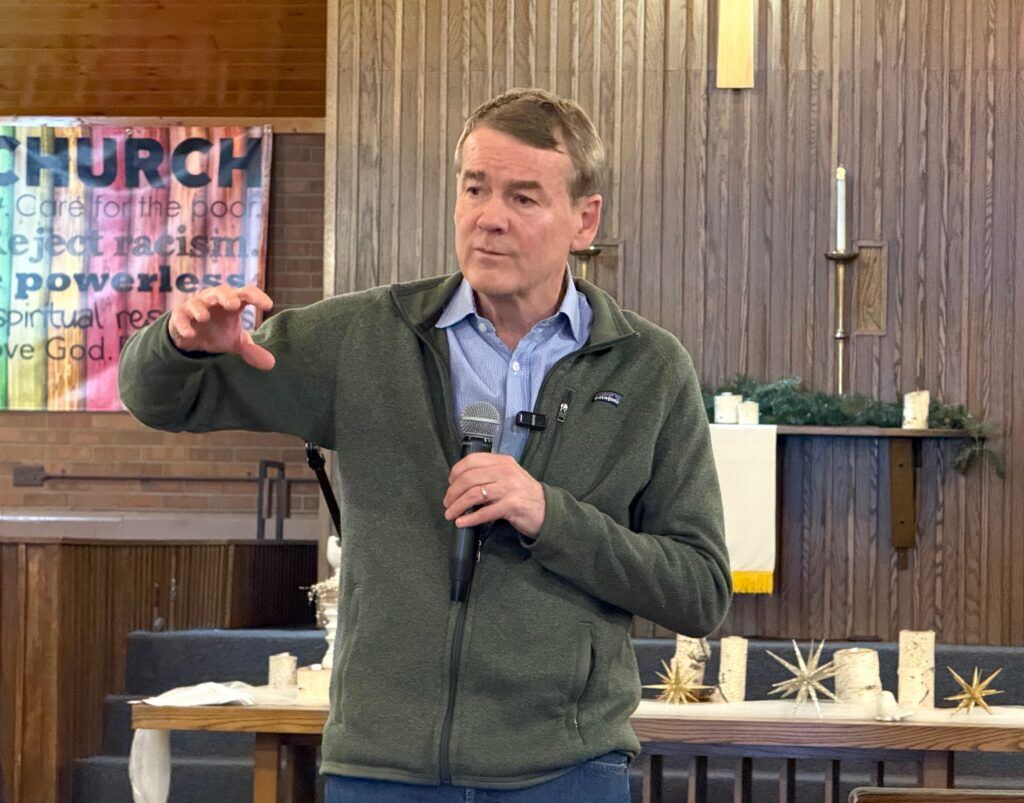
The Trump administration, Weiser said, “threatened to withhold money that we’re entitled to. And that’s lawless. It’s wrong, it’s bullying. But we’ve protected close to a billion dollars by bringing these lawsuits. And by the way, this is an important point for you all to hear because you will hear from some people — probably not Democrats, but there are some people — who say, ‘Phil Weiser is bringing all these lawsuits, they’re wasteful.’”
Weiser added that at a cost of $600,000, his office has won judgments bringing almost $1 billion to the state. “That’s my job. That’s what I’m doing,” he said.
“I know how depressing and discouraging it is to deal with the national politics that we’re facing, and I think it’s critically important that we have a a governor who can fight Donald Trump, who can stand up to Donald Trump and and I can tell you, that’s what I’ve done, as your senator,” Bennet said. “I’ve taken the fight to him.”
Colorado’s officials and the Trump administration have clashed all year long, with both sides suing each other over an array of issues. Some of that underlying tension stems from the “sanctuary laws” Democrats have adopted and defended, and Trump’s campaign to deport a historic number of immigrants illegally staying in the U.S., as well as the president’s complaints over Colorado’s all-mail ballot system.

Bennet and Weiser have a lot in common. The sons of Holocaust survivors, they each grew up on the East Coast and moved to Colorado as adults after earning law degrees — Benent at Yale University, Weiser at New York University — and working at the U.S. Department of Justice.
After arriving in Denver in the late 1990s, Bennet worked briefly for businessman Phil Anschutz, restructuring distressed companies, before getting involved in brewpub owner John Hickenlooper’s Denver mayoral campaign and serving as Hickenlooper’s chief of staff after he won election. Hickenlooper, who later served two terms as Colorado governor, was elected as the state’s junior U.S. senator in 2020.
Bennet went on to served as superintendent of Denver Public Schools before his appointment to the U.S. Senate by then-Gov. Bill Ritter, following Ken Salazar’s resignation to join the Obama cabinet as interior secretary. Bennet has won election to the office three times since, by increasingly larger margins, with his current term running until January. 2029.
After law school, Weiser clerked for U.S. Supreme Court Justices Byron White and Ruth Bader Ginsburg and worked as a deputy assistant attorney general in Department of Justice’s Antitrust Division during the first year of the Obama administration before his appointment as senior advisor for technology and innovation at the White House. He was named dean of the University of Colorado’s law school, where he founded and ran the Silicon Flatirons Center for Law, Technology and Entrepreneurship before the first of his two winning runs for attorney general.
Recalling a recent conversation with a school board member, Weiser said at the town hall in Lakewood that many of the teachers who work in the state can’t afford to buy homes, many have second jobs and some frequent food banks.
“The way we are failing our teachers right now is not OK,” he said. “We are at great risk of losing more and more teachers who can be these mentors. We’ve got to find a way to better support, better pay and better keep teachers in the profession. I will do that as your next governor.”
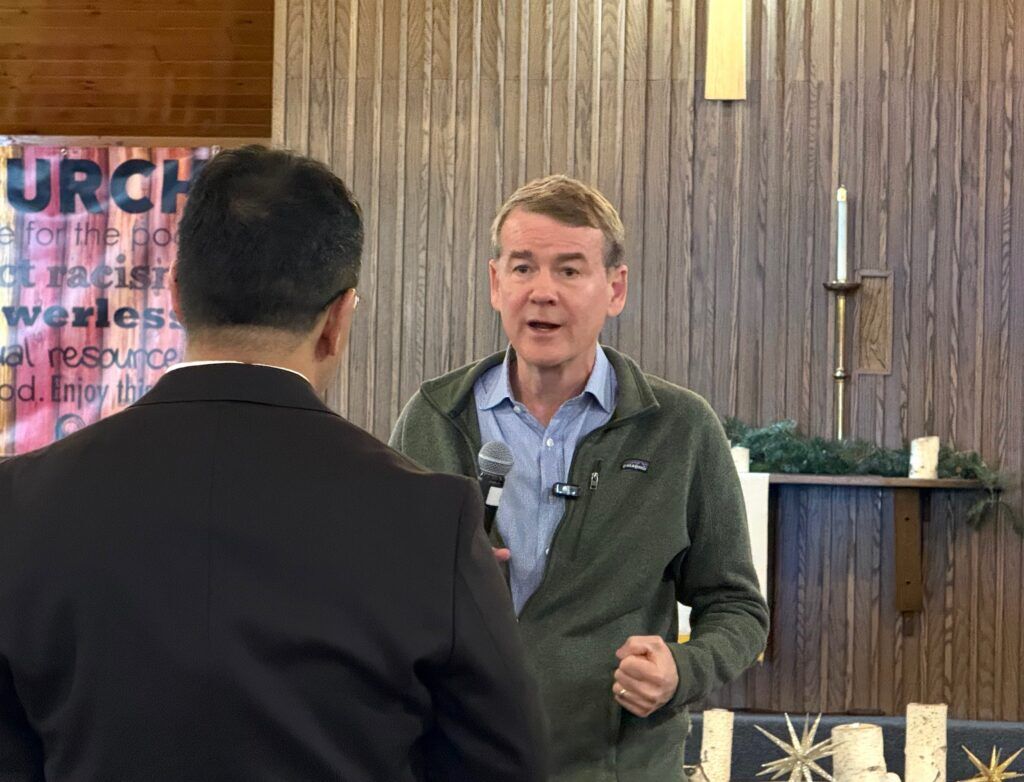
Bennet, the former schools superintendent, repeatedly called the state’s public education system a central focus of his administration, should he be elected governor.
“I think we are in a place where we could create a system of public education in Colorado where every single kid that’s graduating from high school knows they have the skills to earn a living wage, not just the minimum wage,” he said. “There’s no state that can say that in our country. All over the industrialized world, other countries can say that. And I think we could be the first state in America that can do that, and we can be a beacon to the rest of the country. And if we actually have an education system that was doing that, we would transform the lives of millions of Americans, and we would transform our economy.”
Addressing the question of housing affordability — a top issue for nearly every candidate running in Colorado this year — Weiser and Bennet both said the answer to the problem will determine whether Colorado can be the state residents demand.
“We used to build this housing. We can get back to it,” Weiser said. “The Great Recession broke our housing market, and there’s a number of reasons we don’t have as much starter housing.”
He said the notion of encouraging modular housing in order to provide less expensive options quicker makes sense.
“We’ve got to work with state and local governments on the permitting systems. Maybe we can lower permitting fees for starter homes so that we can make sure they get built, and maybe we make sure we have policies that invite more housing development. It has got to happen, or else we keep losing people here in Colorado.”
Bennet made similar points, calling affordable housing a piece of the equation that also includes health care, child care and education.
“We have to build more housing, we have to build more starter homes,” Bennet said at the church in Northglenn. “We have to build more homes for people that are entering the beginning of their economic life, and we’re just not doing it. I don’t think a one-size-fits-all approach is going to work from the governor’s office, but I do think having a governor who’s saying, ‘Look, I don’t care whether you’re the most conservative person in Colorado or the most progressive, if our own kids can’t afford to live here, it doesn’t matter.’ We have a moral obligation to fix that problem.”

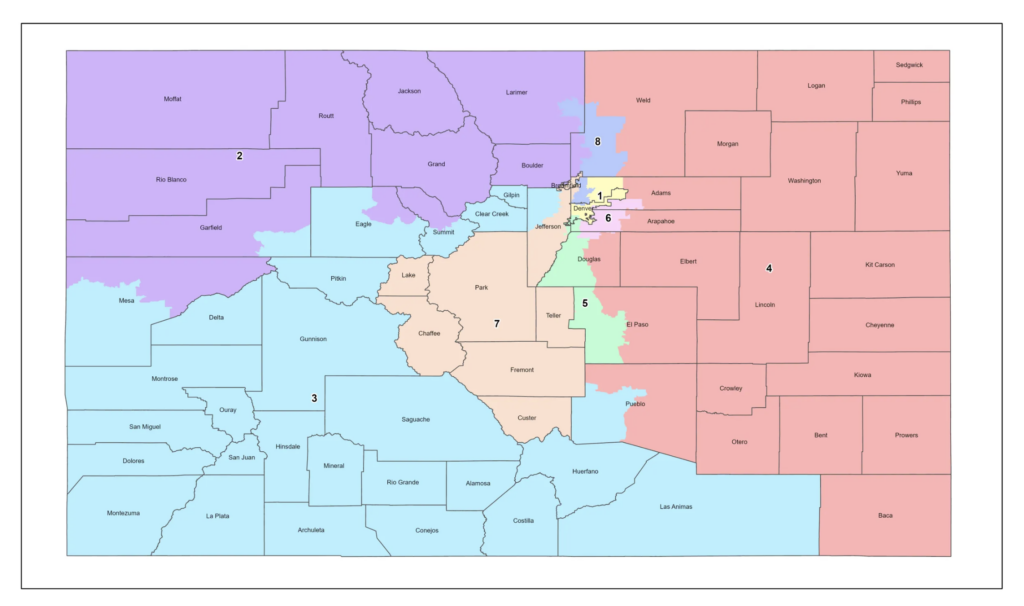
Redistricting scheme would give Colorado Democrats seven House members, split El Paso County | Bob Loevy
Bob Loevy
bob-loevy@denvergazette.com
Updated 4 days ago
A proposed redistricting plan, which could give Colorado seven Democratic members of the U.S. House of Representatives and only one Republican, would split El Paso County into two parts and thereby weaken the county’s influence in Congress. El Paso County,...

Bob Loevy
Reporter
Can deliberation save democracy? | Vince Bzdek
vince-bzdek
vince.bzdek@gazette.com
Updated 3 days ago
In September 2019, 523 Americans traveled to Dallas for an experiment called “America in One Room.” The gathering was designed to test a theory: Could representative citizens deliberate productively even in an era of intense polarization? The event focused on...

vince-bzdek
Reporter
U.S. House probes reports of fraud, waste in Colorado’s Medicaid program
Marianne Goodland
marianne-goodland@denvergazette.com
Updated 3 days ago
A congressional committee is probing reports of waste, fraud and abuse in Colorado’s Medicaid program, citing recent stories outlining over-billing in transportation spending and alleged improper payments in autism services. The U.S. House Committee on Energy and Commerce has sent...

Marianne Goodland
Reporter
Gov. Jared Polis, Upper Basin states criticize federal draft plan for managing the Colorado River
Marianne Goodland
marianne.goodland@coloradopolitics.com
Updated 6 days ago
With no agreement among the seven Colorado River states, which missed multiple federal deadlines, the Upper Colorado River Commission on Monday sharply criticized the U.S. Department of the Interior’s draft plan for managing the river after the current guidelines expire...

Marianne Goodland
Reporter
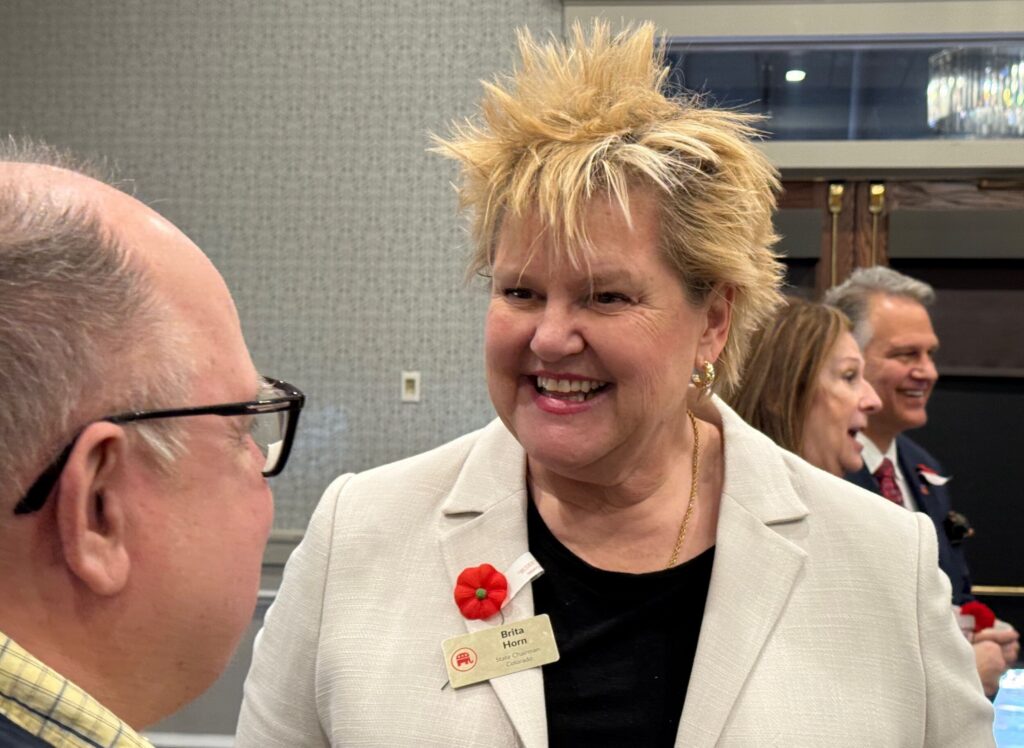
Colorado GOP chair Brita Horn loses ‘no-confidence’ vote, vows to refocus on ‘mending that divide’
Ernest Luning
ernest.luning@coloradopolitics.com
Updated 1 week ago
The Colorado Republican Party’s state central committee approved a resolution expressing “no confidence” in state chair Brita Horn in a landslide late Monday night near the end of an online meeting marked by rancor and confusion. Almost 80% of the...

Ernest Luning
Reporter
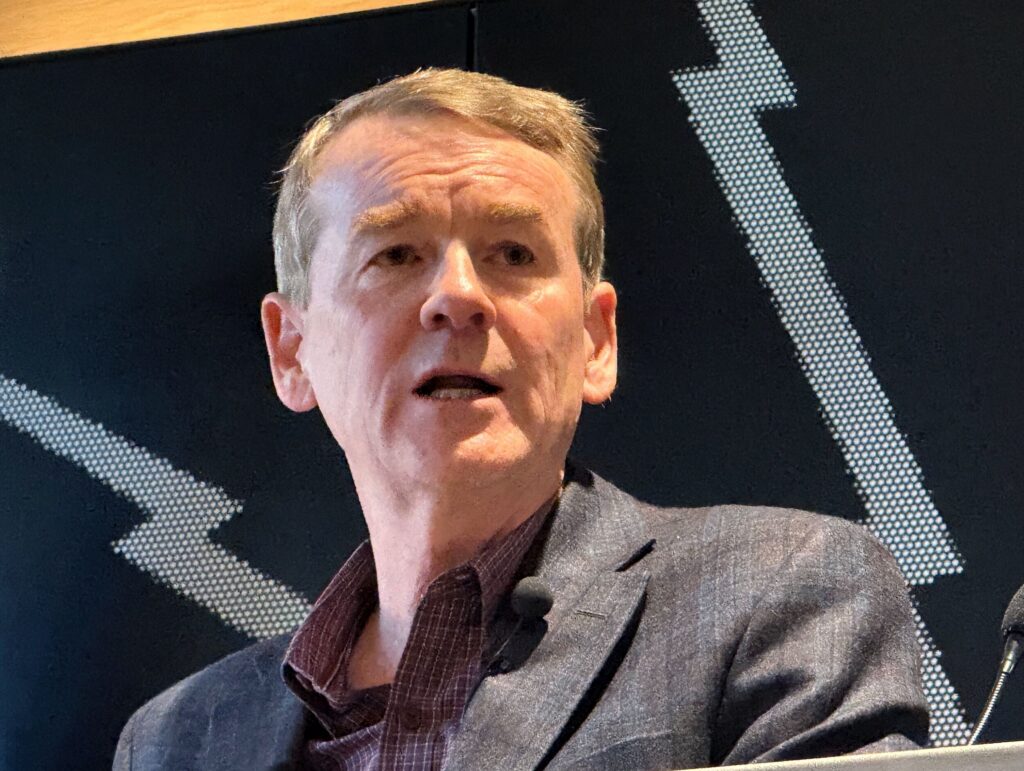
Democrat Michael Bennet turns in petitions for Colorado’s gubernatorial primary, plans to skip caucuses
Ernest Luning
ernest-luning@denvergazette.com
Updated 2 weeks ago
U.S. Sen. Michael Bennet, a Democratic candidate for governor, submitted nominating petitions for Colorado’s June primary ballot on Friday, his campaign and the Colorado Secretary of State’s Office said. Bennet plans to rely on his petitions to get on the...
Ernest Luning
Reporter
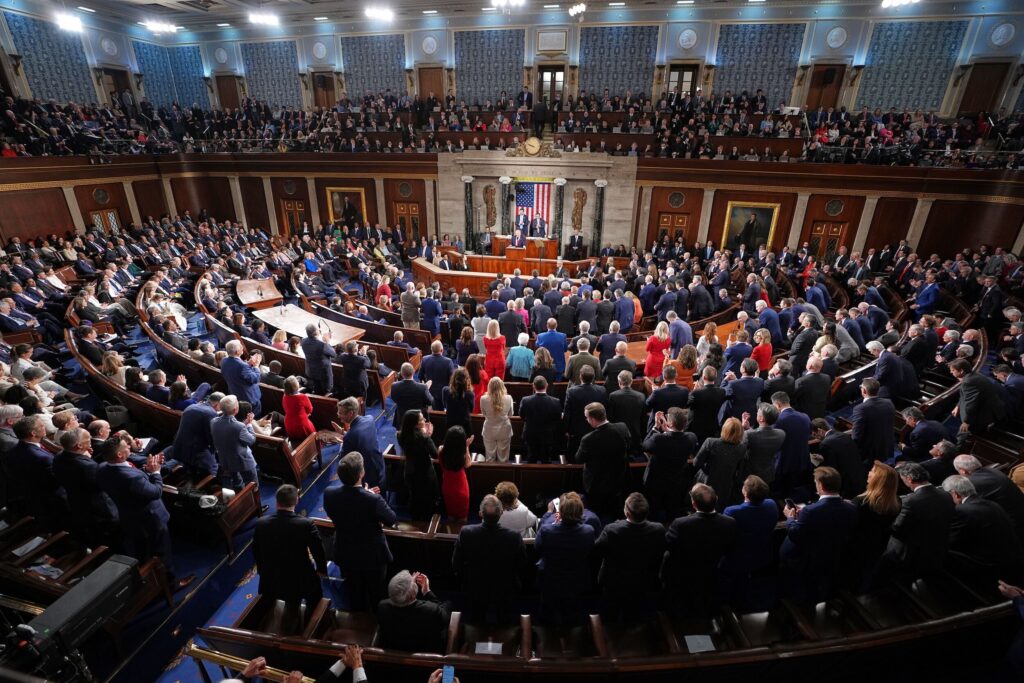
Colorado lawmakers react along partisan lines to Donald Trump’s State of the Union address
Ernest Luning
ernest-luning@denvergazette.com
Updated 2 weeks ago
President Donald Trump could have been describing two different countries in Tuesday’s State of the Union address — one entering a “Golden Age” and the other enduring daily stress under a “lawless” regime — at least as far as the...
Ernest Luning
Reporter
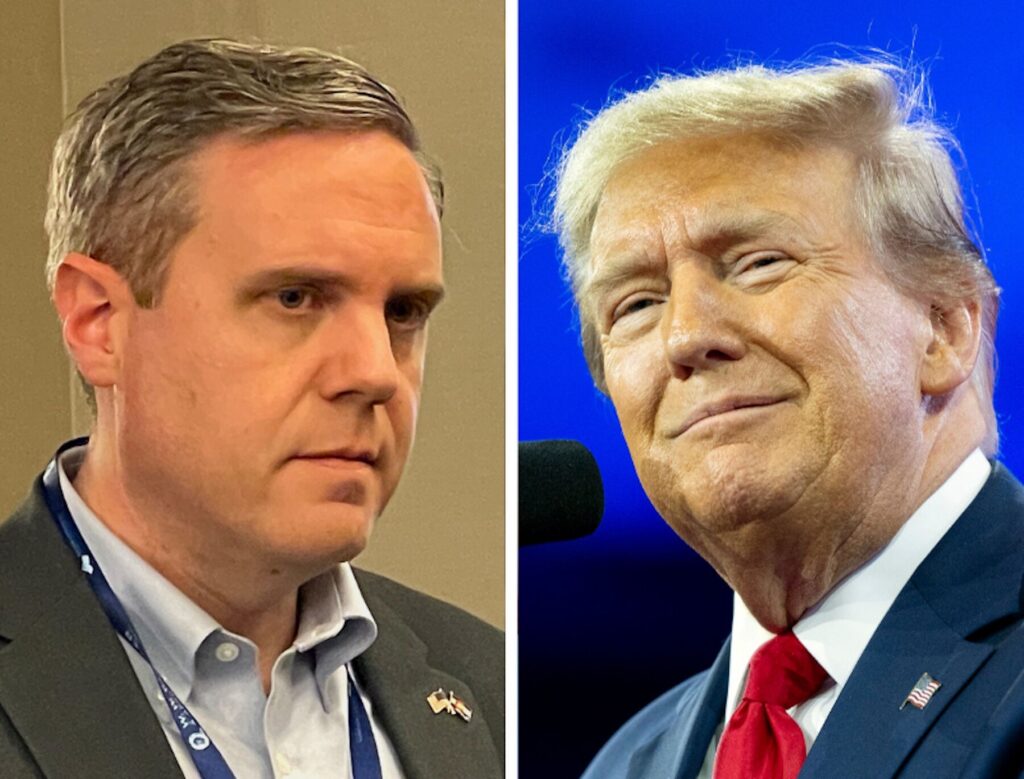
Trump pulls endorsement from Jeff Hurd over tariffs, backs Colorado Republican’s primary challenger
Ernest Luning
ernest-luning@denvergazette.com
Updated 2 weeks ago
President Donald Trump on Saturday rescinded his endorsement of U.S. Rep. Jeff Hurd and threw his support behind the Colorado Republican’s primary challenger, Hope Scheppelman, citing the first-term incumbent’s “lack of support” for the administration’s tariff policy. The move comes...
Ernest Luning
Reporter
In a meeting Colorado GOP chair Brita Horn calls ‘illegal,’ Republicans vote to demand her resignation
Ernest Luning
ernest-luning@denvergazette.com
Updated 3 weeks ago
Roughly half the membership of the Colorado Republican Party’s state central committee on Saturday voted overwhelmingly to approve a resolution expressing “no confidence” in state GOP Chairman Brita Horn’s leadership and calling for her immediate resignation in an online meeting...
Ernest Luning
Reporter
Colorado GOP officers set competing meetings to hold ‘no-confidence’ votes on state chair Brita Horn
Ernest Luning
ernest-luning@denvergazette.com
Updated 3 weeks ago
Once again, members of the Colorado Republican Party’s central committee have scheduled separate, competing meetings to consider whether the state GOP’s governing body supports its chair, but this time neither meeting will be held under a bridge. State GOP Chair...
Ernest Luning
Reporter
PREV
PREVIOUS

The role of religion in tumultuous times: Different Colorado Springs faith groups unite under separate causes
As the nation’s political divisiveness limps along in a perpetually severed state, pastors of different beliefs seem to have found a speck of commonality. It’s not in doctrine or religiosity but in like-minded unity. A few recent events in Colorado Springs underscore how faith groups with varying missions are embracing the concept of strength in […]

Greeley voters to decide fate of project that includes minor league hockey arena
GREELEY • The fate of the Cascadia development — and quite possibly the future direction of the city — is in the hands of Greeley voters this Tuesday during a special city election on whether the landscape-altering project should be halted. Cascadia is a master-planned community designed to integrate housing, recreation, jobs, and quality-of-life amenities. […]