







Ousted film commissioner intends to sue state of Colorado
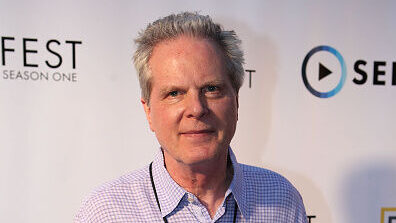
Donald Zuckerman is no longer a silent film commissioner.
Zuckerman’s legal team has filed an intent to sue the state of Colorado, charging he was wrongfully terminated as the state’s film ambassador.
Zuckerman, who was integral to Colorado’s winning bid to become the new home of the Sundance Film Festival, made it plain to The Denver Gazette on Thursday that he was fired last September – he was told, he said, for yelling at a co-worker – and that his legal team would sue on the basis that his firing was “abrupt, arbitrary and capricious.”
According to documents filed by Baker Law Group, the “notice of claim” will charge the state with defamation, intentional infliction of emotional distress, age discrimination, unlawful retaliation and wrongful discharge.
“Accusing an 80-year-old New Yorker of yelling is a trope best left for the movies, not as pretext for unlawful age discrimination against the individual who is credited with bringing the Sundance Film Festival to Colorado,” Zuckerman’s notice, dated Feb. 9 and addressed to Colorado Attorney General Phil Weiser, said.
It’s not money he is after, Zuckerman said – except for reimbursement of legal fees.
“I want a hard apology,” he said.
Zuckerman, who said he intended to stay on as Colorado Film Commissioner through the first Sundance Film Festival in Boulder next January, believes he was “targeted for erasure” by Eve Lieberman.
Lieberman is the executive director of the Office of Economic Development and International Trade (OEDIT), a state agency that exists to support business growth in Colorado. Under its umbrella is the Colorado Office of Film, Television and Media, which promotes the economic growth of the film industry, in part by administering the state’s modest film incentives program. Both are state offices.

On Thursday, Zuckerman said Gov. Jared Polis did nothing to stop his termination.
“And I think it’s an embarrassment that he didn’t,” Zuckerman said. “I was really surprised.”
An OEDIT spokesperson provided The Denver Gazette with Zuckerman’s termination letter, along with the following statement: “OEDIT is committed to fostering a safe and healthy workplace for all while upholding workplace policies and the law. As a general practice, we do not discuss specific personnel issues in order to protect all parties.”
As for Zuckerman’s legal filing, the statement continued: “A demand letter reflects one party’s claims, not findings of fact or wrongdoing. OEDIT disputes the allegations in this demand letter.”
A spokesperson for Polis deferred to OEDIT’s statement.

Zuckerman said he believes his dismissal was triggered by what he called “an unpleasant conversation” he had with a colleague at the Colorado Office of Film, Television and Media last Sept. 9 – five months after Sundance officials announced the move to Boulder.
Soon after, he said, he was on a call with Lieberman and the state’s head of human resources, where, he claimed, he was given a choice: Resign or be fired.
“And I said, ‘Well, I’m not resigning,’” he told the Denver Gazette. “Resigning means: ‘Oh, I’m guilty of something.’ And I wasn’t guilty.”
Zuckerman’s notice of intent to sue accused Lieberman of “publishing false statements with unmistakable insinuations that Mr. Zuckerman engaged in … morally repugnant misconduct.” It went on to claim those alleged defamations “were disseminated to industry partners and beyond, and made with actual malice.”
Talking again with The Denver Gazette, Zuckerman said, “She led everybody to believe that I had done something really bad, and I did not.”
He denied yelling at his former colleague.
He said that Lieberman’s actions “created a cloud over me wherever I go.”
The wound deepened, Zuckerman said, when he was excluded from an awards presentation honoring OEDIT in part for the office’s success at helping to land Sundance. Instead, “they erased me,” he said. “That’s when I decided, ‘I’m getting a lawyer, and I’m going to set the record straight.’”
He added: “I want people to know that Eve Lieberman targeted me for no good reason, and she is trying to take total credit for Sundance.”
In January, Lauren Grimshaw Sloan was named as Zuckerman’s permanent successor.
Zuckerman did not offer a timeframe for when his lawsuit would be filed. In Colorado, a person is required to file a notice before suing the government.
Zuckerman has been the Colorado Film Commissioner since 2011. His abrupt departure means no chance of a victory lap in the lead-up to Sundance 2027.
He believes his tenure should be remembered for three significant accomplishments. The film-festival momentum began in 2024, when the Sundance Institute chose the Stanley Hotel in Estes Park to host its prestigious annual Directors Lab program for budding filmmakers. It went so well that Sundance brought the project back the next year, along with participating actors and mentors Ed Harris, Christine Lahti, Jason Reitman and others.
That paved the way for Sundance’s burgeoning interest in Boulder as a new home for the film festival, and Zuckerman was a leader of the Colorado contingent that brought it home.
But for the local filmmaking community, his greatest success was in 2024, when the state took a toe-dip back into the deep waters of competitive filmmaking. That’s when Polis signed a bill that guarantees $5 million in annual refundable tax credits to filmmakers through at least 2029. For the first time, Colorado now has a sustainable and predictable production incentive written into the state budget.
“I was fighting for years to get a decent film incentive that was guaranteed, and I’m happy that we finally got that,” he said. “But the only reason we got any money was because (former State Rep. Leslie Herod) fought and fought and fought for it. Five million a year isn’t a lot of money, but it’s better than it was.”
As for what’s next, Zuckerman said: “I’m crucially involved in trying to put together a future AI film festival for young people.”
John Moore is the Denver Gazette’s Senior Arts Journalist. Email him at john.moore@denvergazette.com.

What it’s like to be part of Denver’s potentially smallest parade
Bernadette Berdychowski
bernadette.berdychowski@denvergazette.com
Updated 5 hours ago
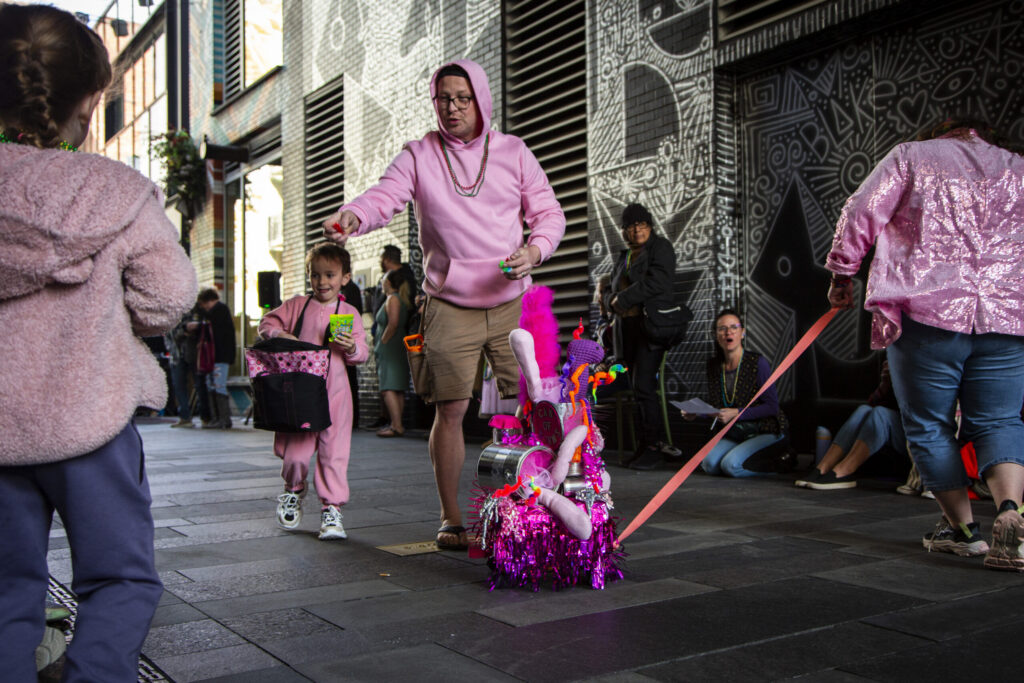
The Richey family was up until 1:30 a.m. on Sunday working on their second-ever float entry for the Dairy Block’s Petite Parade in Lower Downtown. Lexi, Scott and their son dressed up in all pink to match their float titled...

Bernadette Berdychowski
Reporter

A Colorado Life: Janelle Orsborn’s final message: ‘Definitely live big’
John Moore
john.moore@denvergazette.com
Updated 11 hours ago
Actor, author and former Miss Colorado’s Teen fit a lot into her ambitiously adventurous and tragically abbreviated 33 years Janelle Orsborn was big sister to Anna, Abigail, Jake, Daniel and Natalie. But really, says Abigail: “Janelle was a big sister...
John Moore
Reporter

Denver area events for Feb. 28
Carlotta Olson
carlotta-olson@denvergazette.com
Updated 2 days ago
If you have an event taking place in the Denver area, email information to carlotta.olson@gazette.com at least two weeks in advance. All events are listed in the calendar on space availability. Saturday Après at The Terminal: Patio Sessions — With live DJ,...

Carlotta Olson
Reporter

PIKES PICK: A ‘K-Pop Demon Hunters’ day awaits
Linda Navarro
linda-navarro@denvergazette.com
Updated 6 days ago
It’s the music that makes you move and Black Sheep plans a dance party to the soundtrack of “K-Pop Demon Hunters” coming up April 18, 11 a.m. Costumes expected and it’s for all ages. $21.12-$24.21 at blacksheeprocks.com — Linda Navarro

Linda Navarro
Reporter

34th annual Wine Festival of Colorado Springs blends flavor with fundraising
April Borjon
april.borjon@gazette.com
Updated 3 days ago
Sweet, bold or a little bitter, however you take your wine, Colorado Springs will be pouring it by the glassful next week. The 34th annual Wine Festival of Colorado Springs returns Wednesday and runs through March 7, bringing four days...

April Borjon
Reporter

Denver area events for Feb. 27
Carlotta Olson
carlotta-olson@denvergazette.com
Updated 3 days ago
If you have an event taking place in the Denver area, email information to carlotta.olson@gazette.com at least two weeks in advance. All events are listed in the calendar on space availability. Friday Opera Colorado Grand Gala — With cocktails, dinner, live auction...
Carlotta Olson
Reporter

Sandoitchi pop-up returns to Denver, bringing its viral Japanese sandos
Emily Bejarano
emily-bejarano@gazette.com
Updated 3 days ago
No need to book a flight for those trendy convenience store sandwiches – but they won’t be in town for long Inspired by the sweet and savory ‘Sandos’ found at konbini convenience stores across Japan, Sandoitchi makes a return to...

Emily Bejarano
Reporter
Denver area events for Feb. 26
Carlotta Olson
carlotta-olson@denvergazette.com
Updated 3 days ago
If you have an event taking place in the Denver area, email information to carlotta.olson@gazette.com at least two weeks in advance. All events are listed in the calendar on space availability. Thursday Belphegor — With Incantation, Hate & Narcotic Wasteland, 6:45 p.m.,...
Carlotta Olson
Reporter
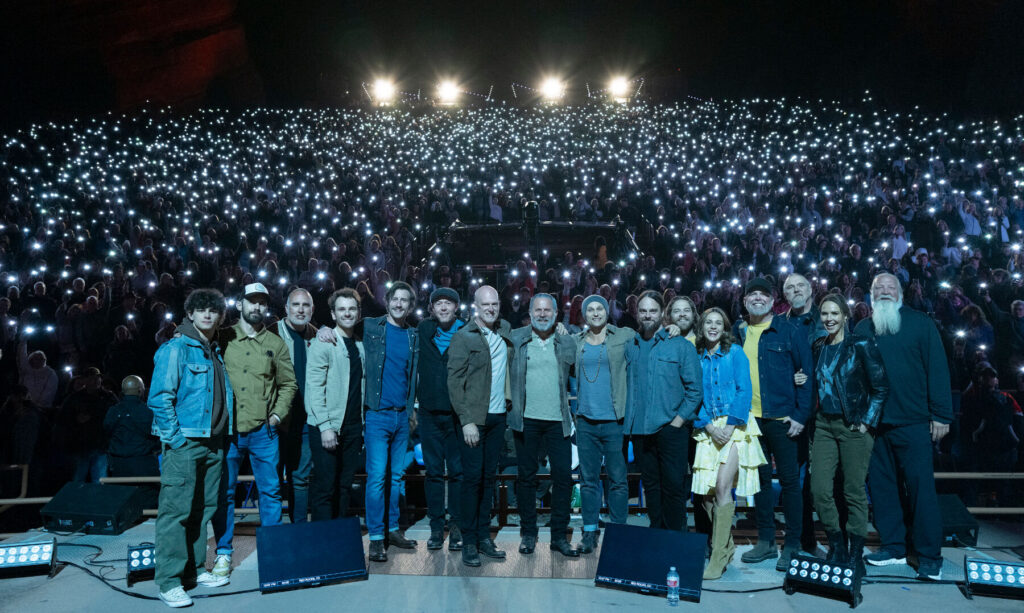
Mercy! Faith film takes center stage at Red Rocks
John Moore
john.moore@denvergazette.com
Updated 4 days ago
Faith-based movies are enjoying a resurgence driven by higher production quality and box-office performance. One was just filmed at Red Rocks. At a time when you can’t say anything without saying something controversial, I’m just going to come out and...
John Moore
Reporter

New Arvada Center CEO is Zoo’s Noelle DeLage
The Denver Gazette
the-denver-gazette@denvergazette.com
Updated 4 days ago
The Arvada Center has named Noelle DeLage, chief communications and philanthropy officer of the Denver Zoo Conservation Alliance, as its next president & CEO. DeLage succeeds the retiring Philip Sneed effective July 1, just as the Arvada Center begins its...

The Denver Gazette
Reporter
PREV
PREVIOUS

Hillary Clinton tells congressional panel she has no information on Epstein
WASHINGTON • Former U.S. Secretary of State Hillary Clinton told a congressional committee on Thursday that she did not remember ever meeting the late sex offender Jeffrey Epstein and had no information to share about his criminal activities. “I do not recall ever encountering Mr. Epstein. I never flew on his plane or visited his island, homes or […]

Denver area events for Feb. 27
If you have an event taking place in the Denver area, email information to carlotta.olson@gazette.com at least two weeks in advance. All events are listed in the calendar on space availability. Friday Opera Colorado Grand Gala — With cocktails, dinner, live auction and performances, 5 p.m., Denver Performing Arts Complex, 1400 Curtis St., Denver, $400. Tickets: operacolorado.org/support/gala. […]