







Goosebumps: Baseball legend Dick Allen gets his due
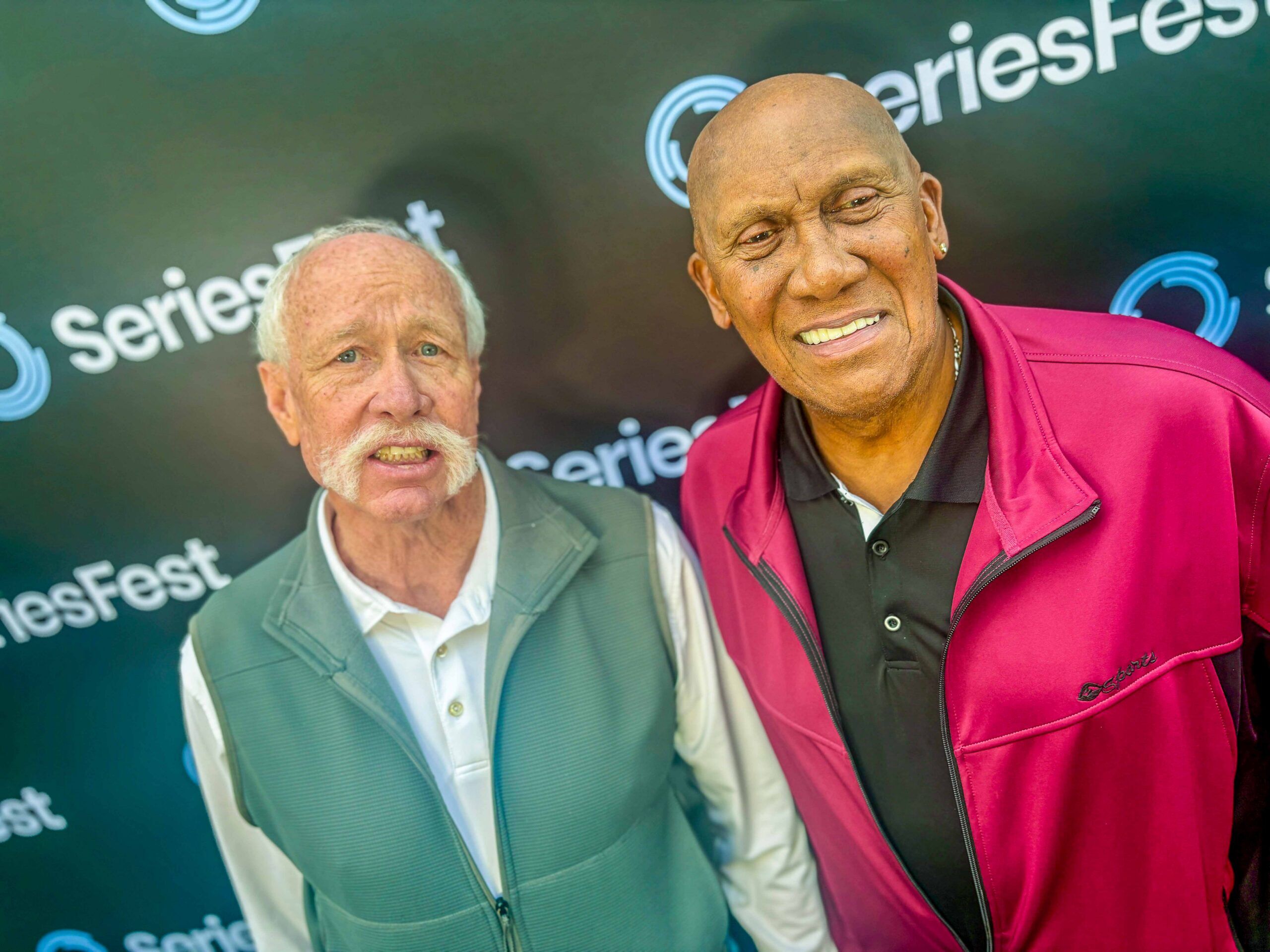
SeriesFest brought new series about Phillies star to Colorado, along with Goose Gossage, Ferguson Jenkins and the ‘Superstar’ of organists
In his 74 years, Goose Gossage has been at a loss for words only for about as long as it took his 103-mph fastball to reach the catcher’s mitt in the 1978 All-Star Game.
But for one recent moment, one of baseball’s most opinionated observers was stunned into silence.
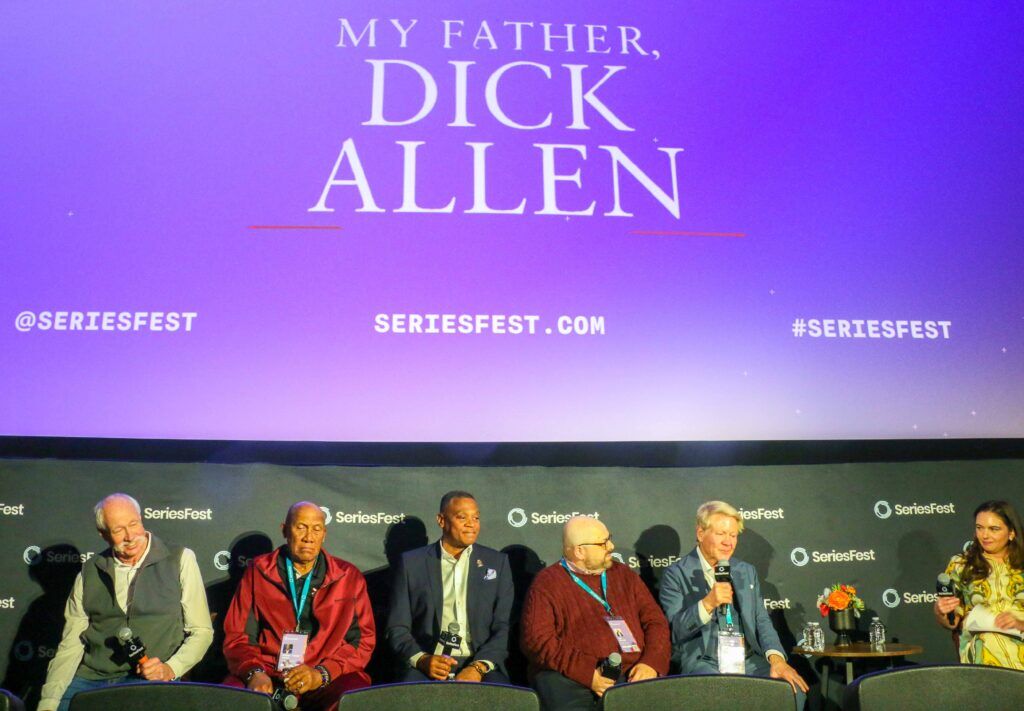
“I am in shock at the things I just saw,” the visibly moved Hall of Fame hurler said May 9, moments after the world-premiere screening of the first two episodes of a planned five-part documentary series titled “My Father, Dick Allen” as part of SeriesFest at the Sie FilmCenter.
Gossage, a Class of 2008 Hall of Famer from Colorado Springs, was a rookie with the 1972 Chicago White Sox team that was saved from certain oblivion by the simultaneous arrival of outspoken 10-year veteran first baseman Dick Allen.
“(Manager Chuck Tanner) told me, ‘Son, you are about to meet the smartest baseball man you will ever meet’ – and that was Dick Allen,” Gossage said. “Little did I know that, as a rookie. I’m watching the greatest player I would ever see play. The greatest hitter I would ever see hit. The greatest baserunner I would ever see run.”
“I played with (Jose) Canseco. I played with (Mark) McGwire. And let me tell you something: They didn’t hit the ball as hard as Dick Allen – not even close. This was bad, bad Leroy Brown.”
Gossage looked at Allen and saw more than a mentor. He saw a god.
“When I met Dick’s son, Richard, I said to him: ‘You didn’t know you have a White brother,’” Gossage said. “But that’s how Dick was to me. He was like my dad.’”
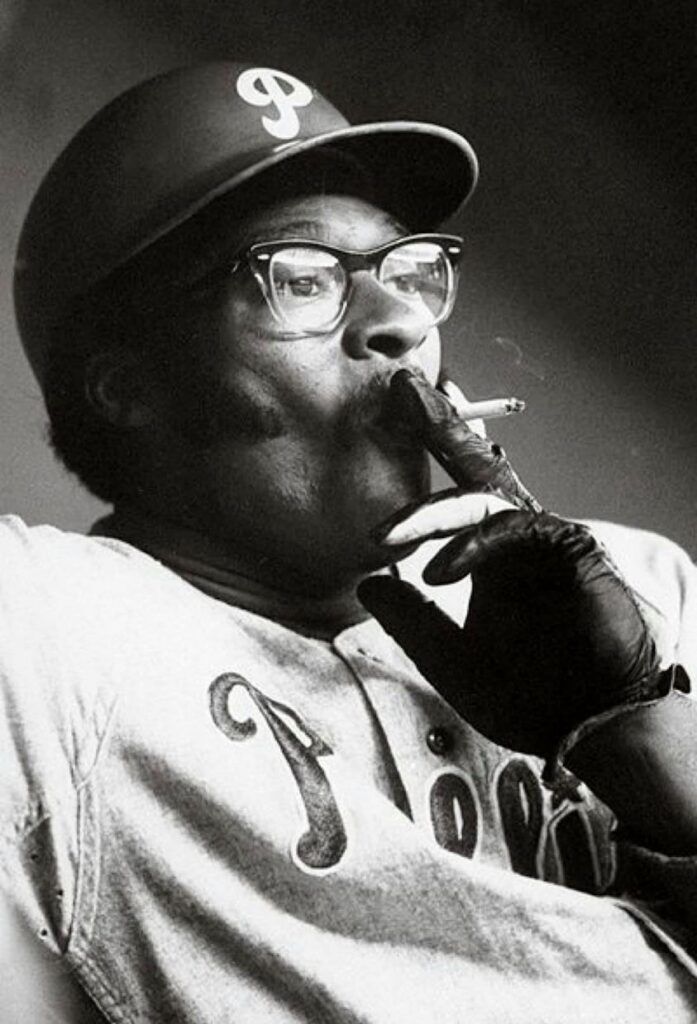
There was one clue that life was not entirely easy for Dick Allen, the brick house of baseball. It was the protective batting helmet he started regularly wearing in the field while playing first base for the Phillies in 1966, a time of immense racial unrest in the city.
“He didn’t wear it because it was stylistic,” docuseries director Andy Billman said. “He wore it for safety.” More specifically: He wore it to protect himself from the hostility of fans who often threw batteries and coins in his direction. A home-team player who hit above .300 in each of his first four seasons with the team.
Big problems at Little Rock
When the Philadelphia Phillies signed their hometown prospect, “The Wampum Walloper,” from rural Pennsylvania to a $70,000 bonus, it was the largest deal of its kind yet given to a Black player.
The Phillies assigned him to its new Triple-A affiliate in Little Rock, Ark. Now, you have to understand: This was only six years after the desegregation of Little Rock’s Central High School required federal military intervention, presidential action and the immense courage of nine Black students.
Allen had never been to the South. He begged team officials not to send him there. Instead, they dropped Allen and his new roommate, future Hall of Fame pitcher Ferguson Jenkins, directly onto the front lines of the American civil-rights movement.
The two were forced to live in segregated housing apart from their White teammates. They were denied service at local restaurants. They received death threats. Opposing players sometimes stated they would not take the field if they played – 16 years after Jackie Robinson had broken baseball’s big-league color barrier.
Allen described the racism he encountered in Arkansas as unrelenting and severe. Jenkins, who is now 83 and traveled to Denver from Texas last week to support the film, called it an incredibly lonely year in Little Rock. For Allen, it was only one. For Jenkins, it was three.
“Segregation was still real popular back then,” Jenkins told the Denver Gazette. “There was a lot of suffering and abuse with the name-calling and things like that. I felt safe on the field … but it was always there.”
Before the Arkansas Travelers’ 1963 home opener, some fans picketed outside the stadium carrying signs like: “Let’s Not Negro-ize Our Baseball.” Allen frequently found threatening, racially derogatory notes on his car, which at one point was spray-painted with the N-word. He said he was repeatedly stopped without cause by police.
Somehow, through all that toxic sludge of hate, Allen hit .289 for the season and was called up in September to the Phillies, where he would soon win the 1964 National League Rookie of the Year award.
Gossage did not know then what viewers will better know once “My Father, Dick Allen,” is completed and distributed.
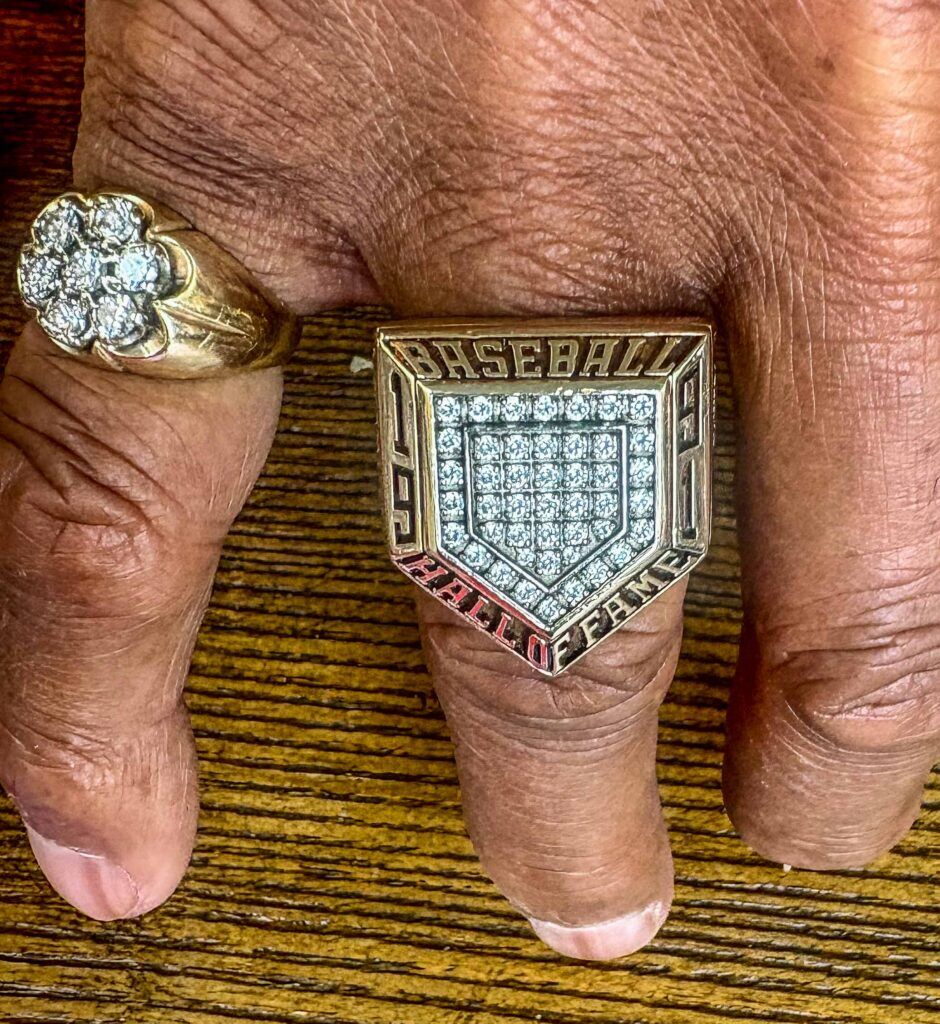
“I had no idea that Dick had to go through all those things in Little Rock,” Gossage said. “As close as I thought I was to Dick – and he shared a lot of things with me, but he never shared that. Me? I’m just a kid in 1972. I’m green as hell behind the ears. I don’t know (bleep) from shinola. But I’m just in total awe of Dick Allen. So to see this now, after all these years … I’ve got goosebumps – no pun intended.”
Allen ultimately played for five teams over 15 seasons, the highlight surely being that 1972 campaign with Gossage and the White Sox, when Allen was named the American League MVP.
Still, he had a combustible relationship with the all-White sports writers, who repeatedly labeled him as difficult and uncooperative. Much was made of an ugly altercation between the 23-year-old Black budding superstar and 36-year-old White teammate Frank Thomas before a Phillies-Reds game in July 1965. It took anywhere from five to eight teammates to separate the two, depending on the source story. But while they both went on to play great that day (Allen went 3-for-4 with two triples, and Thomas tied the game with a pinch-hit solo homer in the eighth inning), management soon released Thomas, who freely told the media that Allen just couldn’t take a joke. Meanwhile, Billman said, the team ordered Allen not to talk to the media – about anything. He didn’t talk.
“So the Philadelphia Inquirer talked for him,” Billman said. “And they didn’t say nice things. And the fans turned against Dick.” The animosity between Allen and the Phillies’ beat reporters only escalated until he was traded five years later.
Allen retired after the 1977 season with credentials that NBC Sports said at the time “scream Hall of Fame.” He was a rookie of the year, an MVP and a seven-time all-star with 351 home runs, 1,119 RBI and a career batting average of .292. But that’s not in itself an automatic pass into the Hall. You know who else hit for a .292 career average? Gary Sheffield and Thurman Munson – and neither of them are enshrined. Nor are (in various positions) Roger Maris, Luis Tiant, Graig Nettles or Tommy John.
But there is one credential Allen had that no other player can ever claim: He invented the walk-up song. Or, rather, the walk-up song was invented for him.
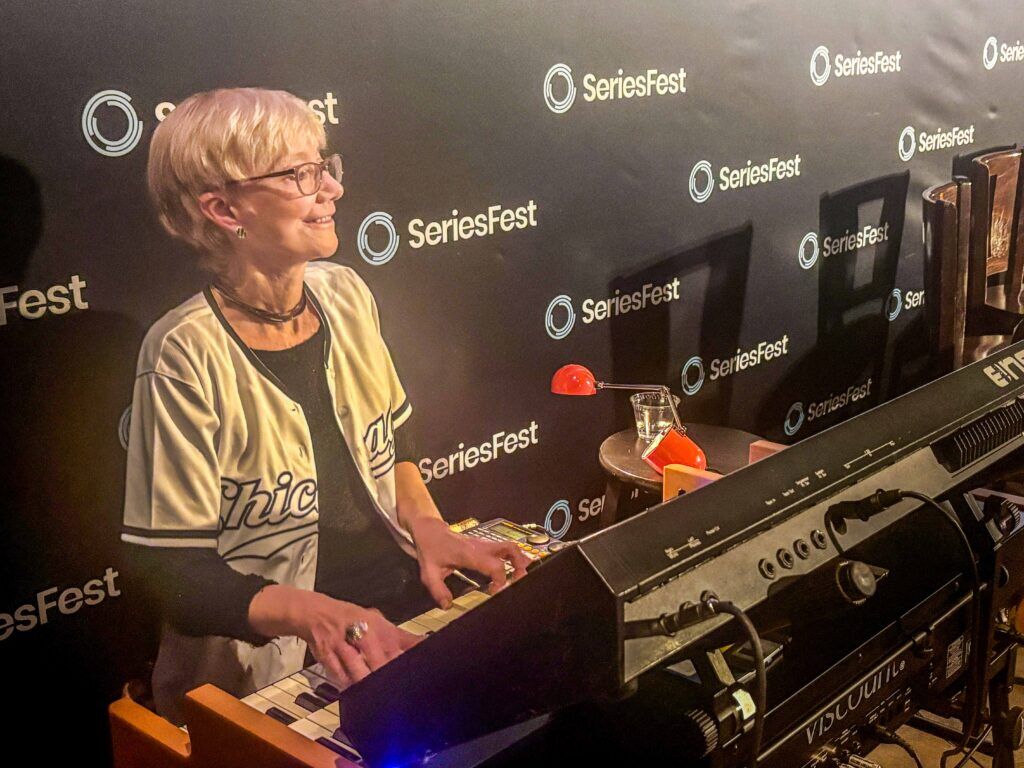
It’s true. Nancy Faust, the legendary Chicago White Sox organist from 1970-2010, “is a pioneering musician who transformed stadium organ music into an essential part of the baseball experience,” said actor Jocko Simms. He not only narrated “My Father, Dick Allen,” he appears in the upcoming streaming reboot of “Little House on the Prairie.”
Faust and her husband drove all the way from Chicago – with her organ – just to entertain the Denver audience before the screening. She treated them to songs like “Come and Get Your Love,” “Take Me Out to the Ballgame” (natch) and the very first walk-up song ever performed for anyone: “Jesus Christ Superstar,” which Faust thought up for Dick Allen spontaneously in 1972.
“My job was to play popular music that was familiar to everybody in the stands,” Faust said. But there was so much more to it. Faust was the first sports organist to play entirely by ear, rapidly responding to the game’s unfolding action in real time with clever musical retorts – sort of like an improv comedian. In ’72, she walked it one step further.
“At the time, there wasn’t a term called ‘walkup music,’” Faust said. “But when Dick came up to the plate that day, I just had this knee-jerk reaction to play something special for this man who had attracted so much attention in Chicago and who was so charismatic. He just strutted up to the plate like a star, and it just seemed to me like ‘Jesus Christ, Superstar’ was the natural song for him.
“And so, I played it. And Sports Illustrated wrote about it. And then I started playing songs for other players as well because such a big deal was made out of it. So, Dick really put me on the map.” (She rewrote that map in 1977, when she also started the stadium tradition of playing “Na Na Hey Hey Kiss Him Goodbye” to taunt opposing pitchers.)
Dr. David Fletcher – yes, he is a real-life physician and a co-author of the film’s source book, “Chili Dog MVP” – said there was truth in every note of Faust’s “JCS” walk-up inspiration.
“When Dick Allen came to the White Sox, he really was the savior,” Fletcher said. “That’s why ‘Jesus Christ Superstar’ is so important. He literally saved the franchise.”
He did that by making a transformative impact on the White Sox, who were baseball’s worst team in 1970 at 56-106. Two years later, Allen’s first with Chicago, the Sox won 31 more games (87-67). Just as important, they drew 1.3 million fans, up 56% over 1970 – the same year Faust arrived on the South Side.
“1970 was absolutely the worst attendance ever at Comiskey Park,” said Faust, a history dating back to 1910. (“Good time for me to break in,” she joked.)
But “what a difference when Dick came two years later,” she added. “When he came up to bat, nobody would go to the bathroom. Nobody got hot dogs or anything.”
Team historians have said Allen’s electrifying, MVP-winning performance in 1972 singlehandedly boosted plummeting attendance, galvanized South Side fans and thwarted rumors that the franchise was going to be relocated to another city like St. Petersburg or Milwaukee. Finally, 10 years into his career, Allen was feeling both love and respect from fans.
Long road to the Hall
Over his 15-year career, Allen was more than a baseball journeyman who made his mark in Philadelphia (twice), St. Louis, Los Angeles, Chicago and Oakland. He was a civil-rights pioneer whose unconventional personality and lingering beefs with voting sportswriters kept him out of the Baseball Hall of Fame. His long and turbulent journey there would take almost another 50 years to complete.
That’s one of the reasons Allen’s son, Richard, set out to make this docuseries. But its creators are endeavoring to make much more than a biographical homage. “My Father, Dick Allen” is both a baseball story and a broader narrative about race, resilience and recognition in American sports. And yes, Fletcher added, it was initially meant to put some added pressure on baseball’s Hall of Fame voters.
In 1983, his first year of Allen’s eligibility, he received only 3.7% of the vote from the Baseball Writers’ Association of America. You need 75% for enshrinement, and you only have 10 years to get it. After that, a given player’s consideration is then handed over to a “Classic Baseball Era” committee that only considers specific players every three years, and it takes 12 of their 16 votes to get in. Allen fell one vote short in 2014, and again in 2021.
“Even though he was the best offensive player at baseball for 11 years, he wasn’t in the Hall of Fame,” said Fletcher. “When he lost by one vote in 2014, I was sitting next to Richard. It was a horrible experience to see him lose.”
The film captures the same moment repeating itself in 2021. What made this even worse is that Allen had died a few months before at 78.
“I was determined the next time we were going to be successful,” said Fletcher. And they were, garnering 13 of 16 votes in 2025. The hard part was over.
Allen had spent much of his life misunderstood. Fighting, Fighting back. No more.
“Before his death, I asked my dad to travel with me to Little Rock.” Richard said. “I think I just needed to see this place that had caused him so much pain for myself. Just the two of us.”
His father declined.
“He said that would be like walking through the graveyard,” Richard said.
Instead, he rallied Jenkins, his dad’s old friend and roommate to make the pilgrimage instead. They visited the historic high school. They admired the statues that show the Little Rock Nine students in a permanent state of play. He thinks his dad would have liked seeing that.
Now, the film series is no longer about getting Allen into the Hall Fame, it’s making sure he’s properly remembered – as well as his times. And who filmgoers meet, they say, might surprise them.
They say you will meet a stoic man, a proud family man, a genius hitter who worked hard and, yes, liked to knock one back, smoke a cigarette in the dugout and bet on the ponies, even if that might make him late for a game getting back. “He went through so much,” Billman said. “Honestly, I think of Dick as an all-American man.”
What you won’t get, Gossage promises, “is one ounce of bull (bleep). Because he didn’t have one ounce of that in him. Period.”
John Moore is the Denver Gazette’s Senior Arts Journalist. Email him at [email protected].