







Are younger Coloradans reaching for faith? Denver church crowds shout ‘yes’
If churchgoing ever hit a low point in American history, it would have been exactly six years ago, just as the year 2020 arrived.
Late the previous year, a widely publicized Pew Research study had documented an ongoing erosion of Christianity and of general religious identity in the U.S. The tally of Americans who identified as Christian, the research said, had fallen to 65% — down 12 points over a single decade.
Moreover, those identifying as atheist, agnostic or as “nones” had climbed to 26%. The unconformity widened further by age groups, older to younger.
Then COVID-19 arrived, with public health orders by governments effectively closing down places of worship, along with schools, businesses and other public buildings.
In Colorado, a March 2020 order capped gatherings at 10 people. Many large denominations suspended public worship. Some adopted remote services.
Denver was already feeling the pinch well before that — way out West where 58% of residents have arrived from someplace else and where religious ties to family are stretched thin by hundreds or thousands of miles. Last year, a Pew study ranked Colorado church attendance among the lowest 15 states.
Pew put the percentage of Coloradans voicing no religious affiliation at 40%, considerably higher than the 29% national average — another factor working against church attendance coming into the pandemic.
“Yeah, we lost some membership,” said Peter Young, senior leader of BridgeWay Church in Denver, referring to the pandemic years.
Young founded his non-denominational church near I-25 and East Evans Avenue 20 years ago with a few other couples. Coming into the pandemic, with a full worship band and a service that he calls “a little-bit charismatic,” it was drawing 525 regular attendees.
“We about halved in size during COVID,” Young said.
Now the church has seen on-site attendance climb back to 450, but with another thousand following online — something that had been a novelty before the pandemic.
‘Tapping into a hunger‘
Five miles east at Hampden Avenue and Havana Street, some 2,400 worshipers each Sunday are packing what used to be an accounting firm’s building for three services at Lifegate Church.
Unlike the faces at traditional churches and synagogues around town, worshipers are overwhelmingly Millennial-aged — or more prominently Gen-Z.
The clergy here track attendance climbing at 25% every year.
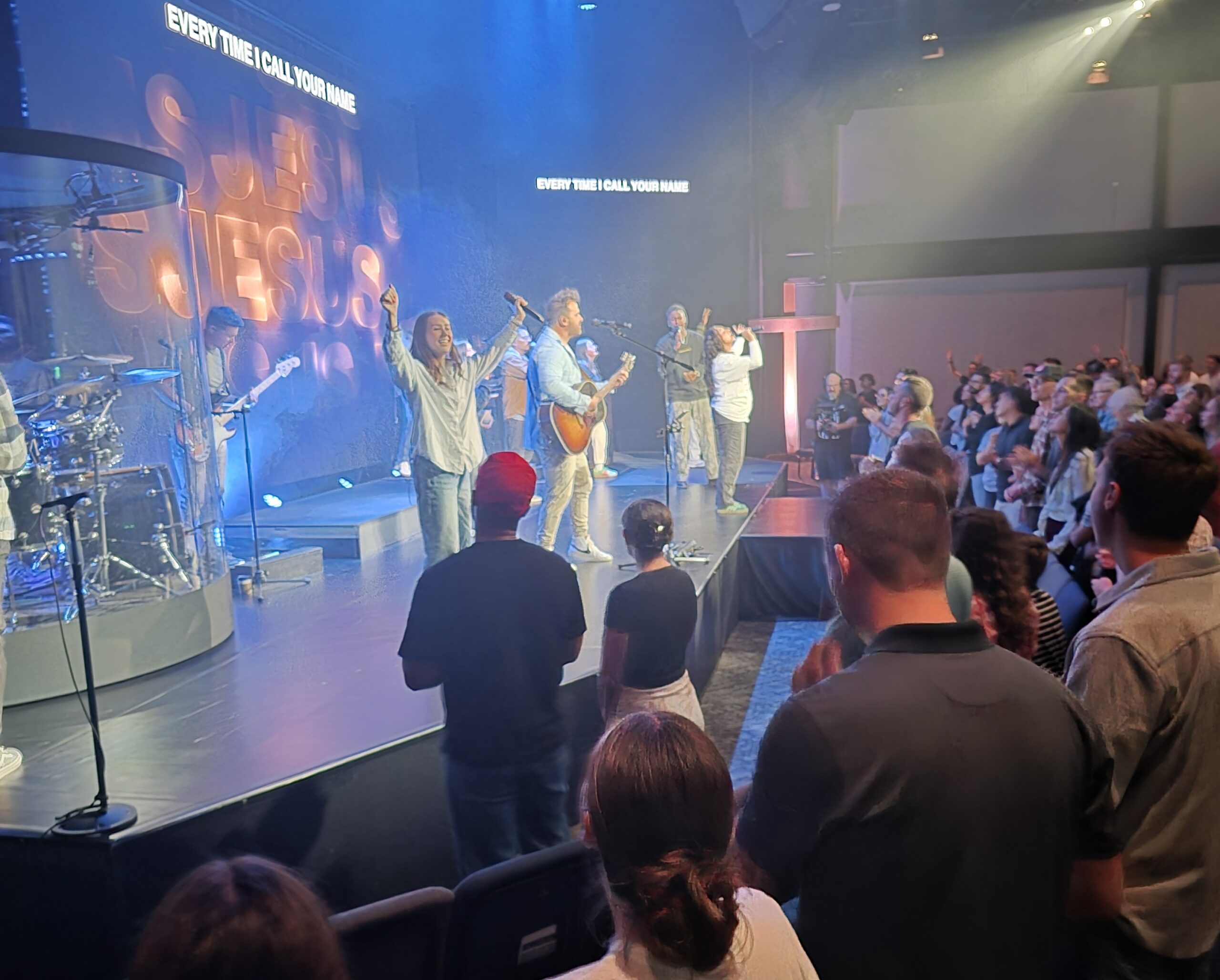
As the church band warmed up the crowd with a hard-driving arrangement of “How Great Thou Art,” Lead Pastor Nirup Alphonse — wearing neither robe nor vestments, but a neat arrangement of sneakers, jeans and a white sweatshirt — offered up a welcome..
Young and Alphonse were among the number of pastors The Denver Gazette interviewed last week — all from non-denominational or nontraditional churches, each marking significant growth now at a place and moment that may seem unlikely.
Least so is the participation they’re getting from Millennials — people born 1981 to 1996 — and even less probable, from Gen-Z, those born entirely into the cellphone age.
“We seem to pull in a lot of Gen Zers, tapping into a hunger for what it means to walk with God,” Alphonse said.
Lifegate, he said, had around 700 worshipers before the government shutdowns closed the church to all but Zoom-type gatherings.
“Once we fully reopened in 2021, it’s been gangbusters,” said Lis Cheesman, who is the congregation’s pastor of formation. “COVID revealed the brokenness of relationships between people who thought they had full lives.”
“Post pandemic, we’ve had such an increase in millennials,” Jason Soderstrom, lead pastor of RST Church in West Wash Park, said.
Last year, the church marked 100 baptisms — a record, he said.
When RST (short for Restoration) passed out a survey among 1,500 worshipers who showed up for its Easter services last month, some 48% of those who responded said that they had rarely or never gone to church.
“They’re in hunger for an experience with God. They want to see what God is about,” Soderstrom said.
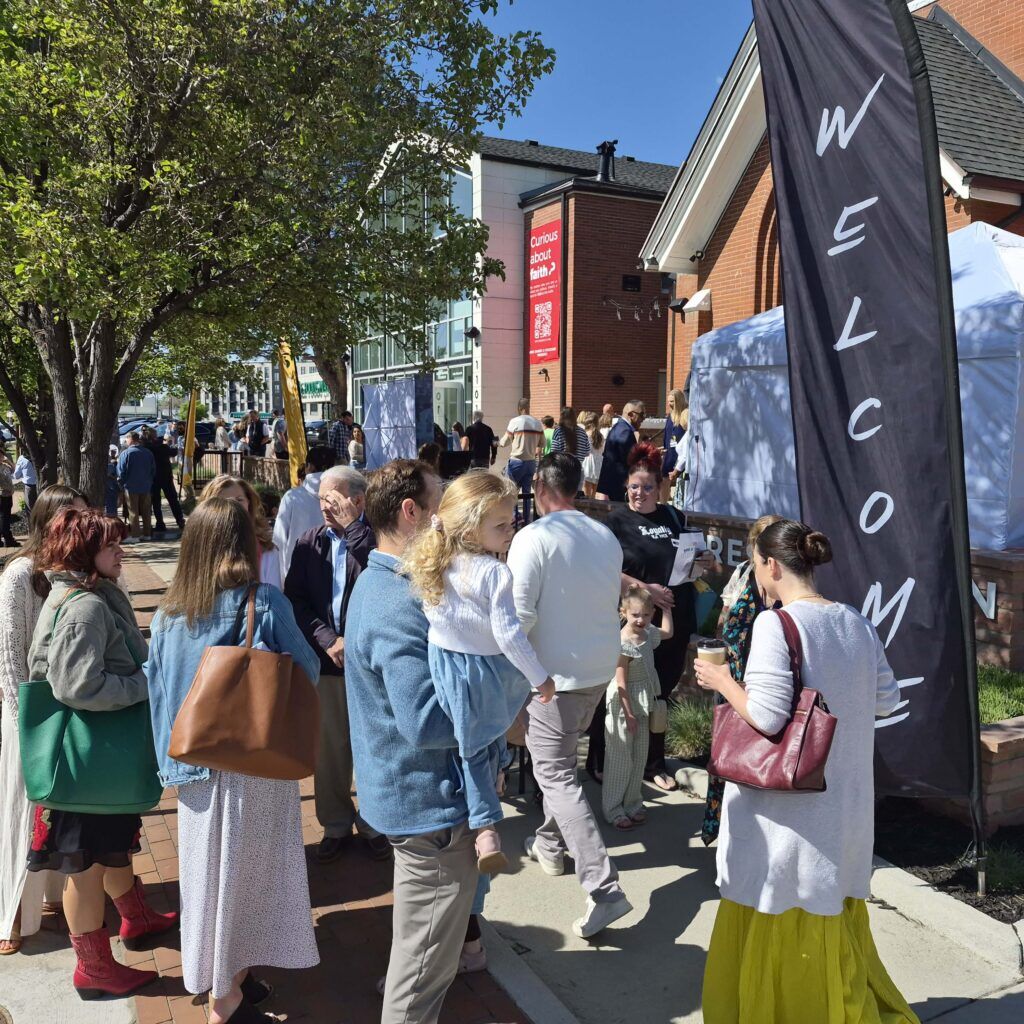
That Sunday experience at RST began blocks from the campus at South Washington Street and Mississippi Avenue, where noticeably younger worshipers were quick to greet neighbors they encountered. Indoors, the church read more like a stage-lit music hall than a sanctuary, where seven singers-guitarists were backing the pastors at services, playing arrangements that may be adapted from traditional hymns or written by leaders.
Out front of the building was a booth for The Brook, a nonprofit founded by Soderstrom’s wife, Molly, specifically reaching for young professionals who may be wanting relationships, not necessarily searching for a faith.
RST tracks some 700 worshipers per weekend, but The Brook reaches some 2,500 beyond that.
Soderstrom said that community building in Denver means reaching out to those who may have positive associations with religion but also individuals who “carry baggage” about the church and who are better accessed by way of a happy hour or a pickleball game.
Faith in the lonely Wild West
What they often all have in common, pastors told The Denver Gazette, is a longing to be seen and recognized in a town where that may be unusually difficult.
Denver, pastors noted, is consistently identified as a lonesome town, where 40% of households are composed of singles.
Loneliness is a vague descriptor and not all studies confirm the ranking, but the clergy said that establishing relationships helps drive a quest for purpose here, particularly among younger people.
“Denver is the epitome of the Wild West,” said Neil Long, executive pastor of Park Church in Denver’s Highlands neighborhood.
“There can be this isolated experience for people where ‘I want community, but I want it on my terms.’ And there’s a disillusionment that comes on the other side of living that way long enough,” Long added.
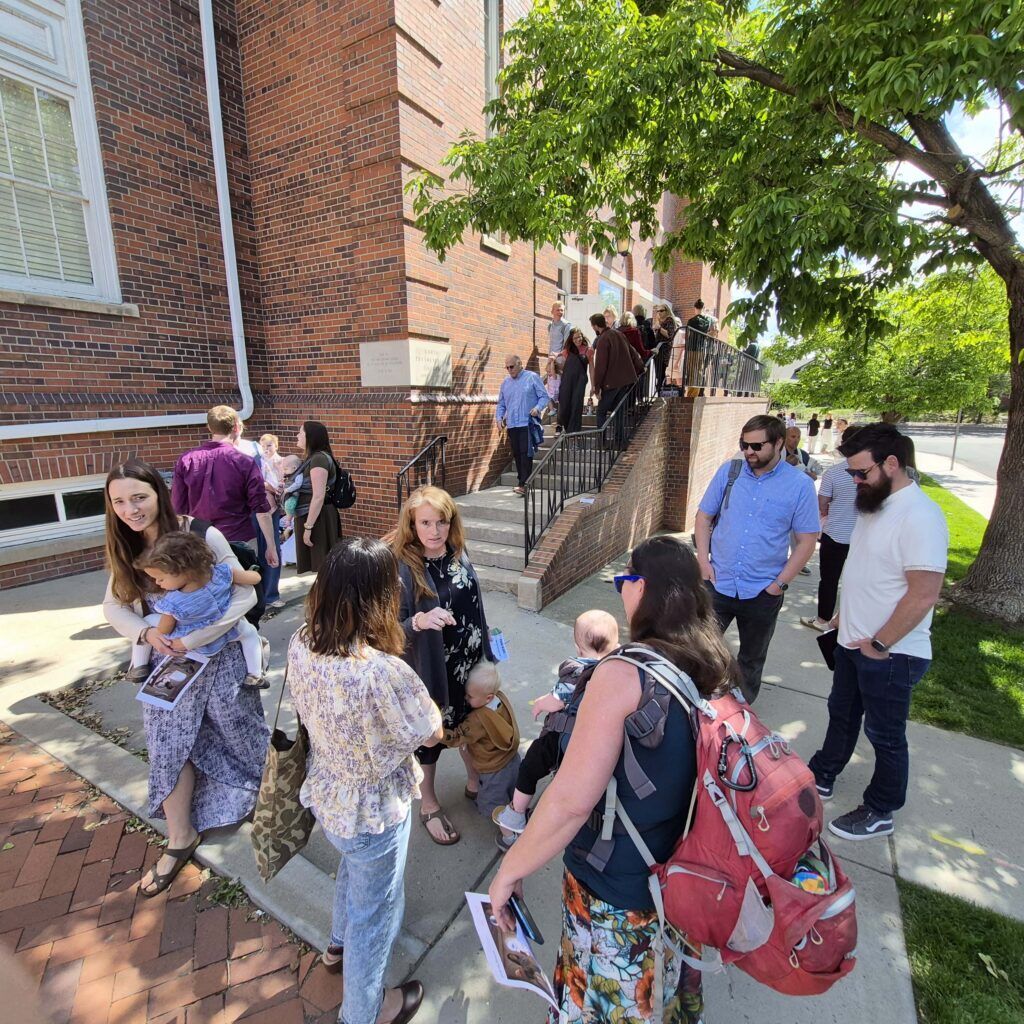
Park, led by Pastor Gary McQuinn, has grown to around 400 members, but saw more than 600 people at just one of its four Easter services. Parking on Sundays spills out of its lot on West 37th Street — into the Masonic Temple’s lot a block down Federal Boulevard.
Becoming a megachurch isn’t what Park Church is after, Long said.
“I’m not opposed to size, but is it something that stays connected to people and their stories, and where we really interact with them at a richer level?” he asked.
That fits the church’s approach to membership, focused on personally relating to individuals, rather than adding to member rolls. Worshipers, Long noted, find a service a little more traditional than at some newer churches, including a sacrament of communion and sermon topics that come from books of the Bible, both New Testament and Old Testament.
Millennials are prominent in their Sunday crowd, but Long said that Park is intently focused on reaching an even younger audience who may be battling social and psychological issues related to the digital age.
“We’re digitally saturated and it’s affecting our relationships, our human development,” Long added.
The church clergy — four pastors and six lay pastors — are preparing a sermon series for the fall tentatively titled “Following Jesus in a digital and distracted world.”
“It’s the first time in human history where human intelligence is on the decline,” Long said.
He referenced studies by social psychologists, including Jonathan Haidt, co-author of “Coddling of the American Mind,” published in 2018.
Meanwhile, Park has a capital campaign underway to update its century-old building, originally the North Presbyterian Church, including installing an elevator but also specialized spaces for counseling the community.
The clergy who spoke to The Denver Gazette underscored that the Boomers and Gen-Xers are welcome at their services, and that the older members appreciate seeing younger worshipers back at church.
But they find a sense of mission now in reaching Gen-Z.
“They are the generation really struggling with mental health and anxiety. The world has been on fire since they were born,” said Trish Morris, spiritual leader of Unity Spiritual Center at South University Boulevard at East Cornell Avenue in Denver.
“They’re used to having information, so much that they’re not able to sleep at night,” Morris added. “I think the need for community is growing like never before, to connect with something larger to give them hope,” she said.
‘Allowing God’s love to work across the city‘
Her church, which has been in its building since 1970, has seen worship climb since the pandemic. She noted that non-worship spaces that were previously empty on weekdays are now filled with activities — including a daycare and coworking space that draws 28 families.
Focusing on serving the community, as opposed to recruiting, is helping drive a return to the church and its Sunday services, Cheesman at Lifegate said.
“It’s not just about sitting in seats,” she said. “It’s seeing a depth of people actually following Jesus in ways that change their lives, where they’re specifically doing things to save their neighbors and give up their lives to allow God’s love to work across the city.”
“Our church is growing, but it is growing in reputation with people who love God and care for the poor and marginalized,” Alphonse, the pastor, said.
Asked whether he sees examples of how that changes lives, Alphonse said he regularly witnesses such things.
“You see miracles,” he said. “I met a millennial mom whose Gen-Z son was addicted to drugs and the party scene and had an encounter with Jesus.
“Now, he’s transformed, and he met a woman here.”
Cheesman added that she could think of three similar stories.
“You see marriages restored,” she said, adding that the congregation carries on a kids’ ministry specifically focused on adopted kids and on those in foster care.
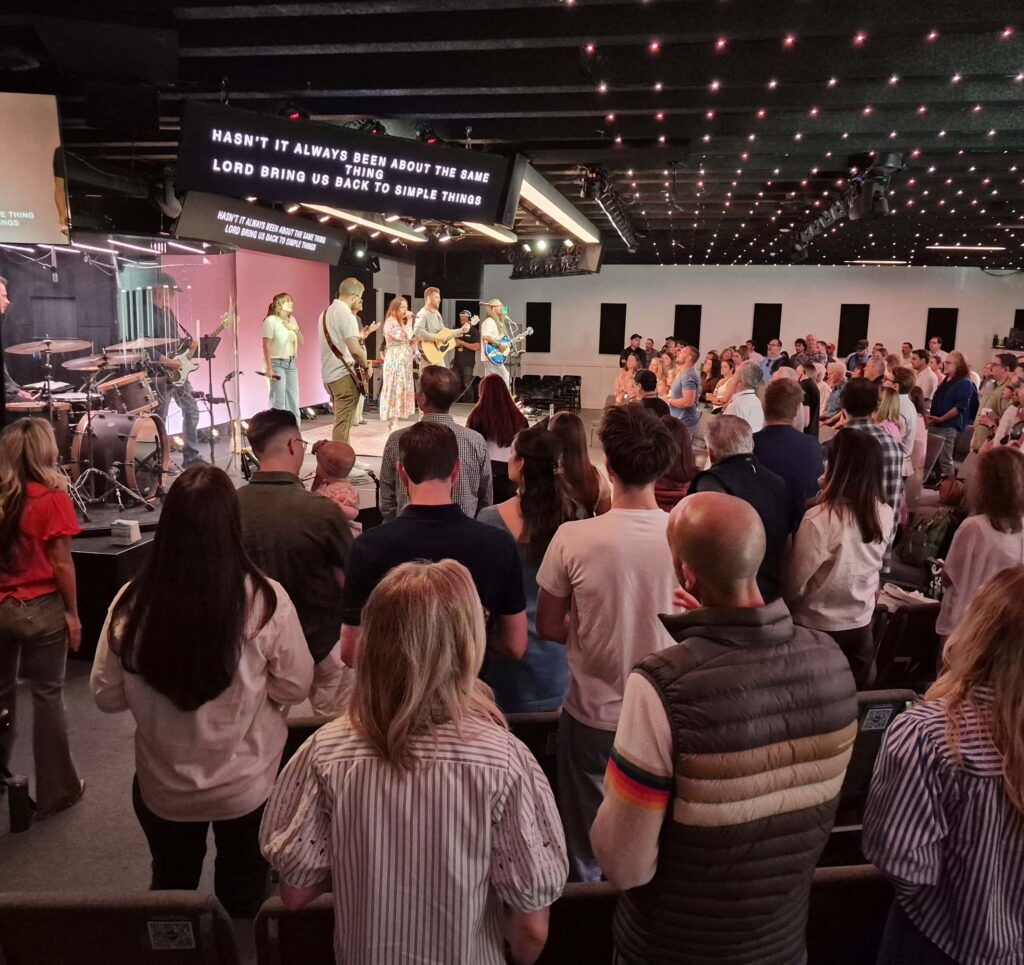
Alphonse said one of the best testimonies to the church’s reach to new worshipers came to him from someone who had never been to church and had no intention to go.
“I have no interest in it,” he recalled them saying. “But I recommended your church to other people.”
At Bridgeway Church, Young, the pastor, said that in the midst of the pandemic, with attendance virtually barred, the church launched a drive-thru service oriented around a food bank, one that is still serving the community.
“We partner with a lot of other churches,” Young said. “The Kingdom of God is not all about one denomination, this or that. So, I’ve got an Anglican brother that’s a good friend, and I have charismatic brothers at evangelical churches, and we network with other pastors to do things together.”
The churches ‘all want each other to win’
Is the success of these newer congregations actually coming from older churches that are seeing their own memberships decline?
Not so, pastors say.
“We generally don’t attract worshipers from traditional churches — they’re older,” Alphonse said.
Nevertheless, he said that Lifegate’s success owes in part to younger worshipers who grew up in ethnic congregations.
“One of the four fastest growing demographics here are young, ethnic minorities who grew up in their traditional churches,” he said
Soderstrom at RST noted that there is also a lack of competition going on between those new congregations.
“These churches all want each other to win,” he said.
“I do think there’s a longing to be seen,” Cheesman added. “We’re all looking for somebody who is looking for us.”