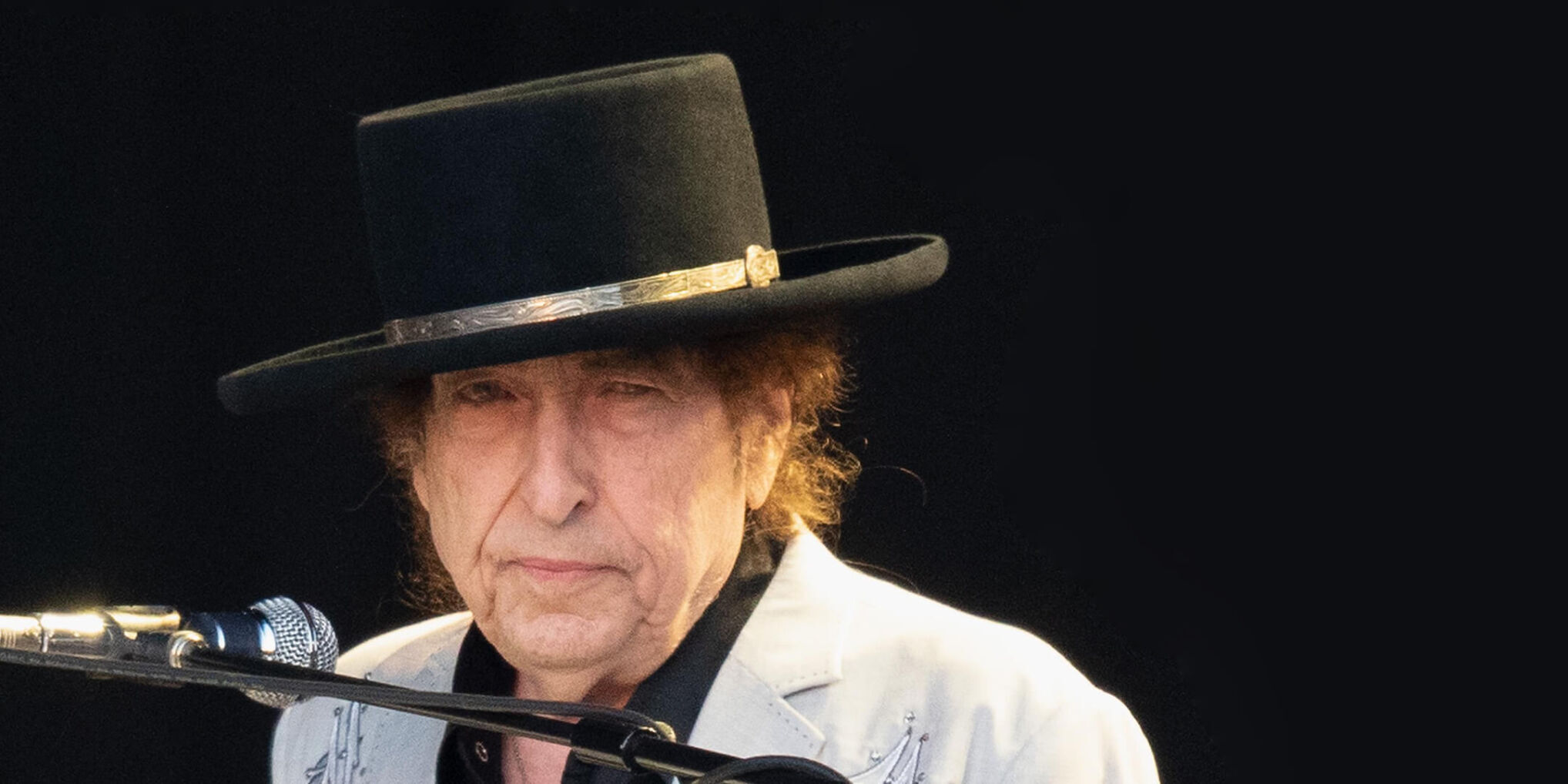
Bob Dylan has written 600 songs. These are his 10 best. | Vince Bzdek
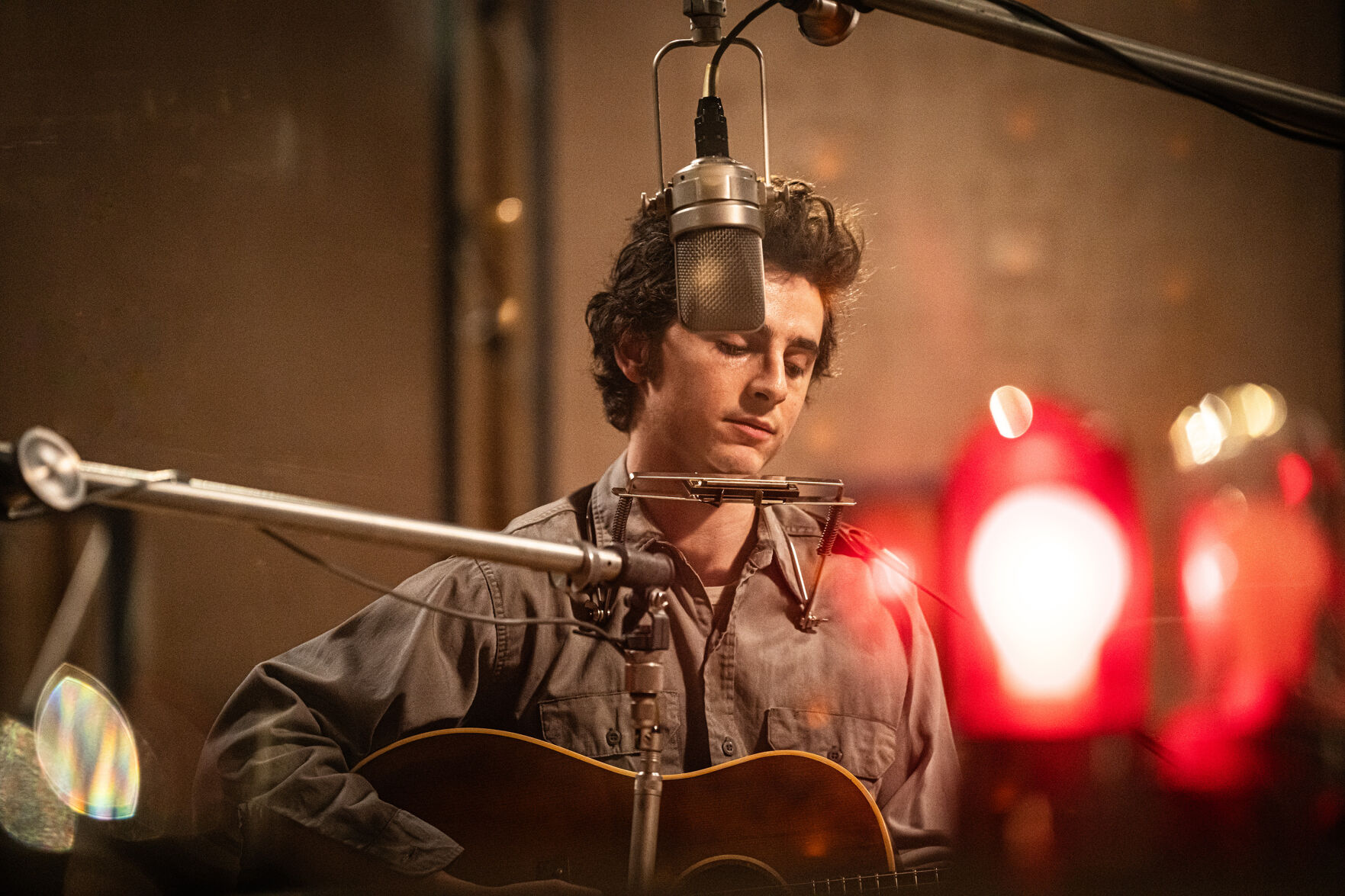
My family and I have been revisiting “Highway 61 Revisited” and lots of other Bob Dylan music in anticipation of James Mangold’s new biopic, “A Complete Unknown,” which opened on Christmas.
“Highway 61 Revisited” features the great groundbreaking rant of a song, “Like a Rolling Stone,” from which the movie’s title and climactic moment are both pulled, the moment when Dylan went electric at the Newport Folk Festival and split the 1960s in two.
Doing a deep dive into Dylan’s discography is both overwhelming and exhilarating given its range and depth. America’s polymath troubadour has written over 600 songs, 40 of which Timothee Chalamet plays and sings persuasively in the new movie, whose very thesis is that Dylan is such an amalgam of musical personalities that he’s impossible to pin down. He mixed folk, rock, blues, balladry, bluegrass, country, poetry and journalism together in his eclectic career.
Musician Lenny Kravitz said it pretty well: “The beautiful thing about Dylan is that he is such a chameleon. He’s got so many characters inside of him, like a painter with limitless amounts of color.”
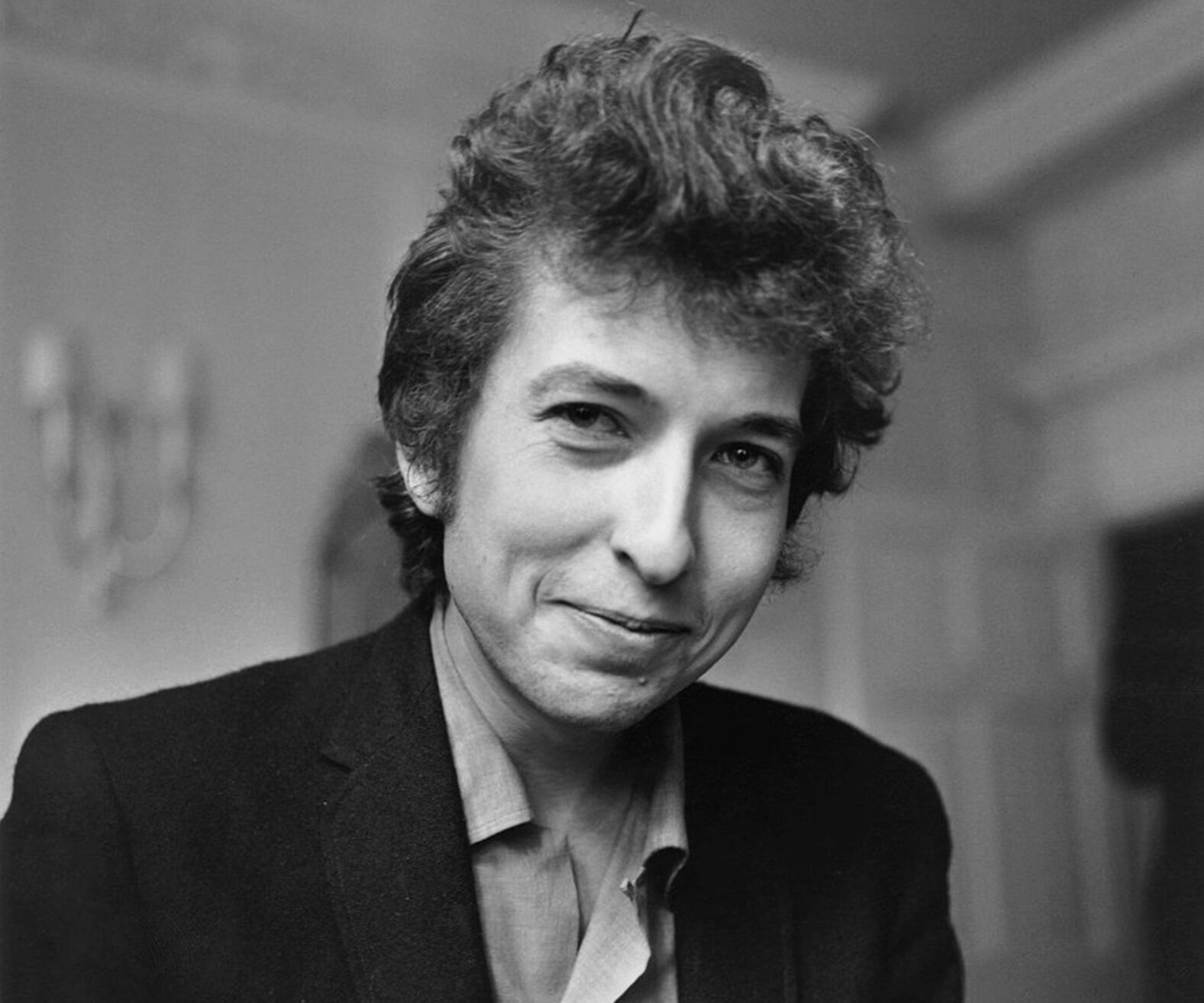
American folk/rock singer and songwriter Bob Dylan smiles during a meeting with the British media in 1965. (Harry Thompson, Evening Standard file)
So any attempt to sum up Dylan’s best songs is doomed to be wildly incomplete, but here it is anyway, a personal, wholly biased attempt that I hope may prompt you to walk out of the theater electrified like my family was, singing his words aloud for all to hear.
10. “Hurricane.” This tour de force came out in 1975, back when folks still believed rock music could change the world. The song is one of Dylan’s most linear narratives, journalistically telling the story of Rubin “Hurricane” Carter, a Black middleweight boxer who Dylan argues was framed by New Jersey police for a triple murder. One of his best protest songs, Dylan howls against the racism and profiling rampant in the late ’60s and early ’70s, but does it with such great storytelling and juxtaposed with such an appealing melody that the song still resonates today. The song helped Carter win a retrial and eventually get all charges against him dropped.
9. “Simple Twist of Fate.” Many of Dylan’s songs are more like word riffs with a couple notes of music to background them, but I must admit I like Dylan’s most musical songs best. The man could write melodies as well as lyrics. The simplicity of “Simple Twist of Fate” and its infectious melody are what give it its power, coming round and round again and again to that shrug-of-the-shoulders lament about why an idyllic relationship fell apart. He wrote it after his marriage came undone, part of an album-long chronicle of loss, “Blood on the Tracks.”
In Notre Dame’s rise from the ashes, a message for Americans | Vince Bzdek
8. “Just Like a Woman.” Another of his simplest constructions, listing a litany of womanly wiles with each verse, ending repeatedly with the heartbreaking coda, “But she breaks just like a little girl.” An old cowboy/editor mentor of mine who mostly listened to country music always cottoned to this one Dylan song, probably because it was Dylan’s first great foray into yet another genre, country rock, cut with Nashville musicians. It is simply Dylan’s finest ballad.
7. “Subterranean Homesick Blues.” Some older friends of mine back in the ’70s, trying to educate me in all things Dylan, took me to see “Don’t Look Back,” which features the memorable scene of Dylan peeling off cue cards of this song’s lyrics one after another in a London alley as Alan Ginsberg and Bob Neuwirth mill in the background. Jack Kerouac’s “The Subterraneans,” a novel published in 1958 about the Beats, is a likely inspiration for the song’s title. The song’s release in 1965 marked a pivotal moment in rock history, capturing the tenor of the times and embodying all that was then the emerging counterculture. The inventive film clip is considered one of the first precursors of the music video.
6. “A Hard Rain’s Gonna Fall.” This is one of the most bracing, hard-edged songs in the movie. The song “roared right out the typewriter” in the words of a friend who watched Dylan write it in response to the Cuban Missile Crisis. The apocalyptic imagery of suffering, pollution and war is astonishing, and points to a new, harder edge in Dylan’s work foreshadowing more harrowing and complicated word collages to come, a singer unafraid to stare down his and his country’s darker sides. “It’s all one long funeral song,” Dylan said.
5. “Chimes of Freedom.” Bruce Springsteen sang this better than Dylan at a concert for 300,000 East Germans at the Berlin Wall in 1988. It’s one of the best songs ever written about the hunger for human freedom, and is said to have been written in response to the assassination of John F. Kennedy. A year after the Springsteen concert, Germans on both sides of the wall tore it down.
4. “Blowing in the Wind.” Renowned as Dylan’s greatest protest song, I see it more like something out of the Bible, psalm-like in its chapters and verses, dealing in universalities rather than the specifics of the day. As author Steven Hayward said: It sounds like music that has existed forever. It asks nine questions, responding to all of them by telling us the answer is “Blowin’ in the Wind,” implying both that the questions are unanswerable and that something is changing in the country that may lead once and for all to solutions to our eternal questions.
3. “Visions of Johanna.” Many critics have called this Dylan’s greatest song, full of poetic language and shimmering images (“The ghost of electricity howls through the bones of her face”) that speak to the gap between an ideal relationship and an actual one. Dylan’s point in the song seems to be that we’ll never achieve our ideals, but the only life worth living is one that chases after them anyway.
2. “Tangled Up in Blue.” This is my personal favorite because of its irresistible melody and epic journey to the four corners of the country, the narrator chasing a relationship that comes and goes but refuses to let him go. A couple of the lines in it could summarize the entire impact of Dylan’s music on people: “And every one of them words rang true/And glowed like burning coal/pouring off of every page/Like it was written in my soul from me to you.”
Of all Dylan’s songs, this one more than any other packs a whole lifetime of living and its lessons into it. Dylan said the song took 10 years to live and two years to write. When Bruce Springsteen inducted Dylan into the Rock and Roll Hall of Fame, he said this: “He had the vision and talent to make a pop song so that it contained the whole world.”
1. “Like a Rolling Stone.” The fireworks, the clang and the snarl of this song mark a new chapter in music, breaking with the short and sweet romantic love songs on the charts in 1965. It’s more of a resentment song than a love song, six long minutes of angry, brooding poetry, and nobody had heard anything like it when he unleashed it at the Newport Folk Festival. Dylan called it a “thin, wild, mercury sound.” He seemed to suddenly give permission to an entire generation to let their rage out, to be honest with themselves about their emotions, good and bad, and do so loudly. Nearly 60 years later, it remains an irresistibly singable anthem of alienation. “He invented a new way a pop singer could sound,” Springsteen said at that induction, “broke through the limitations of what a recording could achieve, and he changed the face of rock ‘n’ roll for ever and ever.”