Denver Art Museum a world leader in North American Native arts
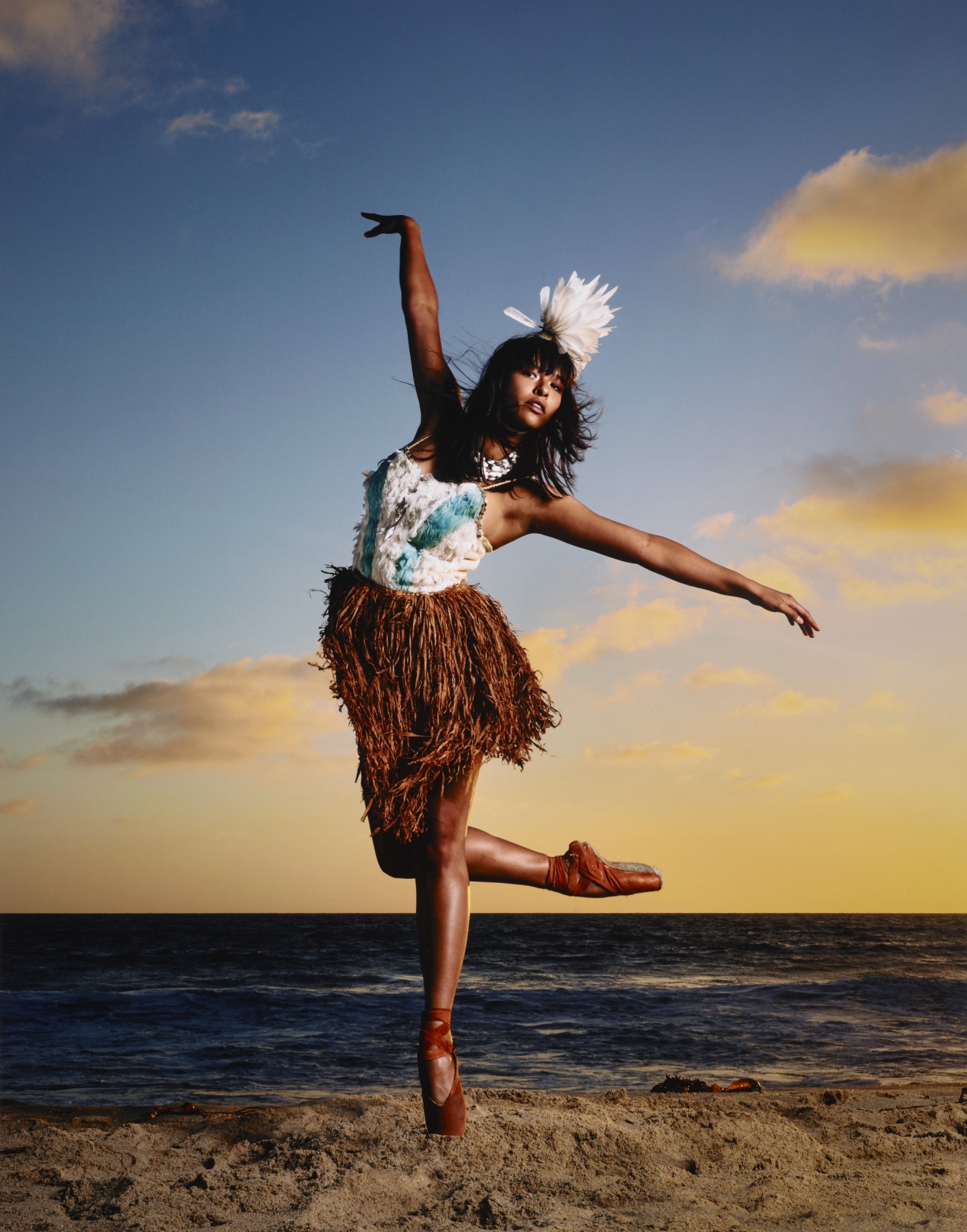
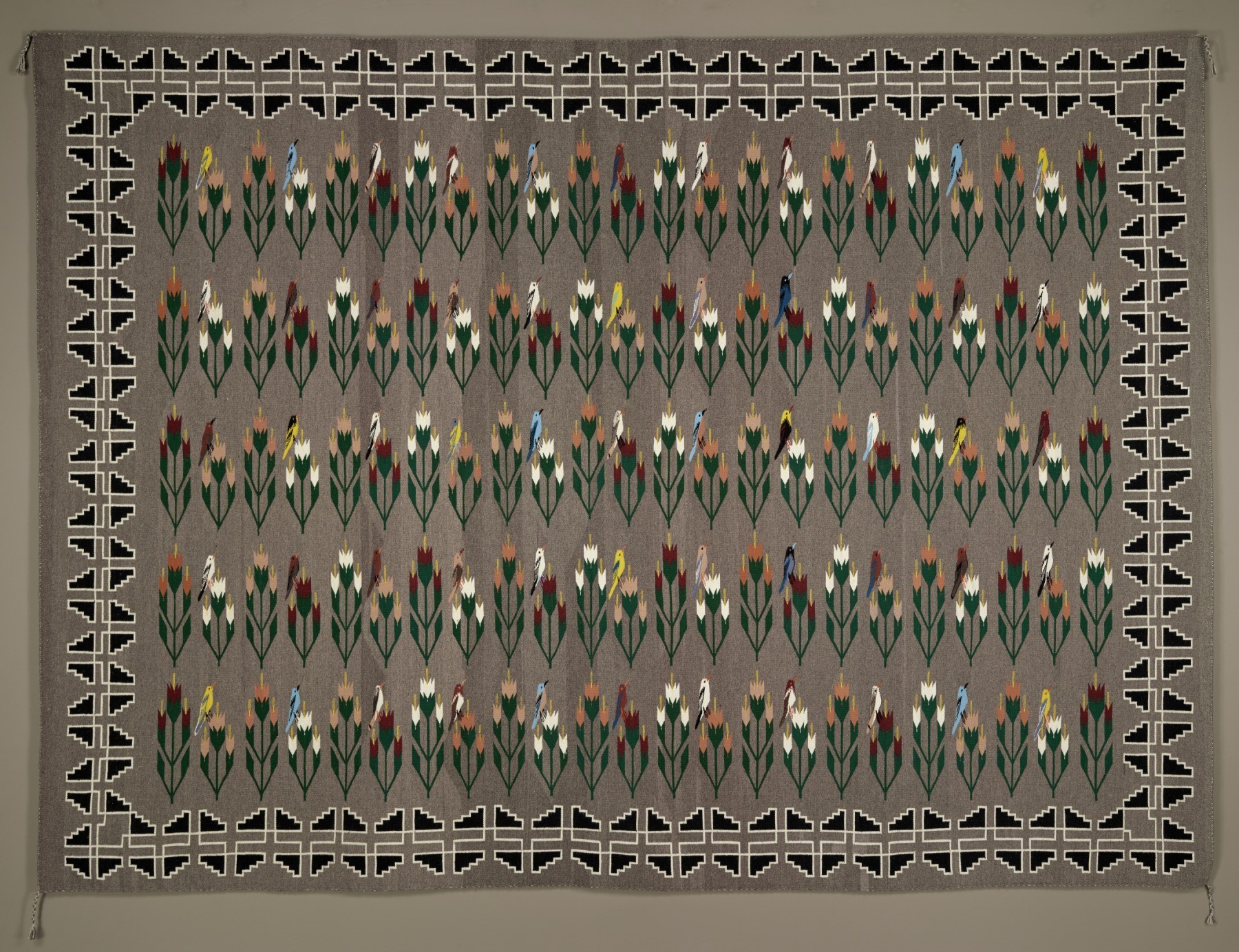
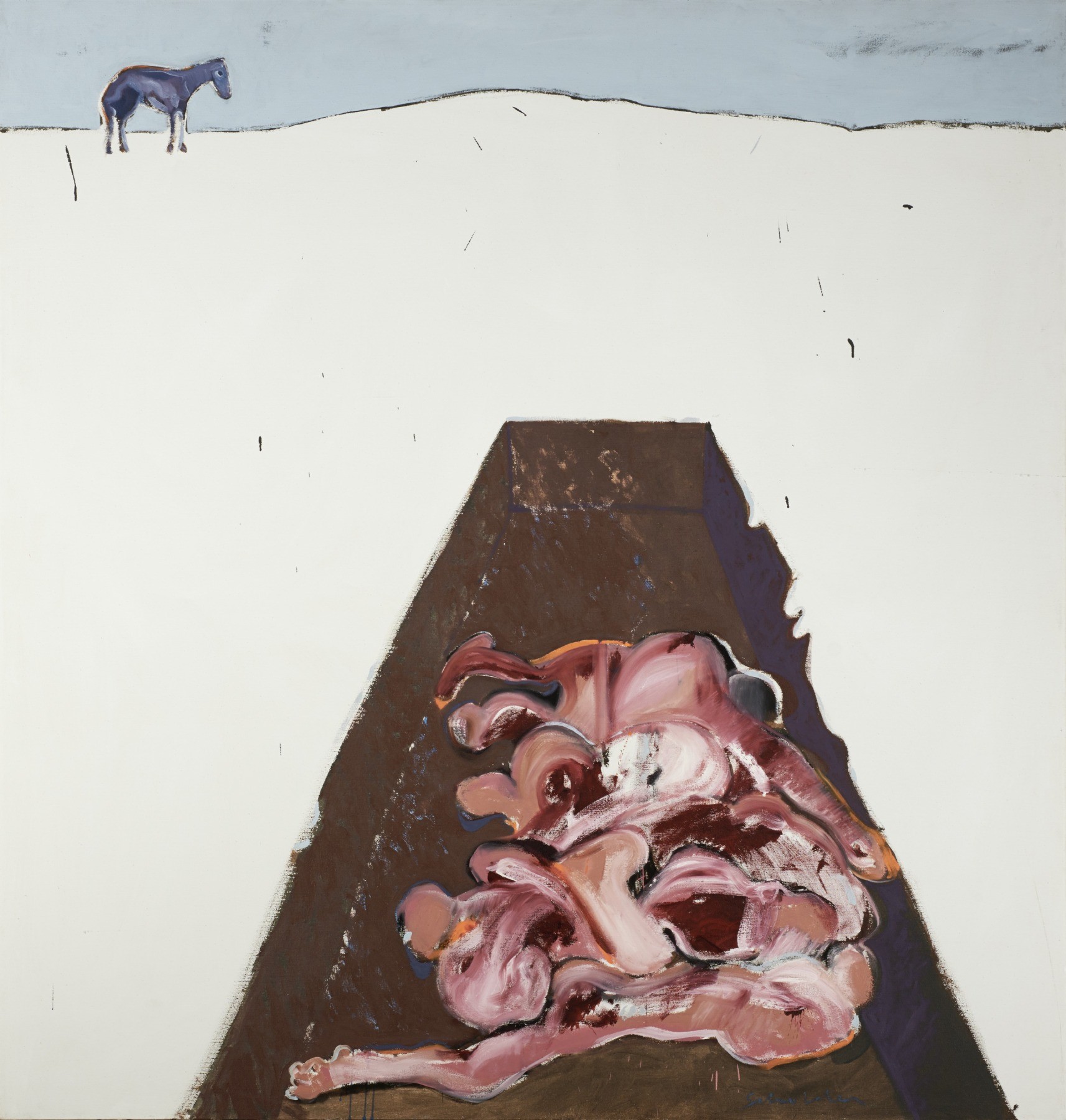
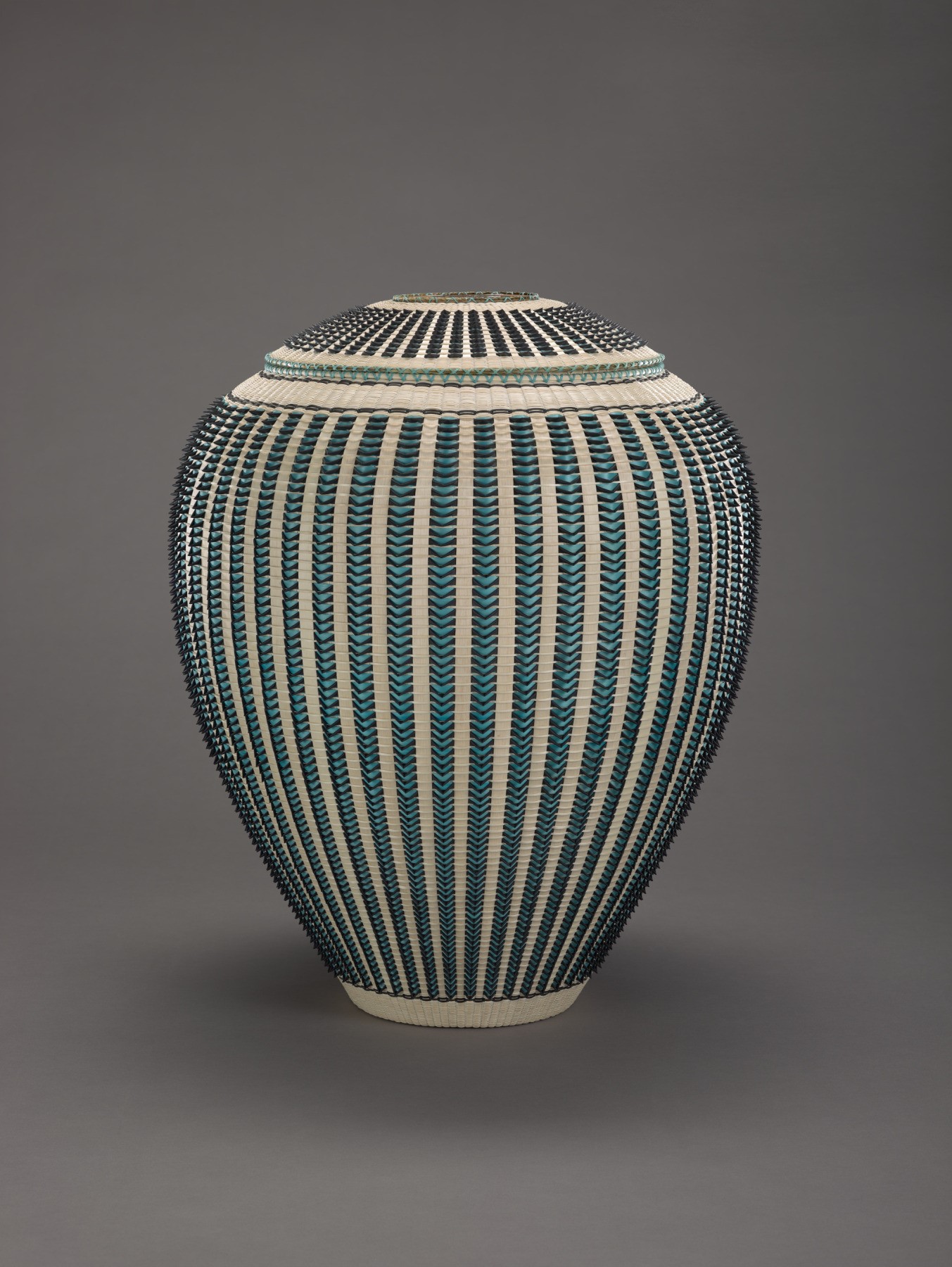
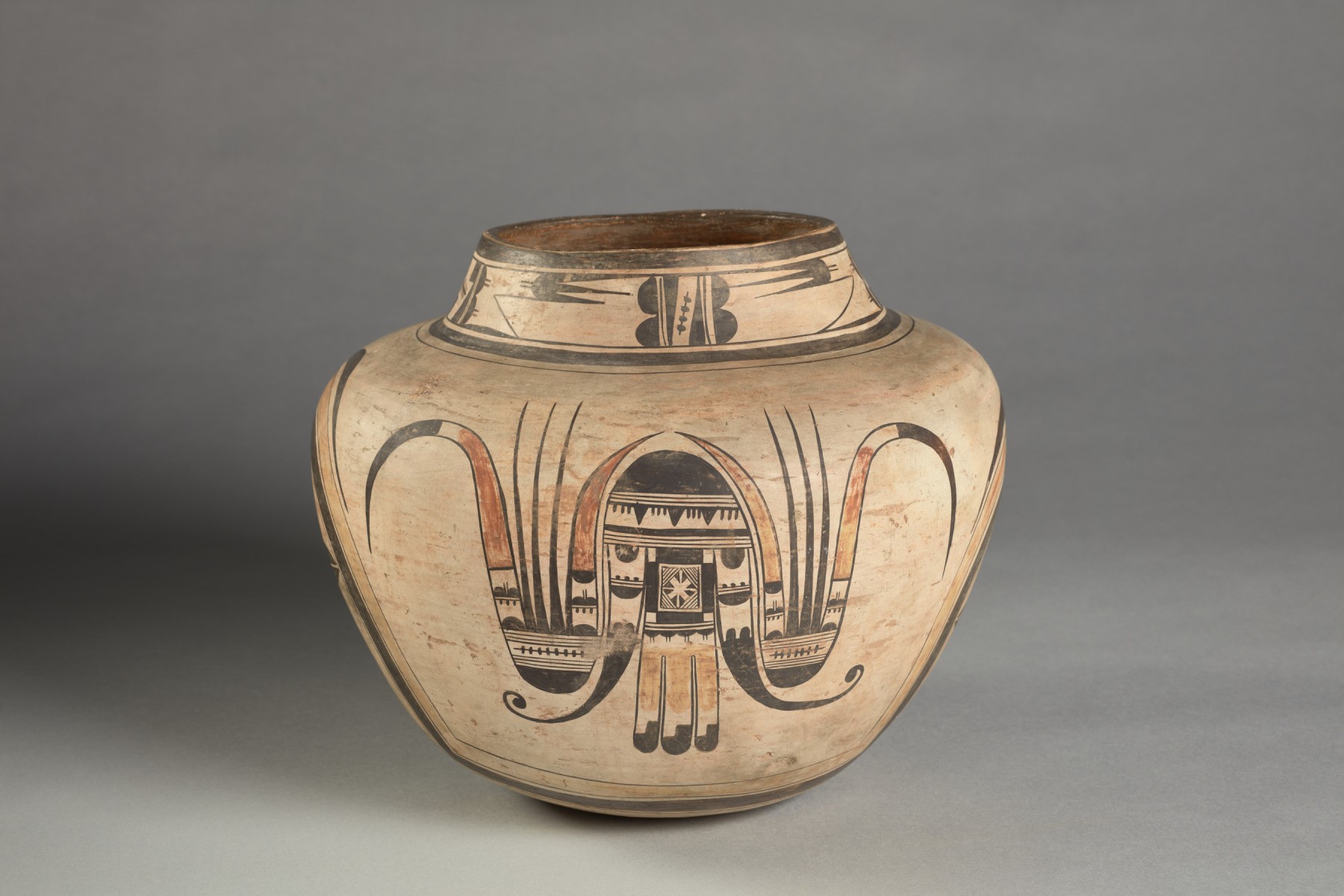
The Denver Art Museum, owing to visionary curation beginning in 1925, proudly houses one of the world’s largest collections of North American Indigenous arts. The DAM initiated the collection early in its institutional history, recognizing the aesthetic merits of Native arts when other museums deemed such works as mere artifacts.
“Our collection never put a premium on collecting things just because they were old,” said John Lukavic, who works at his dream job as the DAM’s Andrew W. Mellon Curator of Native Arts.
Lukavic set his intention upon his current position as a teenager growing up in New York.
“Indigenous arts caught my eye when I was about 12,” said Lukavic. “By the time I was 15, I knew I wanted to be curator of Indigenous Arts at the Denver Art Museum.”
Lukavic, on the museum staff since February 2012, assumed his curatorial role in January 2019. He quickly credits his predecessors for setting the DAM’s tone for the extraordinary collection of more than 18,000 Native artworks from more than 250 Indigenous nations. The collection accounts for about 20 percent of the entire permanent collection at the museum.
“Our identity as an institution is innately tied to Indigenous arts and the collecting we did and the exhibitions we’ve done,” said Lukavic.
The collection’s genesis dates to the influence of an early champion of Denver’s cultural development, Anne Evans — the youngest child of John Evans, then governor of Colorado Territory.
“She was a collector of Indigenous art, and she saw an opportunity at the time when the museum was taking a hard look at what it wanted to become and asking, ‘What can we do better than anybody else?’ Our 20th century Indigenous arts collection is unsurpassed anywhere because nobody else was collecting the material.”
Lukavic noted that in the 1920s, DAM officials collected works that at the time were recent.
“The only difference between traditional art and contemporary art is the element of time. Everything you see as traditional was at one time contemporary,” Lukavic said. “We don’t separate historic and contemporary art. We show them side-by side.”
From 1929 to 1956, Curator of Indian Arts Frederic Huntington Douglas built the bulk of the DAM’s collection and advanced scholarship of the field.
“He grew up in a collecting family, independently wealthy, and they donated a lot,” Lukavic said.
Another instrumental curator of the DAM’s Indigenous arts, Nancy Blomberg, brought to bear her experience of living in Alaska. Blomberg expanded Inuit arts and so much more in the DAM collection.
Upon her death in 2018, Blomberg’s widely recognized influence warranted an above-the-fold obituary in the New York Times: “. . . during her 28 years at the museum she reimagined its extensive American Indian art collection. She emphasized that pieces often thought of as anthropological artifacts were in fact artworks; she also pushed to expand the collection with work by contemporary artists and set up residencies for them.”
Melanie Yazzie, a citizen of the Navajo nation and a professor of art at the University of Colorado Boulder, participated as an artist in residence at the DAM. This past summer, the Denver Botanic Gardens hosted Yazzie’s one-woman show of her multidisciplinary art. For Yazzie, the DAM’s collection validates her identity as a Native American and an artist.
“So often as I grew up, I went to museums and saw artwork by Native peoples from long ago. Oftentimes, things were not labeled — just a tribe or location where things were found,” said Yazzie.
“What’s amazing about the Denver Art Museum collection is that there are many Native Americans who are living now, and they are speaking and making work about their life experiences,” she said. “As Native people we are seeing works from our communities in our lifetime that shows everybody that we are present, that we are important and that we are valuable.”
A significant value of the DAM’s collection lies in the identification of individual artists.
“When our old galleries opened in 2011, they were billed as groundbreaking and revolutionary in the way we were presenting Indigenous art because we actually focused on Native artists,” Lukavic said. “It seems preposterous to think that it was groundbreaking 12 years ago now.”
Blomberg spearheaded the shift.
“My predecessor recognized that with Indigenous art, people expected to see culture, not artists. We did know the names of the artists, but non-Native collectors didn’t put a value on who made it. They didn’t necessarily connect with the people. They connected with the object,” Lukavic said.
“An objectivation was happening in the collecting, but we wanted to change the narrative,” he added. “We wanted to humanize the art by reconnecting with people who made them and use the objects as a window to the people, focusing on the humanity of people making art, not just the object itself.”
Other museums followed suit, which inspired the DAM to advance the presentation of Indigenous arts yet another step.
“We’re placing artists in a cultural ecosystem that includes community, land and place, Indigenous knowledge and the formal aesthetics of their community,” Lukavic said. “Now the artworks can actually help people connect with histories, contemporary experiences and feelings. That’s what we lean into.
“We can talk about generational traumas, land and water rights, identity. Artists are cultural producers that affect these areas, but they’re also affected by them. I would go out on a limb and say that for most Native people, their arts are inseparable from their communities and their culture.”
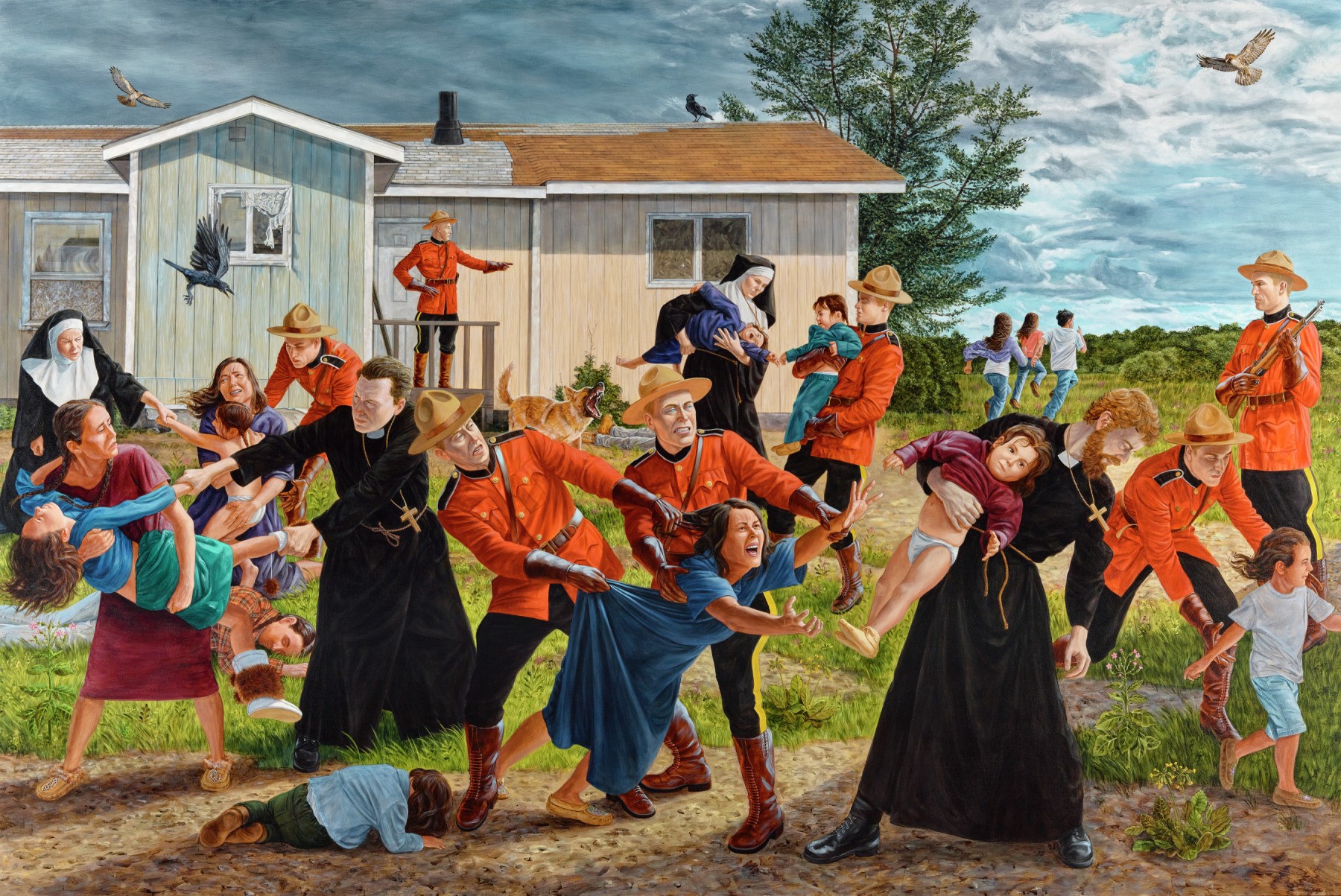
One of the most painful generational traumas is the subject matter of one of the most important, iconic pieces in the DAM’s Native arts collection: a 2017 work titled “The Scream” by Kent Monkman, a Canadian First Nations artist of Cree ancestry. The large, provocative painting depicts Catholic priests, nuns and Royal Canadian Mounted Police snatching Native children from their homes to take them to controversial residential schools.
“It’s an incredibly heart-wrenching story. This painting has gone absolutely viral. With all the mass graves of children found in old residential schools in Canada and parts of the U.S., this image has been burned in people’s minds,” Lukavic said.
“The BBC wrote an article about this painting, unbeknownst to us, putting it in the context of things like Picasso’s “Guernica” or Banksy’s work on the French Embassy in London. The painting has transcended the fact that it is a painting. It’s become a visual marker for an atrocity. Forever in time, this image is what’s in people’s minds when think of that issue,” he said. “It’s a rare occurrence for one image. There are not a lot of images across the world that transcend to that level. This has become one of them.”
“The Scream” disturbs, no doubt, with palpable anguish and devastating terror depicted on the faces of the Native Americans. The curators understand the emotional impact Native arts can trigger. The painting’s label includes a hotline number inviting upset guests to call for counseling.
“Art definitely has the capability of touching you to the soul,” Lukavic said. “The power of this art helps us understand a story and take it in to a very visceral space.”
To accommodate guests experiencing emotional overload, the DAM’S Indigenous art galleries include a reflection space. The sparsely furnished room’s walls bear stenciled excerpts from a poem by the former U.S. Poet Laureate Joy Harjo, a citizen of the Mvskoke [sic] Nation. A window lets in shafts of natural light. Seating invites guests to pause.
“It’s not just for people overwhelmed by painful emotions. Maybe they saw something their grandmother made and need to process their emotions. Maybe somebody on the autism spectrum needs to step away for a minute. We’re providing space for people however they need it,” Lukavic said.
Dakota Hoska, the DAM’s associate curator of Native Arts, is a citizen of the Oglala Lakhota Nation. Hoska applies her curatorial cachet to educate visitors about lesser-known aspects of Native art.
“A lot of people are familiar with Plains regalia, headdresses, but they may know less about the [sic] Mesquakie, the Sac and Fox, or the Woodlands tribes — especially here in the Southwest region,” Hoska said. “I try to reinforce how many different Nations and communities there are and that we aren’t all having one monolithic or pan-Indian experience.”
She also emphasized the DAM’s collection as a reflection of an understanding of the Native people’s understanding of time.
“In our galleries, we didn’t organize anything in a linear timeline. That reinforces the idea of a beginning, middle and end, which really isn’t consistent with Indigenous concepts of circular time, of regeneration,” she said. “Instead, our installations focus on stories, relationships, trade routes and lots of other themes.”
One theme is the longstanding segregation or exclusion of Native arts.
“I’m tired of conversations that center European-established artistic canons as true forms of art and what the rest of the world made as ‘craft.’ I’m ready to expand conversations around what we, as Indigenous people, consider to be our true art forms,” Hoska said.
To mirror the reality of Native arts as part and parcel of American art history, the DAM installs Native arts throughout the museum — in addition to the 20,000 square feet of gallery space devoted to Indigenous arts.
“It’s important to remember that Native art, Native people, and the Native experience, were existing simultaneously and interconnectedly with the American experiment,” Hoska said.
“Native people were diplomats, world travelers with vast trade routes, and participants contributing to, influencing and being influenced by national and global conversations. The concerted effort to write us out of history or make us part of a narrative that only took place in a distant past isn’t accurate,” she said. “When Native works are shown in a broader context it shows our continued relevance and presence in a multitude of situations and helps to dispel the contrived myth of a disappearing people.”
Hoska welcomes more visitors to the experience.
“For Native audiences, I hope they can see themselves reflected in our galleries and that they feel comfortable, safe, and welcome here. I hope young people feel inspired and proud of all the accomplishments their relatives have made artistically,” she said.
“For non-Native audiences, we try to surprise people about what they know or think they know about Native American art and artists. I hope the work we’re doing here helps a non-Native public recognize and appreciate ongoing contributions Native people make to the world. I hope their visits will help expand conversations around land ownership, water-rights, shared humanity, stolen spaces, and ways we can recognize the wisdom and knowledge embedded in Native teachings, which often show up in visual items.”