Denver Center feasts on new plays as others famish | John Moore
2024 COLORADO NEW PLAY SUMMIT


The agony and the ecstasy of developing new plays for the American theater were on full display at the Denver Center Theatre Company’s 18th annual Colorado New Play Summit last weekend – and not just on the stage. In the lobby as well.
On one side, there was Fort Collins playwright Nina McConigley basking in widespread congratulations from adoring audiences after a staged reading of her play “Cowboys and East Indians,” an original (in every way) story of how one Indian American family assimilates into the tight-knit fabric of conservative Casper, Wyo.
McConigley, who was born in Singapore and grew up in Wyoming, was ecstasy personified, looking very much the picture of the future of the American theater.
“This week was one of the most transformative in my life as an artist,” said McConigley, one of five playwrights, including her co-writer, whose developing new works were absorbed by full houses of avid theatergoers both curious and eager to get their first looks at stories that often come back as fully staged productions on future Denver Center Theatre Company mainstage seasons.
The same could be said of Andrew Rosendorf (“One-Shot”) after his searing look back at a time when the only place he felt safe as a gay teenager in 1999 was at the video store where he worked. And of Vauhini Vara (“Ghost Variations”) after her creative exploration of how A.I. might help us to process and navigate grief. And of Terence Anthony (“Godspeed”) after bringing to life a bad*ss, Tarantino-worthy heroine and former slave in 1865 Texas.
The newness of it all was exhilarating.
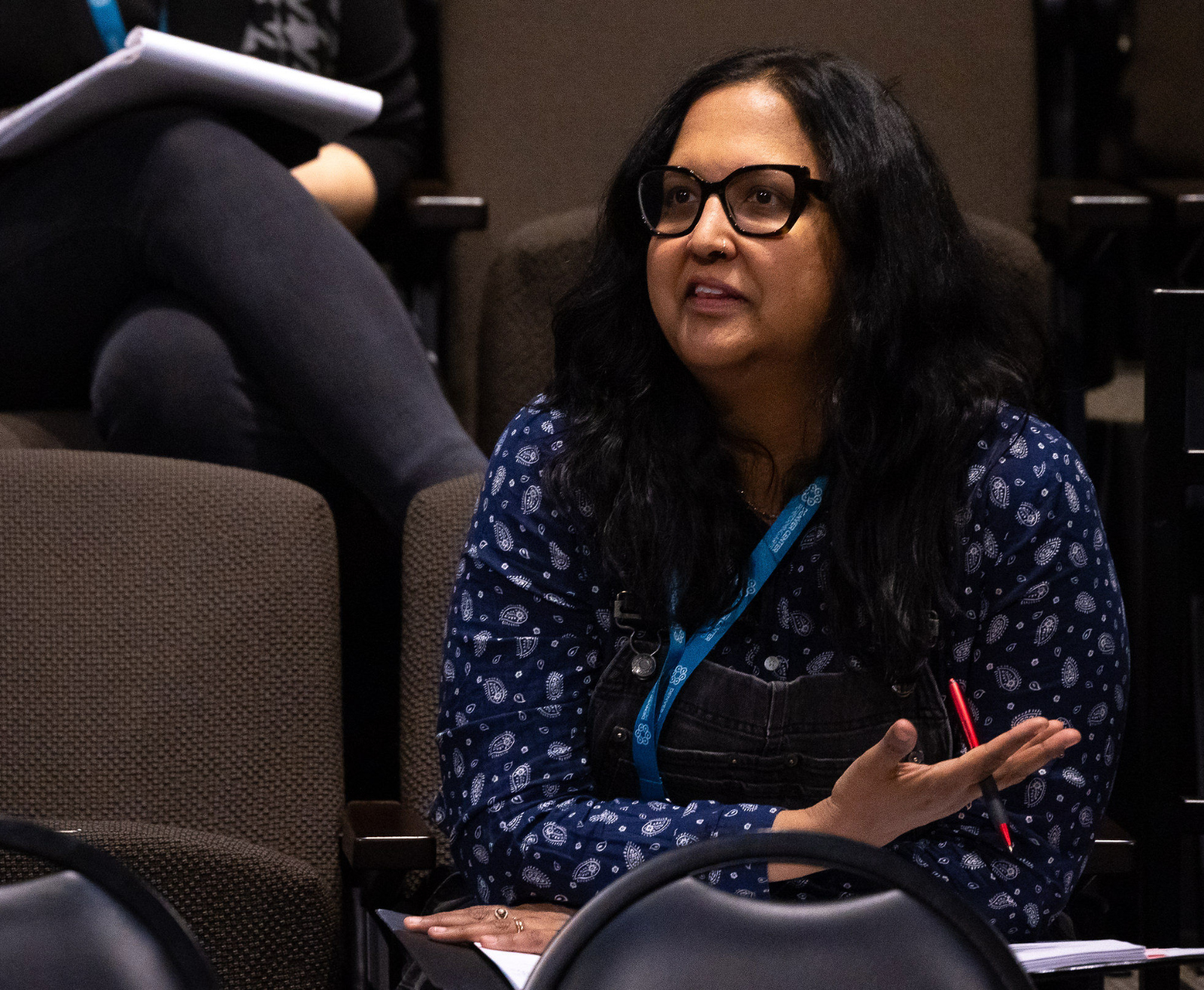
“Stories from the rural immigrant experience are just not being talked about,” McConigley said of her story. The same could be said of the other three featured plays and their subjects.
McConigley’s joyful, humane play about finding our common humanity in a place of hardscrabble isolation becomes an instant bookend to “The Laramie Project,” another true Wyoming story that also was birthed at the Denver Center 25 years ago. One examines the brutal, hate-fueled murder of Matthew Shepard; the second is a tale of two disparate families that ultimately serves as an encouraging progress report on what community truly means in Wyoming today. The play is based on McConigley’s award-winning collection of stories by the same name. And its parallels to “The Laramie Project” are entirely intentional. In fact, she said, “I was thinking about Matt the entire time I was writing this play.”
McConigley says she knows half of the real-life people portrayed in “The Laramie Project” because she and Shepard were a year apart at Dean Morgan Junior High School in Casper. “We went to the same church, and he was in a lot of shows with my sisters,” she said. “My story is my direct response to that toxic Marlboro Man masculinity we have in Wyoming, where men are always being told to ‘cowboy up.’ The suicide rate for men in Wyoming is the highest in the country – and I think there’s a reason for that.”
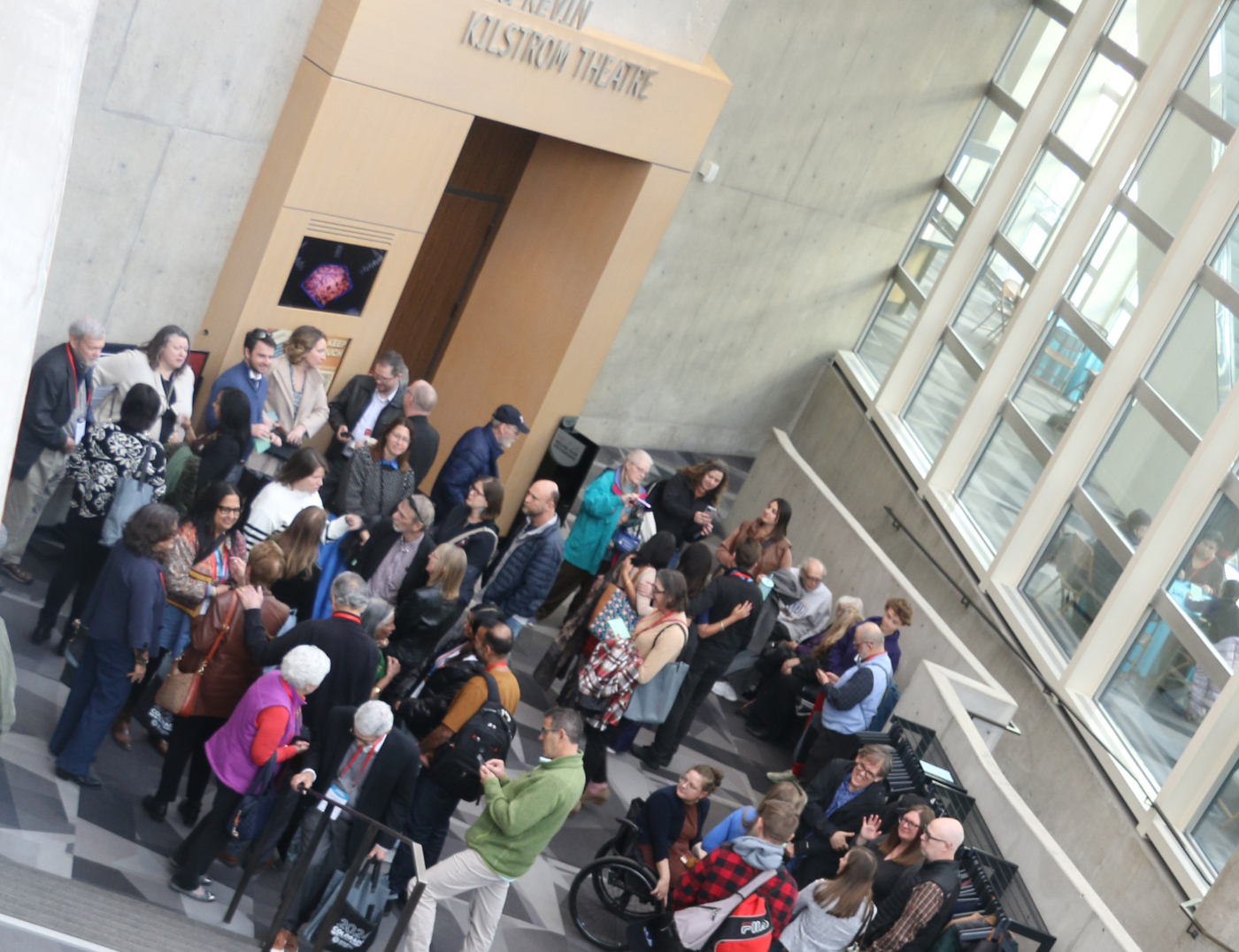
Audience response to her play was palpable. But an invisible yet enduring post-pandemic cloud hung over Denver’s otherwise uncommonly sun-drenched February weekend. Fresh news was circulating that the North Carolina Theatre, the closest thing Raleigh has to a Denver Center for the Performing Arts, has announced it is filing for Chapter 11 bankruptcy. Two years ago, the Humana Festival – the most prestigious new-play festival in the country – shut down after 47 years in Louisville, Ky. Same for The Lark, a beloved, 27-year-old new-play development center in New York.
Major theater companies across the country are facing what American Theatre magazine has called “a crisis of contraction.” Its major report found 35 significant companies from Washington D.C. to Seattle have closed since 2020. Major-league companies like L.A.’s Mark Taper Forum and Chicago’s Lookingglass Theatre Company have “paused” operations – which would be akin to the Colorado Rockies taking a season off to reorganize. It’s an existential crisis. In Denver, the biggest post-shutdown casualty has been the 47-year-old BDT Stage, which closed in January for reasons unrelated to COVID.
Curious Theatre launches recovery campaign
At the Colorado New Play Summit, which attracts a fair share of industry leaders both from Colorado and around the country, the cumulative agony of it all was as plain as the unseasonal sun on the face of Jada Suzanne Dixon. She’s finishing her first full year as artistic director of Curious Theatre Company, which is considered Denver’s equivalent to a top off-Broadway playhouse – a place to see topical and urgent stories of the day in a professional setting.
“I am going to be honest: We are in challenging times, and I’m super stressed right now,” said Dixon. “Folks just aren’t coming in the door. We’re nowhere near where we were pre-COVID – and I don’t know anyone who is.”
Curious’ revenue, she said, is hovering at about 85 percent of what it was before the shutdown. On Friday, Curious announced the launch of an emergency $250,000 giving campaign that Dixon said “is critical to keeping our doors open.” She said Curious is facing “an unprecedented deficit due to impacts from COVID,” including rising costs and drops in ticket sales, subscriptions and donations. Funds are needed, she said, to address critical maintenance issues on the building it owns at 1080 Acoma St.
“We’ve got beautiful stories on stage,” she said. “People are leaving the theater going, ‘Oh my God, I loved it.’ And I say to them: ‘Thank you so very much. Now, go tell 25 people. Go knock on every door in your neighborhood, please … because we need you.”
Across the country, the cost of both labor and materials have gone up since the shutdown. At the same time, subscriptions are going down, donations have plummeted as much as 40%, according to American Theatre, and attendance was down 59% at professional nonprofit theaters in 2022 compared to 2018.
“We’re doing all the things,” Dixon said of managing her shrinking operating budget. “But at this point, I’m not quite sure what else we can do.”
It didn’t help when Dixon recently heard the highest leaders of a major California theater company tell NPR that what audiences want right now “is just to be entertained.” Dixon nearly drove her car off the road.
“I was so disheartened to hear that,” she said. “And here I am in my new role going, ‘Wait, is that what I’m supposed to be doing? Because that doesn’t sound interesting to me. That sort of freaks me out – and not in a good way.”
But a deep-dive into her own numbers reunited her with her instincts. “Our top-selling show of last season was ‘Amerikin,’” she said of a play that deals with white supremacy. “And our top-selling show of the season before was ‘American Son’” – a play that deals with police brutality and interracial relationships.
“I thought, well, I don’t know what’s going on with these other folks, but I know for sure what our patrons are telling us – that they want to be able to glimpse into humanity in a relevant way. They want access to it, and they want to lean into it. So I think people are still open and hungry for new stories that challenge us.”
Ironically, the continued existence of the Colorado New Play Summit as similar opportunities for playwrights around the country continue to decline has only amplified the Denver Center’s place and importance in the national field of new playmaking.
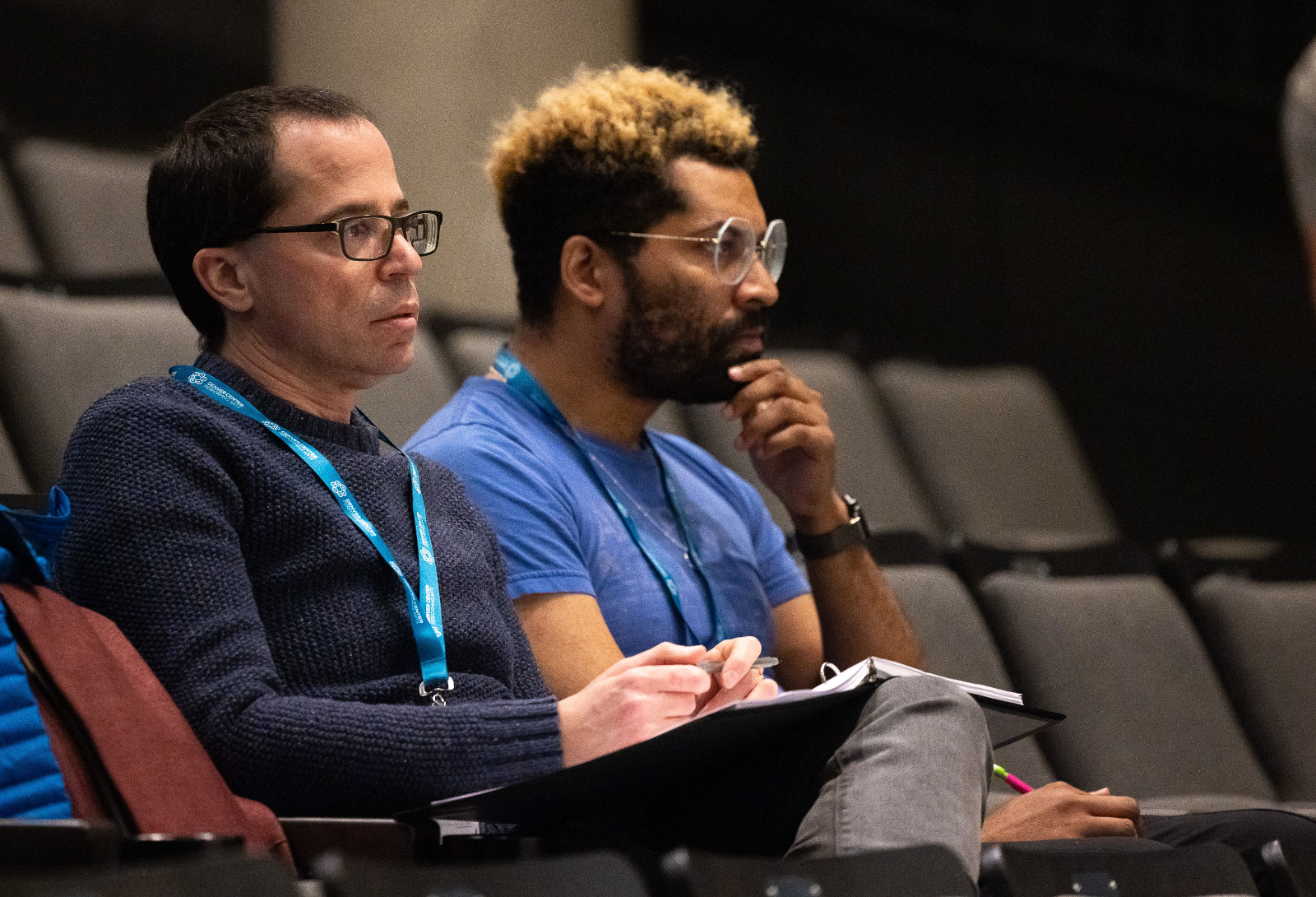
But the Denver Center has not been immune from the downturn. Last year, it essentially halved its Summit from two weeks to one, and in doing so eliminated its defining point of pride: The opportunity for featured playwrights to make changes and improvements to their scripts after a first weekend of public readings.
“We are at a precarious moment in the industry,” said Rosendorf, whose next story (“Stockade”) will be featured at Local Theatre Company’s upcoming new-play fest, called Local Lab, March 15-17 at the Dairy Arts Center in Boulder.
“That other things like it are going away means that the Colorado New Play Summit is more vital than ever at this moment,” he said. “And the fact that the Denver Center is still committed to it is important.”
Complicating the conversation – or perhaps invigorating it, depending on your point of view – is the ongoing challenge for major American theater companies to “meet the moment” in 2024. At a time when theaters are struggling to win back their pre-pandemic base, they are also being asked to expand access for previously underrepresented voices and underserved audiences. While some see those as competing imperatives, Rosendorf sees the challenge not as a problem but a potential solution.
“I think the moment we find ourselves in is long overdue in terms of what our theater spaces should be and who should feel welcome in them,” he said. “And I don’t think focusing on underrepresented stories of the global majority is mutually exclusive to trying to get people in their seats. In fact, I think they work well together. It’s really just asking theaters to live their mission. And you live your mission through action, not just words.”