Loss of Sondheim echoes through arts community
It was evident within the first few missing beats of his heart and his music that the death of composer Stephen Sondheim was going to impact the performing-arts community, and its audiences, harder than most.
Everyone, it seems, has a Sondheim story to tell. Yet everyone seems to be struggling with how to put the scope of his loss into words. “What do you say when the ocean goes away, or when a mountain disappears?” said Broadway star Michael Cerveris.
Who would know just the right thing to say right now? Perhaps only Sondheim himself, said actor Mandy Patinkin, who was an early company member with Colorado’s Creede Repertory Theatre in 1971 before going on to star in Sondheim’s Broadway production of “Sunday in the Park with George” in 1984.
“The guy who wrote my prayers has died,” Patinkin wrote last week. “His words were my Torah.”
Even in a time so full of loss, “this news feels like a unique punch to the heart,” added Cerveris, who played the suicidal father in the Tony Award-winning Broadway production of “Fun Home.” “Which is appropriate, I guess, given that is exactly how Steve’s music always affected me.”
Very few of those who know Sondheim’s music actually knew the man who famously sent in the clowns. But many of them feel a personal connection to the man through the truth and artistry of his deeply meaningful songs.
After Sondheim’s death, Denver actor Maggie Sczekan shared the harrowing story of her sexual assault in college and the humiliating three-year battle with her college that followed. In the midst of bullying and recrimination, she found her safe space in the school’s theatre, where she was cast to play the two leading roles in “Sunday in the Park with George.”
“As Dot, I was able to disappear into this passionate, blunt, saucy, and brave woman ahead of her time,” said Sczekan, who had an epiphany in rehearsal working out the song “We Do Not Belong Together.” “For the first time in years, I felt that I had something artistic to give, something human to give again,” she said. “It was thanks to Sondheim’s words that I could communicate again. It was thanks to his heart that my heart beat again. He is the reason I found myself again.”
Manual High School graduate Elizabeth Ward Land’s Sondheim moment was winning his personal approval to join the Broadway cast of “Passion.” A few years later, she ran into him at an industry event and gathered her courage to re-introduce herself. “I never expected him to remember me,” Ward Land said. “But he didn’t skip a beat. He said, ‘No, I remember you: ‘Tell Me on a Sunday’ and ‘Warm All Over” — which had been my audition songs. I was astounded and soared through the rest of the day. I think he knew how much a few choice words from him could mean, and I carry that with me always.”
In 1992, Shana Kelly of Denver wrote her college senior project on Sondheim and his newest show at the time, “Assassins.” She wrote to him, never expecting a reply, but heard back in a matter of days. In his typed response, Sondheim thoughtfully said no single show should be considered representative of his work. “As you probably recognize, I like to switch tone, subject matter and style as often as possible. I think ‘Assassins’ is as good as any.”
For her part, Kelly said, “I was, and still am, amazed by his generosity. In addition to his undeniable genius, Mr. Sondheim was a classy and genuine human.”
Denver actor Jim Hunt, winner of the Colorado Theatre Guild’s Lifetime Achievement Award, called Sondheim his North Star. “I envy him for now being … beyond the COVID nightmare we’re mired in,” he said. “Not a single day goes by that this genius doesn’t help me be a better man and live a better life.”
Sondheim lived to 91 and though he completed only one musical after 1994, his music has never gone away. There has never been a time, it seems, when at least one of his musicals — ”Sweeney Todd,” “Gypsy,” “Into the Woods,” “Company” or a dozen more — hasn’t been playing somewhere around the state. Next summer, the Lake Dillon Theatre Company will be staging “A Funny Thing Happened on the Way to the Forum.” The beat goes on.
Sondheim’s classic “West Side Story” lyrics will be discovered anew with next week’s release of Steven Spielberg’s new film telling the gritty story of rival gangs battling to the death for supremacy over a few measly blocks of Hell’s Kitchen. Sondheim has always been open to reinterpretations of his work. In 2011, he teamed with Lin-Manuel Miranda (“Hamilton”) to weave Spanish lyrics into the English libretto of “West Side Story.” It was a complicated endeavor because it involved matching meter and rhyme in a different language. “I got my dream job, working alongside my hero,” Miranda told me at the time. “And I had a blast doing it.” But audiences, he said, “freaked out” over the changes to the original score.
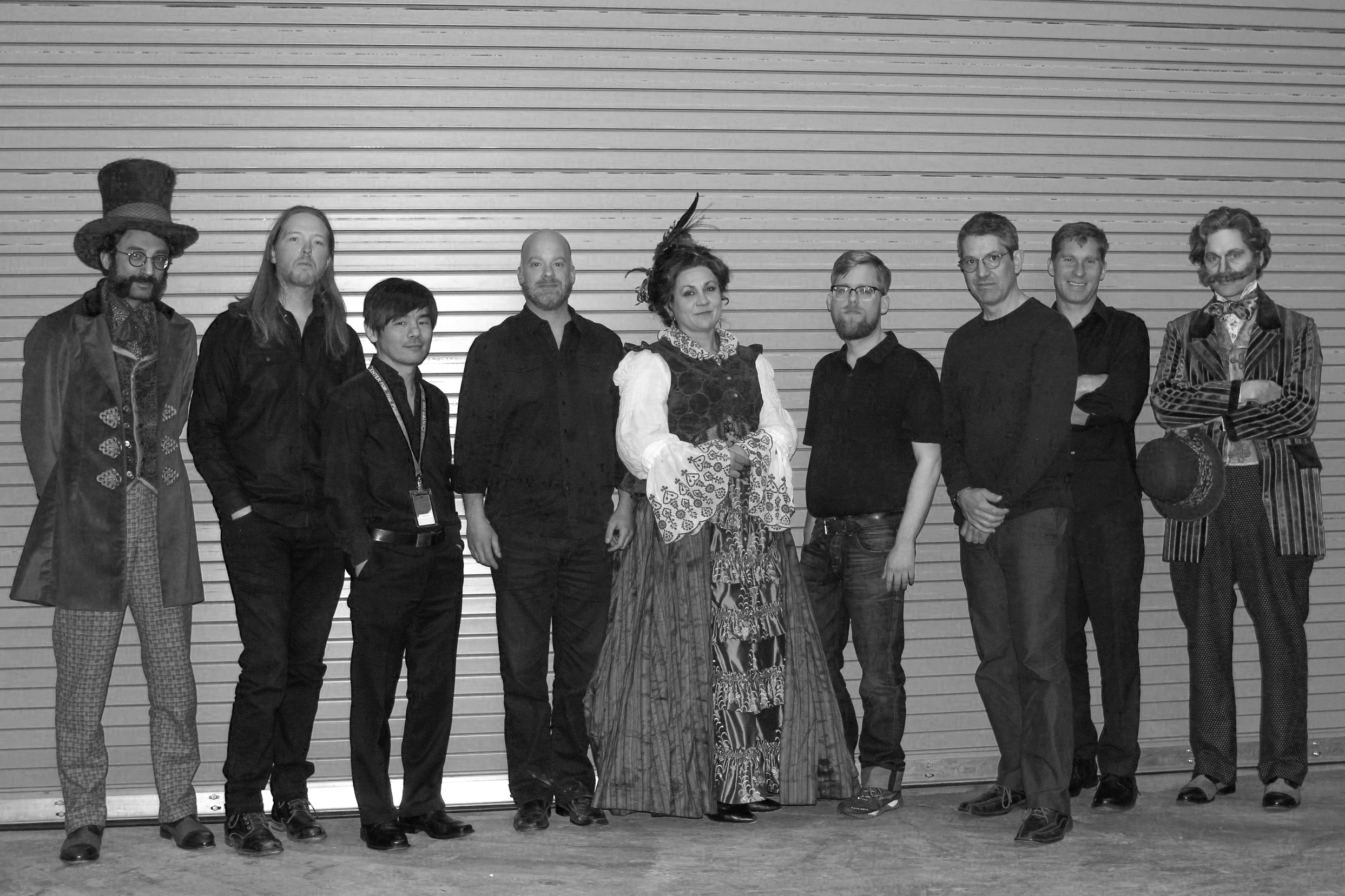
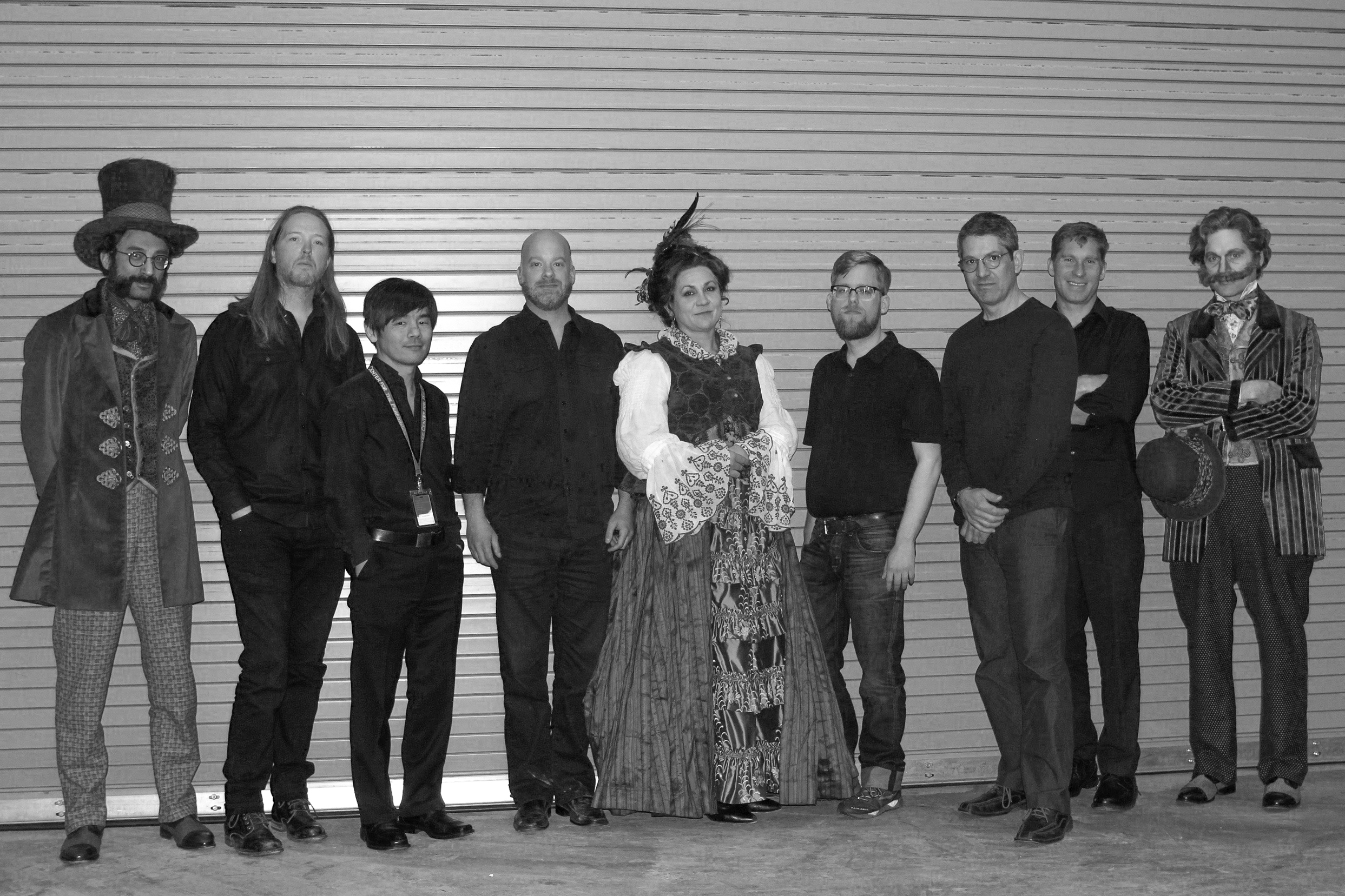
In 2016, Sondheim gave Colorado’s gypsy-rock darlings, DeVotchKa, his (limited) permission to rearrange his “Sweeney Todd” score for a hipster new production staged by the DCPA Theatre Company. (The band enjoyed having their throats slashed every night.)
For 70 years, Sondheim has both created and been a part of our pop culture. Right now, the man is himself a character played by Bradley Whitford in the Netflix film “Tick, tick … BOOM!” The score includes an overt homage to Sondheim, and one key subplot traces the consistent encouragement Sondheim gave to then-unknown composer Jonathan Larson (“Rent.”)
Ten years ago, I surveyed more than 175 theatre professionals to determine the most important American plays ever written. Tony Kushner, who was himself found to be America’s greatest living playwright in a similar survey, took one exception to my poll question: It didn’t consider musicals. Kushner told me several of Sondheim’s works belong on any legitimate list of America’s greatest plays solely for the quality of their lyrics.
In my former capacity as a Colorado theatre critic, I often found myself grappling with the paradox of Sondheim’s brilliance. I called him the finest songwriter of the past half-century … and a cruel genius. After spending many … many … evenings listening to Sondheim songs almost no one this side of the Kennedy Center could ever fully conquer, I concluded that Sondheim’s songs are just not meant to be sung by mere mortals.
Sondheim pens song-stories that are in themselves works of art. To achieve the full vocal range, emotional depth and oftentimes comedy to which most every Sondheim song aspires requires not only operatically trained voices but estimable actors who can convey loss, longing, unabashed love, irony, humor and a dozen other emotions — in song.
I may be hard to impress, but, believe me … no one is less forgiving than Sondheim’s own rabid aficionados. Pull it off, and you’re on the map. Fail, and there is no place to hide. And on those beautiful evenings when someone, somewhere pulls it off … there’s just nothing better. Jeremy Rill nailing “Being Alive” from “Company.” Meghan Van De Hey bringing home “Rose’s Turn” from “Gypsy.” Stephen Day ruminating “I Remember” from “Evening Primrose.”
That’s what I call being (and remaining) alive.
Denver Gazette contributing arts columnist John Moore is an award-winning journalist who was named one of the 10 most influential theater critics by American Theatre Magazine. He is now producing independent journalism as part of his own company, Moore Media.