PERSPECTIVE: Pandemic, recession, and regulatory stranglehold: Colorado’s oil and gas industry at the crossroads
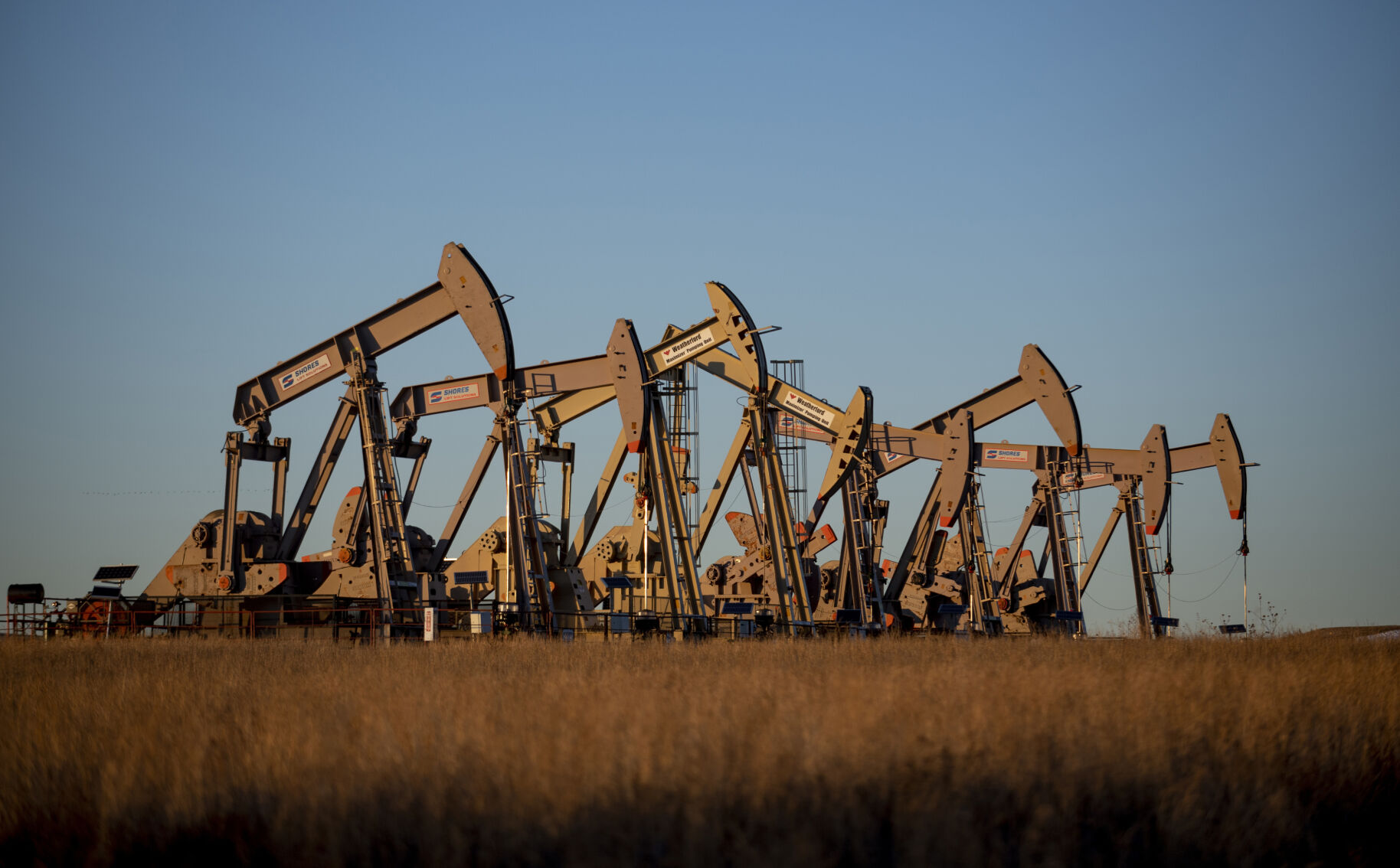
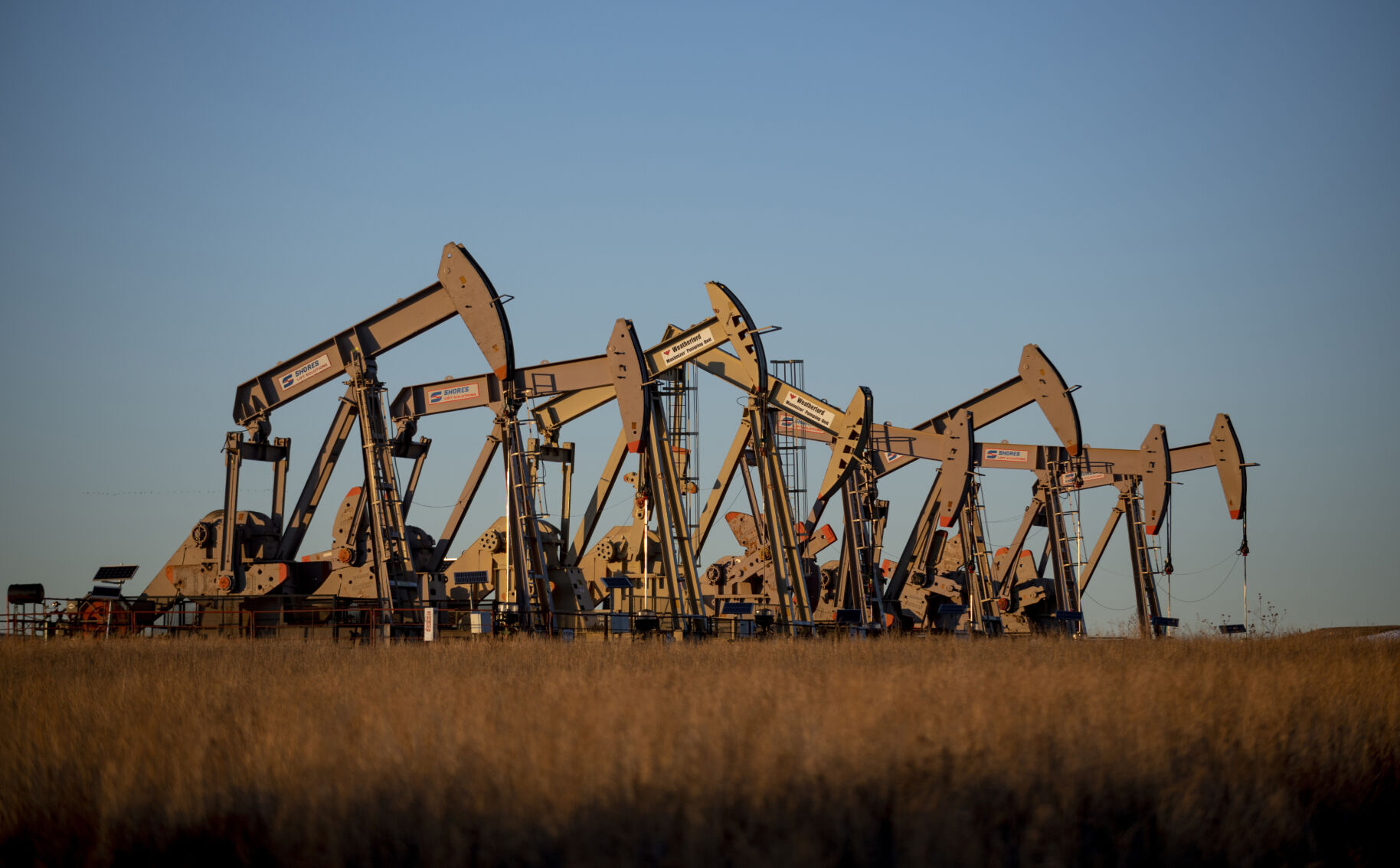
Amid a pandemic and a historically turbulent year in global energy markets, Colorado’s natural gas and oil industry has taken more than its share of lumps in 2020, with over 7,000 direct jobs lost since March. A confluence of precedent-setting state regulatory reform stands poised to make Colorado’s energy recovery — and indeed, the state’s broader economic recovery — far more daunting, and its future less certain.
Our industry is no stranger to robust oversight. Colorado’s energy operators work under the strongest governance in the country, in a country with the strongest rules in the world.
Analysis shows we produce some of the cleanest energy anywhere, right here in our own backyard. The women and men who work in Colorado’s energy sector can claim that with pride. It is for those women and men, and their livelihoods, that we feel compelled to speak out, as a series of proposed and newly-adopted regulations beg a broader, chilling question: Is one of Colorado’s largest employers and strongest economic drivers even welcome in this state anymore?
Warning signs in recent years
A look at recent history provides important context.
Over much of the past decade, environmental activists repeatedly threatened to work around a then-bipartisan state Legislature in assorted stop-and-start efforts to drive natural gas and oil production out of Colorado, despite the industry playing a foundational role in lifting the state from the depths of the late-2000s financial crisis.
In 2014, Jared Polis, then a member of Congress, threatened to bring a suite of such ballot measures directly to Colorado voters. Congressman Polis would ultimately abandon his propositions at the behest of then-Gov. John Hickenlooper and former Sen. Mark Udall, and cooler heads prevailed.
Fast forward to 2018.
Colorado’s environmental activist community marched forward alone, placing Proposition 112 on the ballot in an effort to impose a 2,500-foot setback on new natural gas and oil development in the state. This was their shot, or so they thought: The measure would have imposed a blanket 2,500-foot setback from everything, from a single building unit to a dry creek bed, with nearly 90 percent of Colorado land becoming off-limits from natural gas and oil production, effectively killing the industry in the process.
This time, Polis acknowledged the importance of our industry to Colorado and opposed Proposition 112, while simultaneously endorsing a transition to a “green energy future.” On election night, bolstered by an avalanche of negative voter sentiment toward President Donald Trump, Polis was elected governor of Colorado by a double-digit margin over former State Treasurer Walker Stapleton.
But something else important happened that night: Colorado voters, by a nearly identical margin to Polis’ victory, rejected Proposition 112 at the ballot box.
This came as little surprise. Colorado voters pay attention and have a history of thoughtful outcomes with their voting voices. They correctly surmised that American-made natural gas and oil keeps our country out of global conflicts, reduces trade deficits, creates and sustains millions of good-paying jobs, all while adhering to rules that are more protective of the environment than anywhere else in the world.
A political tsunami
The 2018 blue wave placed Democrats into nearly every conceivable office across the state, and any semblance of bipartisanship under the Gold Dome exited stage left. Shortly after gaveling into the 2019 legislative session, lawmakers introduced Senate Bill 181 and House Bill 1261, the combination of which represented the most sweeping legislative reform to the natural gas and oil industry in Colorado history. Neither bill was granted a stakeholder process customary to any legislation of this magnitude, never mind that the proposals would completely upend a foundational industry’s future operability.
Both bills passed with ease, with only Democratic support, and were signed into law by Gov. Polis. This transpired despite vehement objections from Colorado’s business and energy-producing communities who demanded both a seat at the table and more substantive stakeholder processes.
It was said that such stakeholder work would occur at the regulatory level, and the stage was set for a suite of associated rulemakings that would take years to complete.
Rules, regulations, certainty
Today, we find ourselves in the midst of Colorado’s entire energy rulebook being rewritten, and the stakes could not be higher. Gubernatorially appointed regulators at the Colorado Oil and Gas Conservation Commission (COGCC) and the state’s Air Quality Control Commission (AQCC) are tasked with executing this mandate, and both agencies’ expert, nonpartisan staffs are working day and night to craft functional rules that satisfy legislative directives. The staffs’ tireless work has been worthy of respect and commendation, and history suggests that these processes can succeed with good-faith collaboration, even when circumstances dictate that this collaboration occurs under an umbrella of tedious, complicated details of aspirational new laws.
This approach necessitates the signoff of politically appointed commissioners at the state’s regulatory bodies, but the reality is that regulators are free to accept or reject the proposals of their respective staffs. They even have the authority to direct the drafting of entirely new rules, despite a majority of the decisionmakers enjoying less experience than those they might choose to direct. Commissioners at both the COGCC and AQCC have had such opportunities in recent weeks, and took largely divergent paths.
Late last month, the AQCC approved first-in-the-nation air monitoring regulations at oil and natural gas sites. The rules are groundbreaking and expensive, but after months of stakeholder work, they appear operationally feasible and practical for Colorado’s energy producers.
The process and outcome of the AQCC’s rulemaking stands in stark contrast to the parallel, ongoing regulatory overhaul at the COGCC. In July, Gov. Polis appointed five commissioners to the agency. These commissioners were quickly thrown into the deep end, tasked with an unprecedented “Mission Change” rulemaking wherein the commission’s objective was to permanently alter, from one of “fostering” energy development to one in which development would be “regulated.” Typically, new regulatory rulemakings take place over a day or two. This historic Mission Change rulemaking began in August and will not be completed until November at the earliest.
At times throughout the ongoing proceedings, newly appointed COGCC commissioners have largely leaned on the expertise of their career staff and have demonstrated a willingness to work collaboratively with stakeholders. Regrettably, in other circumstances they have veered dramatically from facts, data and science, instead applying decisions which appear reactive to political agendas and activist fearmongering. The consequences could prove dire to Colorado’s economic vitality.
COGCC commissioners were recently presented with proposed rules regarding setbacks from buildings and homes. The highly technical staff proposed a “tiered” approach based on the type of structure and the amount of homes in proximity to natural gas and oil operations.
The appointed commissioners had other plans, immediately scrapping staff recommendations and introducing a blanket, 2,000-foot setback, with ambiguous and confusing application. COGCC commissioners based their decision on hypothetical, worst-case-scenario modeling from a 2019 Colorado Department of Public Health and Environment study, a study wherein authors conceded that its worst-case conditions had neither ever occurred nor were remotely likely to occur in the future.
After heavy industry input and stakeholder work, the AQCC utilized the 2019 CDPHE study to enact a functional, science-based regulatory solution to a theoretical development issue identified during the flowback stage of development, addressing the issue head-on. Conversely, the COGCC used the same study to propose arbitrary and subjective setback requirements, offering no analysis, mapping, or comprehension of the related impacts.
It feels as though the left hand isn’t speaking with the right hand across Colorado’s regulatory space, opening the door to duplicative, counterintuitive, and potentially contradictory rules across agencies. When these rulemakings began, the natural gas and oil industry asked for one thing in their wake: certainty. It would be extremely challenging for any industry to operate under an increasingly disjointed regulatory framework.
Political proceedings, silent governor
When Gov. Polis signed Senate Bill 181, he optimistically declared an “end” to Colorado’s oil and gas wars. This summer, he furthered his stated commitment to that end, announcing that he would not support any oil-and-gas-related ballot measures through 2022, so as to allow the new rules to be implemented and fully realized. The governor went as far as declaring in a recent Colorado Politics op-ed that “the legislation… established regulatory certainty with regard to the oil and gas industry.”
Recent actions by COGCC commissioners appointed by the governor defy his proclamations. The text of Senate Bill 181 makes clear that its pursuant rules are required to be “reasonable” and “necessary” in the commission’s advancement of public health, welfare, safety, the environment and wildlife. On more than one occasion in recent weeks, commissioners have invoked the precautionary principle as justification for rules that are anything but reasonable, let alone necessary. During deliberations, one commissioner even riffed that if left to individual regulators, setbacks of a mile or more would become Colorado’s standard.
Put simply, there is no scientific basis upon which a 2,000-foot setback is justified, yet commissioners have aggressively forged ahead with their newfound baseline.
Perhaps understanding just how unwieldy their rules have become, commissioners in recent weeks introduced an “offramp” system to its setback proposal, whereby an energy operator can, in fact, drill within 2,000 feet of a home, so long as it demonstrates a still-unclear and highly interpretive level of protectiveness. This solves little if anything in our industry’s quest for clarity and certainty. Under this subjective methodology, there’s a concern that engineers, geologists, and scientists could take a back seat to personal biases and political favoritism.
The rules likewise fall woefully short of any real-world application, as new homes can be built inside the proposed boundaries, but new wells cannot. Paying little mind to this plainly conflicting standard, commissioners appear determined to impose their designs on an industry that in recent years has contributed a billion dollars of annual tax revenue into Colorado’s coffers. It should not go without mention that the pandemic has emptied the state’s accounts, leaving school districts, roads, and first responders woefully underfunded.
Ever since COGCC commissioners tore up staff’s proposed rules regarding setbacks, the eyes of Colorado’s business community have been fixed upon Gov. Polis. It was his decree, that the state’s long-running energy conflict had come and passed, which set the stage for the ongoing regulatory overhaul.
So what has Gov. Polis said on the matter? You’d have to ask the 42 business and advocacy organizations from across the state who frantically wrote him a letter urging leadership regarding the commission he hand-picked. Or the nearly 200 energy companies which wrote him asking for clarity. What did these groups get in response? A form letter, signed with “kind regards” from “The Office of Governor Jared Polis.” The letter said very little, save for this:
“Setbacks are core to this discussion, and while we cannot comment on an ongoing regulatory proceeding, we have faith that our new full-time commission will forge the appropriate balance given the directives of SB19-181 and the diverse testimony received during the Commission’s rulemaking.”
That doesn’t amount to much, as the commissioners tasked with imposing these new regulations serve at the governor’s pleasure. This is a far-reaching problem that extends far beyond energy regulations and an ongoing debate that he preemptively declared finished.
A false choice for energy’s future
What comes next? Had activist organizations like 350 Colorado and WildEarth Guardians had their way, Colorado’s natural gas and oil industry, and its tens of thousands of direct jobs, would have been banished years ago. This week, those same activist entities demanded that Colorado’s only oil refinery be shuttered by 2025, part of their explicitly stated desire to drive a foundational industry out of the state — forever. Their hysterics pay no mind to the fact that the refinery in their crosshairs is a critical asset for the Rocky Mountain region, keeping energy prices low and providing the pavement for our roads and the fuel for airplanes taking flight at Denver International Airport.
These no-compromise organizations unsurprisingly propose a “100% phase out” of Colorado-based oil and natural gas development, with no recognition of the consequences, let alone any basis in facts and science.
Activist objectives and rhetoric have spiraled out of control. We acknowledge and agree that the climate is changing, and all of us, including the natural gas and oil industry, need to do our part to help. But it is reckless beyond measure for activists to tell elementary school-aged kids that they could die in ten years because of their parents’ automobile choice. It’s equally irresponsible to suggest that the planet has produced all the oil and gas it will ever need; that if another drop is produced beyond 2030, the world will cease to exist. This fearmongering has no basis in reality, but it could have lasting impacts on the mental health of our developing minds.
The fact is that even wind blades and solar cells are made by and through processes reliant on oil and natural gas. Take the average 1,000-pound electric car battery: To produce that battery, 500,000 pounds of raw materials must be mined from somewhere on the planet. Does anyone think that mining occurs without emissions? And is this a solution that generations present and future will deem environmentally and socially acceptable?
What of the countless medicines and medical instruments made from the basic chemistry set that oil and natural gas molecules afford us, or the fertilizers that grow our food, or the clothes we wear, or the smartphones and laptops we use to conduct business in an increasingly virtual world? Should we ban those products as well? Modern life, from medicine to society’s most accessible conveniences, are impossible without natural gas and oil.
In Colorado, we have reduced our emissions by more than 50 percent over the past decade, and we continue to work overtime to further reduce our environmental footprint. This is our home, too. By marrying thoughtful regulations with emerging technologies, we can produce the energy and products we all use while protecting our environment and the communities where we live and work. These efforts can and should support global efforts to combat climate change. Put simply, any contention that we face a binary choice between saving the planet and powering modern life is false.
Picking winners and losers, or lumping energy sources into groups of “good” and “evil,” helps nothing. We must be better than that, and we’d submit that Coloradans are smarter than that. Our energy future requires everyone to play their part, and to play it better than ever before. This future consists of renewables and battery storage, as well as natural gas and oil, gas-generated hydrogen, and nuclear power. But this all-of-the-above approach necessitates bringing more — not fewer — parties to the table to address our existing and future energy challenges head-on. Doing so will require all available perspectives, not just politically motivated voices for whom prescribed outcomes are already decided.
A chance to right the ship
Colorado has an opportunity to get it right. We can and must work beyond rhetoric and extreme political agendas. Right now, today, we have an opportunity to chart a cleaner energy future, together. For the betterment of our generation and those to come, we must.
Colorado’s natural gas and oil industry is proud of its best-in-the-nation regulatory framework, and that existing framework should be considered during the present and future rulemakings across state agencies. We make progress every day in concert with Colorado’s strong standards, and we are committed to upholding these principles for generations to come.
In the interim, we remain hopeful that Gov. Polis lives up to his pledge to be a “governor for all.” Hundreds of thousands of his residents’ livelihoods may depend on what he chooses to do in the weeks ahead. In a time in which the entire state faces public health and economic crises, it is his leadership that can allow for healing and recovery. We need it now more than ever.
Lynn Granger is executive director of API Colorado, a division of the American Petroleum Institute. Dan Haley is the president and CEO of the Colorado Oil & Gas Association.