







This year’s election likely to influence the future of mail voting
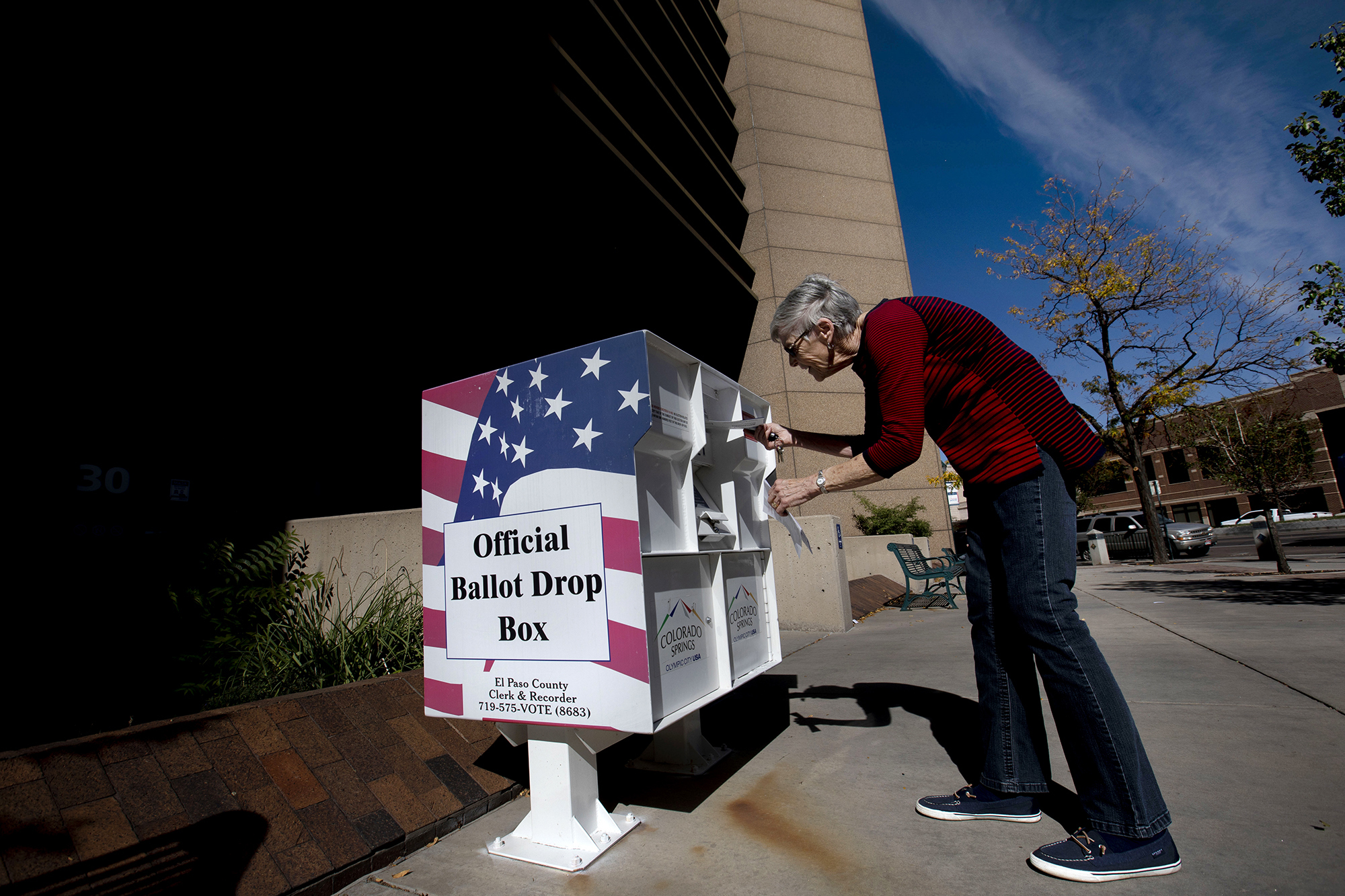
Colorado shifted to all-mail voting in 2013, automatically sending a ballot to each active voter, and the state’s system has been hailed as a well-oiled, reliable machine.
But fear about the safety of in-person voting during the COVID-19 pandemic, highlighted the reality that states that didn’t already have all-mail or comprehensive no-excuse mail voting systems wouldn’t have time to develop them before Election Day. (No-excuse voting allows voters to request mail ballots without a specific reason.)
Disputes over how to manage mail voting — the proper cutoff date for counting ballots postmarked by Tuesday, whether to allow curbside voting, and the authority of the federal government to weigh in on state voting rules — prompted a rash of lawsuits even before Election Day.
Election law experts said legal challenges related to Tuesday’s election — including the presidential contest between President Donald Trump and former Vice President Joe Biden — will likely come in jurisdictions where the race is tight. Lawsuits have already been filed in battleground states such as Pennsylvania, Texas and Wisconsin.
“A lot of what’s fueling these election litigation is that jurisdictions have felt like they needed to make some changes, and then you get legal challenges to those changes,” said Chris Jackson, a partner at Holland & Hart and adjunct professor of election and campaign finance law at the University of Denver.
“And I would expect that to the extent there’s post-election litigation … you’ll see somebody arguing that some percentage or section or type of vote should not be counted, because for reason X, Y and Z under sort of standard election laws or rules for the jurisdiction, they wouldn’t have been counted.”
The memory of the U.S. Supreme Court case Bush v. Gore that decided the 2000 presidential election looms with the possibility that this year’s presidential election could eventually go to the Supreme Court in some form. In addition, there is the specter of partisanship.
The fact that the Supreme Court now has three justices appointed by Trump — Justices Brett Kavanaugh, Neil Gorsuch and Amy Coney Barrett — has raised questions about the court’s ability to fairly decide an election case.
Craig Konnoth, an associate professor at the University of Colorado Law School and a former deputy solicitor general for California’s Department of Justice, said Coney Barrett’s confirmation to the court in October speaks particularly strongly to the appearance of partisanship.
Konnoth pointed to Trump’s statement that he believed the court needed to have nine justices in the event the election ends up at the Supreme Court, a statement he made following Justice Ruth Bader Ginsburg’s death in September and in anticipation of Coney Barrett’s confirmation.
Konnoth also noted that Coney Barrett did not commit when questioned during her confirmation hearings to recusing herself from an election case.
“It’s the fact that she’s been nominated by a president who said that he was nominating her at the time time for the election,” he said. “That, I think, is particularly troublesome.”
Regardless of how any legal challenges to this year’s election results play out in the courts, experts said the election makes a case for some reforms to how states and local governments administer mail voting.
Mario Nicolais, founder of KBN Law and counsel for the Lincoln Project, said Colorado has room to examine possible tweaks to its mail voting such as counting ballots received after Election Day but postmarked in time, or sending ballots to all registered voters instead of just active voters — people who voted in the prior election.
But he called such tweaks “niggling” details that don’t undermine the overall strength of Colorado as an example of how to conduct mail voting.
“I think overall, Colorado is one of those states which absolutely should be looked at and viewed as a model for other states to follow,” Nicolais said.
Jackson said he hopes more states and local jurisdictions will adopt systems that facilitate the ease of voting, such as mail ballots and same-day voter registration. But he acknowledged adoption of these types of measures will likely fall along party lines.
“I do think that you will get more reforms in Democratic-leaning jurisdictions than Republican ones,” he said. “For better or worse, that’s the world that we live in.”
Nicolais said he believes increasing use of mail voting will almost certainly change the way some local governments process thosel ballots. Several states did not start opening and verifying the validity of mail ballots received until Tuesday morning, which Nicolais said delays results in states such as Pennsylvania with large voter bases.
“I think that’s another reform that you’ll see a lot of, is ‘hey, look, we need to give our election officials time to process these absentee ballots,’ especially as they become more prevalent in future elections.”
