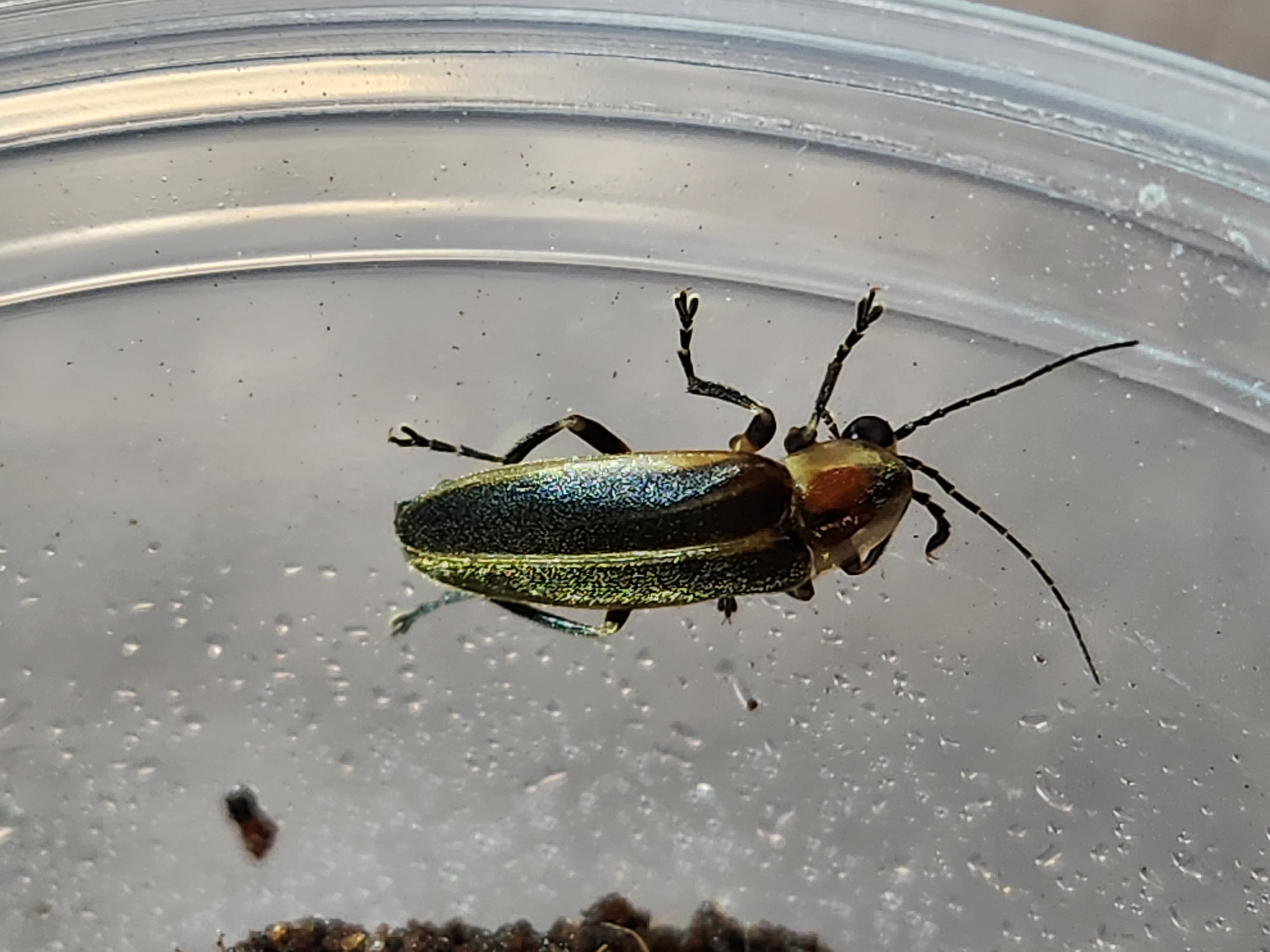
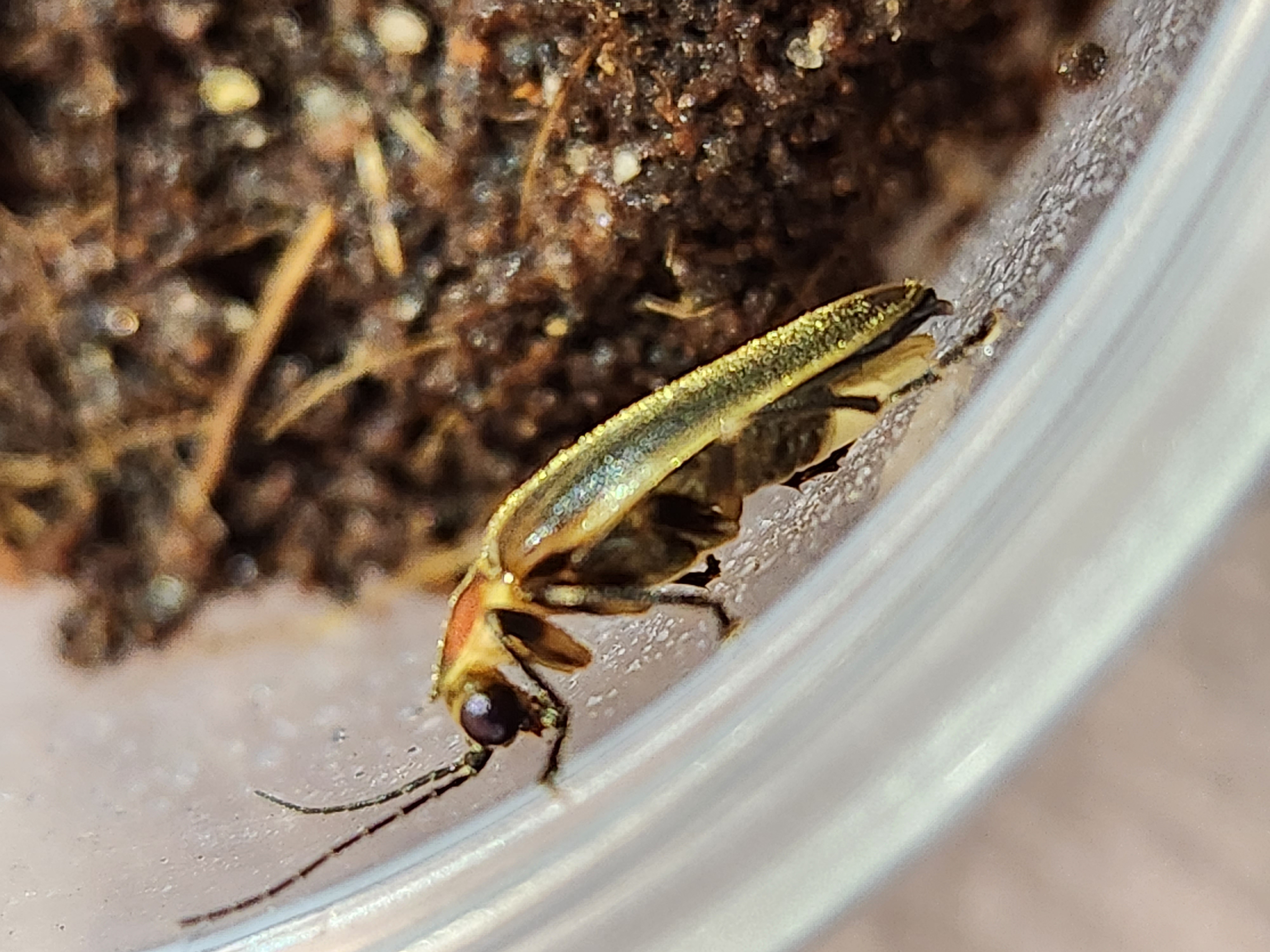
First Colorado firefly to be raised in captivity emerges at Butterfly Pavilion
First Colorado firefly to be raised in captivity emerges at Butterfly Pavilion
“The lightning bugs are back. They fly low to the ground as the lawn dissolves from green to black in the dusk. Seeing them, I can reconstruct a childhood; a hot night under tall trees: The Good Humor Man in his square white truck, the freezer smoky when he reaches inside for an ice cream.”
~Anna Quindlen (author, journalist, opinion columnist)
Fireflies are alive and glowing in Colorado. But no one knows how long they have been flashing along the wetter habitats of the Front Range.
Scientists are just beginning to understand the lightning bug specific to Colorado. And this abnormally wet year has them scrambling to learn while they can.
Firefly study is so new in Colorado, it’s also unknown how many are here, what they eat, or the kind of dirt they need in order to grow.
The glow worm is basically a beetle with wings, but their magical flickering quality comes from a light-emitting enzyme called luciferase. Their twinkling is actually the way they communicate to each other — a language of light females use to attract males, and scare off predators.
Last month, scientists and interns at Butterfly Pavilion made huge progress when the first three living Colorado fireflies, two females and one male, emerged under human care.
“No one had been able to get them to pupate into adult fireflies until now,” said Lorna McCallister, a Butterfly Pavilion biologist.
McCallister calls the lightning bug a “cryptic and sensitive” species with their varied body patterns of red, yellow and black.
The Colorado lightning bug genus is called Photuris, which means “light terror.”
Until recently, scientists didn’t even know the life cycle of the Colorado firefly — but now they have an idea.
That’s because the Butterfly Pavilion’s three fully-formed adult fireflies took two years to emerge, having been nurtured in the lab since 2021.
To get them to the adult stage, researchers experimented introducing small changes to the eggs like different diets and environments. When the prized adults finally came out, scientists were shocked because they didn’t know if any of their mini-experiments were working.
This is a beginning of sorts, but now it’s time to get to work.
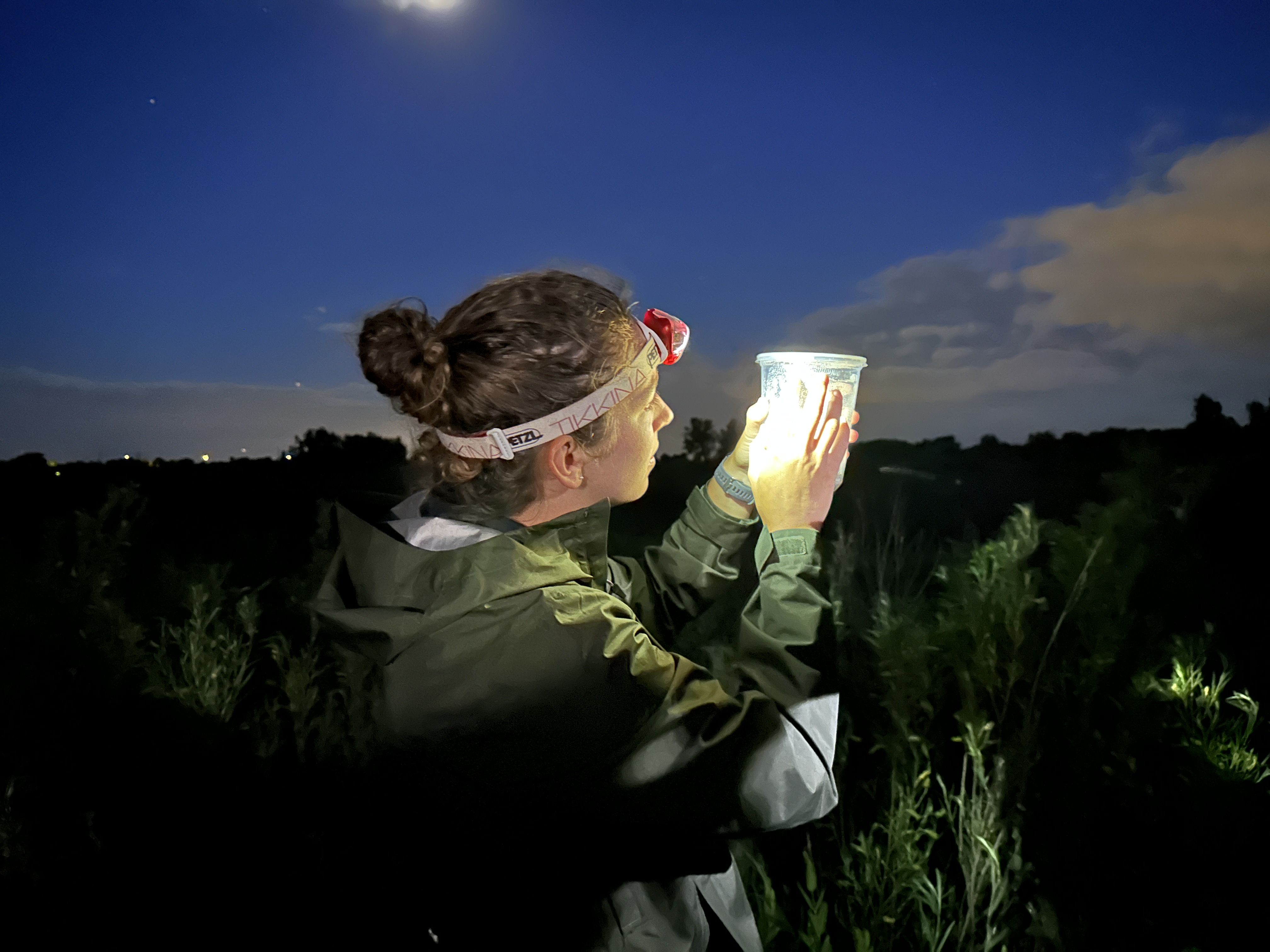
On a recent June evening, a Pavilion conservation team traveled to Fort Collins, collected larvae, and brought it back to their labs.
Six team members partnered with children who helped spot the flashing lights.
“The kids were very excited. They were running about saying ‘There’s one flashing here…get this one!’” said McCollister.
The Photuris live in wetland habitats and have been spotted, always at night, lighting up six areas:
- Riverbend Ponds Natural area in Ft. Collins
- Morey Wildlife Reserve in Loveland
- Sawhill Ponds Open Space in Boulder
- Fountain Creek Regional Park in Fountain
- Filoha Meadows Nature Preserve Redstone
- Chatfield State Park Littleton
Keeping fireflies multiplying is important to the ecosystem as, like all insects, their populations are declining worldwide. Habitat loss, pesticides and light pollution are responsible for their disappearance.
There’s been talk in Fort Collins about one firefly population that vanished, according to McCallister.
She said that last month’s egg harvest was especially important because the wet year has been good for them.
“Most people would say ‘oh it’s just a beetle,’ but they are an indicator of the quality of our wetland habitats,” she said.
Butterfly Pavilion officials took on firefly study in 2018. Go to Colorado Firefly Watch for more information.