







Aurora moves to investigate Colorado government, Denver ‘placing’ immigrants into city
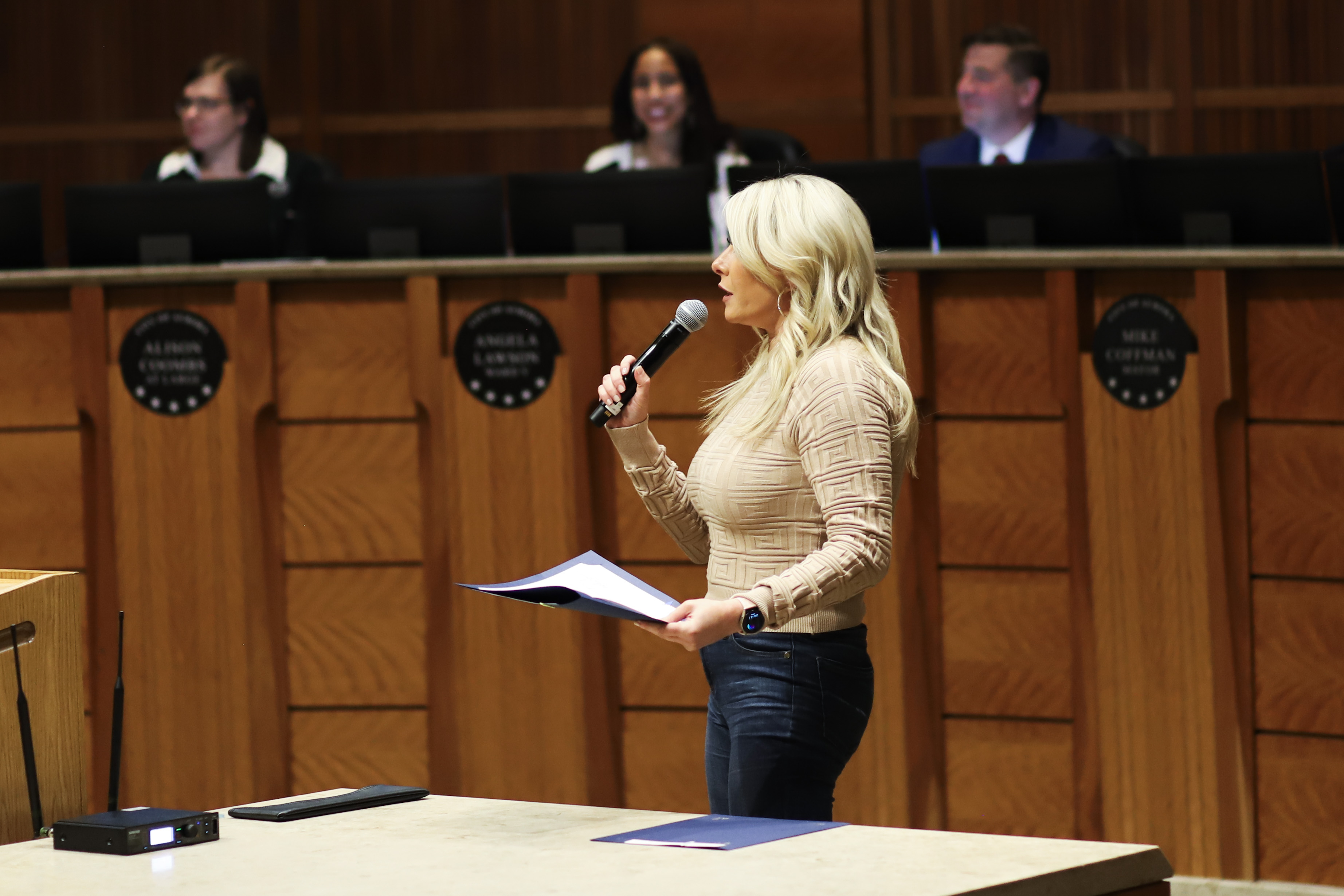
Aurora’s councilmembers on Monday night approved a resolution launching an investigation into claims that the Colorado government and Denver “placed” immigrants into the state’s third most populous city without the latter’s consent.
Sponsored by City Councilmember Danielle Jurinsky, the resolution, which passed, 6-2, says officials from the state and the City and County of Denver “intentionally placed immigrants within (Aurora) without notifying the city of this placement.”
It goes on to say that the “placing” of immigrants into Aurora without the resources to assist them is “detrimental” to the city, the immigrants and the community.
It directs the city manager to “investigate whether or not the State of Colorado and the City and County of Denver have placed immigrants in Aurora, without the help of Aurora based non-profits.”
The resolution also directs Aurora’s manager to provide a list of city organizations that have received funding to aid immigrants, including federal and state dollars, as well as money from the City and County of Denver.
In response, a spokesperson for Mayor Mike Johnston said the city partnered with nonprofits to help immigrants find stability.
“Denver took what many saw as a crisis and turned it into opportunity,” the mayor’s spokesperson said. “Had we turned our back, there is little doubt that many of the 43,000 people who arrived in Denver over the last two years would today be sleeping on the streets rather than in their own beds. We stand proudly with our immigrant community and with our nonprofit partners, whose dedication and life-saving work should be applauded, not demonized.”
Over the past 22 months, nearly 43,000 immigrants have arrived in Denver. Most of the immigrants were from South and Central America who crossed America’s southern border illegally.
At the height of the immigration influx in January, when Denver’s temporary shelters were busting at the seams with more than 5,000 immigrants, Texas officials estimated about three in 10 at the border were heading to Colorado.
Initially, Denver officials believed the draw to Colorado’s most populous city was its relative proximity to the U.S. border with Mexico. But Texas officials at the border blamed Denver’s offer of free shelter and onward travel to the immigrants’ desired cities.
Some of Denver’s neighboring communities, notably Douglas County, have warily eyed the city’s handling of the crisis. Denver is surrounded by municipalities that have deliberately avoided being tagged as a “sanctuary status.”
During Monday’s meeting in Aurora, Councilmember Steve Sundberg, who supported the resolution, said nonprofits in Aurora accepted immigrants “irresponsibly.”
Councilmember Alison Coombs, who voted “no,” said it would “target” organizations and people, when the issues, she argued, have actually been with housing and code violations. The City Council “should be” writing policies about the latter, she said.
Councilmember Crystal Murillo, who also voted “no,” asked what the City Council plans to do with information from the investigation. Murillo suggested that, in the future, the City Council may “withhold funding” from organizations that, assuming the claims proved to be true, played a role in moving immigrants to Aurora.
Jurinsky replied she does not think the council should be funding any nonprofits at all — that Aurora’s elected body should not be able to “pick and choose” nonprofits to fund and not fund.
Aurora Mayor Mike Coffman said since officials don’t know “the challenges in front of us,” they can’t make calls on what the information will be used for.
City officials need to know what happened in order to prevent it from occurring again, he said.
“We just need to retrace our steps to find out what happened and make sure it never happens again,” Coffman said.
Aurora officials weighed the proposal a few days after former President Donald Trump blasted the Biden administration’s handling of illegal immigration, which he said contributed to the Venezuelan gang problem in Colorado’s third-most populous city.
During his campaign stop in the city, Trump oscillated between the illegal immigration crisis that has spilled into America’s interior cities, notably Denver, Chicago and New York, and the gang situation in Aurora, and he sought to tie the problem to the Biden-Harris administration’s policies.
Jurinsky, who spoke at the Trump rally, earlier told The Denver Gazette that Denver officials are culpable for the influx and the ensuing gang situation in Aurora.
“They welcomed immigrants with open arms,” Jurinsky said. “But they didn’t help them. They placed them all in Aurora.”
During his stop in Aurora, Trump said Vice President Kamala Harris has “imported an army of illegal aliens and gang members.” The Republican presidential nominee also hurled insults at Colorado’s Democratic governor and vowed to “liberate” the state after next month’s election from a wave of immigration-related problems.
“I will rescue Aurora and every town that has been invaded and conquered,” Trump told a crowd estimated at about 10,000, which nearly filled an exhibit hall at a resort and convention center near Denver International Airport.
Aurora Mayor Mike Coffman, a former Republican congressman, pushed back on Trump’s characterization of the city of 400,000, calling Trump’s claims that Aurora has been “invaded” or occupied by migrant gangs false and damaging to the city’s sense of safety.
Colorado’s third largest city made national headlines this summer after a group of armed men — purported to be members of Tren de Aragua — terrorized tenants in an apartment complex in a video that went viral.
TDA is a violent Venezuelan prison gang that has expanded its footprint into the United States, establishing a foothold in the Denver metro area, according to the U.S. Department of Homeland Security.
Editor’s note: In a follow-up email to The Denver Gazette Tuesday, a spokesperson for Johnston stated that the City of Denver did not place immigrants in Aurora, but rather “people chose where they wanted to live and nonprofits supported them with rental assistance.”