Colorado construction industry: Women wanted
Colorado’s construction industry workforce faces three big challenges in coming years: Aging workers who will soon be retiring faster than replacements can get trained; a booming housing market that’s driving demand and a glaring under-representation of women construction workers.
That’s according to studies from industry associations and local construction officials, who outlined ongoing plans to recruit and retain more women construction workers and managers.
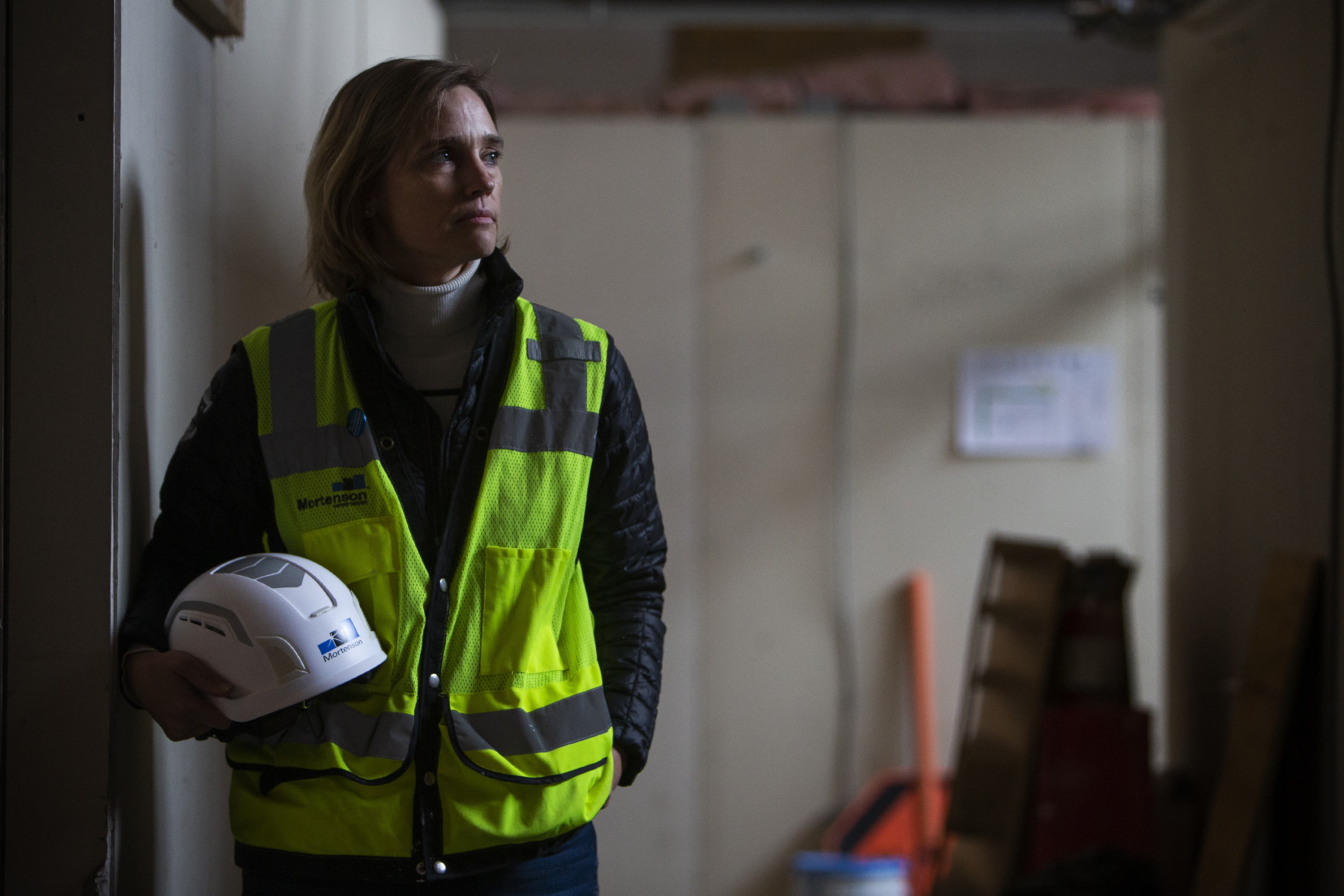
Maja Rosenquist, senior vice president of Mortenson, said ongoing programs, and recently inked partnerships, should help decrease the massive gender gap in an industry where only 10.9 percent of workers are female, according to the U.S. Bureau of Labor statistics.
“We’re being very focused and intentional about our female workforce,” said Rosenquist, who has been on the business side of the construction industry for more than 20 years.
The Home Builders Associations of metro Denver and Colorado Springs, and the Association of General Contractors in Denver, have also been ramping up efforts in recent years with a Careers in Construction program that targets women and people of color while they’re still in high school.
Started by the Housing and Building Association of Colorado Springs in 2015, it’s now in 29 high schools, with 1,600 students enrolled. They can earn certificates recognized by the U.S. Department of Labor, internships and job leads.
“If it weren’t for CICC I would not be where I am today especially as a woman because it is intimidating going into a field such as construction which is still very male oriented,” wrote Teagan Nevada, a Manitou High School graduate who landed a construction job, in a testimonial for the program. “However, it is less intimidating knowing I am well prepared and have a strong reliable resource at my disposal.”
It’s a far cry from a time earlier in her career when Rosenquist found her name scrawled in a decidedly non-complimentary way inside a construction site port-a-potty. Denver construction magnate Linda Alvarado, owner of Alvarado Construction, told Forbes magazine last year the same thing happened to her.
“What I’m seeing today is a lot of companies are lifting their heads up and saying ‘what we have been doing is not cutting it’,” Rosenquist said of efforts to get more female construction workers. “Everybody is on their own journey and working at their own pace. It’s going to be a tough challenge to solve.”
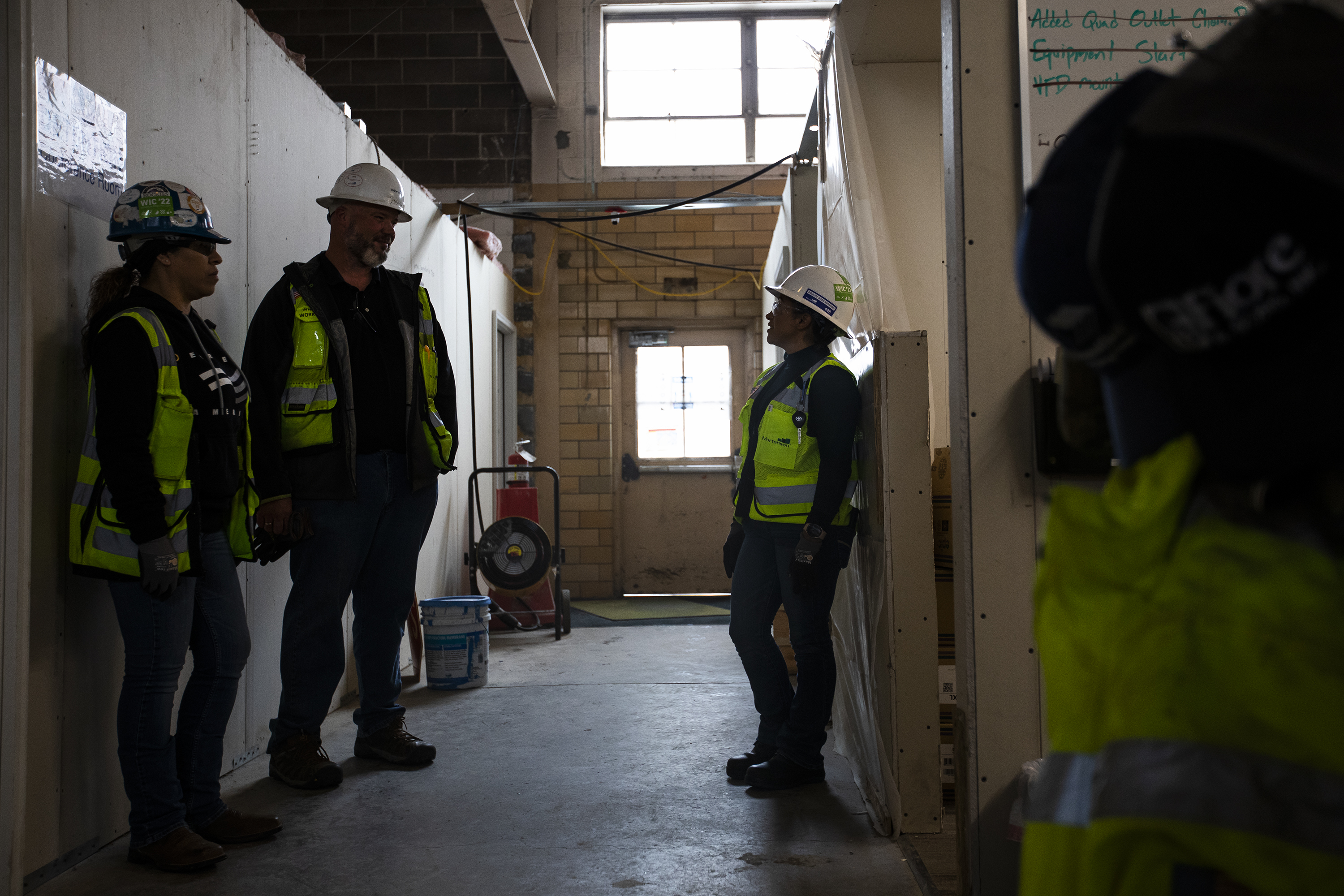
Mortenson’s work in the area has included hosting Women’s Skills Nights, efforts focused on hiring more women, and creating a culture of support for those women. That includes making sure they’re getting skilled worker, and management roles — not just holding signs or sweeping the floor.
“Our industry does have a history of relegating women into very low-level roles,” she said.
In early March, Mortenson inked a multi-year deal with Habitat for Humanity to create a Women Build Program to provide training and more involvement from Mortenson’s women leaders. Mortenson’s employees have volunteered to help build Habitat homes for years.
“Mortenson really approached this relationship as a collaboration. Together, we envisioned new ways to work together to support their goal of bringing more women into construction while advancing our goal of creating and maintaining affordable, stable housing,” said Jeanne Fischette, Habitat’s director of sponsorships, in a news release.
The new program includes quarterly skills building classes taught by Mortenson’s women leaders, teambuilding days on Habitat construction sites, Women Skills Nights and an “intensive two-day training session” coming in May.
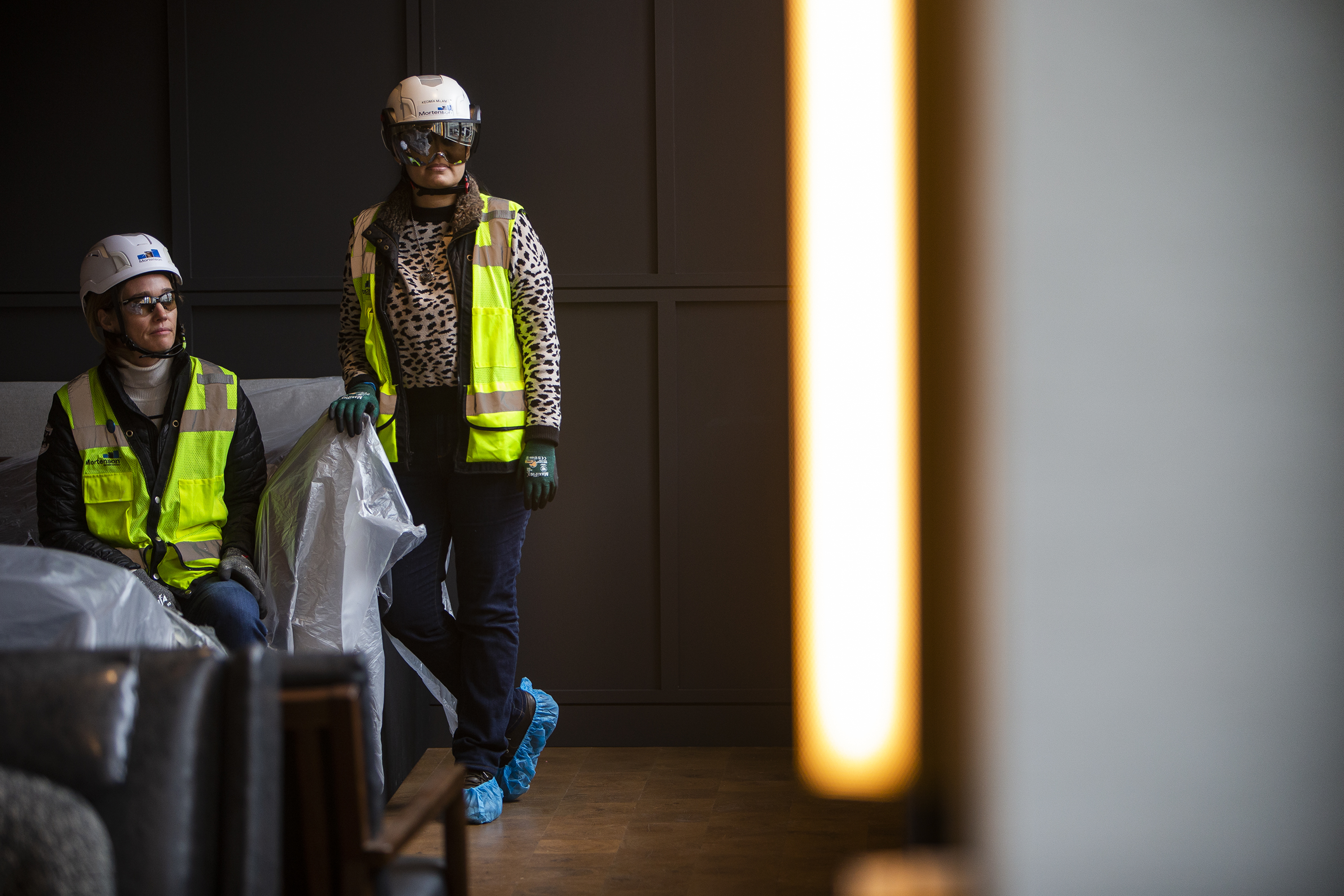
On a recent snowy day at the under-construction Slate Hotel where Mortenson and 4240 Architecture are finishing a 250-key hotel in the former Emily Griffith Opportunity School on 12th and Welton streets, Craft Resource Manager Kedmia Milam talked about her journey into a construction management career.
“There were a lot less women here that when I joined 11 years ago,” Milam said. “But I know that we’ve worked very hard to hit higher numbers throughout these last five years. We’ve come close to 20% (female workers) here and in Utah.”
Craft workers are the skilled workforce, like laborers, carpenters, heavy equipment operators, etc. Milam manages teams larger than 100 in both states. About 18% are female.
Milam said she knows upper management has her back.
“It just give me the courage because I know that I will bring diversity into the conversation and a very different point of view,” she said. “They recognize the importance of being able to speak up.”
And the old cliché of hard-hatted construction workers wolf whistling women has largely gone by the wayside, Rosenquist said.
“We’ve been super clear around the zero tolerance on any kind of bias motivated action or discrimination,” Rosenquist said. “It’s just something that’s not going to be tolerated.”
She pointed to an example of an entire project team of 1,500 being shut down to re-iterate those zero-tolerance policies.
“We are making a much bigger deal about it,” she said.
They’ve also ramped up retention efforts when it comes to being flexible for child care schedules, and making sure there’s no wage disparity between men and women workers.
“We’ve always done a good job at that, but it doesn’t mean we don’t need to double-check it,” Rosenquist said. “We had a third-party audit we completed last year to make sure we don’t have any disparities there.”
At a recent Women in Construction Week event at Empower Field at Mile High, Rosenquist said she was encouraged by the number of male participants.
“I feel like it’s working when I see our men just as excited about it as our women are, and that’s what I saw last week,” Rosenquist said. “I saw a ton of our men volunteering and attending the events we were hosting. They were advocating for how important their role is in all this.”