







Costs of wind and solar in Colorado underestimated, don’t include costs of power lines
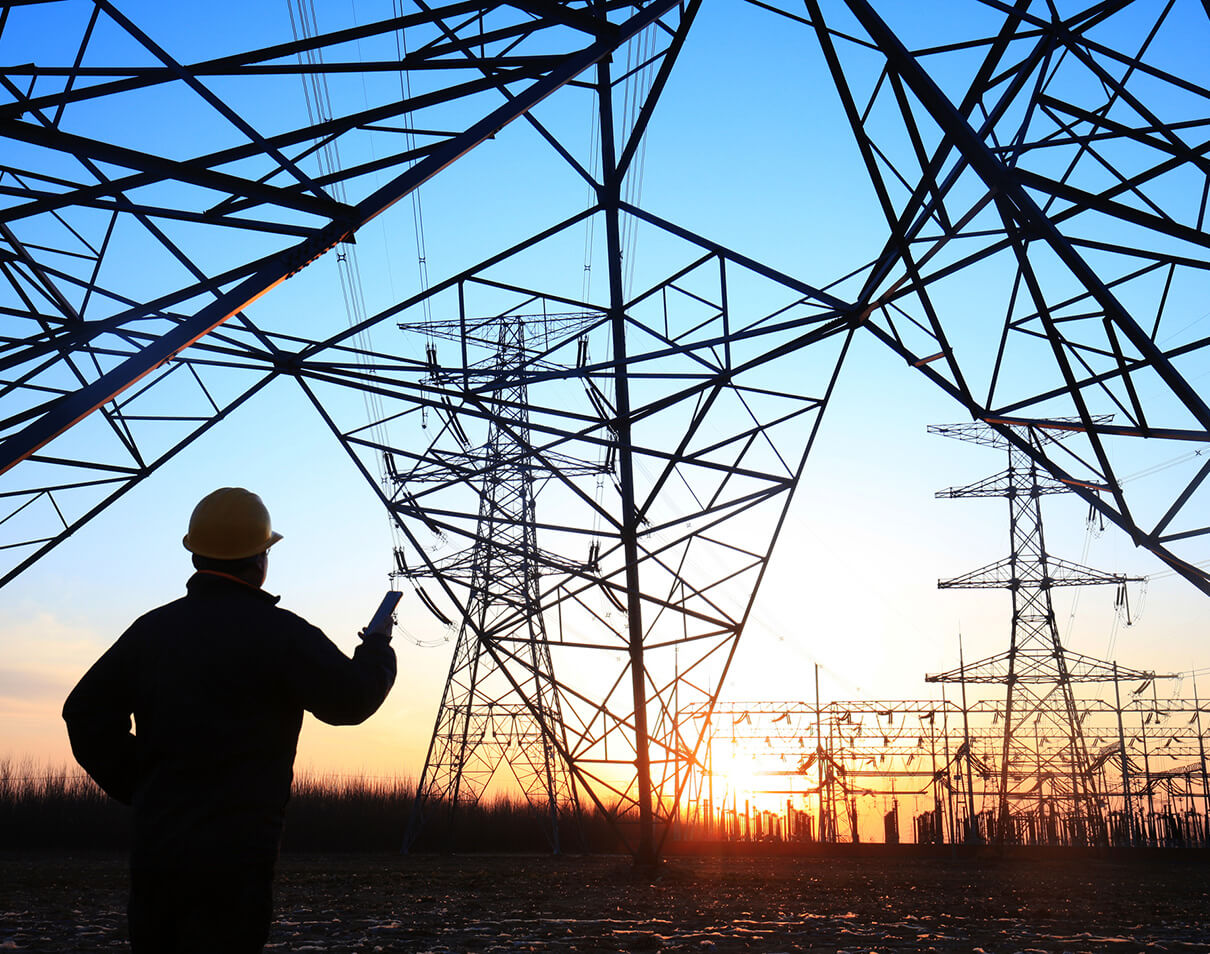
Xcel Energy’s new $1.7 billion Power Pathway Project to build 550 miles of new 345-kilovolt power lines and at least four new substations in eastern and southeastern Colorado will add to the cost of renewable energy.
Xcel customers will be paying for the power lines to help meet Gov. Jared Polis’ Greenhouse Gas Reduction Roadmap goals for carbon reduction.
“The project will create jobs, lease payments for landowners, and significant property tax investment associated with the new energy infrastructure,” said Robert Kenney, president of Xcel Energy Colorado.
And while Kenney said Xcel has received more than 1,100 bids for renewable energy projects to feed the more than 5,000 megawatts of new line capacity in Colorado, a research study out of Princeton University suggests that hundreds of thousands of miles of new power lines could be required to meet a nationwide “high electrification scenario” by 2050.
The Princeton Net-Zero America report quantifies five technological pathways, all using technologies known today, by which the United States could decarbonize its entire economy.
“The goal of this work is to provide confidence that the U.S. now has multiple genuine paths to net-zero by 2050 and to provide a blueprint for priority actions for the next decade,” said the report.
In the report’s high-electrification scenario, for nearly full electrification of buildings and transportation, Net-Zero America co-principal investigator Jesse Jenkins, an assistant professor and energy systems engineer at Princeton, told The Denver Gazette in an email that the U.S. would have to increase transmission capacity by at least 60% by 2030 and by nearly 300% by 2050.
This could mean building as much as 884,000 miles of new transmission lines nationwide to add to the existing 183,000 miles of lines, at a potential costs of more than $1 trillion, according to figures provided by Jenkins. Jenkins could not provide an estimate for Colorado alone.
“Reaching the goal of net-zero greenhouse gas emissions by 2050 will require substantial investment in the U.S. transmission grid, to accommodate growing electricity demand from EVs, heat pumps, and hydrogen producers, and tap into the nation’s abundant renewable resource potential,” said Jenkins. “One scenario included in the Princeton Net-Zero America study identified a need for about 60% more transmission capacity by 2030 and tripling current capacity by 2050.”
Jenkins stressed that these numbers are from modeling and are “not to be taken as a concrete prescription.”
Jenkins also said he is somewhat skeptical of the data he provided to The Denver Gazette. “The average line rating is very approximate, and it looks like our siting methods produce a massive amount of spur line circuit miles.”
“The levelized cost simply describes the average revenue per MWh of electricity sold that a project needs to break even. What is important is whether a project delivers more value than it costs. So long as that is true, then the project is a net benefit,” said Jenkins.
Jenkins explained that comparing the cost of a wind or solar farm to a gas or nuclear plant is like comparing the cost of a banana to the cost of a burger when deciding what to eat.
“Knowing a banana is cheaper than a burger is helpful information, but not everything you need to know, nor the right guide to how to build a balanced diet,” said Jenkins.
Jenkins explained that the dietary value of a food isn’t about cost, it’s about how foods work together to nourish the body. The same is largely true of the varying costs of different components of an energy system, said Jenkins.
“So, what we are looking for is not the lowest LCOE resource,” said Jenkins. “We’re looking for the right balanced diet of electricity resources. Wind and solar play a central, even starring role in that, and there is a lot of cost-effective transmission expansion that delivers greater value than it costs.”
But recent research says that when all the costs of using renewable energy are factored in, the comparative costs between renewables and, for example, natural gas or nuclear power, shift dramatically.
Dr. Robert Idel, who holds a PhD in Economics from Rice University, published a study in the scientific journal Energy in 2022 examining the way in which the cost of energy from a source like windmills or nuclear power is calculated.
The traditional levelized cost of energy (LCOE) represents “the expected lifetime generation of an electricity generating plant and the expected costs to generate the lifetime electricity,” said Idel.
It’s important to note that the classic LCOE is calculated based on the output of the generator itself and doesn’t include the costs of distributing that energy.
Idel said the standard way of calculating how much energy costs “has been criticized for ignoring the effects of intermittency and non-dispatchability.”
These two factors are inherent in both wind and solar sources, which do not provide full-time stable power to the grid.
To address this, Idel discusses a novel cost evaluation metric — the Levelized Full System Costs of Electricity (LFCOE), to address what he sees as a deficiency in the standard method.
He concludes that the LCOE per-megawatt-hour for wind and solar of $40 and $36 respectively, drastically underestimate the true LFSCOE per megawatt-hour as compared to other generating sources including coal, natural gas, and nuclear power.
Idel says in Texas, the LFSCOE of wind and solar of $291 and $413 respectively, are two to four times the cost of nuclear power, which comes in at $122, and five to 10 times more expensive than natural gas, which comes in at $42 per MWh.
Idel’s analysis does not include the additional costs pointed out in the Princeton report for building power lines to reach all of the widely distributed wind turbines and solar farms.
