







Denver mayor touts moving 2,000 homeless ‘indoors’
City's homeless population grew, despite tens of millions of dollars in spending by the Johnston administration
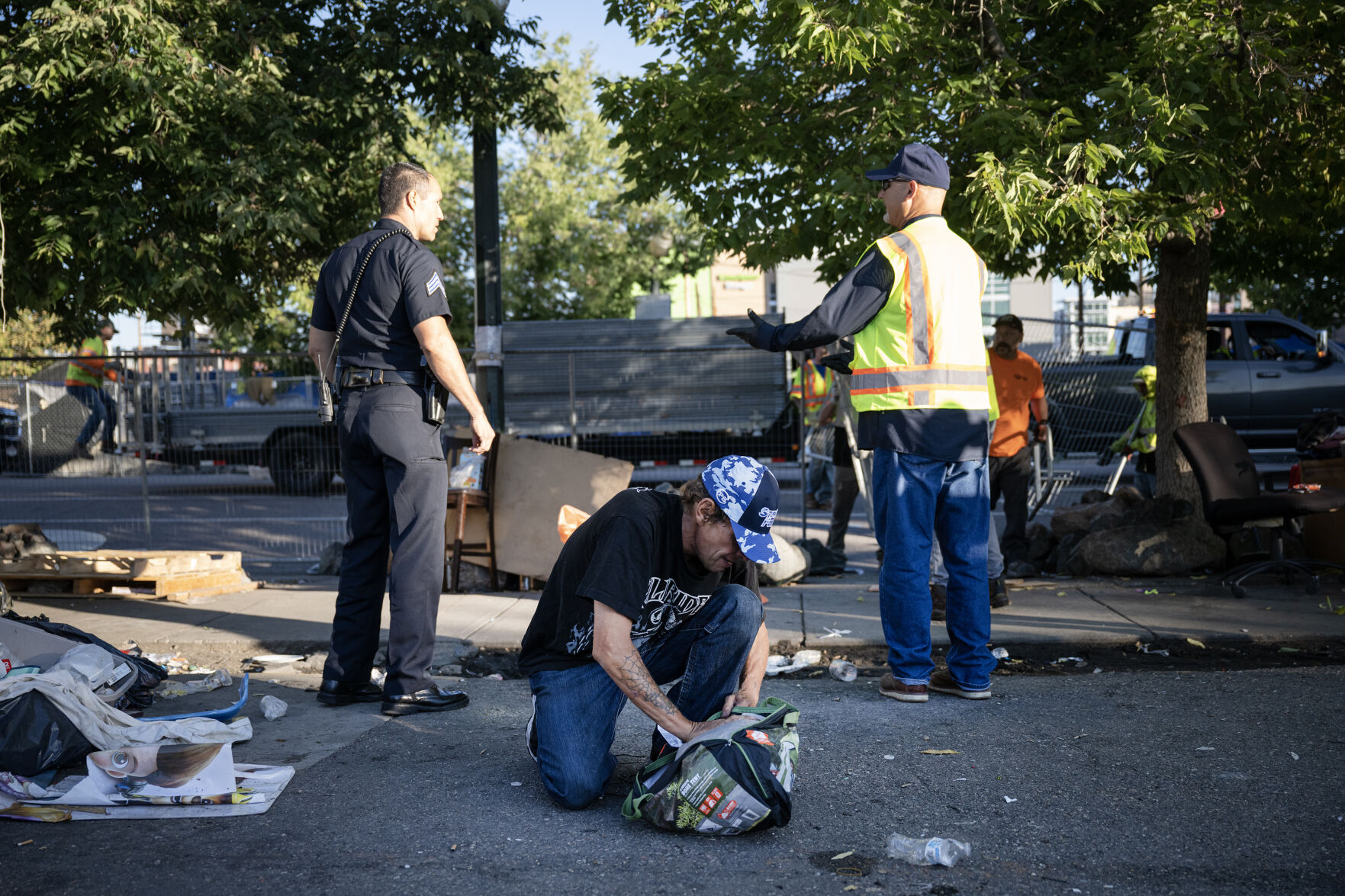
Denver Mayor Mike Johnston’s administration on Monday touted a “milestone” in his campaign against homelessness — the city has moved 2,000 homeless people to temporary shelters since he took office last year.
Johnston made it a priority to move 1,000 homeless people off of the city’s streets and into hotel-turned shelters and “micro-communities” by the end of 2024. He vowed to bring another 1,000 people into shelters by the end of 2025.
The mayor’s office said that latest goal has also now been achieved.
“Since that time,” the mayor’s office said, referring to the day Johnston officially assumed office, “2,064 people have been moved indoors, 18 of the city’s largest encampments have been closed and more than 350 blocks of downtown have been permanently closed to camping.”
“There are currently no large encampments remaining in the City and County of Denver,” his office said.
A news release from the mayor’s office did not say how much the program has cost.
The campaign has been expensive, though the exact numbers are difficult to pin down.
Notably, Denver councilmembers had no idea how much the city spent on its homelessness response until a briefing from the city’s Department of Housing Stability last June.
As it turned out, the city was on track to spend $155 million between July 2023 and December 2024 — $65 million more than Johnston previously said it would cost.
Against this spending backdrop, the latest count showed the total number of homeless people in Denver ballooned from 5,818 last year to 6,539 this year. And the city saw only 150 fewer “unsheltered” homeless people when compared to last year’s count — data that puzzled one councilmember a few months ago and led another to accuse the Johnston administration of having a “spend first, ask questions later mindset.”
Despite the increase in the number of homeless people, the mayor’s office viewed one key data as a resounding success. After “only six months of work,” the mayor’s office said, the city “recorded its largest ever year-over-year drop in unsheltered homelessness.”
“You don’t need us to tell you that All In Mile High has been a success. You can just go downtown and see for yourself,” Johnston said in a news release. “We heard Denverites loud and clear when they told us they want real solutions to homelessness. We are delivering on that and continuing to build on real momentum, not by moving people from block-to-block, but by providing the dignity and compassion that comes with having your own bed and the support needed to improve your circumstance.”
In the same news release, Carly West, vice president of government affairs for the Denver Metro Chamber of Commerce, said her group’s members say they “feel significantly safer in downtown Denver since the mayor’s concerted efforts to address the homelessness crisis.”
“We commend the mayor for not only addressing the immediate safety concerns but also for providing homeless individuals with essential resources, tools, and opportunities to break the cycle of homelessness. This is not about relocating the problem, but about offering real solutions that benefit the entire community,” West said.
The mayor’s office said that, of the 2,064 people brought to shelters, 83% remained “indoors,” and 36% have secured “permanent housing.”
A Denver Gazette investigation earlier this year showed that metro Denver’s homeless crisis has worsened and become among the most acute in the nation, despite the city of Denver contracting for at least $274 million from 2021 through 2024 on efforts to keep people off the streets.
The Denver metro region has added more homeless individuals than any other metro region in the country since 2018, according to key metrics collected by the federal government.
Other metro regions, including Seattle and Houston, have had greater success during that period prioritizing permanent housing rather than the quick fix solutions critics said simply perpetuate homelessness.
In Denver, the spending that flowed through the city’s Department of Housing Stability, known as HOST, has relied disproportionately on emergency shelter beds and temporary transition services, the records showed.
The review by The Denver Gazette of homeless provider contracts, invoices, performance outcomes and federal data showed that metro Denver trailed many other major metropolitan regions in tackling homelessness with permanent housing.
Just two out of every 10 people exiting homeless programming in Denver in 2023 found long-term permanent housing, a rate far worse than most other areas in the nation, according to the records.


