Denver officials decide against closing elementary school
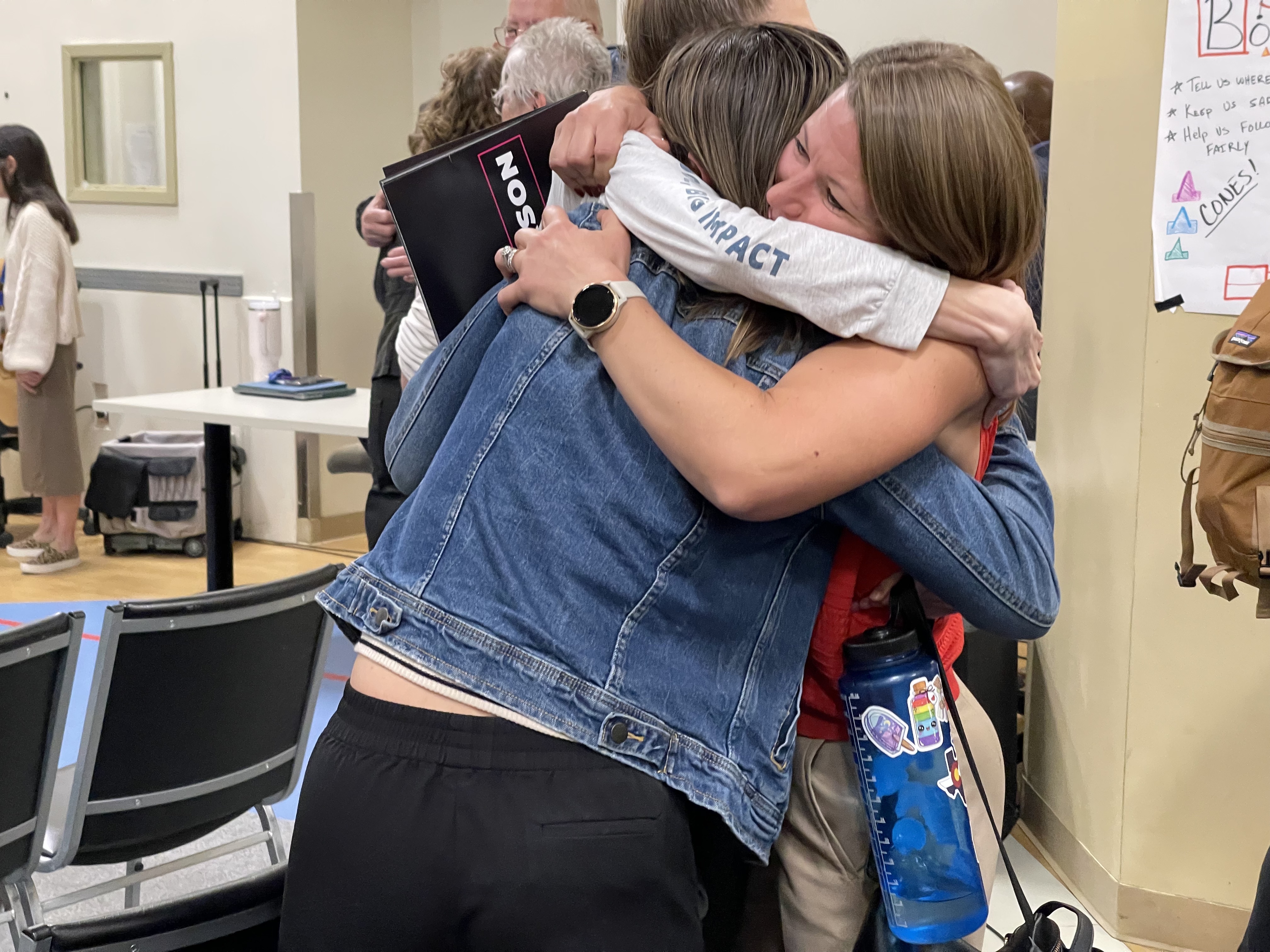
The Denver Public Schools board on Thursday decided against closing Academy 360, a low-performing elementary charter school.
Two board members — Scott Baldermann and Xóchitl Gaytán — voted for the closure; five rejected the idea.
Superintendent Alex Marrero earlier recommended renewing the contract for 17 of the 18 schools up for renewal. Only Academy 360 faced possible closure.
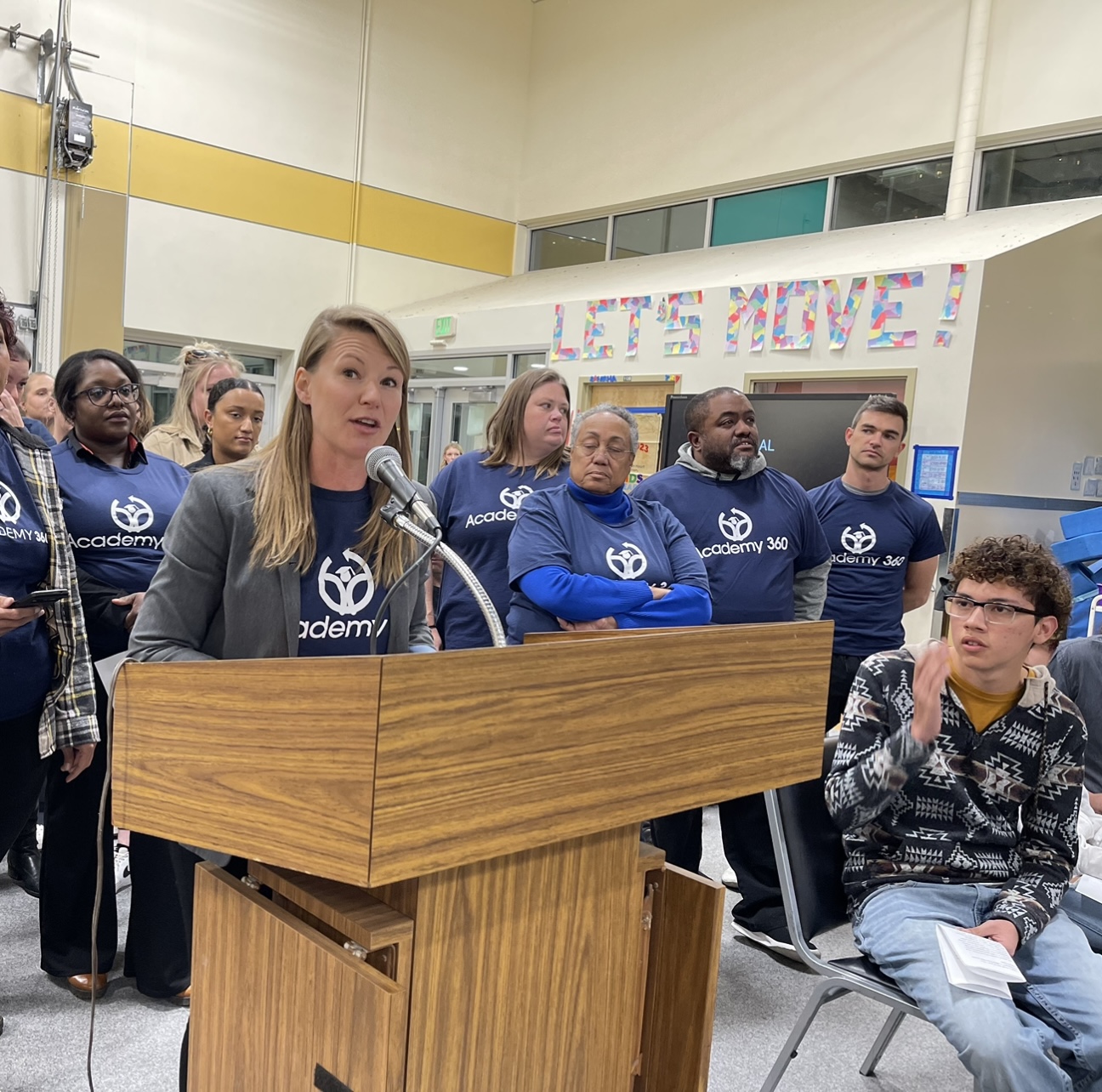
“It is not the only option,” Academy 360 Executive Director Becky McLean had told The Denver Gazette. “It’s not closure or bust.”
Called a “city within a city” and located in far northeast Denver, the Montbello community has said it often feels neglected by the city.
Roughly a third of the students at Academy 360 are multilingual learners, which is often used as code in education circles to describe economic and cultural challenges students and teachers face.
The community has confronted a myriad of challenges that have included the fight for basic services such as its first high school in 1980, 15 years after Montbello was established. But overcrowding issues and academic underachievement led to its closure in 2014. The district reopened the high school last academic year.
Community members have long decried district big-footing the neighborhood with a “we know what’s best for you” attitude.
The sentiment was on display last Monday during a public comment meeting.
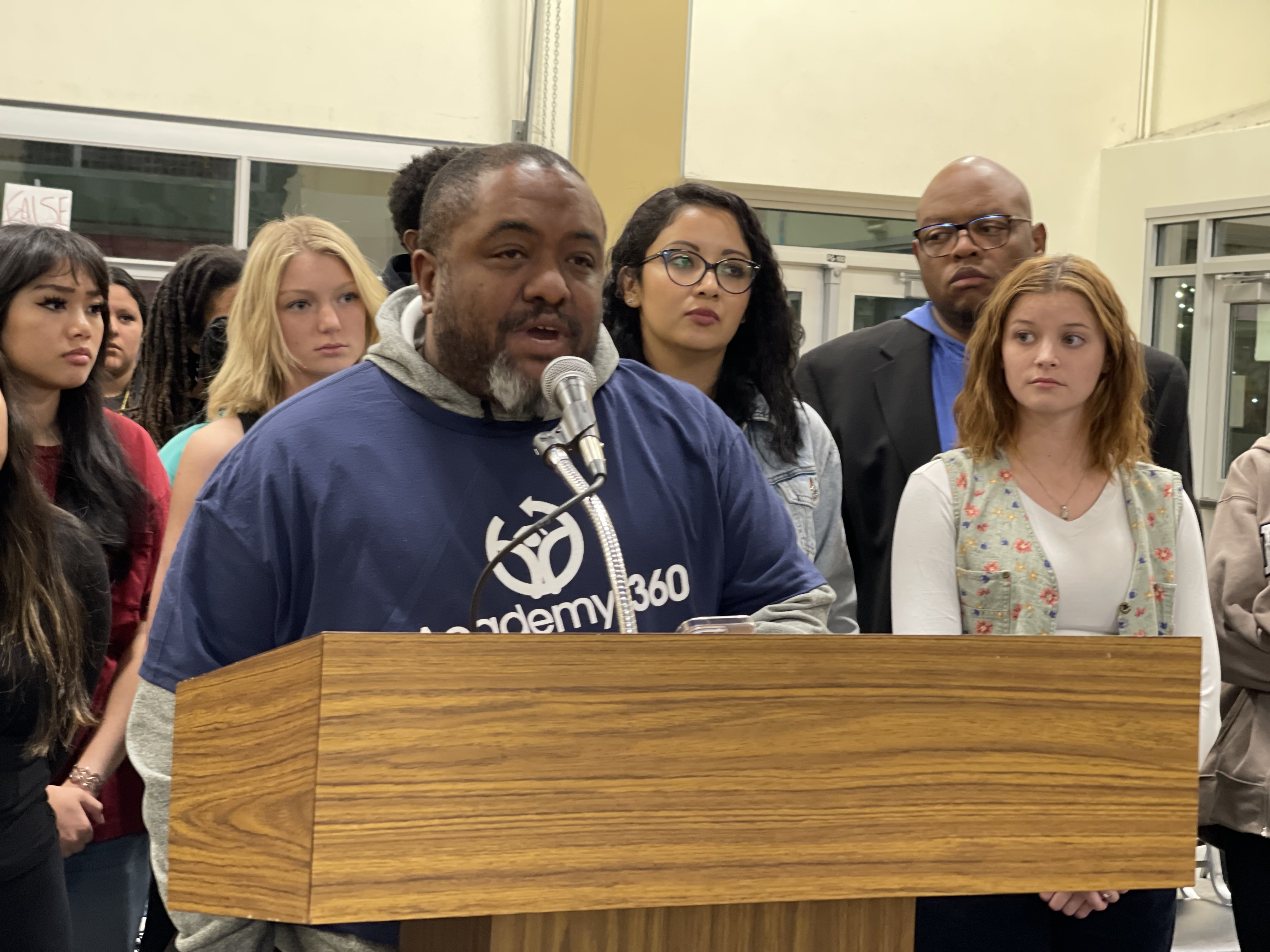
“We are not here for the district to continue to close community-supported schools in our community with the false promise that you can do it better because the truth shows us that you can’t and you haven’t,” said Vernon Jones Jr.
“Check the record.”
Jones, whose family has lived in northeast Denver since 1960, is the father of two DPS students and executive partner of FaithBridge, a nonprofit organization concerned with ensuring “the best opportunities and outcomes” for students.
More than 50 students, parents and faculty — many wearing blue Academy 360 T-shirts — joined Jones on Monday to push back on Marrero’s recommendation.
It was the input board members had sought when at a special meeting earlier this month they tabled Marrero’s recommendation, questioning whether the superintendent was creating a two-tiered system with a separate standard for charter schools — which must meet academic expectations — and district schools that don’t.
The board has repeatedly affirmed its belief test scores should not be used as a criteria for judging the performance of district-run schools.
State law provides autonomy for charter schools that gives them flexibilities not available to traditional schools. In return, Denver charters contractually agree to meet academic performance expectations.
About 50 of the district’s 200 campuses are charter schools.
Criticized by some as “high-stakes testing” they believe to be inaccurate and inequitable, standardized testing has existed in the U.S. as a way to measure academic achievement.
In 2015, the school board adopted a process to identify and support “persistently low-performing schools” called the School Performance Compact. Using the district’s performance data, officials could shutter or “restart” schools deemed to be failing students.
But then the historic 2019 flip of the school board shifted the balance of power away from these changes and toward a more traditional union-supported education model.
The current board in 2020 jettisoned the school performance framework used to justify shuttering low-performing schools.
While the intent would be to better serve students, closure would not have guaranteed it for the roughly 200 students who attend Academy 360. That’s because none of the elementary schools in the Montbello neighborhood that Academy 360 students would be directed to are high-performing schools.
Take Oakland Elementary and McGlone Academy.
Both are district-run schools on “turn-around plans,” according to preliminary 2023 state data.
John H. Amesse Elementary, also district run, is on an improvement plan.
District-run Farrell B. Howell ECE-8 School and Maxwell Elementary School are on “priority improvement plans.”
Improvement and turn-around schools have been identified by the state as low performing.
Only Marie L. Greenwood Academy is meeting academic expectations.
Parker Baxter, director of the Center for Education Policy Analysis at the University of Colorado Denver, called the accountability tension a fascinating challenge.
“In this case the district is doing something that it really doesn’t want to justify,” Baxter said.
And that’s because district officials are using the very metric — test scores — it has eschewed.
“I think it does raise a question of to what extent the district will have a hard time standing its ground in other places when it says test scores don’t matter,” Baxter said.
She doesn’t want to because of the months of uncertainty, but McLean, with Academy 360, said her board was poised to appeal to the state should the board vote to close the school.
Correction: Monarch Montessori in the Montbello neighborhood in Denver, while on a two-year watch for its previous academic performance, is meeting academic expectations, according to preliminary findings by the Colorado Department of Education. A story published on Nov. 16, 2023 failed to mention this.