Denver schools superintendent receives $17,000 bonus with annual evaluation
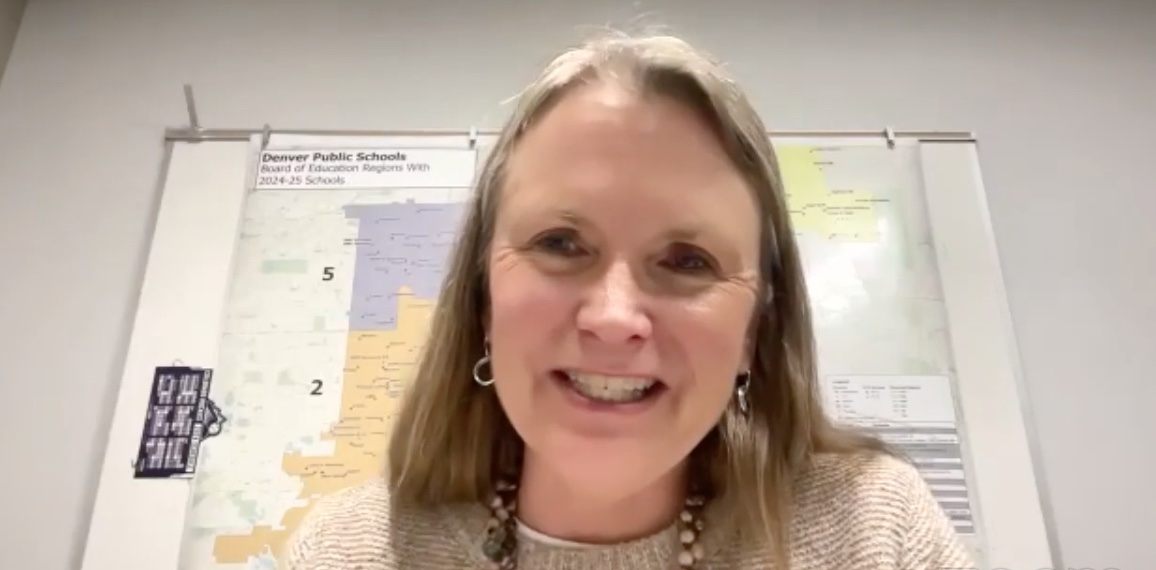
The Denver Public Schools Board of Education unanimously approved — without discussion — Superintendent Alex Marrero’s annual review Monday, but because of a technical glitch, the public was left in the dark about the details for more than 30 minutes.
Bill Good, a district spokesperson, told The Denver Gazette that Marrero will receive a $17,326 bonus, or 5% percent of his base pay, which is $346,000 annually.
Marrero’s 18-page performance review did not disclose whether he received a bonus.
The superintendent is considered to have met goal when achieving 75% or greater of the stated criteria outlined in the district’s reasonable interpretations, which the board’s report said Marrero met.
The roughly $17,000 bonus was far less than the 12.5%, or $43,250 he could have earned, had Marrero met all of his goals.
Last year, Marrero received a 2.5% bonus just five months after the board bumped his pay 10%, bringing his annual salary to $305,000 and making him the highest paid superintendent in the state.
As superintendent, Marrero oversees the largest school district in Colorado with more than 85,000 students.
Just five months after Marrero joined DPS in July 2021, the board voted to amend and extend his two-year contract to a four-year term with options for a one-year extension.
Before coming to Denver, Marrero served as assistant superintendent for the City School District of New Rochelle, which is outside New York City and serves roughly 11,000 students.
Marrero’s performance review comes after weathering public criticism for perceived missteps over his handling of campus closures, school shootings and a pay dispute with the teachers’ union.
Among the areas Marrero did not meet in his evaluation:
• Grades 9 through 11 math scores. While percentages showed a modicum of improvement, test scores did not meet the overall targets for vulnerable populations: Black, Latino, multi-lingual students nor those with disabilities or receiving free and reduced lunch, a poverty indicator.
• Just 58% of schools’ Multilingual Education programs “meet” expectations, shy of the targeted 60% goal.
• Overall school attendance.
Among Marrero’s goals that were partially met, without elaboration:
• Revisions to the Discipline Matrix, which is used to address problematic behaviors. Initially under fire for its perceived laxness, the Discipline Matrix now includes a category for when a student is accused of homicide.
• Increasing graduation rates, which were not met for Latino students.
While praising Marrero for meeting “several” goals for teaching and learning his performance review also noted that state scores were relatively flat last academic year.
“CMAS and COSAT accountability assessment data currently show very few examples of statistically significant improvements in student academic outcomes,” the review said. “Results represent a continuation of low achievement levels, especially for Latine and Black students, multilingual learners, students with disabilities, and students who qualify for free and reduced lunch, and median growth percentiles that represent the continued increase of learning gaps between student groups over time.”
Just 31.2% of DPS students meet or exceeded expectations in math, a 0.9% gain over the previous year, while 40.7% of students did so in English, a 0.4% increase.
Each spring, the state administers the Colorado Measures of Academic Success or CMAS, test for reading and math for third through eighth graders. Students are also tested, to a lesser extent, in science and social studies. High schoolers also take the SAT and PSAT administered by the College Board to measure college readiness.
Officials in Denver and across the state have wrung their hands over the learning losses sustained during the pandemic when schools were shuttered over COVID-19 precautions that lead to a reliance on parents and remote learning during the first stages of the global pandemic.
In other news, board members also approved, on first reading, a new public comment policy that limits the public’s input to work sessions, which are typically held a week before the board votes on items at its regular meeting.
The board also received a review of its annual budget, which with about 81% remaining for the remainder of the fiscal year was said to be “trending on budget.”
Board members also unanimously approved a resolution opposing Amendment 80, which voters will consider when they go to the polls next week. If passed, Amendment 80 will amend the Colorado constitution to create a right to school choice for K-12 students and their parents.
“This is a piece of legislation that is a classic example of a solution in search of a problem,” Director Scott Esserman said.