







Denver seeks public input on city’s expansion plans for bike lane network
Denver’s transportation department is seeking the public’s input on building out the city’s bike network infrastructure.
The Denver Department of Transportation and Infrastructure rolled out an interactive map and online survey, which will be open until Dec. 15.
Among the questions, the city asked respondents what their “Top 3 barriers” are to riding a bike or scooter around Denver more often and which specific locations they experienced “challenges” when biking or using scooters.
The department will also host a “virtual community kickoff” meeting on Nov. 15 from 5 to 6 p.m. That meeting can be accessed here.
The process will offer an opportunity for Denver residents to voice their opinion on bike lane plans for their respective neighborhoods.
Bike lane expansions have been the source of friction between Denver officials and some residents. Residents in the Cheesman Park neighborhood reported an uptick in incidents and expressed their frustrations following the installation of a bike lane and bollards in the area surrounding the intersection of East 7th Avenue and Williams Street this past summer.
One resident paid an engineering firm to study the blocks west of the intersection to determine if they actually carry the amount of traffic the city maintains creates safety issues for cyclists. That study showed volumes well below the 1,500 vehicles per day that residents say is the city’s stated threshold.
Supporters insist that bike expansion programs benefit the environment and make it safer for cyclists.
Bike lanes are a key component in Denver’s “Vision Zero,” a campaign to eliminate traffic deaths. Last month, the city unveiled plans to upgrade 134 miles of bike lanes and 120 pedestrian crossings by 2029, as well as add new public transportation lines.
Denver’s bicycle network currently consists of 493 miles of on street and off-street facilities. The transportation department plans to expand this network via the Denver Moves: Bikes plan, which the city updated in 2015.
The department hopes that the next update will build more connected and comfortable bikeways and identify locations where existing bikeways need improvement.
The Denver Bike Network is made up of five types of bikeways: protected bike lanes, neighborhood bikeways, trails/shared-use paths, buffered bike lanes, and bike lanes. Transportation officials cited local and national research as saying protected bike lanes, neighborhood bikeways, and trails/shared-use paths are safer and more comfortable for people bicycling and riding scooters.
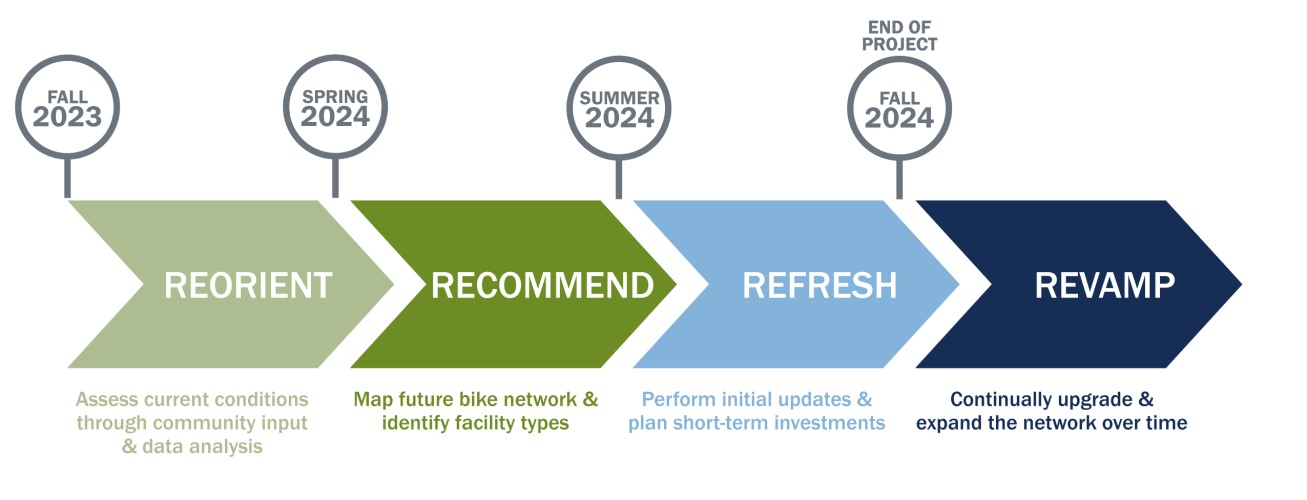
The city outlined its expansion plans in four phases. The survey and virtual meeting are part of “Public Outreach Phase #1.”
