New tool to help Coloradans identify hospital costs
Only about half of Colorado's largest health systems are complying with billing transparency rule.
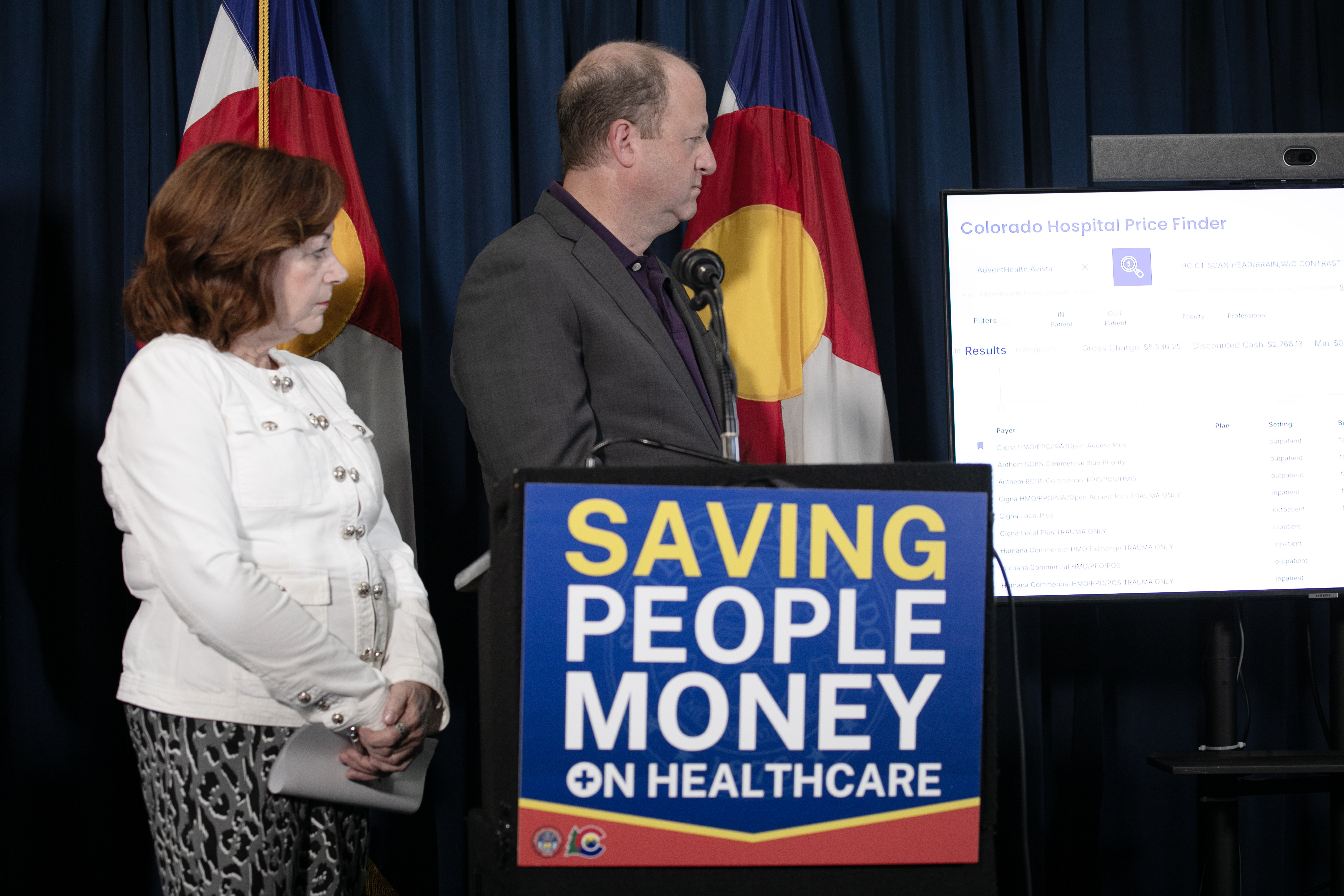
A new hospital price transparency tool is expected to help Coloradans identify out-of-pocket costs before a procedure, with the goal of ultimately helping consumers shop around for their health care.
Gov. Jared Polis recently touted the tool.
“Saving Coloradans money on health care is a top priority and I am excited to help launch this new and free Colorado Hospital Price Finder to make healthcare pricing more competitive and save people money on healthcare,” Polis said in a statement. “I am excited to see more of these tools online because the more transparency the better for all of us. We will continue to ensure Colorado’s competitive health care market provides high-quality care to everyone at lower costs and provide more clarity on the true cost of health care.”
Patients often do not know what they will be financially responsible for until weeks, sometimes months after undergoing a test or procedure.
Created by PatientRightsAdvocate.org, the hospital transparency tool allows consumers to search for the cost of common procedures, drugs and supplies by hospital. The price spat out by a search produces estimated costs by insurance provider.
Consumers shouldn’t have to go on faith.
And under the Public Health Service Act they don’t have to. Hospitals are required each year to establish, update and publicize a list of standard charges for items and services. The act also authorizes the Centers for Medicare & Medicaid Services, or CMS, to enforce the regulation with monetary penalties.
The rule has been in place since Jan. 1, 2021.
About half of Colorado’s largest health systems are complying with the rule, according to the organization.
That’s better than the national average, according to PatientRightsAdvocate.org, which is roughly 34%.
“With full transparency, consumers can benefit from competition to make informed decisions, protect from overcharges, billing errors, and fraud, and lower their costs,” the report said.
Two years ago, state legislators put some teeth to the federal rule with a new law that prohibits hospitals from sending a medical debt into collections if the hospital is not in compliance with federal reporting requirements.
“What the Colorado law does is the beginning of the shift of power to patients,” said Cynthia Fisher, founder and chairman of PatientRightsAdvocate.org.
The new Colorado law became effective last June.
The federal transparency rule only requires hospitals to publish 300 of the most common services scheduled in advance such as a knee replacement, C-section or MRI. And CMS only dictates 70 procedures that must be included.
It is for this reason, patient advocates argue, that these price estimator tools do not actually provide patients with a true upfront cost.
“When there’s a hole in the coverage, they just go for the biggest number they can get,” Marni Carey, president of Power to the Patients, has said.
Power to the Patients is a nonprofit organization formed in 2021 dedicated to price transparency.
Cara Welch, a Colorado Hospital Association spokesperson, has said Colorado hospitals have invested “significant resources” to be compliant.
“CHA and its member hospitals have a long history of supporting price transparency for patients,” Welch has said. “We strongly believe that patients should understand their insurance benefits and have access to price
Welch and others contend that Colorado hospitals are complying, pointing to the lack of fines. The Centers for Medicare & Medicaid Services has fined just 14 of the nation’s roughly 6,000 hospitals for noncompliance.
The penalties range from $56,940 up to $979,000.
Visit PatientRightsAdvocate.org for more information or to use the hospital transparency tool.