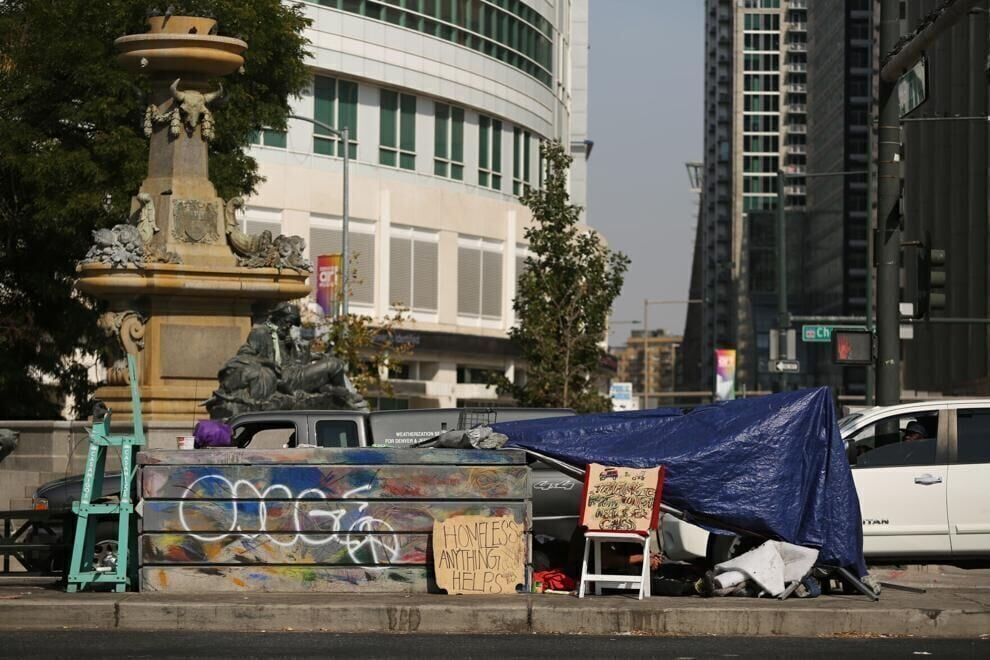
Colorado Springs more effective than Denver in handling homelessness crisis, report finds
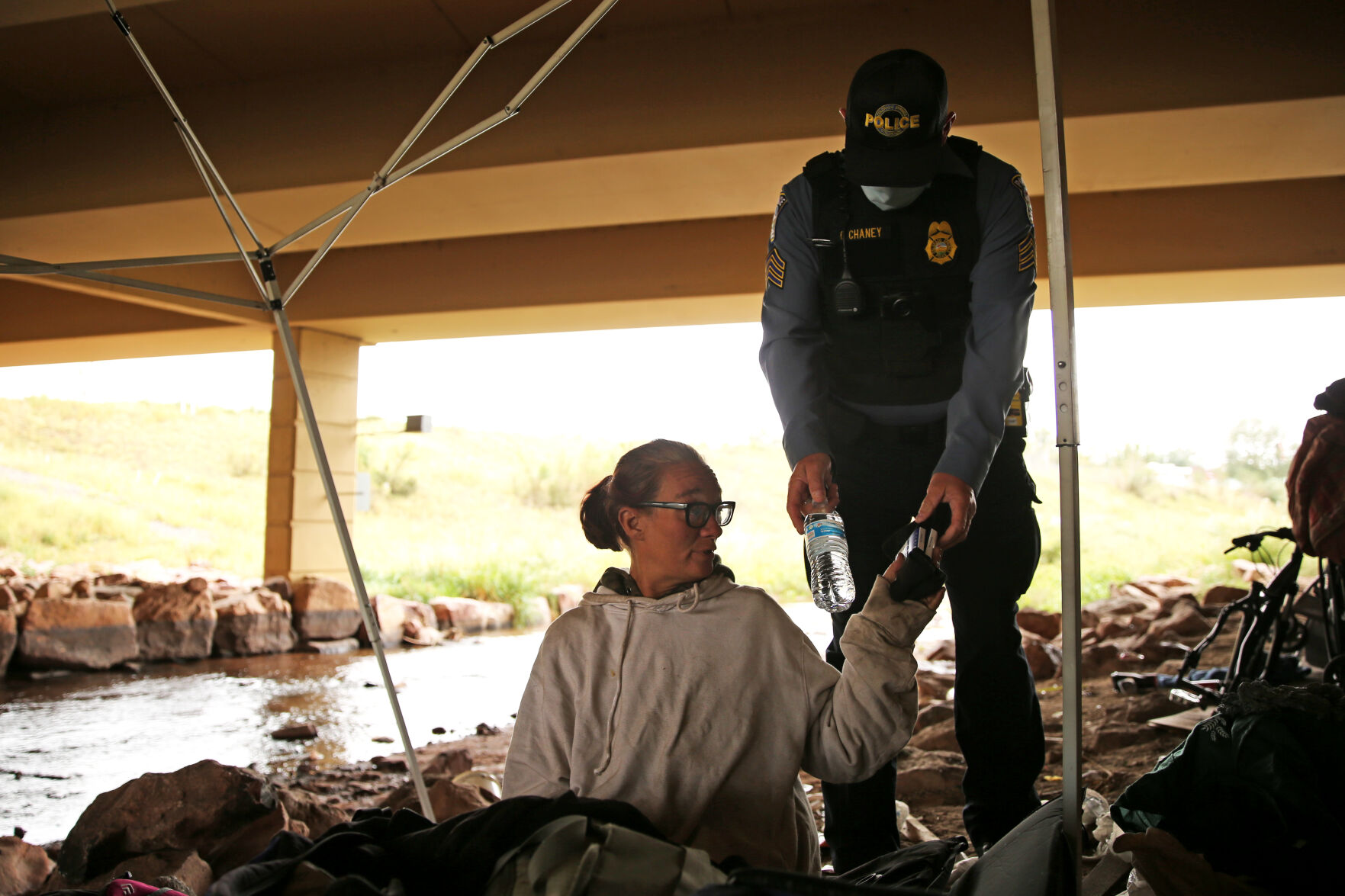
As the homelessness crisis dominates the debate among mayoral candidates in Denver, one study points to contrasting results between Colorado’s two largest cities, showing some modicum of success on one hand and exacerbation on the other.
The study’s gist contends that Colorado Springs has been more effective than metro Denver in reducing the number of homeless people living on the streets in recent years.
Notably, Colorado Springs is not experiencing a significant increase in its homeless population, unlike other areas in the state, particularly when compared to major cities in metro Denver.
The drop in the city’s number of the unsheltered homeless population — individuals who sleep in cars, parks, abandoned building or camps — “suggests that providers and policymakers in Colorado Springs have responded effectively to the city’s shortage of shelter,” said the report from the Common Sense Institute.
The report noted that, even as spending on homelessness increased throughout the state, Colorado’s unsheltered and chronically homeless populations also increased. Meanwhile, housing affordability also plummeted and the inventory hovered “dangerously low,” the report said, adding that is a “concerning precursor for sustained elevated levels of newly homeless.”
Colorado Springs, however, appears to be beating the trajectory that has snagged metro Denver, particularly when it comes to the former’s homeless population and shelter supply, the report said.
Some contend it isn’t fair to compare the state’s two largest metropolitan areas.
“It is well-understood that Denver and Colorado Springs are very different cities with very different populations and resource trends,” said Cathy Alderman, spokesperson and public policy officer for the Denver-based Colorado Coalition for the Homeless.
“I don’t know what the value in making this comparison is without comparing other factors like population size, population growth, availability of housing resources and availability of shelter and non-congregate shelter options,” she said. “I think this report incorrectly conflates a reduction in unsheltered homelessness with homelessness resolution.”
Others, such as Colorado Springs Mayor John Suthers, who will retire after the April 4 municipal election, believe the Colorado Springs Homelessness Study that the Common Sense Institute released this week confirms what he has espoused for years.
“Compared to other cities, we’re doing a hell of a job,” he said in an interview.
The Greenwood Village-based Common Sense Institute, which describes itself as a nonpartisan, independent research organization, studied years of results from a mandatory annual census known as the Point in Time survey, which is necessary for communities to receive federal funding for homeless services.
In the 2022 Point in Time, Colorado Springs reported a total of 1,443 homeless people to the U.S. Department of Housing and Urban Development.
Denver counted 6,884 homeless people in 2022, up from 4,019 in 2017.
All communities are still tallying statistics for the 2023 count, which was conducted in January.
What’s most significant, the institute’s analysis says, is that Colorado Springs’ unsheltered rate, which refers to people living outside in tents, under bridges, in doorways or other uninhabitable places, has fallen by nearly 43% since 2018, when almost one-third of the city’s homeless population was considered unsheltered.
As of last year, Colorado Springs’ unsheltered rate dropped to encompass 19% of the total homeless population, or 267 people.
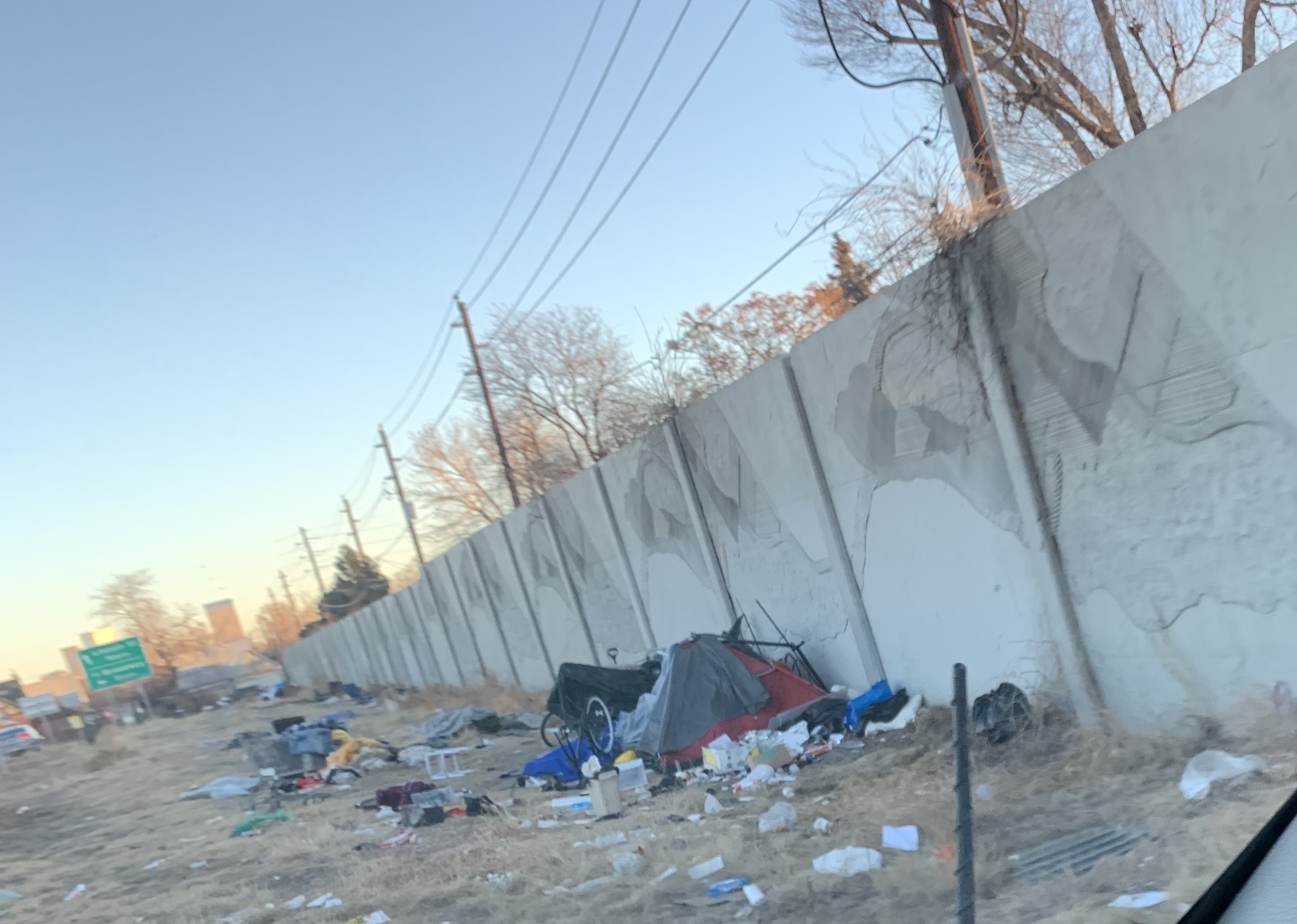
By contrast, the unsheltered population in metro Denver grew by 33% from 2020 to 2022, to reach 2,078 — the area’s highest level since 2008, the institute reports. And since 2019, Denver’s unsheltered population has increased by 120%.
“It’s natural to want to compare two cities to one another — this city is doing this, we don’t want to do this — and they’re making the case that homelessness in Colorado Springs is more in check,” said Evan Caster, senior manager of homeless initiatives for the Pikes Peak Community Health Partnership, which focuses on improving the overall health of the region.
Walking around downtown Denver shows visible differences in the homeless population, he said, as many more homeless people can be seen hanging out on the streets and living in makeshift camps than in Colorado Springs.
However, Caster said, “It’s a hard apples-to-apples” comparison to draw from just looking at the numbers.
While the populations of Denver County, which includes the city of Denver, and El Paso County, which includes the city of Colorado Springs, are similar, the metro Denver area in terms of the Point in Time survey covers seven counties: Adams, Arapahoe, Boulder, Broomfield, Denver, Douglas and Jefferson counties. The Colorado Springs area encompasses only El Paso County.
That means the one-night snapshot the Point in Time provides is a limited look at the population, Caster said.
“El Paso County is unique in that we have urban, rural and suburban all in one county,” he said, “so you’re going to see the homeless experience in a variety of ways.”
Suthers said he thinks it’s reasonable to pit Colorado Springs side by side with Denver when it comes to the issue.
The significant disparity in the larger numbers of homeless in Denver versus Colorado Springs can’t be explained by claiming the cities are too different, he said.
“It is very clear to me that they are not enforcing the camping bans in Denver,” Suthers said, “and frankly, I don’t understand why.”
Whether to enforce Denver’s camping ban — or to what extent — has permeated the debate among candidates for Denver’s next mayor. The candidates are split on the issue, with some supporting strict enforcement and others seeking alternative solutions.
Businessman and Army veteran Andre Rougeot, for example, supports the sweeps, arguing that homelessness is “out of control” in Denver. Kelly Brough, a former chamber executive, recently suggested that arresting someone who violates the urban camping ban would come as a “last resort” when that person refuse to accept help and resources, such as shelter, behavioral health treatment or relocation to a sanctioned camping site.
Others, such as state Rep. Leslie Herod, emphasized the delivery of services, as opposed to sweeps.
Citizens for a Safe and Clean Denver, a group that’s pushing to “end urban camping” and curb the spike in “crime, trash, violence, public defecation and open drug use, said Brough is right to suggest an arrest is necessary as a last resort.
“Kelly is exactly right. Arrest is an important part of intervention. Without intervention, these desperate people will continue to spiral on the street,” said David Howard.
“It saves the individual and can save our city,” he said.
Howard rejected the notion that a stricter stance translates to “criminalizing poverty, criminalizing homelessness and addiction.”
“In our city, there is a strong cultural attitude of forgiveness, and we all want to forgive and we want to help, but, at some point, these folks need our direct intervention or direct help to turn their lives around,” he said.
Kelly Caufield, executive director of Common Sense Institute, said Colorado Springs has maintained a relatively stable homeless population since 2015.
Though the county’s total number in 2022 was 31% higher than in 2015, it’s was also 10% lower than it was in 2019, she noted.
“Homelessness is certainly not solved in Colorado Springs, but we did see some encouraging trends,” Caufield said.
“We think Colorado Springs is bucking the trend, and there’s something worth learning from, and something worth trying to replicate here,” Caufield added.
So, what’s working?
The Common Sense Institute report pointed to efforts to increase emergency shelter beds at the Springs Rescue Mission. Officials also added work at the Salvation Army’s R.J. Montgomery Center.
An $18 million expansion at Springs Rescue Mission, which was completed in 2021, expanded the campus to provide a multitude of services, including job training through a culinary academy and city cleanup work, on-campus transitional housing, substance abuse programs, a nearby indigent health center and other support services, all toward the goal of moving people from the streets to shelters to permanent housing.
Other steps Colorado Springs has taken include enacting an ordinance that prohibits anyone from sitting, lying, kneeling or reclining on sidewalks, trails, alleys and other rights of way — a law that critics say targets homeless people.
Colorado Springs and El Paso County also ban camping near waterways, in parks, along trail systems and on other government land.
Enforcement is possible because of the availability of shelter beds for anyone who wants to sleep inside overnight, said Suthers, who is a former Colorado attorney general.
Colorado Springs also has increased its affordable housing stock in the past five years, Suthers said, with now more than 1,000 units per year committed for development or availability.
What’s also helped, Caster said, is that Colorado Springs homeless service providers and city departments, including fire, police, subsidized housing and homeless prevention, do a good job of working together toward the common goal of ending homelessness.
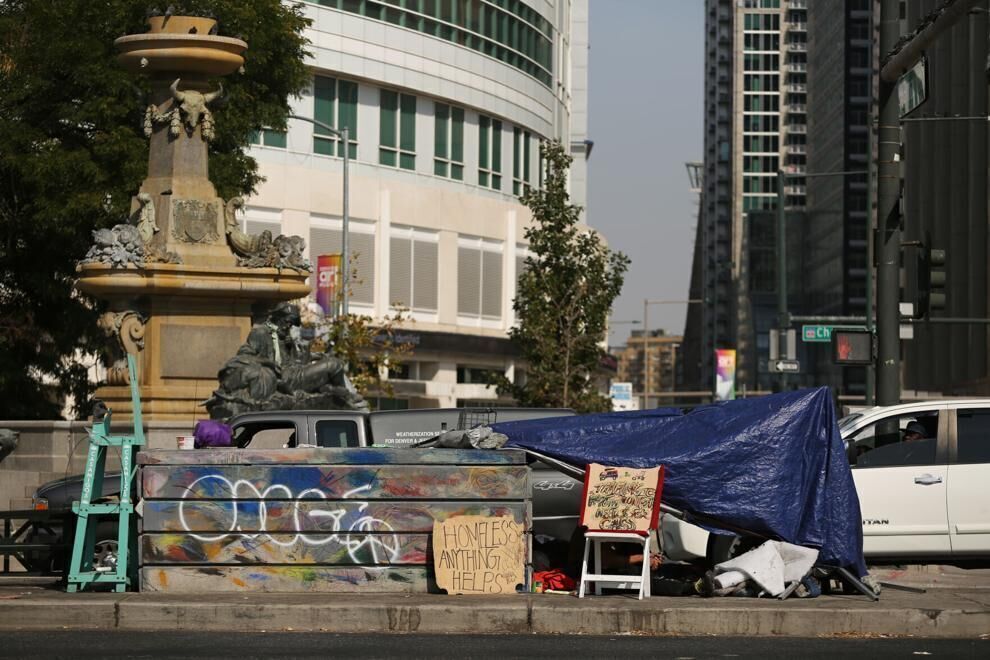

Colorado Springs more effective than Denver in handling homelessness crisis, report finds
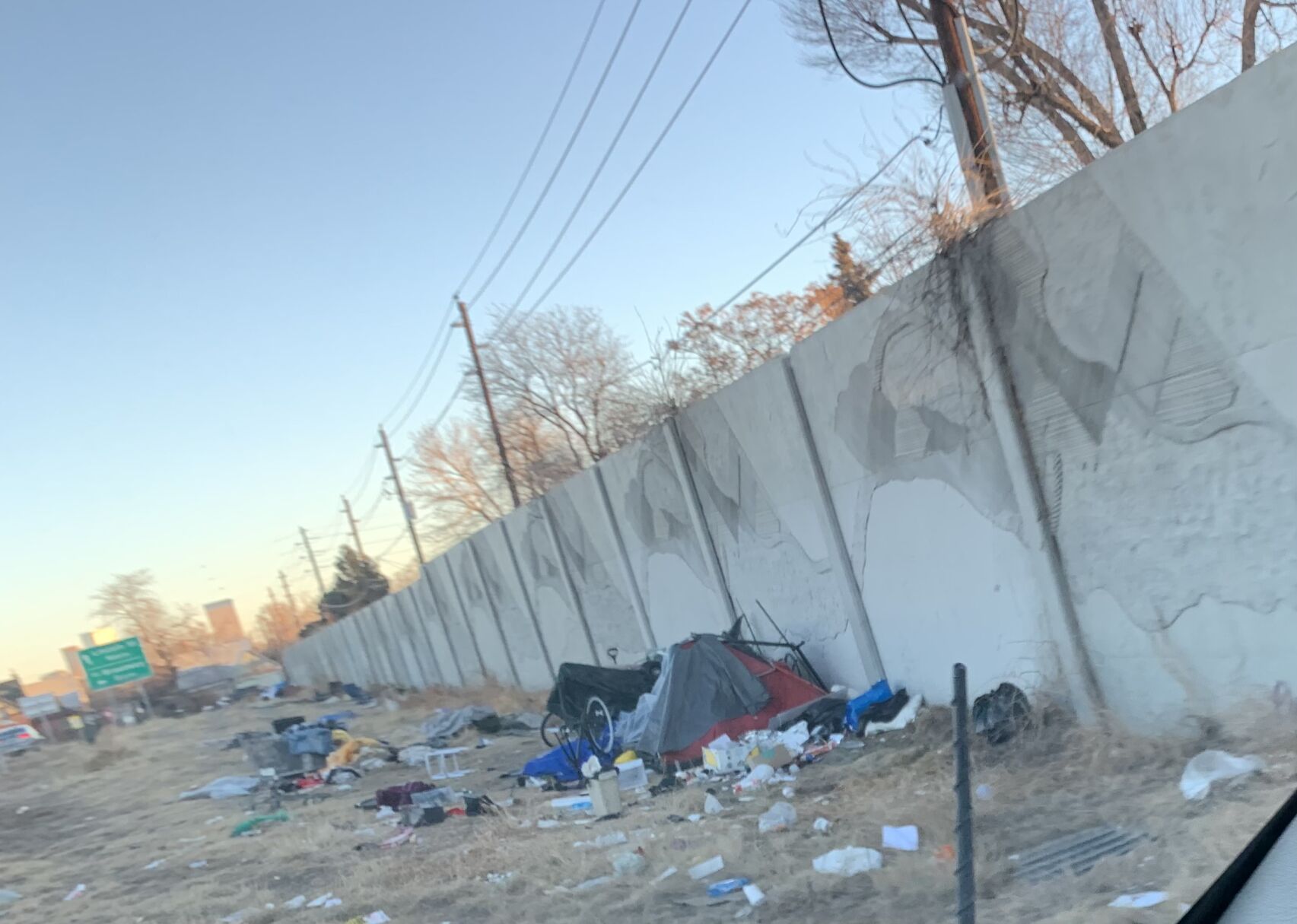
As the homelessness crisis dominates the debate among mayoral candidates in Denver, one study points to contrasting results between Colorado’s two largest cities, showing some modicum of success on one hand and exacerbation on the other.
The study’s gist contends that Colorado Springs has been more effective than metro Denver in reducing the number of homeless people living on the streets in recent years.
Denver homeless camp cleanup nets more than one ton of trash
Notably, Colorado Springs is not experiencing a significant increase in its homeless population, unlike other areas in the state, particularly when compared to major cities in metro Denver.
The drop in the city’s number of the unsheltered homeless population — individuals who sleep in cars, parks, abandoned building or camps — “suggests that providers and policymakers in Colorado Springs have responded effectively to the city’s shortage of shelter,” said the report from the Common Sense Institute.
The report noted that, even as spending on homelessness increased throughout the state, Colorado’s unsheltered and chronically homeless populations also increased. Meanwhile, housing affordability also plummeted and the inventory hovered “dangerously low,” the report said, adding that is a “concerning precursor for sustained elevated levels of newly homeless.”
Colorado Springs, however, appears to be beating the trajectory that has snagged metro Denver, particularly when it comes to the former’s homeless population and shelter supply, the report said.
Some contend it isn’t fair to compare the state’s two largest metropolitan areas.
“It is well-understood that Denver and Colorado Springs are very different cities with very different populations and resource trends,” said Cathy Alderman, spokesperson and public policy officer for the Denver-based Colorado Coalition for the Homeless.
“I don’t know what the value in making this comparison is without comparing other factors like population size, population growth, availability of housing resources and availability of shelter and non-congregate shelter options,” she said. “I think this report incorrectly conflates a reduction in unsheltered homelessness with homelessness resolution.”
Annual homeless person count uncovers the misery of cold Colorado streets
Others, such as Colorado Springs Mayor John Suthers, who will retire after the April 4 municipal election, believe the Colorado Springs Homelessness Study that the Common Sense Institute released this week confirms what he has espoused for years.
“Compared to other cities, we’re doing a hell of a job,” he said in an interview.
The Greenwood Village-based Common Sense Institute, which describes itself as a nonpartisan, independent research organization, studied years of results from a mandatory annual census known as the Point in Time survey, which is necessary for communities to receive federal funding for homeless services.
In the 2022 Point in Time, Colorado Springs reported a total of 1,443 homeless people to the U.S. Department of Housing and Urban Development.
Denver counted 6,884 homeless people in 2022, up from 4,019 in 2017.
All communities are still tallying statistics for the 2023 count, which was conducted in January.
What’s most significant, the institute’s analysis says, is that Colorado Springs’ unsheltered rate, which refers to people living outside in tents, under bridges, in doorways or other uninhabitable places, has fallen by nearly 43% since 2018, when almost one-third of the city’s homeless population was considered unsheltered.
As of last year, Colorado Springs’ unsheltered rate dropped to encompass 19% of the total homeless population, or 267 people.
By contrast, the unsheltered population in metro Denver grew by 33% from 2020 to 2022, to reach 2,078 — the area’s highest level since 2008, the institute reports. And since 2019, Denver’s unsheltered population has increased by 120%.
“It’s natural to want to compare two cities to one another — this city is doing this, we don’t want to do this — and they’re making the case that homelessness in Colorado Springs is more in check,” said Evan Caster, senior manager of homeless initiatives for the Pikes Peak Community Health Partnership, which focuses on improving the overall health of the region.
Walking around downtown Denver shows visible differences in the homeless population, he said, as many more homeless people can be seen hanging out on the streets and living in makeshift camps than in Colorado Springs.
However, Caster said, “It’s a hard apples-to-apples” comparison to draw from just looking at the numbers.
While the populations of Denver County, which includes the city of Denver, and El Paso County, which includes the city of Colorado Springs, are similar, the metro Denver area in terms of the Point in Time survey covers seven counties: Adams, Arapahoe, Boulder, Broomfield, Denver, Douglas and Jefferson counties. The Colorado Springs area encompasses only El Paso County.
That means the one-night snapshot the Point in Time provides is a limited look at the population, Caster said.
“El Paso County is unique in that we have urban, rural and suburban all in one county,” he said, “so you’re going to see the homeless experience in a variety of ways.”
Suthers said he thinks it’s reasonable to pit Colorado Springs side by side with Denver when it comes to the issue.
The significant disparity in the larger numbers of homeless in Denver versus Colorado Springs can’t be explained by claiming the cities are too different, he said.
“It is very clear to me that they are not enforcing the camping bans in Denver,” Suthers said, “and frankly, I don’t understand why.”
Whether to enforce Denver’s camping ban — or to what extent — has permeated the debate among candidates for Denver’s next mayor. The candidates are split on the issue, with some supporting strict enforcement and others seeking alternative solutions.
Businessman and Army veteran Andre Rougeot, for example, supports the sweeps, arguing that homelessness is “out of control” in Denver. Kelly Brough, a former chamber executive, recently suggested that arresting someone who violates the urban camping ban would come as a “last resort” when that person refuse to accept help and resources, such as shelter, behavioral health treatment or relocation to a sanctioned camping site.
Others, such as state Rep. Leslie Herod, emphasized the delivery of services, as opposed to sweeps.
Citizens for a Safe and Clean Denver, a group that’s pushing to “end urban camping” and curb the spike in “crime, trash, violence, public defecation and open drug use, said Brough is right to suggest an arrest is necessary as a last resort.
“Kelly is exactly right. Arrest is an important part of intervention. Without intervention, these desperate people will continue to spiral on the street,” said David Howard.
“It saves the individual and can save our city,” he said.
Howard rejected the notion that a stricter stance translates to “criminalizing poverty, criminalizing homelessness and addiction.”
“In our city, there is a strong cultural attitude of forgiveness, and we all want to forgive and we want to help, but, at some point, these folks need our direct intervention or direct help to turn their lives around,” he said.
Kelly Caufield, executive director of Common Sense Institute, said Colorado Springs has maintained a relatively stable homeless population since 2015.
Though the county’s total number in 2022 was 31% higher than in 2015, it’s was also 10% lower than it was in 2019, she noted.
“Homelessness is certainly not solved in Colorado Springs, but we did see some encouraging trends,” Caufield said.
“We think Colorado Springs is bucking the trend, and there’s something worth learning from, and something worth trying to replicate here,” Caufield added.
So, what’s working?
The Common Sense Institute report pointed to efforts to increase emergency shelter beds at the Springs Rescue Mission. Officials also added work at the Salvation Army’s R.J. Montgomery Center.
An $18 million expansion at Springs Rescue Mission, which was completed in 2021, expanded the campus to provide a multitude of services, including job training through a culinary academy and city cleanup work, on-campus transitional housing, substance abuse programs, a nearby indigent health center and other support services, all toward the goal of moving people from the streets to shelters to permanent housing.
Other steps Colorado Springs has taken include enacting an ordinance that prohibits anyone from sitting, lying, kneeling or reclining on sidewalks, trails, alleys and other rights of way — a law that critics say targets homeless people.
Colorado Springs and El Paso County also ban camping near waterways, in parks, along trail systems and on other government land.
Enforcement is possible because of the availability of shelter beds for anyone who wants to sleep inside overnight, said Suthers, who is a former Colorado attorney general.
Colorado Springs also has increased its affordable housing stock in the past five years, Suthers said, with now more than 1,000 units per year committed for development or availability.
What’s also helped, Caster said, is that Colorado Springs homeless service providers and city departments, including fire, police, subsidized housing and homeless prevention, do a good job of working together toward the common goal of ending homelessness.