







IREA switches to CORE, sunny new image
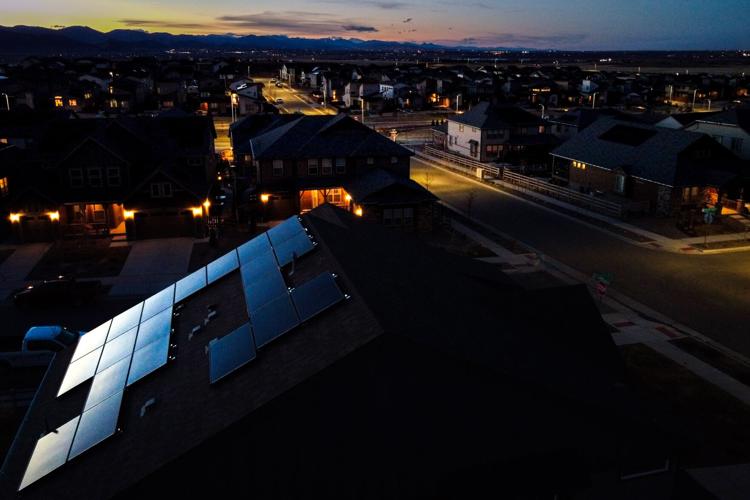
Michael Ciaglo/Special to The De
The Intermountain Rural Electric Association, the state’s largest electric cooperative, recently changed its name to CORE.
What the press release announcing the new name and branding didn’t mention is the coop leadership agreed to ditch a controversial fee applied to solar users many customers and installation companies thought was punitive.
“We’re just a different company today than where we were originally,” said Chairman of the Board Tim White in the release.
Sedalia-headquartered CORE – which is not an acronym – delivers electricity to about 300,000 customers spread throughout a 5,000-square-mile area in central Colorado. The 80-year-old company operates as a not-for-profit and is governed by a board of directors from seven districts.
Xcel Energy looking at preserving Hayden plant as molten salt energy storage facility
“As our member communities have grown and modernized, we saw that we needed a new name to represent the place we occupy, not just geographically, but in people’s everyday lives,” said CEO Jeff Baudier in a statement.
Officials say 2020 was an anomaly when it sourced a majority of its energy from renewables, 36%, because the Comanche 3 coal plant near Pueblo suffered a “prolonged outage.” Natural gas was 34% of the energy provided, and coal 29%.
But they’ve seen the light, so to speak, and solar installs for residential customers are averaging 400 a month, said spokesman Josh Liss.
CORE never offered rebates to customers who installed solar rooftop photovoltaic (PV) systems, like Xcel.
“We’re a not-for-profit, so if we give (solar customers) rebates, someone else has to pay for that, often those who can’t afford going solar,” Liss said. “That’s been something rooftop solar companies didn’t like.”
Some solar companies misrepresented to customers they couldn’t do installations in CORE districts, Liss said.
“We had people calling us saying ‘why can’t we install solar here’,” he said.
Something else they, and customers, didn’t like is a fee CORE, when it was known as IREA, used to apply to solar customers called a Load Factor Adjustment. It didn’t seem fair to customers who were switching to solar to save money on their electricity bill, nor to installers who had to explain the fee to potential customers.
“It seemed like punishment for going solar,” said Mike Kruger, president and CEO of the Colorado Solar and Storage Association, formerly Colorado Solar Energy Industries Association.
Denver-based startup looks to help oil and gas producers 'get real' on methane emissions
Other solar company representatives took that criticism a step further.
Capital Solar CEO and Co-Owner Laurent Meillon, a former association board member, said it seemed IREA dragged its collective feet on solar.
“Some of their board members believed society was a future based on coal and refused to go with the flow,” Meillon said. “There seemed to be all sorts of administrative barriers.”
Solar rooftops produce most of the energy during the day when the sun is shining strong. But the peak demand always comes between 4 and 8 p.m. when it’s going down, thus producing less energy.
“At the lowest point in the need curve, solar is producing the most,” said Liss. “But it’s the law of supply and demand and we’re under a mandate that requires we pay retail for that energy.”
CORE usually buys energy wholesale, and owns a small part of Comanche. It must have the capacity to provide power to all of its customers during peak times, Liss said.
“If you have rooftop solar producing most of the energy during the day and providing (excess) to the cooperative, being paid for that at retail rates at a time that’s not necessarily beneficial to the utility,” Liss said. “One set of members was subsidizing another.”
It wasn’t so much an issue when rooftop solar first started coming on the scene and there were hundreds to low thousands. Now it’s closer to 4,000, Liss said, and they hope it grows to “tens of thousands.”
CORE recently completed converting all customers’ meters to what’s called Advanced Metering Infrastructure, or smart meters. The company can now accurately measure demand and replaced the Load Factor Adjustment with a “small demand charge” Liss said the company is going to introduce in three parts.
Kruger said “that demand charge is defensible from a rate-design manner.”
“Now what they’re saying to customers is ‘here’s when the power is valuable, and here’s when the value is cheaper,” said Kruger. “It’s a pretty advanced way of thinking about the electric power sector. For 75-80 years it’s been the same price every day, all day. That’s great but it’s like an all-you-can-eat buffet really.”
Showing customers when power is the most expensive to buy might encourage them to do high-electricity tasks after peak hours, he said.
Solar community garden company Sunshare hasn’t been able to work in CORE territory, but looks forward to doing so, said Emily Kobylarczyk, director of development.
“With the change, we’re excited at the opportunity to break into that market and make it work with CORE,” Kobylarczyk said. “With the removal of the load factor adjustment, it paves the way to be more economical on a solar choice.”
As a resident of Bailey, Kobylarczyk is also a member-owner and CORE customer.
“IREA did support legislation regarding the minimum size of a community solar garden. They supported it publicaly. We’ve been always hoping to do a community solar garden in a unique solar territory,” she said. “There’s a big difference between Parker and Bailey.”
Solar is the more economical choice for CORE, Kruger said. On large-scale purchases, the average price of solar through what’s called a Power Purchase Agreement is $21 per megawatt hour. Coal can run $60 per megawatt hour, he said.
“I love what trying to do down there,” Kruger said. “I don’t think it’s perfect, but the improvements are exactly where we need to go as a state. It’s pretty advanced thinking, clear and wise choices for electric power work that works out well for solar customers.”
Gazette Business Reporter Dennis Huspeni is a resident of Parker and a CORE customer.