







Lafayette-based Blue Canyon Technology lands NASA contract
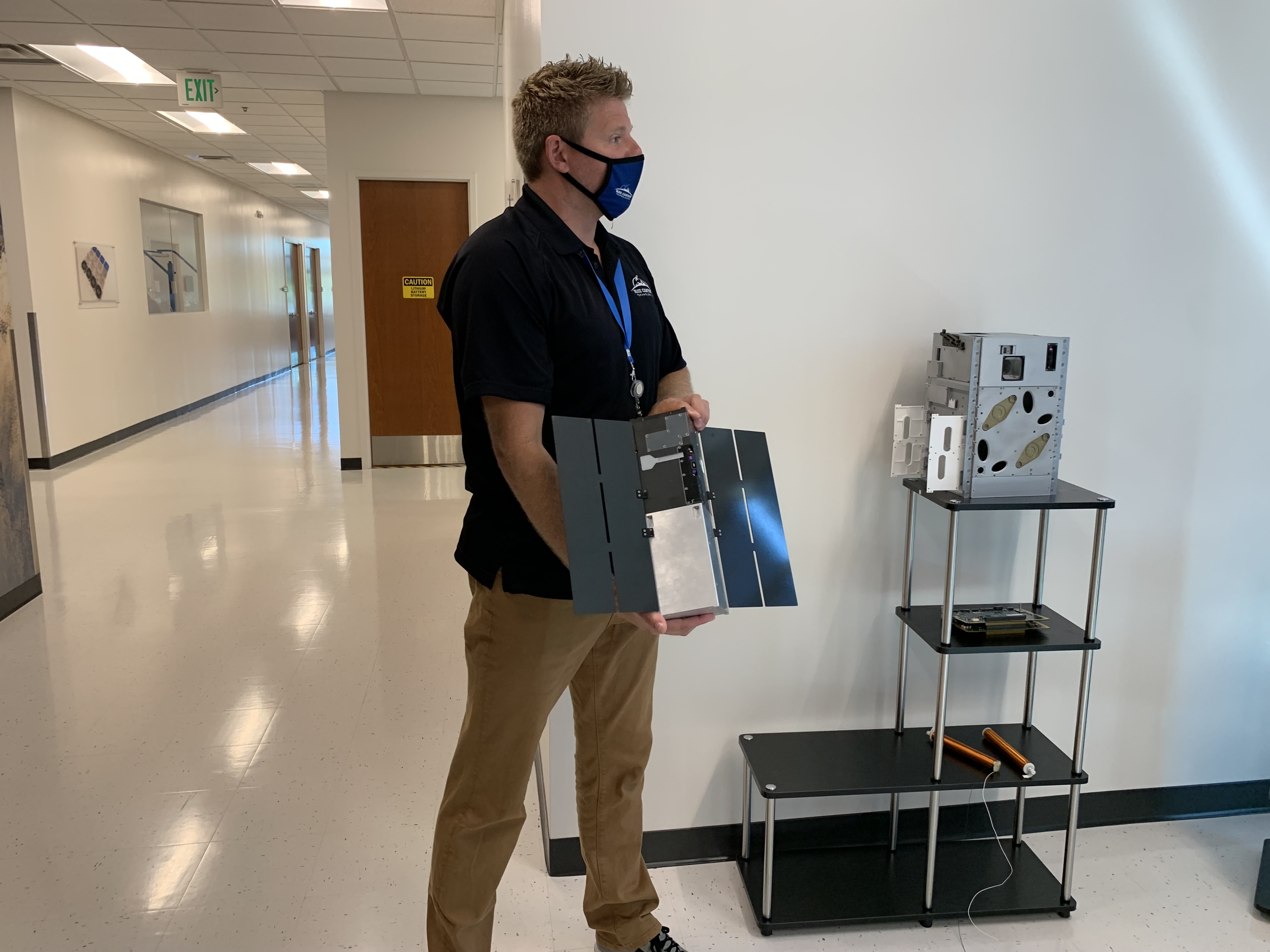
NASA picked Lafayette-based Blue Canyon Technologies to build eight X-SAT Venus ESPA-class microsatellite buses for its HelioSwarm science mission, which will study solar wind and space plasma turbulence, according to a news release Thursday.
A microsatellite bus, or microsat, is a small satellite, from 22 to 200 lbs., that can carry payload for commercial or government contractors.
The development continues a strong growth trajectory the company has been on in the last two years. In December 2020, it was bought by Massachusetts-based Raytheon Technologies Corp. (NYSE: RTX). Raytheon officials have said publicly they expect the successful startup company to double its number of employees in the next three to five years. Published reports had the deal worth between $350 million and $426 million.
Blue Canyon currently has about 400 employees working in Boulder and its new facility in Lafayette, which company officials said last year is already almost at capacity, despite it being less than 2 years old.
Raytheon has a large presence in Colorado Springs.
“Blue Canyon Technologies, as a Raytheon Intelligence & Space subsidiary, has experienced steady strong growth over the last 5 years, and expects that to continue. HelioSwarm is one of many contracts Blue Canyon is working on. In fact Blue Canyon expects to deliver over 50 spacecraft to our customers in 2022 alone,” said President Brad Tousley, who is also a vice president at Raytheon Intelligence and Space, via email.
That means the company has more than doubled its production capability in two years. It produced 20 satellites in 2020.
The company started in 2008 and launched its first satellite in 2016. There are now more than 30 BCT satellites orbiting the Earth. One has gone as far as Mars.
“The HelioSwarm mission is a multi-spacecraft observatory that will capture the first multiscale in-space measurements of fluctuations in the magnetic field and motions of solar wind turbulence,” according to the release.
It’s expected to launch in 2028 with one “hub” spacecraft and eight small satellites that will move “in coordinated orbits.” The contract also covers Blue Canyon integrating science instrument payloads to perform “spacecraft-level environmental testing.”
“Blue Canyon’s trusted on-orbit product performance allows our customers to focus on payload efforts,” said CEO Stephen Steg in the release. “The synergy between our spacecraft and component product lines fuels our ability to tailor solutions for each mission’s unique requirements.”
Other companies working on the HelioSwarm mission are Northrop Grumman, for the “hub” spacecraft, and the NASA Ames Research Center, which is overseeing project management and mission operations.