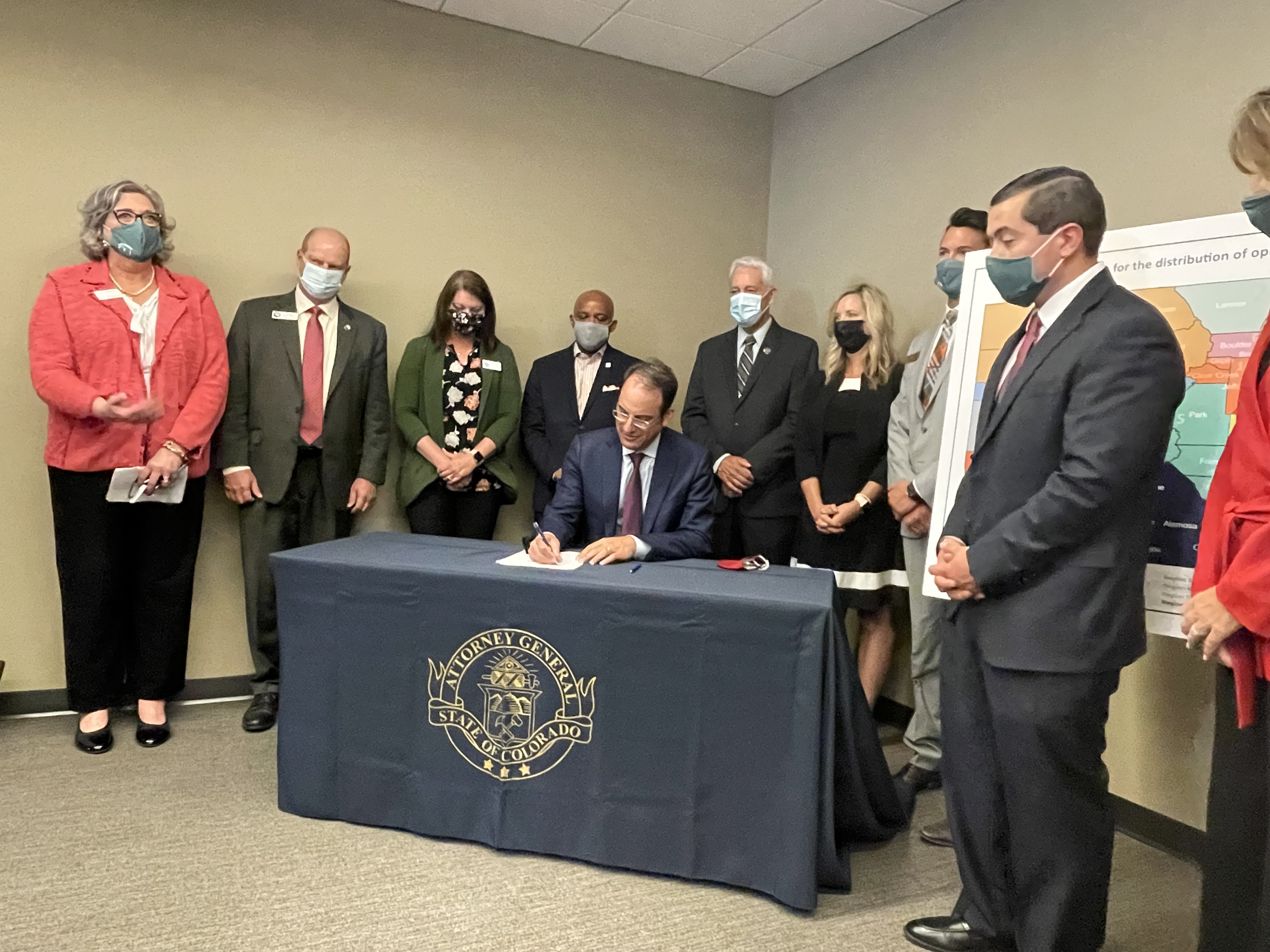
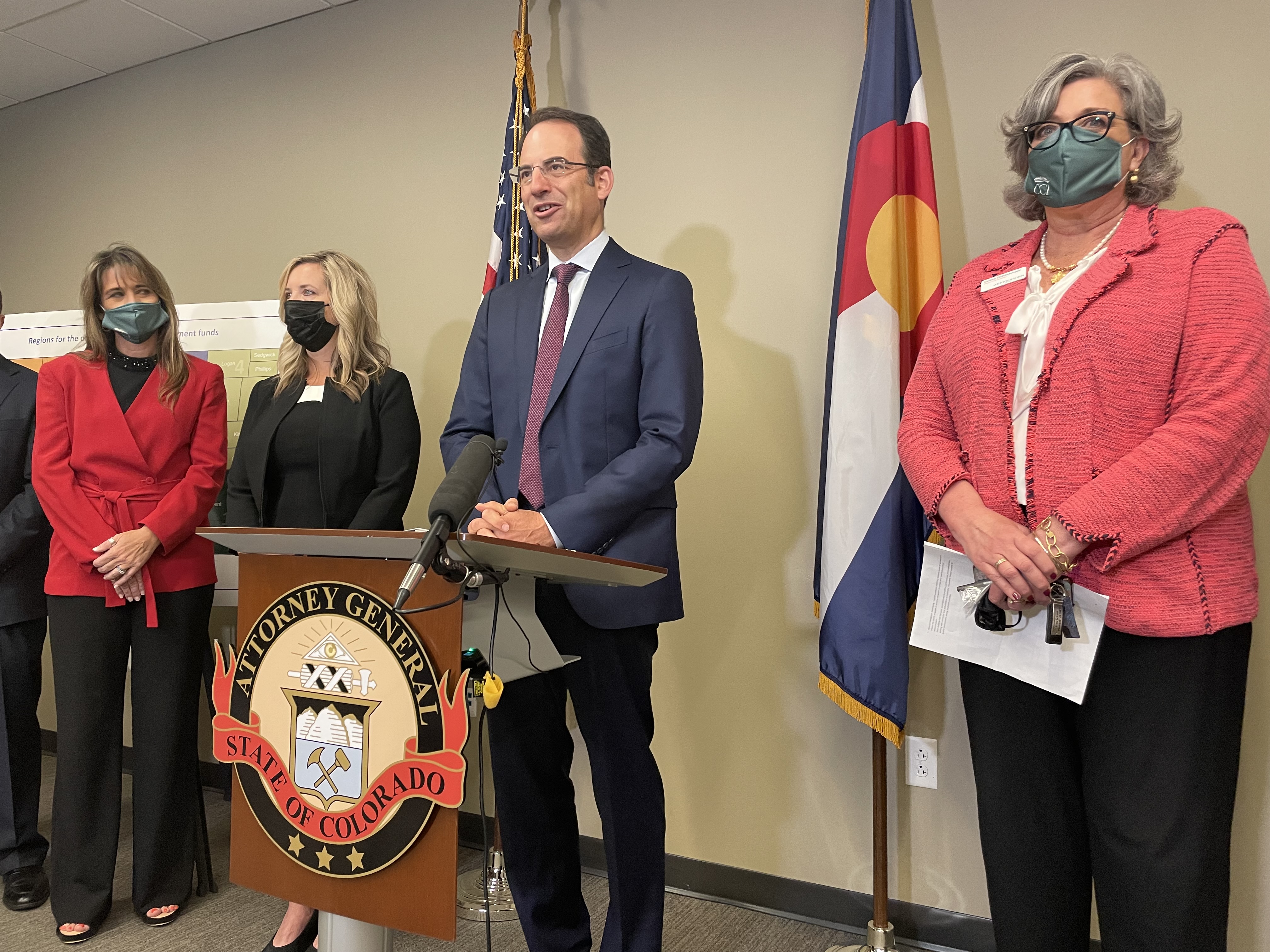
Phil Weiser, local elected leaders announce framework for distributing Colorado’s opioid settlement funds
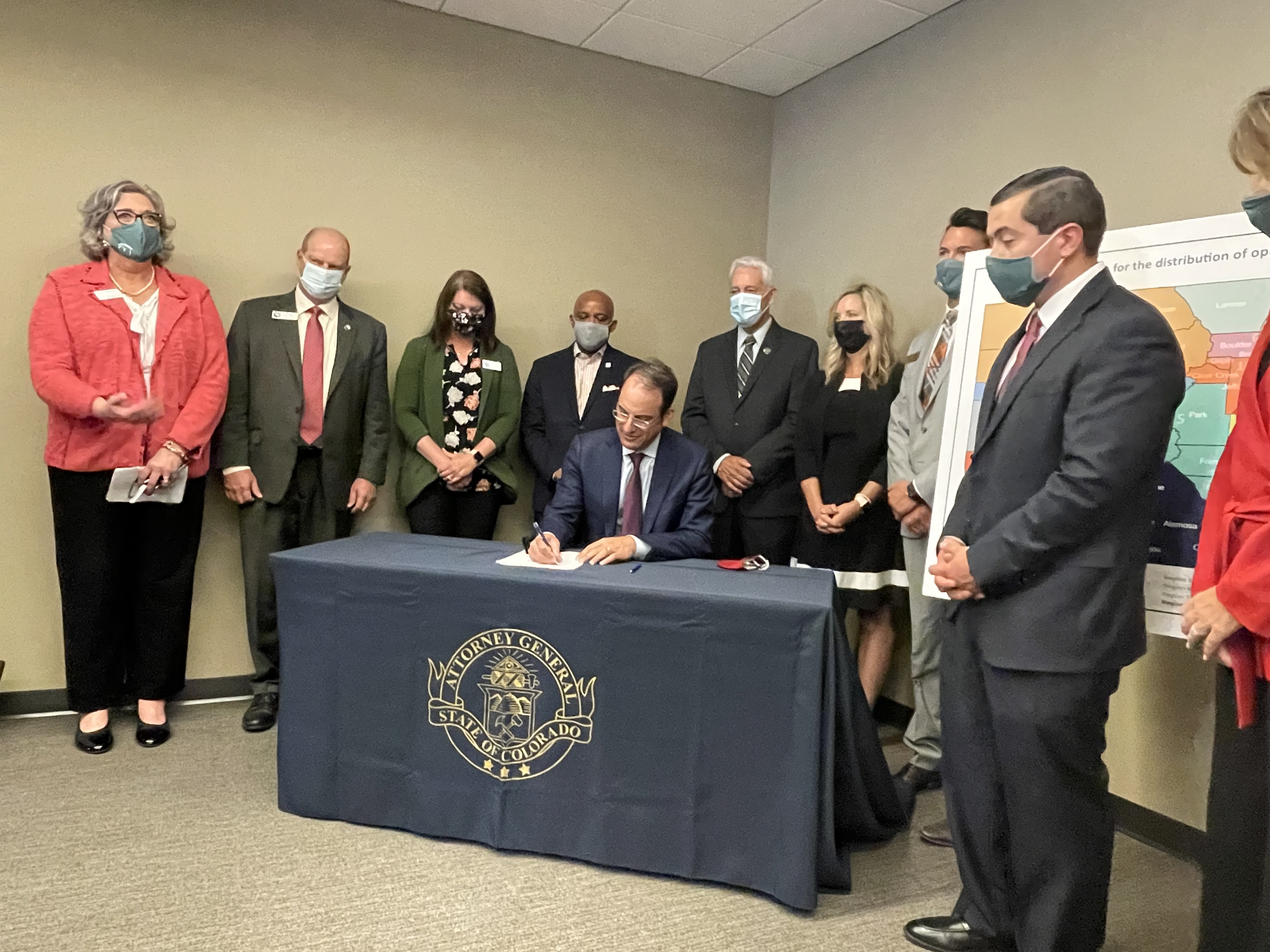
More than 1,500 people in Colorado died from opioid overdoses in 2020, and elected leaders are hoping a newly developed framework for distributing settlement funds will be a step toward efforts to stabilize the state’s opioid crisis on a broad scale. Attorney General Phil Weiser and local elected officials from around Colorado on Thursday announced the strategy for distributing more than $400 million in funds from several settlements with opioid makers, distributors and consultants.
“We have a new chapter based on transparency, accountability, but most of all, hope,” said Adams County Commissioner Steve O’Dorisio at a news conference.
In July, Weiser announced the state’s support for a $26 billion settlement that includes drug maker Johnson & Johnson and distributors Cardinal Health, McKesson and AmeriSource Bergen. Colorado will receive at least $300 million from the funds. Johnson & Johnson also agreed not to produce any opioids for at least a decade.
In other opioid settlements, the state also stands to receive $10 million from McKinsey & Company, $75 million from Purdue Pharma and the Sackler family and $25 million from Mallinckrodt.
Denver Mayor Michael Hancock said the city has been “dogged” about pursuing opioid litigation to respond to “a very intentional campaign to damn our nation, perpetrated by some very greedy families, very greedy corporations who cared less about the devastation on the streets in our cities across this nation.”
Leaders have organized Colorado into 19 regions, which will receive 60% of opioid settlement funds allocated to the state. Each region will have a governing body made up of local elected officials. Local governments will get 20% of the settlement funds and can choose to allocate them to the county or region they fall under in the framework.
Weiser said 10% of the funds will go to infrastructure for regions that don’t have adequate facilities for treatment and recovery. The attorney general’s office will manage the remaining 10% for statewide opioid crisis issues including prevention and education.
Weiser said regions’ governing bodies and local governments will make independent decisions about how to spend the settlement funds on treatment and other abatement efforts, whether that means distributing funds to private service providers or government-operated treatment, depending on what makes sense for their area.
“Our goal will be to develop transparency so we know how all the money is being spent. And then secondly to facilitate learning, because people will try things in different areas, and we’ll learn from that.”
Colorado’s northeastern plains are one area lacking adequate infrastructure for fighting opioid addiction. Logan County commissioner Byron Pelton said a 10-county area — which comprises one of the regions set up to receive and manage settlement funds — has one mental health center, and the closest detox facility is in Greeley.
Hancock said he expects Denver will still be grappling with the fallout of the opioid crisis a generation from now, comparing the lasting damage to that of the U.S. crack cocaine epidemic that peaked 30 to 40 years ago.
“We are still dealing with the impacts of that epidemic in terms of children who are now adults; many are incarcerated, and had to fight an amazing uphill battle just to get to a stable way of life,” he said.
Weiser said Colorado currently has 16% of the treatment the state needs, and said the settlement funds won’t close the entire gap. He urged other sources of funding to fight the opioid crisis.
“We need more and better education and prevention that calls on all of us to destigmatize conversations around substance abuse and mental health more broadly.”