







The pandemic is taking a toll on journalists | Vince Bzdek
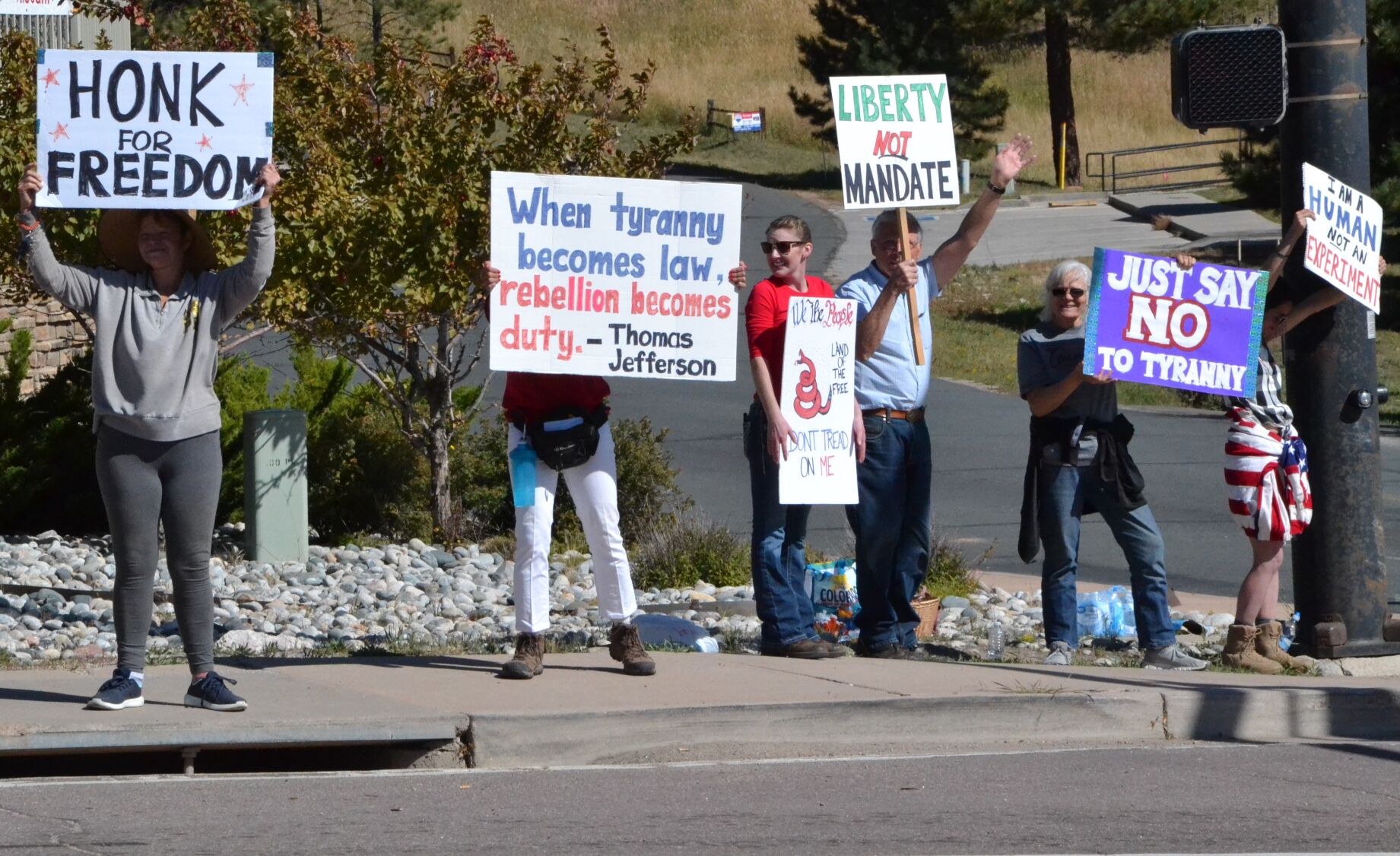
Not long ago, one of our senior Gazette reporters, Debbie Kelley, was outside of Memorial Hospital in Colorado Springs, covering a protest against vaccine mandates.
“It was this really antagonistic group of anti-vaxxers, they were really angry that I had taken their picture and asked to interview them,” Debbie told me, “and they got really vicious.” One of the protesters tried to grab her cell phone, even though they were all on public property so Debbie was perfectly within her rights to photograph, and she pulled it away and started running the quarter mile to where she was parked. “And they chased me to my car!” Debbie recalled. “It was a bad situation.” She made it safely to her car, locked herself in, and they hurled more threats at her. “It was really disconcerting because it caught me off guard,” she told me. “I was pretty pissed off about it actually.”
Nearly two years into this pandemic, health workers are burned out, disillusioned and leaving the industry in droves. As are teachers, and long-term care workers, and mental health practitioners.
But one category you haven’t heard much about is journalists, and the grinding, demoralizing impact of covering so much disease, death, misinformation and unrelenting misery.
“It’ been really fascinating, but it’s been too much. I mean it’s been forever,” said Kelley.
“I’ve been covering it nonstop since the beginning,” said Seth Klamann, who’s been our chief COVID reporter in Denver. “There’s a rush that comes from covering breaking news and covering big stories, even when’s its horrible you start running on adrenaline and your muscle memory starts to take over. But that wore off in June 2020. And it keeps coming. I’ve found a new level of exhaustion. It’s this bone-deep weariness. At the same time it’s this massive news story. If there’s a larger news story I’ve covered in my career, I don’t really know about it.”
But make no mistake, this thing is taking a heavy toll on our journalists even as they stay committed to covering every twist and turn.
“I’ve heard from the very beginning, well you guys like this,” Klamann told me. “It’s drama, it’s pageviews, whatever. Bull—-. No, I hate this. You don’t want to cover a mass shooting. That’s pageviews. I don’t want to do that. I don’t want to write about anyone dying from anything. But it’s important. People need to know, even though it is hard and exhausting, and mass death.”
As the pandemic has dragged on, Klamann has noticed less trust in medical professionals, in vaccines, in base-level data and information reported by media outlets like The Gazette.
“I get way more emails now disputing vaccines, disputing testing, hospitalizations… much more angry, I mean way more now than at any point in the pandemic. It’s gotten worse,” Klamman said.
“It’s hard when people just don’t believe that base-level stuff, and you’re the one reporting that base-level stuff,” said Klamann. “I’m definitely way more cynical. Every time there’s been some sort of glimmer of light since March, 2020, it’s been snuffed out pretty quickly.”
General assignment reporter Stephanie Earls doesn’t understand the people who think reporters are making stuff up. “I feel like the people who would be most impacted reading those stories aren’t reading them, or they’re not trusting them. That’s the hardest part, that there are people thinking that we’re not telling honest stories, or that we have some agenda aside from just telling them what’s happening and how you could be safer and not kill your loved one or put them at risk, or yourself. That’s the hardest part.”
“It’s been really difficult to see the people in charge attack public health,” said Mary Shinn, who covers city and county government in El Paso County. “It’s hard to see the people in charge not accept reality.”
The challenge for journalists is reporting all sides of the debate over how best to handle COVID without giving oxygen to the misinformation or outright bad information that flows so freely over the internet. Newspapers, I would argue, are one of the last bastions committed to vetted information, balanced coverage and professional fact-checking and reporting that holds public officials accountable for their statements and policies.
Debbie said she thinks our reporters have made valiant, successful efforts to cover all sides of this debate.
“When businesses were closed, and businesses were threatened with fines, we covered that,” Kelley said. “I covered the vaccine objections, the vaccine shaming, Christian Scientists who said we’re not going to get a vaccine.
“We gave people the opportunity to speak even if we may not have changed any minds. I think our coverage has been fair and balanced.”
Sometimes, frankly, our readers have been frustrated because the information we report does change all the time.
“Conflicting information from the get-go, and politics, created the storm that we are currently still in,” Kelley observed.
“It’s a constant learning process for us,” added Klamann. “That’s one thing that’s frustrating. There’s never an answer that’s going to last forever with COVID. That’s just not going to happen.”
Therefore, people have come to question all the answers, or any answers, and sort of throw up their hands and give up trying to beat this thing. We journalists have to report the best available information we have at any given time, and we citizens still all have to act on that. We can’t just throw up our hands from exhaustion.
“If you accept that, it doesn’t make it easier, but at least you’re more flexible,” said Klamann. “We didn’t know omicron was going to exist six months ago. We didn’t know that 20 percent of the population wouldn’t get vaccinated a year ago. Or how to intubate patients properly. All of this changes constantly, so we’re flexible, public health officials are flexible, but it’s frustrating when the general public is not. At meetings I hear things like, you said we had to mask, you said it would only be two months to flatten the curve, and all these things are true, but you sort of want to pull your hair out, what little I have left, because it’s changing every day.”
We’re constantly evaluating what we cover, as a result, and whether we’re covering the right things at the right times, whether we should pull back on our daily charts tracking infections, hospitalizations and vaccines. We hear complaints that we do too much coverage of COVID, but I would argue that we’re still in the thick of this thing, unfortunately, and divining the ramifications that are still to come is hugely important work.
“Going forward, we can certainly change our coverage,” said Klamann. “We can cover X less and Y more, but the ramifications are going to become more and more clear … staffing issues, people delaying care, people getting sicker, it’s going to go on and on and on, like a never-ending staircase shooting up into the sky, and you don’t see the end of it, or maybe shooting into the earth, and all you see is this dim red glow around the base of the stairs.”
Seth’s image reminded me of a scene in Ralph Ellison’s great book, “Invisible Man,” about being Black in America in the 1950s. His protagonist lives in a hole in the ground, not unlike the hole we find ourselves in two years into this pandemic. And his best answer to his plight of not being seen by his fellow Americans is to fill his hole with light, 1,369 lights to be exact, strung on the ceiling, all four walls, the door, everywhere possible, and soon he plans to string more on the floor. I think of that scene at this time of year especially, when our cities and homes are brightened with millions and millions of Christmas lights.
That’s all we can offer after the months of unrelenting darkness: more light. You have to decide what you do with that light, whether it leads you somewhere better or simply exposes the reality of the hole we continue to dig. My personal hope is that as we are all exposed to yet more suffering and distress, we become even more alive to the plight and suffering of others, and perhaps, more alive to tenderness in how we treat each other as a result.
“The scariest thing for me,” said Earls, “it’s just exhausting thinking about how long we’re going to be covering these stories. Because we’re not serving our readers or the historical record if we get exhausted telling these stories that need to be told even if it’s about the deniers.”
We can promise this: We will try to learn from our own mistakes, learn from our readers what they want, balancing that with our own experience and judgment. We will take care of our truth-tellers, give them the support they require, the time off they need, the reinforcements they deserve so that we can keep plodding forward.
As Klamann said, all we can do is “put one foot in front of the other until we get to the end of the bottomless staircase.”