Colorado regulators set to slash Xcel’s $262 million rate hike request

Colorado’s regulators are set to approve only a third – or less – of Xcel Energy’s request to hike rates, which means its customers won’t face an additional $262 million in energy bills.
Instead, the Public Utilities Commission is considering allowing Xcel to add between $48 million and $97 million to people’s energy bills — thereby knocking off as much as $214 million from Xcel’s original $262 million request.
The commission will approve the new base rate tariff increase as part of a “nearly comprehensive settlement agreement” hammered out by parties to the November 2022 rate increase request from Xcel at an upcoming meeting.
It’s not the first in recent months that the state’s energy regulators have slashed Xcel’s rate hike requests. Back in October, they also cut Xcel Energy’s latest natural gas rate increase request by 70% — from $214.6 million to $64.2 million. The regulatory agency also denied the energy company’s request for $81 million for future, unspecified capital expenses.
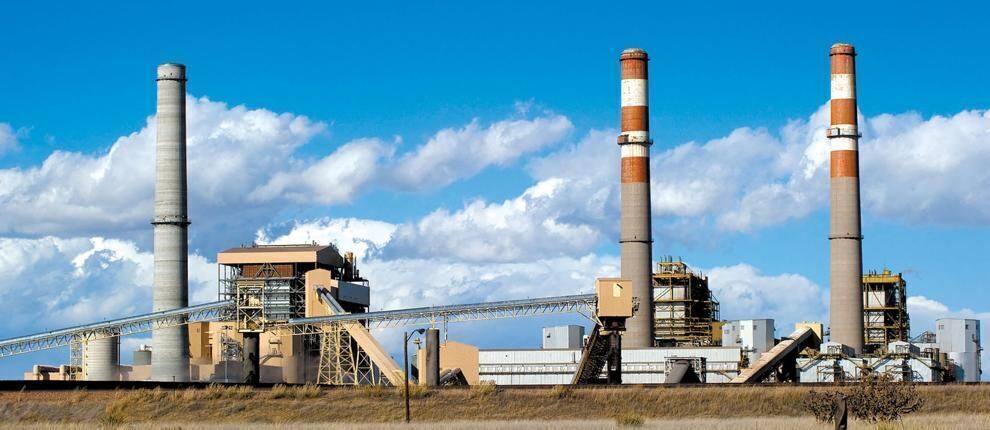
In the latest case, one of the largest requests for cost recovery by Xcel involves closing the Comanche 3, Craig 2, Hayden 1, and Hayden 2 coal power plants and removing the Pawnee plant’s coal-burning equipment and replacing it with natural gas at a cost of about $49 million.
Xcel has committed to closing all its coal-fired plants by the end of 2030.
The proposed settlement reserves for future litigation the issue of how much ratepayers are on the hook for investments the company made in coal plants that have or will shut down. Opinions vary on when those investments should be paid back, how, and what amounts should be recoverable from ratepayers.
One of those expenses is the unamortized cost of building the Comanche 3 power plant near Pueblo, which went online in 2010. Decommissioning the Comanche plant years ahead of schedule, according to its 2021 electrical plan, could put Xcel customers on the hook for some or all of the estimated $732 million it could cost to pay off the remaining construction costs, anticipated profits, and cleanup of the site.
The $1.3 billion plant was supposed to operate for at least 60 years but has been offline for more than 700 days since 2010, according to CORE Electrical Cooperative, which invested approximately $366 million for its 25 1/3% ownership interest in Comanche 3 in April 2005.
The plant has a long history of unexpected repairs and failures since it first went online.
Three recent major failures — in 2020, 2021 and 2022 — ended up costing $36.4 million to repair, according to estimates in Colorado Public Utilities Commission reports.
Those and other failures resulted in CORE suing Xcel in September, saying it is withdrawing from ownership of the facility and demanding a refund. That case remains pending.
The City of Boulder is objecting to the proposed Xcel settlement, raising concerns about the profit margins that will be authorized under it. City officials said the city favors the overall reductions in the amount and of separately litigating the coal plant closure costs, but Boulder objects to some provisions that it views as favoring Xcel profits over the effects on customers.
“In our testimony, we note that Xcel’s profitability and stock performance has been achieved even though their actual earnings have been consistently well below their authorized return,” Leah Kelleher, a spokesperson for Boulder, said in an email to The Denver Gazette. “Again, they continue to record higher profits in Colorado. If they can do this while not earning their full authorized return, should we keep the condition in place so that they can try and set a new record?”
The settlement would increase the amount Xcel can pay to obtain capital from 6.8% to 6.95%. Ratepayers would have to absorb that cost.
“A higher cost of debt is usually associated with higher risk. They are a monopoly utility, their stock continues to outperform their peers, and there is no indication that they are struggling to obtain or having to pay more to secure capital,” Kelleher said. “We are concerned about some of the remaining elements that constitute the remaining $48 million, specifically the higher weighted average cost of capital … and what this may mean in continuing to deliver record profits to Xcel while our community members continue to face higher and higher utility bills.”
In 2010, Boulder started exploring municipalizing the power grid that Xcel owns in order to achieve the city’s goal of an 80% reduction of carbon emissions by 2030.
Carolyn Elam, Boulder’s Sustainability Senior Manager for Energy Systems, said that, in 2020, the city and Xcel negotiated a settlement on the “municipalization efforts” that was presented to voters on the November ballot.
“The voters decided to accept the settlement and got back under franchise with Xcel,” Elam said.
Under the proposed settlement agreement, Xcel also agreed to join other stakeholders in a PUC proceeding to evaluate whether the goals of electric utility service “may be more effectively achieved through a performance-based regulatory framework … that can benefit customers, promote utility financial health, and increase regulatory efficiency by reducing or creating more time between the filing of base rate cases.”
A public comment hearing is scheduled for July 11 from 4 to 6 p.m. People who wish to present comments can register through the links at the PUC website under the Energy Proceedings tab and the proceeding for Public Service Company of Colorado Electric Rate Tariff.
The commission has scheduled evidentiary hearings for July 6, 7, 10, and 11. The public is invited to view and check the calendar of events at the bottom of the PUC home page for updates.