Los Alamos renewal: Past, present, future of nation’s nuclear enterprise
LOS ALAMOS, N.M. — The Nobel laureates are dead and gone. Oppenheimer stands in a park in bronze. The aura of history is in a museum. And the crowds that a movie brought have dwindled since the July anniversary of the first atomic bombs.
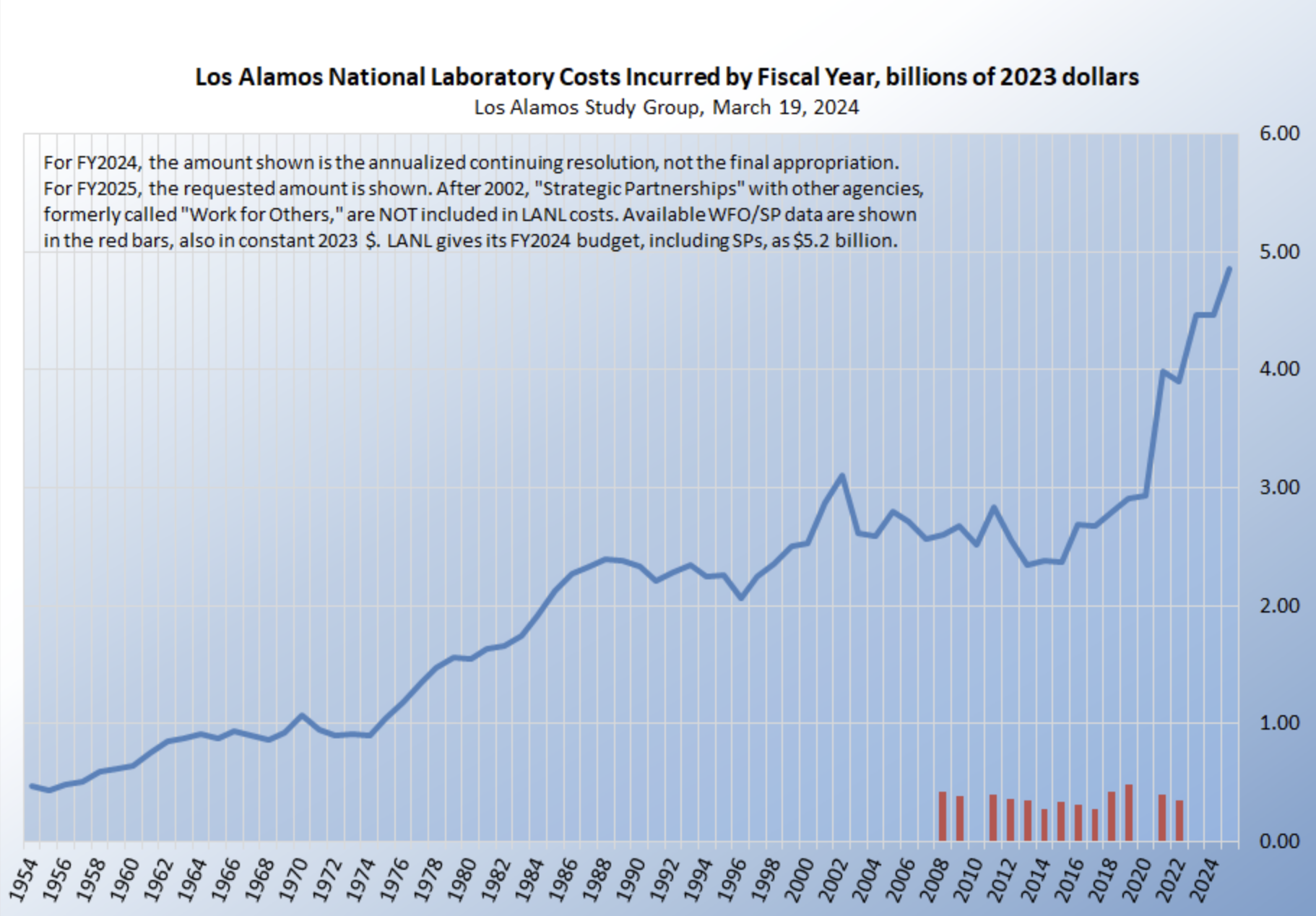
Los Alamos today is a factory town. Eighteen thousand work at the lab — more than three times the number when Oppie lived there. With a $5 billion budget, their primary mission, as it was 80 years ago, is nuclear weapons. Back then they were made to win a war. Today, so the logic goes, they’re made to prevent one.
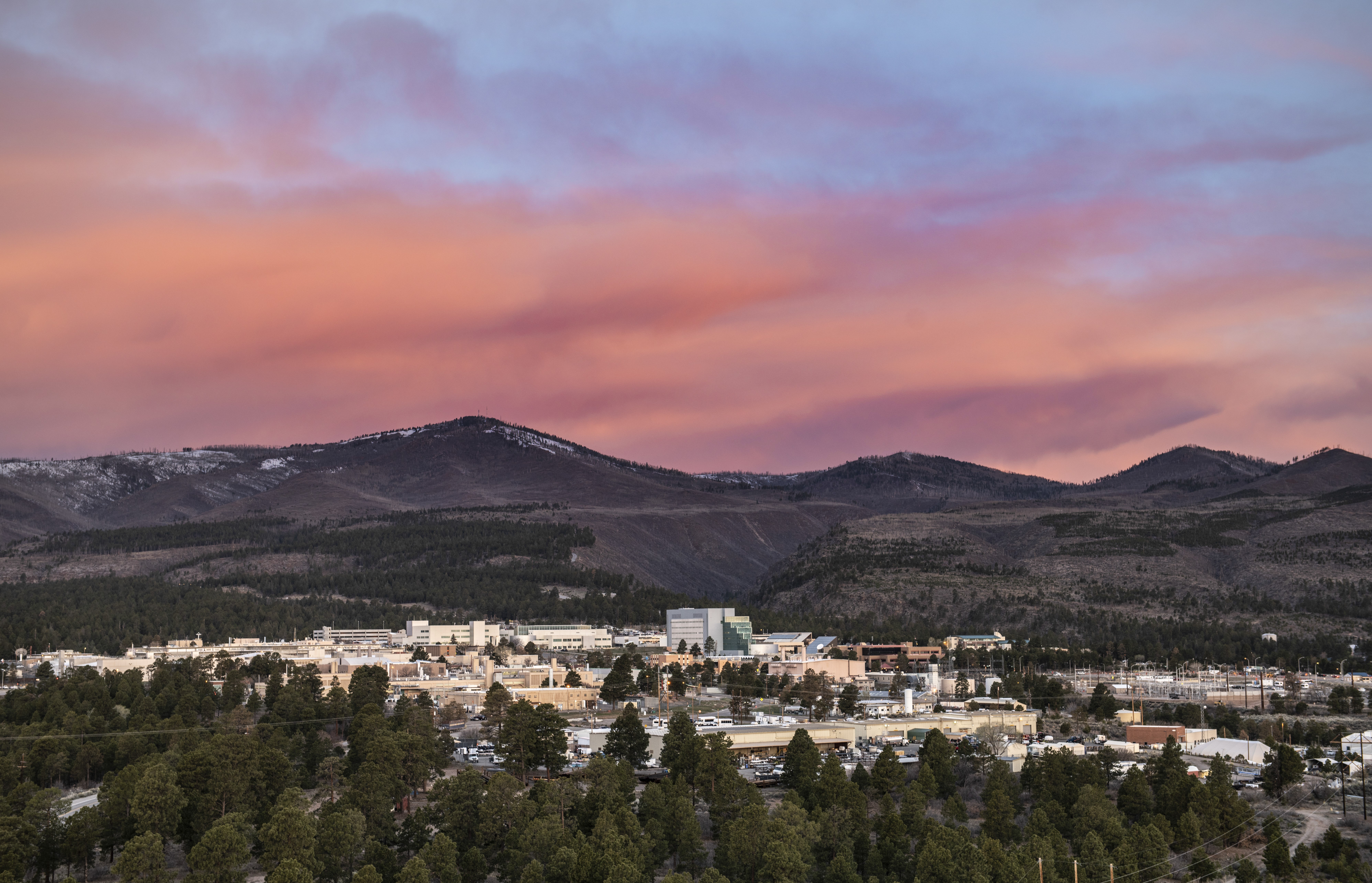
Technically a New Mexico county, home to 19,440, Los Alamos has a unique duplexity. It is a wealthy, remote small town with all the usual problems of growth: roads, housing, water, waste. But if lines were drawn tracing the path of thousands of warheads conceived here and stationed around the globe, the 40 square miles of the Los Alamos National Laboratory would look like the epicenter of a web of power, the source of America’s military strength and dominance.
As it enters its eighth decade, Los Alamos is undergoing a second renaissance, often compared in expense and importance to the original Manhattan Project. People and money are pouring in. New weapons are being designed and manufactured. The one difference is that Los Alamos was founded to beat one dictator to the bomb. Today, there are three who possess the nuclear means to destroy us. That reality has set in motion an arms race for the ages — with Los Alamos, as one watchdog put it, “the beating heart not only of today’s nuclear deterrent, but of tomorrow’s.”
Knowing this, a visitor approaches Los Alamos, 37 miles north of Santa Fe, with a mix of awe and aversion. Here is a place where human wizards before computers imagined the innards of two atoms, uranium and plutonium, and figured out how to release what is called their binding energy, so powerful that splitting one atom can move a grain of sand. A few pounds of either metal, when crushed into a ball smaller than a cantaloupe, can destroy a city, as they did Hiroshima and Nagasaki.
The lab’s origin story is familiar: J. Robert Oppenheimer, born and raised in New York City had gone to New Mexico in 1922 as a frail college-age student to regain his health. While there he took pack trips into the Sangre de Christo and Jemez mountains. Twenty years later, named to head the Manhattan Project to develop an atomic bomb, he recommended a mountain ranch school as the site for a secret lab. Its creation was the first of three building booms for Los Alamos, a Spanish word for poplar trees.
The 2023 Oppenheimer movie, focusing on personalities in the Manhattan Project, does not capture the intense pressure, the trials and errors, of creating the first bombs. According to an official history, by July 1944, two-and-a half years after the U.S. entered World War II, and after spending a billion dollars, Oppenheimer realized that “the possibility of developing a plutonium weapon during the war was now small. Unless the Los Alamos scientists could design an implosion weapon within a matter of months, all the work … might be in vain.”
The fact that they did, in one year, testing it successfully at Trinity on July 16, 1945, and destroying Nagasaki on Aug. 9, remains breathtaking history.
Then, nearly abandoned as the U.S. debated the future of atomic energy, the lab was asked by the military to make a few copies of the Nagasaki bomb. Called the Mark 4 (for the fourth atomic bomb) the five-ton, hand-built bomb with yields of 1-to-31 kilotons, could only be dropped from a plane. By 1946 the lab had nine bombs and was producing two a month. In 1947 Oppenheimer, whose hopes for a peaceful sharing of nuclear secrets was dashed by the aggression of the Soviet Union, reluctantly recommended that Los Alamos gear up to design, build and test better bombs, and pursue the Super, a hydrogen bomb which would use a plutonium core, or “pit,” to ignite fusion power found only in the stars.
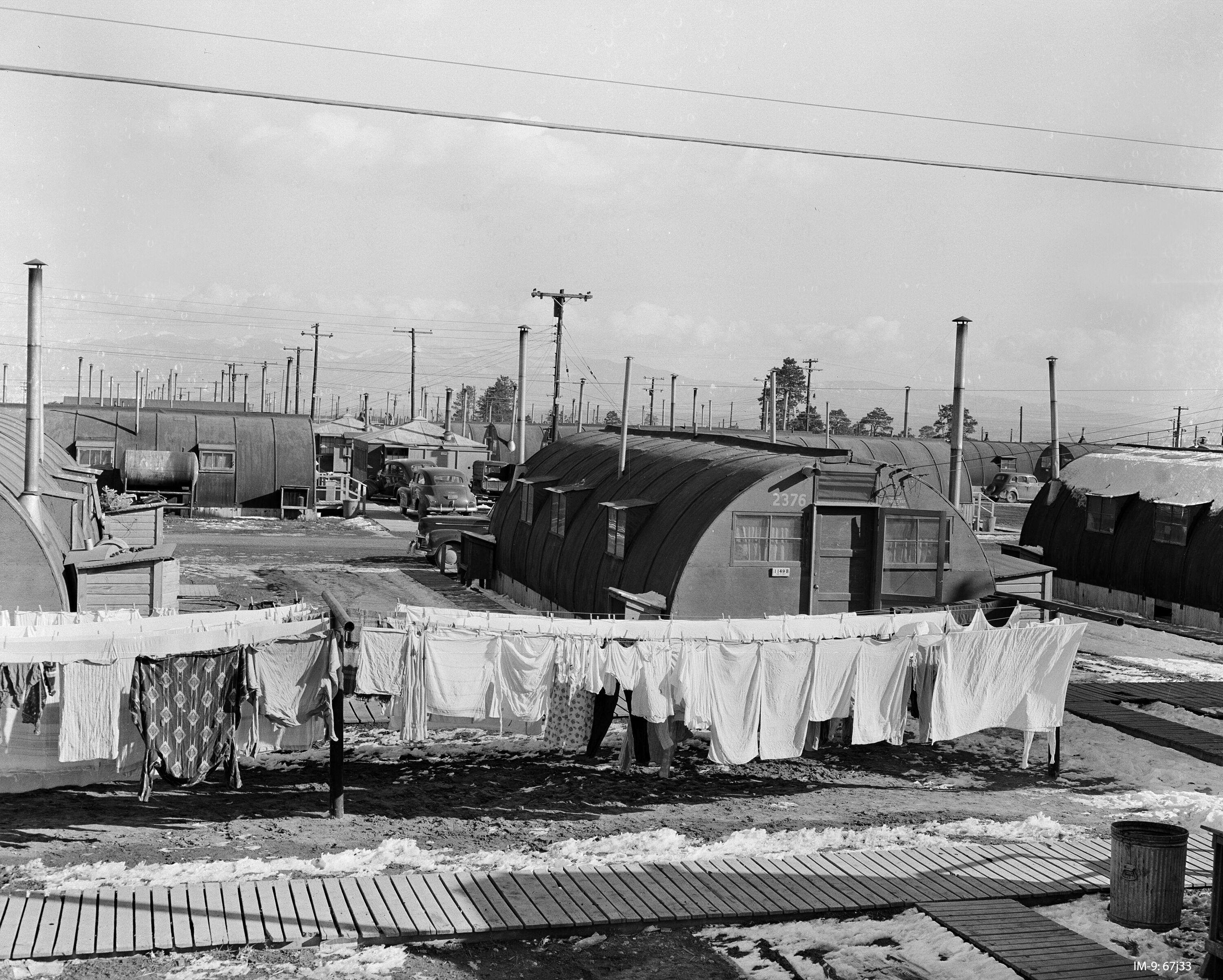
As the lab’s new director, Norris Bradbury, assembled a new group of scientists and moved in, “it was hard to believe that these crumbling temporary buildings surrounded by oil drums, cable reels, and mud-caked Army vehicles housed one of the world’s famous scientific laboratories,” according to the history. Most of the town’s 7,000 inhabitants “still lived in temporary wartime buildings. There were few paved streets, no sidewalks, and almost no private telephones.”
With 3,300 employees, and a goal of testing new bombs in 1948, “one could feel new energy, and with it new ideas, surging through the laboratory. A new sense of mission had replaced the spiritless make-work of 1946.
“Bradbury was giving a new team of relatively junior scientists a chance to show what they could do. The work was challenging. Creating a stockpile of atomic weapons required not only the resumption of many of the activities established during the war, but also substantial new efforts to standardize operations, improve the quality of existing weapon models, and develop new ones.”
In 1949, when the Soviet Union exploded Joe 1, a copy of the Nagasaki bomb — a design stolen from Los Alamos by spy Klaus Fuchs — the Cold War was on. By then, the U.S. had 100 bombs, and the military had a list of targets in the Soviet Union.
A giant industrial complex was built: Hanford, Washington, churning out plutonium; Oak Ridge, Tennessee, enriching uranium and producing tritium gas; Rocky Flats, Colorado, forging plutonium pits; the new Lawrence Livermore National Laboratory in California, designing a line of bombs for Navy submarines; an Idaho lab, making reactors for Navy ships; and parts and assembly lines, spreading in several states.
In 1952, Los Alamos succeeded in exploding a Super by fusing tritium gas with a plutonium core. The first one, a monster named Mike, produced 10.4 megatons, 500 times more powerful than the Nagasaki bomb. A year later, using Fuch’s information, the Soviets exploded a poor copy. In 1954 Los Alamos created W-5, the first thermonuclear warhead small enough to be launched on a missile. The Soviets soon matched it.
Over the next 50 years, Los Alamos designed 89 nuclear weapons — bombs and warheads — and all but 33 were built, according to the Nuclear Weapons Archive. In total the U.S. manufactured 70,000 nuclear weapons.
The Cold War ended in 1989 with the collapse of the Soviet Union. Out of work, the nuclear brain trust at Los Alamos stopped creating new bombs, and became stockpile “stewards,” spot-checking bombs for readiness and making “life-extension” modifications. It was not exciting work, and by 1995, on the 50th anniversary of the bomb, the lab’s “core weapons” employment had shrunk to 900, half of what it was in 1987.
Modernizing the nuclear enterprise
In 2009, President Obama received the Nobel Peace Prize for his vision of a nuclear-free world. He negotiated the New START nuclear treaty with Russia that reduced the number of deployed strategic warheads to 1,550 — a number that both sides have honored. But it expires less than a year from now, on Feb. 5, 2026, and its renewal is unlikely, according to the Arms Control Association.
To get Senate ratification of New START, Obama agreed to “modernize” the nuclear enterprise — the labs and factories that had “atrophied” since the Cold War, even as Russia, China and Korea “seized the initiative,” according to a study by the National Defense University Press. In 2014 the Nuclear Weapons Council told Congress that the U.S. needs to create 80 plutonium pits a year. The only place left to do that work is Los Alamos, in a building called Plutonium Facility 4 (PF4), 233,000 square feet of space built in 1978 that also creates plutonium heat sources for spacecraft.
After installing new glove boxes, and months of training, the lab announced last October that its first “war reserve” pit had been made. It was designed for a new warhead, the W87 for new Sentinel missiles that will replace all 400 of the Minuteman missiles in silos. On any given day, 1,000 people work in PF-4.
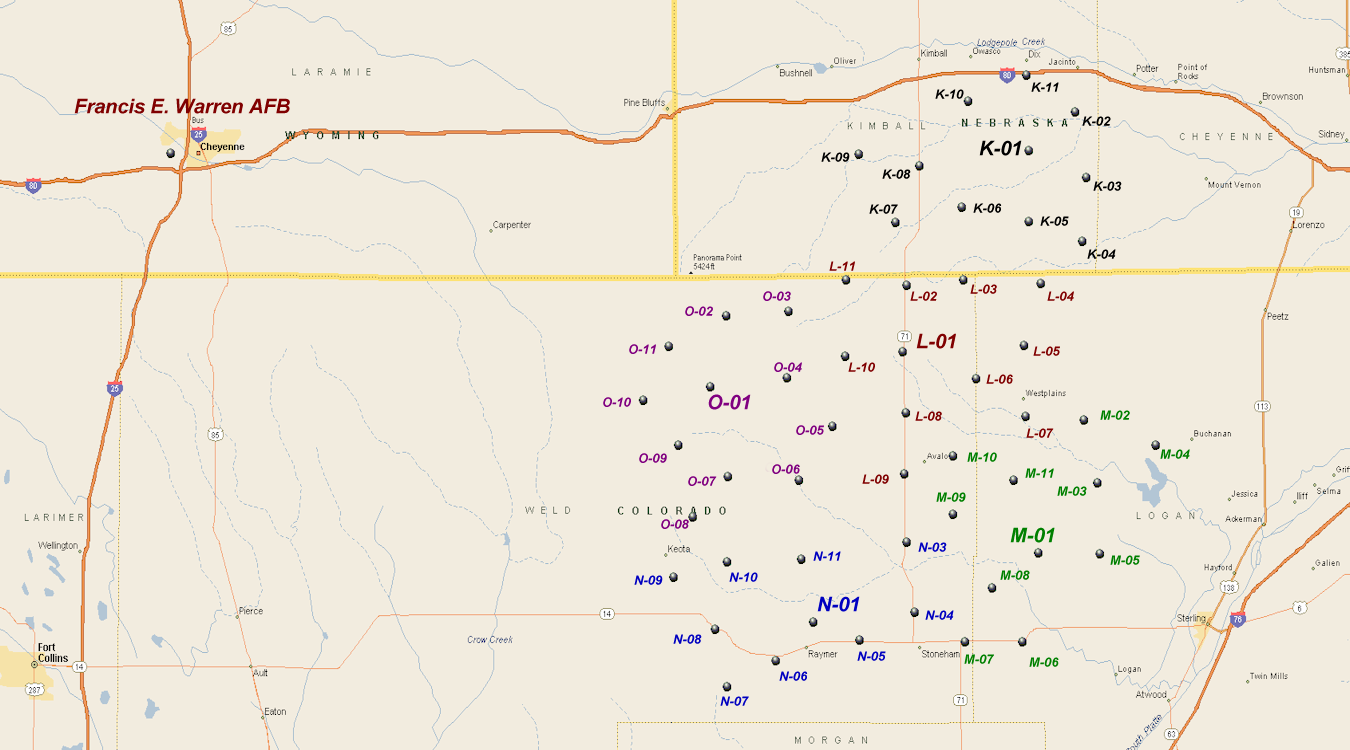
Forty of those missile silos are in Weld County, complete with control centers, all under the supervision of Warren AFB in Cheyenne. The missiles currently in those silos presumably will be replaced with the new Sentinel missiles.
Although the U.S won’t use the term, a new arms race is already underway, the nonpartisan Arms Control Association reports: “Competitive contours among the Chinese, Russian, and U.S. nuclear programs already are set; and it will be Chinese force expansion, a factor not even captured by New START, that will be the dominant factor after the treaty expires.”
For its part, Congress has set in motion a $1.7 trillion, 30-year plan to build new nuclear weapons, and the planes, submarines and missiles to deliver them. Nuclear designers at Los Alamos are already working on a brand new warhead, the W93, for the Trident submarine missile.
While the lab has the full-throated support of its congressional delegation, its neighbors have mixed views.
At recent, packed public hearings on a new environmental impact study, only a rare voice or two supported the lab’s plans to expand facilities. The Santa Fe County Commission has raised concerns about pollution and a new power line through the Caja del Rio plateau. Others question the lab’s focus on nuclear deterrence.
“Do we really need more weapons?” asked Anna Hansen, a former Santa Fe County commissioner.
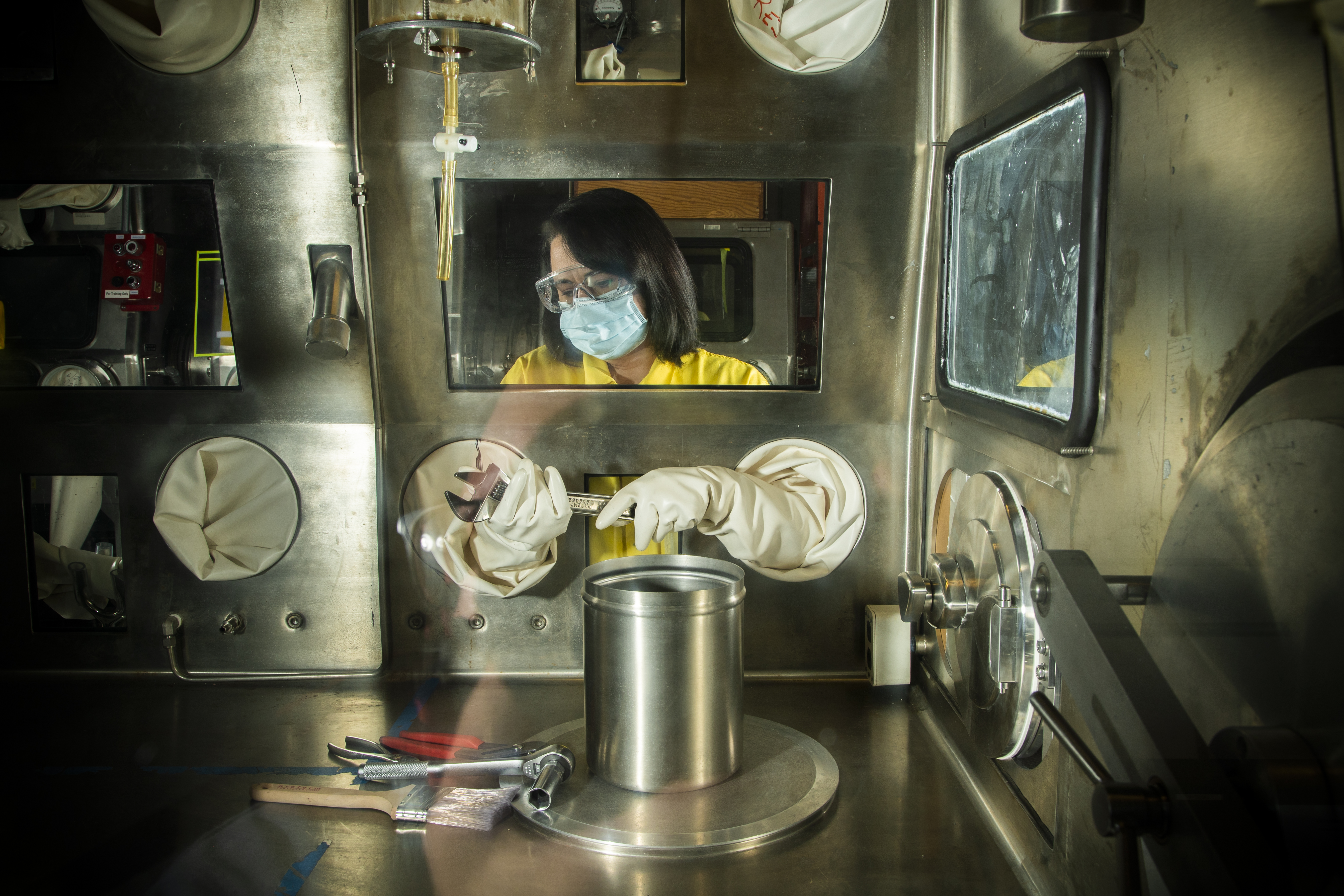
The lab has spent millions creating a job training pipeline for Hispanic and Native American students at nearby colleges. Graduates who become radiation technicians can make $66,000 and up, and 39 percent of the lab’s employees are “native New Mexicans.” On its web site, the lab also brags of its 1,378 union craft workers, among them people who work with metal using welders and lathes and molds. They are men and women who work with their hands thrust into rubber-like gloves that reach into glove boxes, some as small as a kitchen oven, others walk-in. While it won’t reveal how many bomb designers work at Los Alamos, it does employ 330 guards.
The lab also calculates that it spends $1 billion a year on “procurement” in New Mexico with more than half of that going to small businesses. This river of money, ironically, has created an imbalance in New Mexico’s economy. Businesses or government agencies cannot compete with the federal payroll. The result is a charge that New Mexico is a federal “colony.”
“There’s very little agency on the part of civil society in New Mexico, from the state government on down to citizens,” said Greg Mello, a longtime watchdog who runs the Los Alamos Study Group. “None of them have any say in what is going on. There’s also a mental part of this, subtle but pervasive. They don’t have any alternative idea of what economic and social development might be. The imaginations of our political leaders are subverted, so basically they work for the lab.”
Carrying the message around the world
While the lab markets itself as a national laboratory for the advancement of science, the majority of its budget is spent on nuclear weapons. The lab claims that of its $5 billion budget in fiscal year 2024, 57% is for weapons. According to Jay Coghlan of Nuclear Watch New Mexico, the percentage, based on his analysis of the lab’s congressional budget requests, is 79 percent.
So far, the Trump administration’s efforts to reduce the federal payroll has not scratched Los Alamos, which is run by a federal contractor, Triad National Security. Triad is owned by the Battelle Memorial Institute, the Texas A&M University System and the University of California. Triad’s president is Thomas Mason, who is also the Los Alamos lab director.
The atom bombs that destroyed Hiroshima and Nagasaki in August 1945 carried the signatures of two Los Alamos physicists: Harold Agnew and Norman Ramsey. Written on the casings of the bombs as they were assembled in Tinian before being loaded into B-29s, the signatures carried personal pride in their handiwork, and a message of warrior aggression. The sentiments were delivered. In a lasting way, even today, they linked creator, destroyer, and destroyed.
Today’s Los Alamos bomb makers don’t sign their work in the same way, but their efforts, written in code and assembled in clean rooms, carry the same message around the world, in silos, airplanes and submarines.
In quite another way, for its entire 80-year history, Los Alamos’s signature work polluted and poisoned, from the lab work itself, to the Trinity test site, to downwinders in Nevada and Utah, to the Bikini atoll, and the lingering effects among Hiroshima and Nagasaki survivors.
In 1986, novelist E.L. Doctorow wrote an essay for the Nation magazine entitled, “The State of Mind of the Union.” Written during the Cold War, his words resonate today:
“We have had the bomb on our minds since 1945. It was first our weaponry and then our diplomacy, and now it’s our economy. How can we suppose that something so monstrously powerful would not, after 40 years, compose our identity? The great golem we have made against our enemies is our culture, our bomb culture — its logic, its faith, its vision.”