Colorado companies begin groundwork for future moon economy
The lunar market could be worth $142 billion by 2040, a report found, and aerospace companies across the Front Range see a beacon of opportunities.

The Apollo missions to bring mankind to the moon for the first time more than 50 years ago is a small step in comparison to what’s coming next.
NASA’s new space program, Artemis — named after the Greek goddess of the moon and twin sister to Apollo — aims to not only send humans back to the celestial body orbiting Earth but also take giant leaps toward making it a suitable place to live and work.
As Colorado witnessed a partial solar eclipse Monday, aerospace companies and government officials kicked off Space Symposium in Colorado Springs and talked about the future they plan to build on the moon many marveled at through their safe-viewing glasses.
Over four days, companies showcased their work at the big aerospace show in the Broadmoor Hotel from transportation vehicles for navigating the moon’s rocky surface to internet-like networks, 3D-printing labs, power sources and mining equipment.
Some of these developments are being done by Colorado companies, or with top aerospace contractors with operations in the state.
Last year, the Department of Defense’s research division known as the Defense Advanced Research Projects Agency (DARPA) selected 14 companies to participate in its lunar architecture study for commercial uses.
Of the cohort, four companies are headquartered in Colorado’s Front Range region and three — Blue Origin, Redwire and Northrop Grumman — have significant operations in the state.
Looking at the Colorado-based companies, it gives a snapshot into what a lunar infrastructure might look like:
- Denver’s CisLunar Industries is partnering with the Colorado School of Mines to explore sustainable mining on the moon.
- Crescent Space Services – Lockheed Martin’s new lunar infrastructure company established in 2023 out of Denver is building a seamless communication network through a constellation of small satellites.
- Honeybee Robotics, a Blue Origin subsidiary headquartered in Longmont, is working on the “lunarsaber,” a 100-meter-tall light pole to illuminate parts on the moon without light and boost network connectivity.
- Louisville-based Sierra Space is developing technology to extract oxygen out of moon soil.
That’s not all. More work outside DARPA’s study is being done for the lunar economy.
What will it take to build a lunar economy?
For Lockheed Martin, the aerospace giant based in Maryland with a campus in Littleton, a lunar economy will rely on two important sources: water and nuclear power.
“We call this our nuclear-enabled water-based economy,” said Rob Chambers, Lockheed Martin director of human and scientific exploration.
Water is not only essential for hydration, but it’s also important for generating oxygen to breathe and making hydrogen fuel. It’s a “no fossil fuel” approach, Chambers said.
Lockheed Martin is building Orion, the Artemis spacecraft to carry the first woman and person of color to the moon, out of its Waterton Canyon campus in Littleton. The company is working on nuclear thermal propulsion to carry Orion into deep space faster and more efficiently to both the moon and Mars. The new rocket technology has yet to be tested and wouldn’t activate until it’s out of earth’s atmosphere and in a “nuclear safe” zone.
In addition, the company is developing nuclear electric power to keep the lights on during lunar nights.
Earlier this month, NASA awarded a moon rover contract to Golden-based company Lunar Outpost in partnership with Lockheed Martin, General Motors, Goodyear and MDA Space.

The Lunar Dawn LTV team will build a lunar rover to go farther and expand mission times from days to years. It can be manned or run autonomously, using batteries developed for electric vehicles.
“Lunar Outpost looks forward to driving value in the cislunar economy by providing a reliable, safe and capable vehicle that will be used to provide mobility to Artemis astronauts and perform critical missions autonomously on the Moon for commercial endeavors,” said Justin Cyrus, CEO of Lunar Outpost, in a statement.
When it’s not being used by NASA, Chambers said the rover will be available to rent and there’s already interest from private companies to be announced later in the year.
Some want to use it to mine for solar panel materials, map out lunar resources available, set up tanks or layout cabling, he added.
“NASA is going to be the main customer,” Chambers said, “until we find the thing that earthlings will pay for.”

Preparing for the moon
Before making the moon suitable for life and work, NASA is working to better understand the surface — especially around the lunar poles where the highest concentration of water can be found.
NASA is spending about $2.6 billion over five years to study the moon ahead of its human missions through the Commercial Lunar Payload Services initiative.
One of those companies working on a CLPS project is ispace technologies US, Inc., headquartered in Centennial.
ispace announced Tuesday it partnered with Lafayette-based Blue Canyon Technologies to design a lunar lander to study the once volcanic Schrödinger Basin near the lunar south pole to better understand the moon’s tectonic structure and seismic activity.
It’s set to launch in 2026, a year later than expected.
The study is in line with the company’s efforts to get 1,000 people to live on the moon by 2040, Ron Garan, CEO of ispace U.S., told the Denver Gazette.
“What ispace intends on doing is becoming a major player in helping to establish the lunar infrastructure necessary to establish a significant, permanent human presence on the moon,” he said.
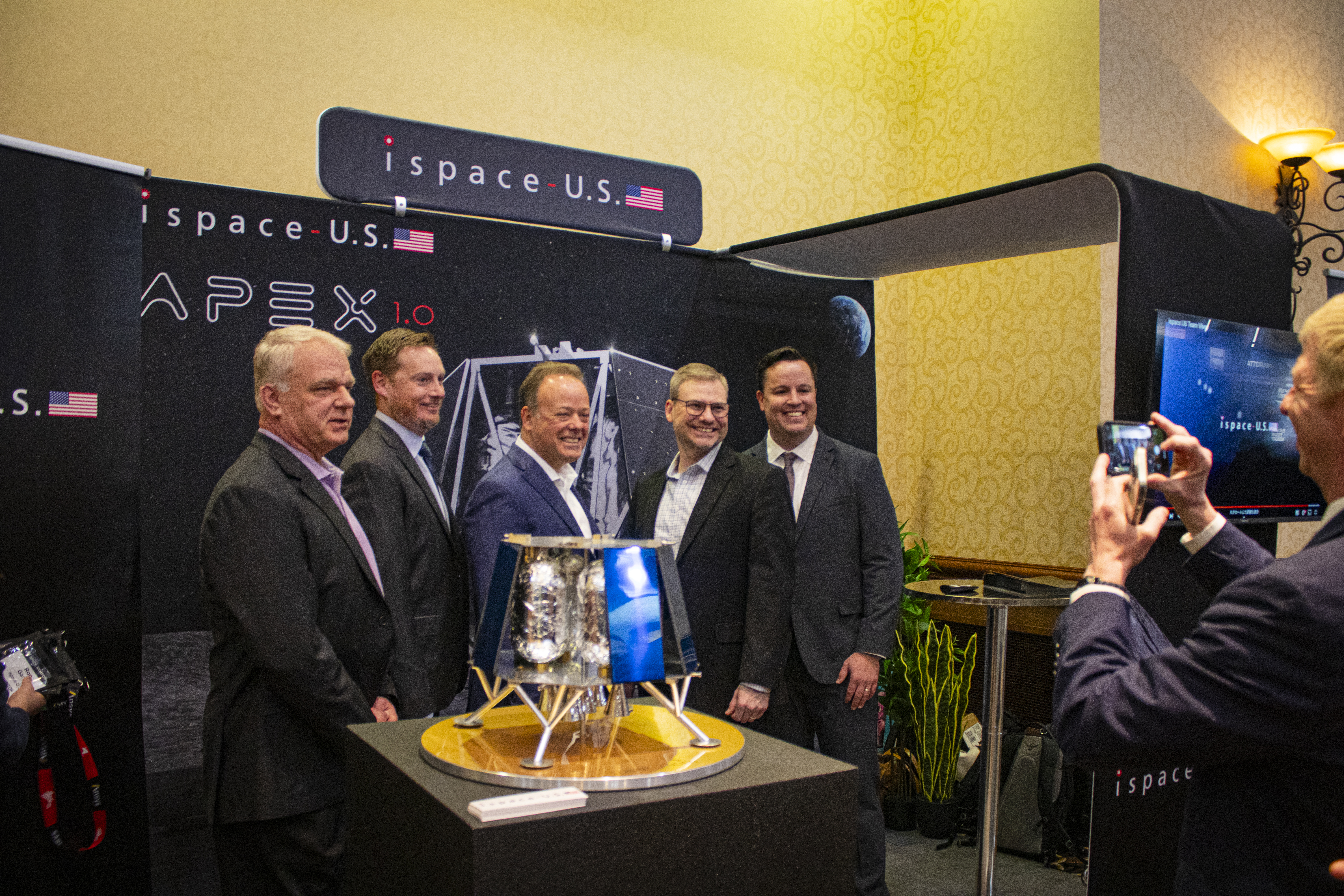
It’s a big reason why the Japanese-owned company established its U.S. presence in Denver, Garan added.
The Colorado Front Range is a highly-concentrated aerospace hub spanning from the Wyoming border to Colorado Springs, where many companies are within an hour from each other.
The region attracts military, engineering, manufacturing, research and development and mission control operations for some of the world’s biggest aerospace companies. It also has a quickly-growing space startup scene.
Colorado is also one of the top beneficiaries of the Artemis program.
NASA contracted more than 90 Colorado companies for the Moon to Mars missions and it’s expected to generate 14,600 jobs statewide and $3 billion in economic output, according to a 2022 report from the space agency.
“The only way that we’re going to turn the moon into the Earth’s eighth continent and to have this cislunar economy is through deep collaboration within the industry,” Garan said. “One of the reasons why we came to the Denver area is because we have so many companies here that we can collaborate with.”
Companies like Blue Canyon Technologies.
The local startup owned by Raytheon will develop two small satellites to help the lunar lander communicate when it’s on the far side of the moon and be a model for future lunar smallsats.
Beacon of opportunities
Deep space exploration has been primarily driven by government agencies, but it’s evolving with this generation of moon travel, according to a new space trends report released Wednesday from consulting firm PwC. Space agencies are financially constrained and are relying more on their commercial partners.
“The beyond Earth economy covers an ensemble of activities where the private sector will be able to capture more and more opportunities in the coming years,” the report said.
The lunar economy market could be worth $142 billion by 2040, according to PwC. But since it’s still in the early stages, investors are still wary about funding moon-based business models.
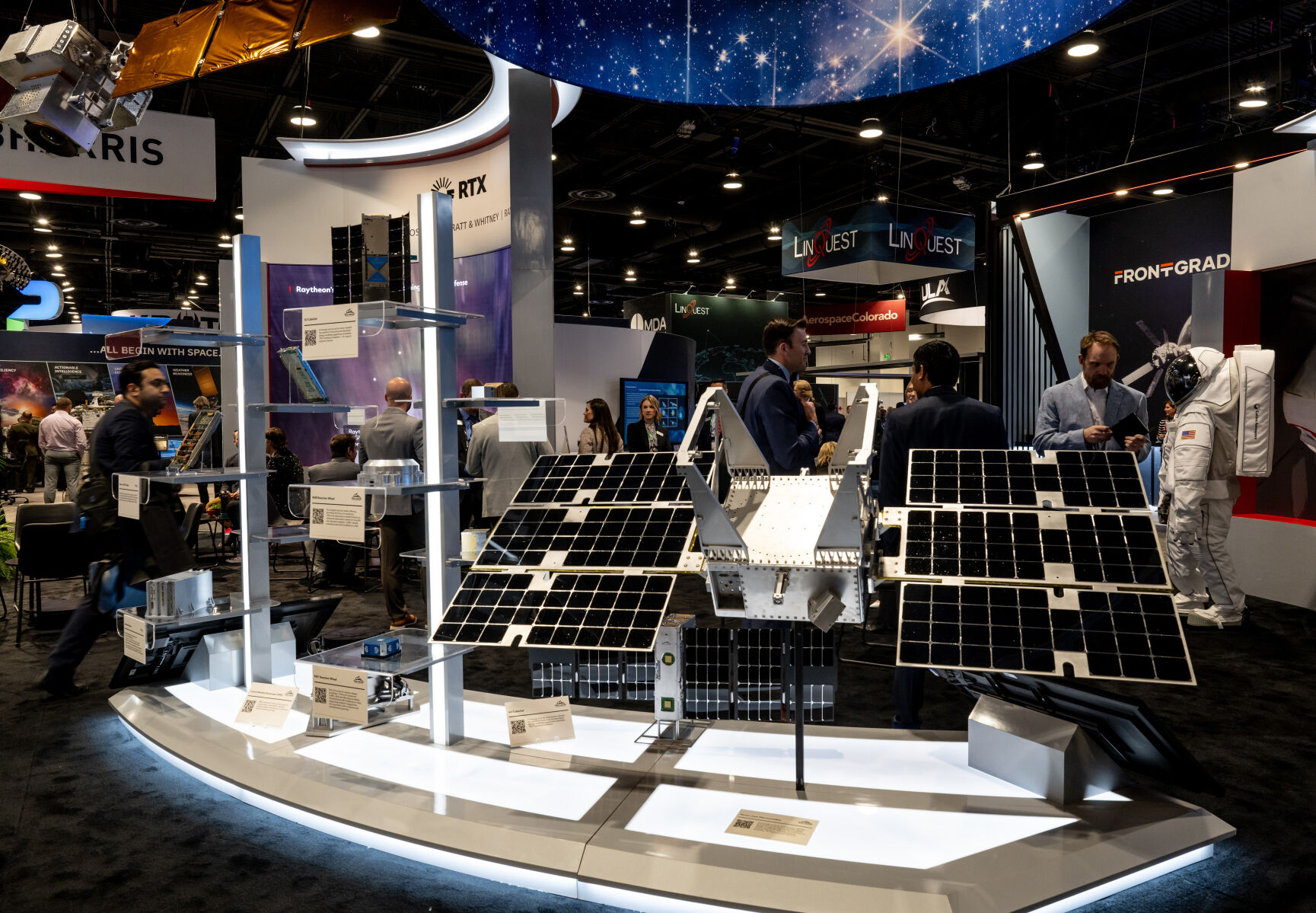
One big player betting on the lunar economy is Blue Origin, the aerospace company founded by Jeff Bezos with a Colorado office in Highlands Ranch.
Blue Origin is hiring for engineers and project managers nationwide, including the Denver area, for its lunar permanence business unit and its lunar transportation division to help “extend human presence permanently beyond the bounds of Earth,” according to the job posting.
NASA selected Blue Origin to build a lunar lander for Artemis astronauts to touchdown on the moon’s surface from Orion.
The lander would be powered by a liquid oxygen and liquid hydrogen propellant, which can potentially be made from extracting lunar ice.
At a Wednesday afternoon panel on manufacturing on the moon at Space Symposium, Blue Origin Senior Director of Space Resources Vlada Stamenkovic discussed with other space industry leaders how technology for the moon could be used to tackle climate change on Earth.
The moon’s harsh environment is pushing scientists to think about new ways of mining more sustainably, generating power and making solar panels with less carbon emissions, Stamenkovic said.
Regolith — the fine gray soil on the moon’s surface — could be converted into materials suitable for solar panel production such as iron, aluminum or silicone.
The moon doesn’t have much carbon and it’s harder to thermally-control chemicals, Stamenkovic explained, so these budding technologies necessary for moon habitation could one day be used on Earth.
“We see a huge benefit developing on the moon and the rest of the solar system that can help, today, solve issues on this planet,” Stamenkovic said.
An important need for the moon economy is making it self-sustainable and limiting reliance on Earth for supplies.
“You can’t always predict what tools you’re going to need, so there’s going to be a push for conditioning people to making things in space that are mission critical on stations, in orbit or on the surface of the moon,” said Chief Scientific Officer Ken Savin at Redwire, the company developing a 3D-printing lab to generate tools and parts during the Artemis missions.
And what’s done on the moon will be a stepping stone for deeper space travel.
“Especially for longer duration and long-range missions like Mars,” Savin said, “there will be situations where you can’t bring everything with you.”