
‘It’s getting worse than ever’: Organized crime permeates metro Denver’s retail theft surge
The Colorado Retail Council says the main issue plaguing large retailers is not petty shoplifting — but organized retail theft
Within the last month, retail stores in metro Denver saw their merchandise stolen in ways that starkly illustrate the evolving nature of retail theft plaguing major urban centers across America.
In each case, the theft was brazen, and, in at least one incident, carried out with complete disregard for the public’s safety, resulting in tragedy.
And while some estimates put retail theft losses in Colorado at roughly $1 billion a year, an industry spokesperson worries about the violence — against store workers and customers alike.
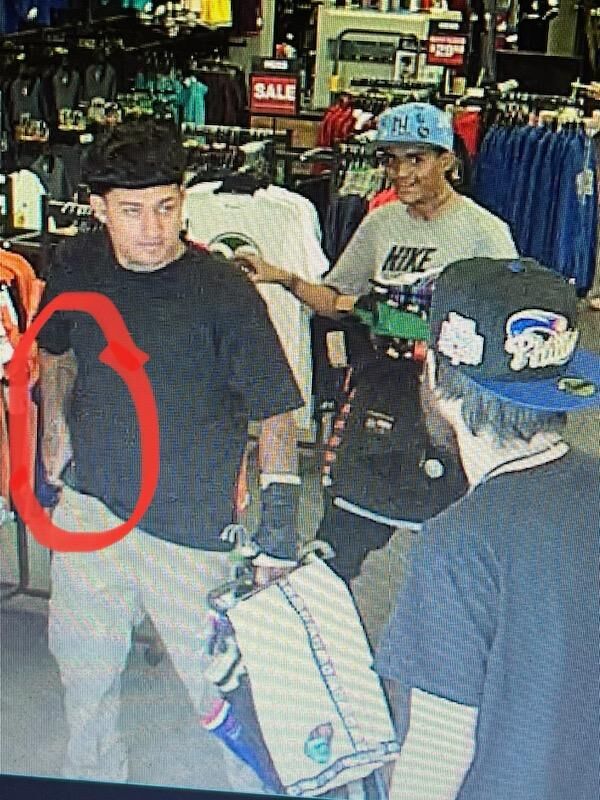
In the first instance, the Aurora police are looking for three of the four thieves who hit three retailers, including a sporting goods store at Southlands Shopping Center, in the same day in Thornton and Longmont. The suspects used a stolen Chevy Tahoe and brandished a gun when confronted as they carted off with armloads of gear.
In Parker, a man loaded a shopping cart, walked out of a store and drove off. A Parker Police officer followed the suspect for a while, but when he sped up, the officer disengaged. Blocks later, the suspect ran a red light and fatally struck a pedestrian.
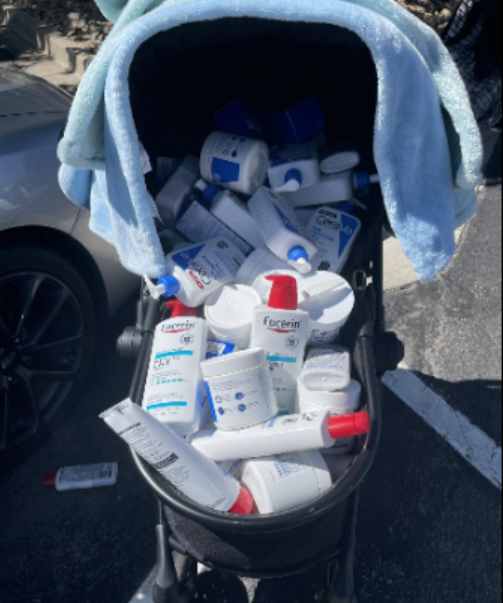
In Douglas County, at a grocery store in the 9200 block of South Broadway, an officer stopped a pair of women seen swiping “whole shelves of makeup and hand creams off the shelf and into a baby stroller.” The products were worth almost $1,300.
Another grocery store on Wildcat Reserve Parkway and Highlands Ranch Parkway called police about a similar theft in progress shortly afterwards. When deputies caught up to the suspects’ car, it was loaded with stolen goods estimated at $4,000.
Local crime statistics differ as to whether the problem has gotten worse in metro Denver, but national data confirms its rise.
And as experts offer various strategies to best tackle the problem, many retailers have responded by securing high-ticket items and installing layers of security by way of cameras in the preventative category.
Retailers report the thieves to police in hopes the goods can be recovered — and the thieves captured — but they’ve also increasingly told employees not to intervene for fear of liability. And criminals, who seem to sense that strategy, appear willing to take their chances that police won’t catch them, law enforcement sources say.
Other retailers have deployed security guards — some armed — to try and deter theft.
Meanwhile, at least one local government has adopted a strident response: Almost a year ago, the Aurora City Council approved an ordinance requiring minimum jail sentences of three days for people convicted of stealing $300 or more worth of retail goods, believing stricter penalties would deter would-be thieves.
A year later, retail theft still plagues Aurora and the Denver metro area’s retail businesses, especially “big box” stores near highways.
From shoplifting to organized crime rings
Organized retail crime in 2020 reached an average of more than $700,000 in losses for each $1 billion in sales, a survey of large retailers by the National Retail Federation found. It was the fifth year in a row in which the average losses reached more than $700,000. By contrast, the losses stood at $453,940 in 2015.
Some 54% of small retailers reported an increase in shoplifting in 2021, according to the U.S. Chamber of Commerce.
Colorado cities are seeing that increase.
In Aurora, the police responded to 981 calls for larceny shoplifting or retail theft as of Aug. 13 of this year. By the same date in 2022, police had responded to only 766 calls for larceny shoplifting.
In Denver, the police recorded 1,222 incidents by Aug. 1 of this year, in which shoplifting was the highest offense. Data provided by the police department shows that of those incidents, 464 led to arrests. Since 2018, the department reached a high point of 1,761 arrests out of 2,789 reported for shoplifting incidents in 2019. The department recorded the fewest number of shoplifting incidents last year at 1,860, with 741 arrests. The data did not include business robberies, in which a shoplifter threatens or assaults employees or security officers.
Of particular worry to both retailers and law enforcers is organized retail theft.
Colorado Attorney General Phil Weiser created a statewide retail theft task force in December to curb the practice of reselling stolen goods online by organized crime groups. His office said the task force provides a point of contact for organizations looking to address the problem and brings together law enforcement agencies to pool resources for investigations involving more than one jurisdiction.
His office requested about $660,000 to fund the task force in the 2023-2024 fiscal year and nearly $680,000 for 2024-2025.
“Organized retail crime harms businesses, employees, and communities,” Weiser said in a statement.
Christopher Howes of the Colorado Retail Council believes the attorney general’s task force is effective. The group works with a stores’ asset protection teams to develop cases and provide law enforcement with evidence on suspected retail theft ring members.
“They are not going after people who are stealing candy bars,” he said. “They are going after kind of the CEO of the operation.”
But Howes said more focus on organized retail theft is necessary and he urged law enforcement to do so, noting some of the crimes could be prosecutable under Colorado’s Organized Crime Control Act. He emphasized that the main issue plaguing large retailers is not petty shoplifting — but organized retail theft.
“Unfortunately, it’s getting worse than ever. It’s more violent than ever. We estimate that it’s costing (Colorado) retailers up to a billion dollars a year in lost product,” he said. “Which is shocking, but not if you understand that that national estimate is somewhere between $75 billion and $100 billion.”
The council noted nearly $33 billion in national losses in 2011, and “we thought that was bad,” Howes said.
Beyond the fiscal losses, Howes worries about the increased risk of violence during retail thefts that put employees in harm’s way, pointing to an incident in Greeley, in which an alleged shoplifter reportedly used bear mace against employees who confronted him.
Is stricter punishment a deterrent?
While some may view the 215-call increase in Aurora from last year as implying that the city’s new mandatory jail ordinance is not helping to deter retail theft, Aurora’s interim police chief, Art Acevedo, said the rise in calls may actually be a sign that efforts to deter theft are working.
The increase in calls could be due to more retail workers reporting theft, rather than an increase in theft itself, Acevedo said.
“I really believe that, finally, retail is just saying enough is enough,” Acevedo said. “They’re actually cooperating with us now much more than we’ve seen in years past and I think that bodes well for the long-term strategy of combating retail theft in the city of Aurora.”
Support for the ordinance was not unanimous.
Aurora Councilmember Juan Marcano, who voted ‘no’ and debated the issue with Councilmember Danielle Jurinsky, the sponsor, said nothing the council has done to increase punishment has deterred crime in the city.
“Evidence continues to show that the best way to reduce crime is to attack the root causes of criminal activity, which often stems from the conditions that folks who commit these kinds of crimes are dealing with,” Marcano said. “This includes housing instability, low wages, behavioral and mental health challenges, lack of familial support, and a lack of pro social activities and opportunities in their communities.”
Jurinsky said while she has not looked at crime data in recent months, she believes the ordinance is effective.
“Last time I was updated, there were arrests being made and there were people unfortunately serving the three-day mandatory minimum, so I believe it is being effective,” Jurinsky said.
At some point, the $300 threshold should be lowered, Jurinsky said.
“I’ll wait until I see some updated numbers, because I would also like to see how many contacts are being made in retail theft that are $299,” Jurinsky said. “Doing nothing is certainly not the answer, and I think we are where we are because we became so lackadaisical on crime.”
So far, 13 people have served the 3-day sentence imposed by Aurora’s new law.
The consequence of little to no consequence
In a statement, Evelyn Fornes, the senior public affairs manager for Home Depot, said a recently passed federal law is “a great first step” in tackling organized retail theft “by removing the cloak of anonymity that professional shoplifters hide behind when reselling stolen merchandise on online marketplaces.”
Under the federal INFORM Consumers Act, online marketplaces must collect, verify, and disclose information about their sellers. The law’s goal is to add transparency to online transactions and deter stolen goods from getting sold in these marketplaces.
Fornes urged Congress and states to enforce the new law, provide the funding needed for law enforcement to investigate and prosecute cases and foster more partnership between law enforcement and retailers.
“Organized retail crime is an ongoing issue, and it has been on the rise over the last several years for many retailers. Some of the most targeted items fall into the categories of wire and wiring devices, power tools and home automation products,” Fornes said. “We have a multitude of initiatives in place to mitigate, including human and technology resources to make theft in our stores more difficult, close partnerships with law enforcement and significant efforts working with federal and state task forces to fight this problem.”
In Aurora, Acevedo sees a “mindset change” among retailers.
The police have been working more closely with retailers to report theft instead of “pass(ing) it on to the consumer,” the city’s interim police chief said.
“In the past, for corporations, we’ve looked at theft as the cost of doing business,” Acevedo said. “But over the years, not just here but across the country, that cost has increased so much that I think there’s been a mindset change.”
He also said the city’s mandatory sentence ordinance will become more effective the longer it is in place. Many retail thieves may not yet be aware of the ordinance, but as many more face the minimum three-day sentences, word will spread, he said.
“We’re hopeful that it will have a positive impact in the weeks and months and years to come,” Acevedo said.
To Acevedo, the rise in retail theft in Aurora and across the country has a lot to do with the minimal consequences of the crime. In too many places, he said, little to no consequence exists for stealing merchandise, which means people are more likely to engage in criminal enterprises since the economic gains outweigh the very little risk of being caught or incarcerated.
‘Sophisticated, structured’
Douglas County Sheriff Darren Weekly watched a 9% increase in theft within his jurisdiction since last year, tracking 24 shoplifting cases from January through August of this year, compared to 16 within that same time period in 2022.
The sheriff’s office has investigated two cases of organized retail theft this fall.
When it comes to organized retail theft, Weekly said the sheriff’s office most often sees suspects take stolen products and resell them online, on sites like eBay or Craigslist.
“It’s pretty sophisticated. It’s pretty structured,” he said, adding that, just like with other forms of organized crime, groups have workers who steal the product, then pass it up the chain of command, which sells if for a higher profit and gives lower-level members a cut.
“These aren’t just a group of kids going out and stealing products. They do this for a living,” he said.
Most organized retail crime monitored by his office targets small but larger value items, such as cosmetics, that are quickly grabbed and then “just walked out the door,” he said.
In Douglas County, the sheriff’s office partners with the Castle Rock and Lone Tree police departments, the U.S. Secret Service and the United States Postal Service to operate a task force that focuses on larger cases of fraud or theft. Task forces allow agencies to share information, critical when crimes are being carried out across a region or statewide, he said.
“A lot of these cases will qualify as COCCA cases,” he said, referring to the Colorado Organized Crimes Act.
More recently, the task force, for example, will be looking into one case in which two women were arrested this month on suspicion of shoplifting from two grocery stores back-to-back before deputies caught up with them. The women allegedly filled a baby stroller with cosmetic products, stealing roughly $1,900 from the grocery stores. Deputies found between $3,000 and $4,000 worth of products in their vehicle. Detectives are still looking into whether the crime is connected to an organization, but it fits the pattern of organized retail theft, Weekly said.
One challenge is that big box stores and national chains often have policies barring employees from intercepting or stopping thefts, Weekly said. He understands their worry, and he, too, does not want employees to put themselves in harm’s way, he said. But the sheriff emphasized the need for retailers to report thefts when they occur.
People involved in organized retail theft know that “for the big box stores, theft is just part of doing business,” and that businesses account for losses when pricing items and setting policies, he said. Weekly worries this makes stores less likely to try and stop suspected shoplifters “or even potentially not contact law enforcement.
“If these retailers don’t act upon it, I strongly feel that they are creating a more dangerous environment, not only for their employees but for customers,” he said. “We don’t expect their staff to get in the middle of it, but call us.”
One strategy that Weekly would like to see is higher bonds — both to keep those accused of theft from going “right back out on the street” and also as a preventative effort, saying lax consequences for non-violent crimes do not deter people from committing theft.
“It’s truly a quality-of-life issue. Even these low-level crimes, while they are not heinous like murder, overall, over time, it really does diminish the safety of a community,” he said.
Acevedo of Aurora echoed that sentiment, adding that the crime should not be regarded as petty offenses.
Organized crime rings stand to benefit from a lack of enforcement, Acevedo said.
What needs to change?
These crimes need to be treated as organized crime, rather than as petty theft, Acevedo said.
“This is what they do,” he said. “They’re stealing hundreds of thousands of millions of dollars’ worth of merchandise across the metro, across the state and across the country and then they go ahead and turn around and sell it to make a profit.”
“When they’re in organized groups engaged in regional or statewide theft activity, we need to look at it not as petty theft or any level of theft but as organized criminal activity,” he said.
Aurora officials look to Colorado’s Organized Crime Control Act to deal with these kinds of cases, Acevedo said, especially as other states nearby, such as California, start taking a stronger stance against organized retail theft.
As other states — especially those near Colorado — begin to more seriously address the issue, crime rings will move into states with fewer consequences, Acevedo said. If California strengthens its laws, organized retail theft criminals will move to other places, he said.
“We need to make sure we have robust strategies that match or exceed those in other surrounding states,” Acevedo said. “We want to make sure they don’t gain by coming to Colorado.”
Call the police or intervene?
While government plays a part in enforcement and dealing out consequences, customers, too, can help reduce retail theft by standing up to companies who pass theft costs onto them, Acevedo said.
Retailers and consumers need to demand that prosecutors, police departments and courts hold people accountable who engage in organized retail crime activity, he said. Consumers should also make it clear to businesses they won’t shop somewhere that won’t hold criminals accountable.
Theft data tracked by retail companies tends to provide a more comprehensive measure of incidents and losses than figures kept by law enforcement because so many incidents go unreported, said Zebulon Strickland, who chairs the Colorado Organized Retail Crime Alliance and is an investigator for a national retailer.
The alliance is a nonprofit dedicated to exchanging information about retail crimes, and its members include law enforcement officers, retail theft investigators, loss prevention managers and prosecutors.
Members of the alliance reported about 490 incidents worth more than $1 million on its information sharing platform in 2022, he said.
“Obviously, that’s not going to cover every event that’s happening,” he said. “But just from the retailers that are participating, I think over a million dollars in reported incidents just last year is interesting.”
He estimated around 50% of incidents in stores don’t get reported to police. Petty theft, which in Colorado covers stealing less than $300 in value, is one example that bigger retailers often prefer to handle without getting law enforcement involved, he said, though practices vary from company to company.
Strickland said small mom-and-pop stores tend to call police more often for theft — because they have fewer resources for internal loss prevention operations and their businesses feel the costs of shoplifting more sharply. And they also have an emotional investment in their goods.
“If I’m the one that had to buy that inventory, put it on the shelf, and it’s my business, I feel a lot more involved. And so they have a lot more emotional incentive to contact law enforcement,” he said.
Companies choosing to focus on tracking crimes by tracking organized theft rings over time as part of a larger master investigation also affects how the crimes get reported, according to Strickland. Investigators may then pitch the investigation to the Colorado attorney general’s office or another task force once they’ve accumulated information about many incidents by a crime ring.
“I may have 40, 50 incidents where they’re all $3,000 apiece over the span of a year,” he said. “Then that’s counted as one incident — one theft series versus 20 different isolated incidents.”