







Police say ‘hybrid gangs’ are contributing to a surge in Denver metro’s youth gun violence
Kids in the Crossfire

The two undercover Aurora police officers following a stolen Kia Optima they encountered quickly realized the tables had turned — that they had been “made.” The Kia made a screeching series of U-turns and closed on the tail of the officers’ car. When the officers turned into a King Soopers parking lot, the Kia followed.
At 9:44 p.m., the occupants of the car opened fire, according to court documents describing what occurred that Nov. 30 night. The shootout that ensued would quickly involve nine Aurora officers and cover the parking lot like hail with bullet casings — at least 18 from the suspects’ 9 mm and .40 caliber guns alone.
Police that night had come face to face with a newer phenomenon they now say is contributing to an uptick in youth violence in the metro Denver area. Officers call them “hybrid gangs,” loosely affiliated groups that lack the top-down hierarchy, codes and structure inherent in traditional gangs.
Police say the new groups are looser, younger and, in some respects, more violent.
During the brazen shootout with police, the Kia careened to the back of the store before one suspect fled on foot and the other hopped into the driver’s seat and sped away, court records show.
The search effort sprawled throughout the surrounding neighborhood’s darkened streets. Residents would report “an unknown person traversing through backyards,” bleeding from the leg. Police found the Kia abandoned with the engine still running and the driver’s door ajar roughly half a mile from the store.
Another officer stationed near Aurora Central High School saw a figure emerging from a tree line. He took the 16-year-old, cold and wet, wearing an ankle monitor with a dead battery, to the hospital and later into custody. The boy was on probation and earlier that day had skipped a court hearing.
The second suspect, 15, indeed shot in the leg, evaded police for nearly a week until they arrested him at a Denver apartment complex. A search warrant turned up guns used in the King Soopers shooting from the boy’s bedroom, according to court records.
Now the two are facing 35 charges on sweeping allegations they not only carried out the King Soopers shooting but prolifically stole cars and dealt guns.
Astonishingly, the two boys — just old enough to have their driver’s license — have been linked by their guns or witness statements to at least six homicides, court records show. Spasms of violence tied to them range from the shooting death of a pregnant woman, who was an innocent bystander, to the killings of three other teens, two of whom were killed when a volley of bullets hit a car they were inside making its way through Denver.
One of the defendants threatened to kill another boy for merely stepping on his shoe, according to the gang’s Instagram chats detailed in court documents.
Traditional gangs still operate in the Denver metro area, but hybrid gangs pose unique challenges, said Officer Max Schoolmaster, a member of Aurora Police Department’s gang unit.
They tend to be smaller groups and prone to more extreme violence, he said. There is no traditional leadership structure. With no older gang member counseling and directing those in the hybrid gangs, younger members are more prone to lash out with outbursts, even in broad daylight, according to Schoolmaster.
Hybrid gangs spring up and disband quickly, merging or splintering off into separate groups, and sometimes they include members from multiple gangs, he said. That’s why their numbers are difficult to pinpoint, Schoolmaster said, explaining he cannot offer an estimated population count for hybrid gang members in the city or greater metro area.
Court documents for the King Soopers case describe feuds forming between purported hybrid gang members over someone stepping on another person’s shoes, or over insults made to one another’s girlfriends.
“What we would consider silly confrontations will emerge between them over slights, and that’s when it becomes very violent,” Schoolmaster said.
Gun crimes are the form of violence that Schoolmaster sees most often, he said.
“The amount of guns that are sold illegally is astronomical,” Schoolmaster said. “I could buy a gun through Instagram or Snapchat today.”
Youth violence, including by hybrid gangs, and curbing recidivism are issues he does not know how to fix, he said, and that troubles him. As a police officer, he said his job is to help solve the community’s problems.
“When I think about it, it’s almost overwhelming,” he said.
Rising youth violence
Coinciding with the recent ascendance of hybrid gangs, crime statistics show rising incidents of violence among youth.
The Aurora Police Department tracked a 2.3% increase in violent crime involving a juvenile offender or juvenile suspect from 2018 to 2022, including an 800% increase in homicides. The department recorded one homicide in 2018 and nine last year. Aggravated assaults rose by 5.9%.
As the city marked National Youth Violence Prevention Week in late April, Councilmember Angela Lawson read a sobering statistic — 14 of the 52 homicides in Aurora last year, or roughly 1 in 4 victims, were under the age of 25.
Data provided by UCHealth, which had partnered with the city to provide hospital intervention for juvenile victims of violence, shows from 2019 to now, among patients under the age of 24, the hospital has seen a 119% increase in all assaults and a 138% increase for gunshot and stabbing victims. There was an 8% decrease in assaults and 21% decrease in gunshots and stabbings between 2021 and 2022.
‘We failed that kid’
Interim Aurora Chief of Police Art Acevedo is still evaluating just how large a role hybrid gangs play in the youth violence besetting Aurora and the broader metro area. But he said the King Soopers’ shootout raised eyebrows among veteran cops, including himself.
The most disturbing part to Acevedo was the number of previous homicides the teenage suspects’ guns were linked to. He stared at a page listing previous charges brought against the boy discovered near Aurora Central, including a missed court sentencing hearing, and wondered how the boy was not in detention. The two defendants police have charged have not entered pleas in the police shootout yet. One of the defendants is now 17 and the other 16.
“We failed that kid,” Acevedo said.
Acevedo, who joined the department in December, is still assessing multiple factors in addition to gang activity that are driving local youth violence, he said, emphasizing that youth violence is an issue in metropolitan areas across the country.
Gun proliferation, Congress’ unwillingness to pass gun safety laws and U.S. Supreme Court decisions are undeniable components of the nation’s youth violence dilemma, he said.
“No one should be surprised that when you make it easier to not just buy guns but to now buy gun kits and make gun kits — no one should be surprised that gun deaths and gun violence continues to rise,” he said.
Acevedo agrees with Aurora city councilmembers who have called for the state to eliminate its juvenile detention bed cap. Bed space should be based on need, he said, and detention can be a necessary tool in turning around young lives.
Communities must end “revolving door justice” and consequences that are too lax, Acevedo said. They also need a safe place to take young people accused of violent crimes while offering them “wraparound services.”
If juveniles are placed in detention or incarcerated, a plan to successfully reintegrate them into society upon release, including robust mental health services, becomes essential, he said.
“In too many instances, we just warehouse these young people,” he said.
A safe place
R. J. pulled on his boxing gloves and tightened the straps. The protective head gear already in place covered his deep scars — one the size of a dime on his cheek, another, an incision stretching a few inches across his neck.
Nearly seven months ago, as R. J. scrolled through his cell phone while walking to a bus stop, shots fired by another teenager rang out. Then 14, R.J. tried to bolt, his backpack weighing him down. One bullet ricocheted off his cheekbone, breaking apart and lodging in his chin. A second shattered his jaw. A third struck him in the neck. On cold days, he still feels the metal plate in his jaw.
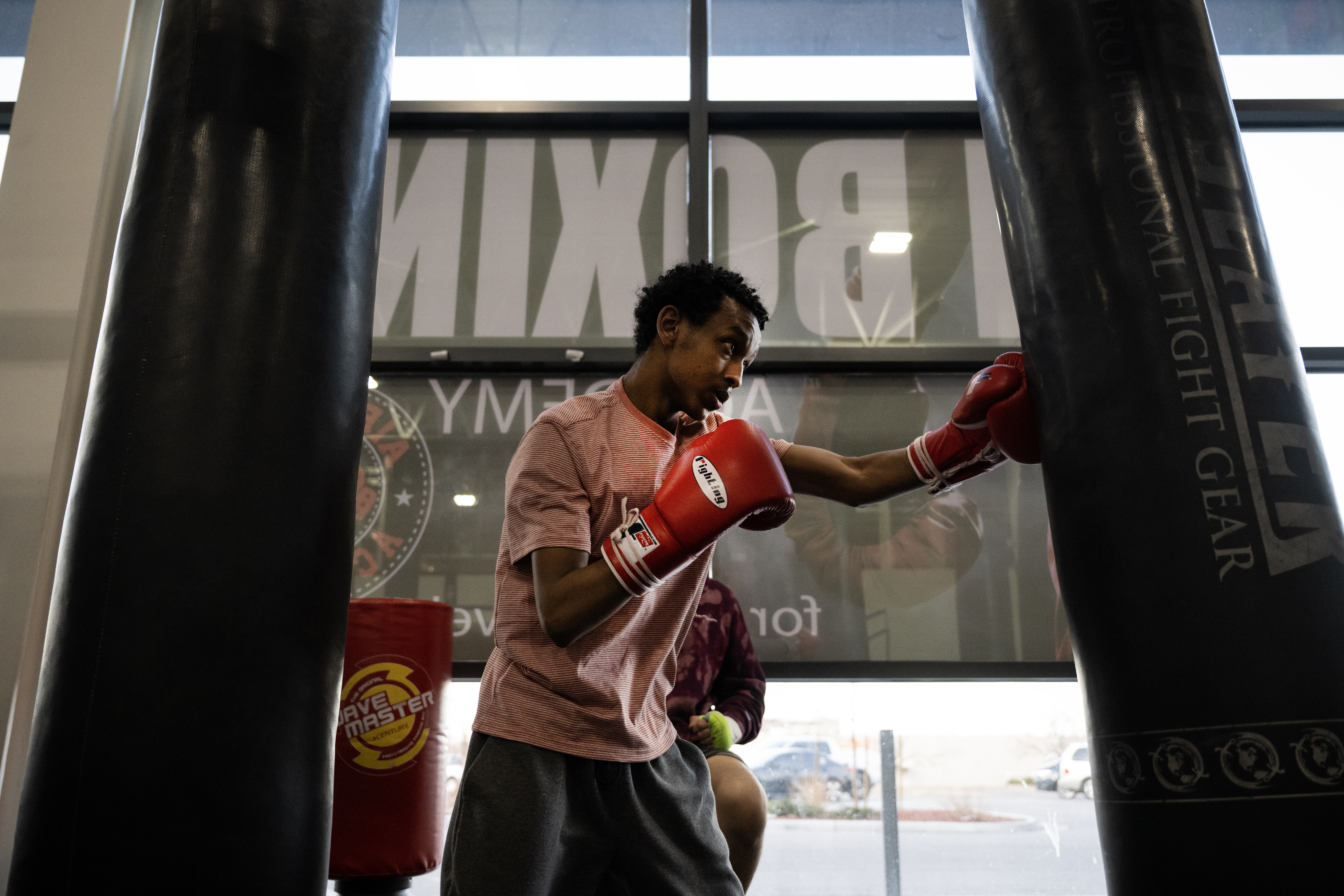
Now, the whoosh of a jump rope whirled from one side of the gym. The pop and thud of gloves pummeling a row of heavy bags rippled near a wall of windows.
R. J.’s coach pulled each of his sparring partners aside. Use less power, he told them. Stick to body work. Avoid blows to the face and head.
R.J., now 15, climbed between the ropes at Aurora’s A1 Boxing and returned to his beloved ring for the first time since the shooting. He was home, the siege of youth violence that had caught him on the street behind him.

One coach at the gym, Carlos Rodriquez, said he hears about youth violence “every single day.”
“Everybody has a gun,” he said
“It kind of breaks my heart, because they feel like it’s normal,” he said. “This is not normal. This is not normal.”
A1 Boxing, armed with a $10,000 grant from the city of Aurora, is considered a success story in the city’s youth violence prevention strategy.
Clay Graham, R.J.’s coach and mentor at A1, spent most of his childhood in the metro area, including Aurora and Denver.
As a boy, Graham would wait at Denver’s Montbello High School where his sister attended classes until his parents got off work. At elementary school age, he was exposed to shootings and stabbings, he said. As he got older, his family lived in Park Hill, where “it was just as bad, if not worse.”
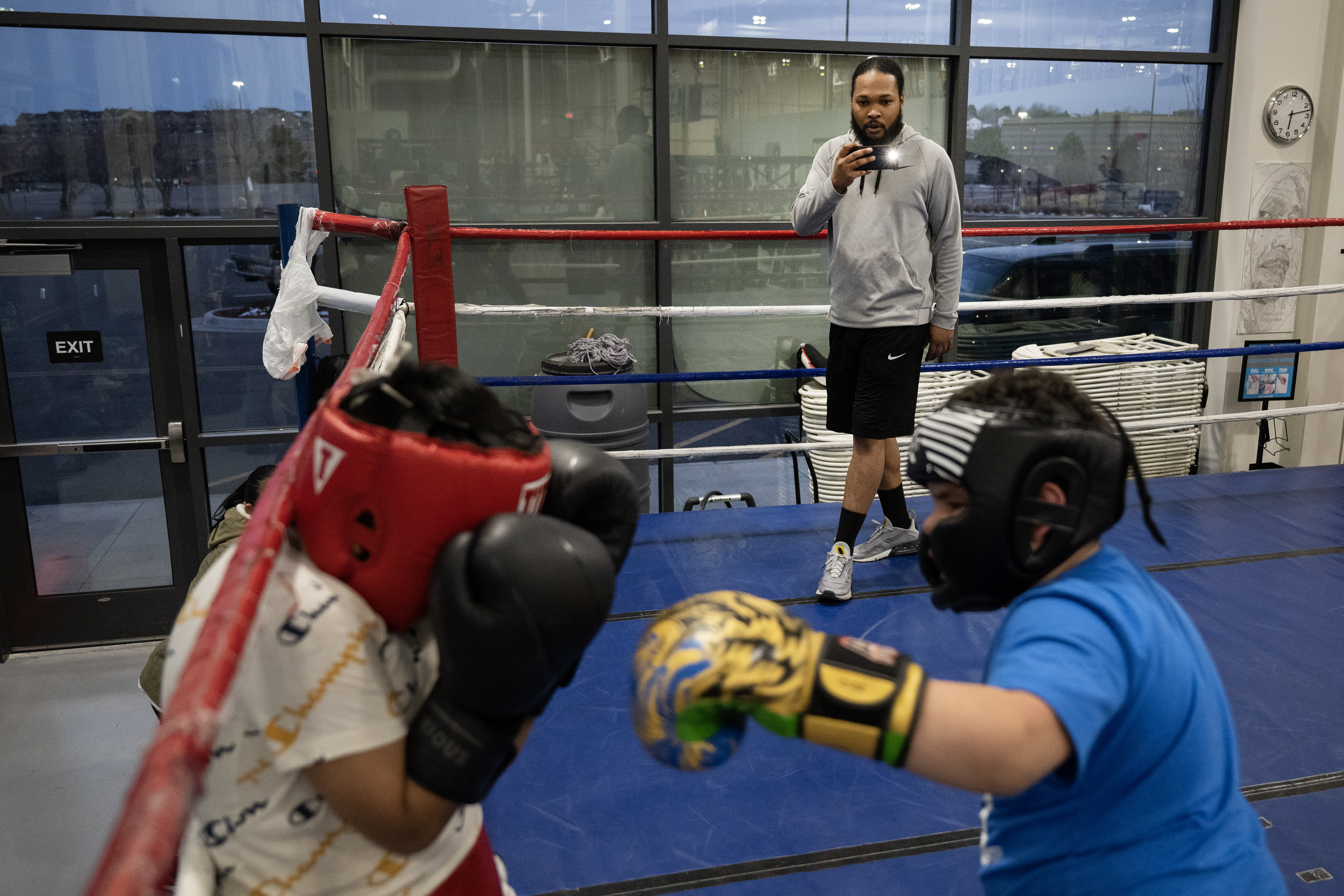
“One minute you are being told that, ‘Let’s go play a video game and have fun,’ and the next minute you get initiated into a gang,” the now 30-year-old said.
Graham never joined a gang but said the pressure was omnipresent. He did not completely avoid trouble — he fought often in middle school, he said — but one of his greatest triumphs was going from his own hard times to working hard at sports and earning playing time.
He studied psychology in college, focusing on learning how to support kids from his background, while also playing football, he said.
One reason he switched from football to boxing was to help kids find an outlet. He’s been a boxing coach now for nearly 10 years.
“You learn to cope and embrace that certain things were also in your path or in your walk to just kind of help you, and motivate that growth within yourself,” he said.
After R.J.’s second round, Graham huddled with his protégé in the ring. They whispered back and forth and then Graham’s face cracked into a wide grin.
“You want to fight,” he said knowingly to R.J.
By the third round, R.J.’s sparring partners weren’t holding back. He barely felt their punches, he would say.
“I’ve been waiting for that for a long time.”

In the gym, off the street
A1 Boxing is not the only facility in the city whose athletes have been affected by youth violence, Graham said. Coaches have seen their young people on both sides, as victims and as perpetrators. Through all those challenges, they try to provide a support system, multiple coaches said.
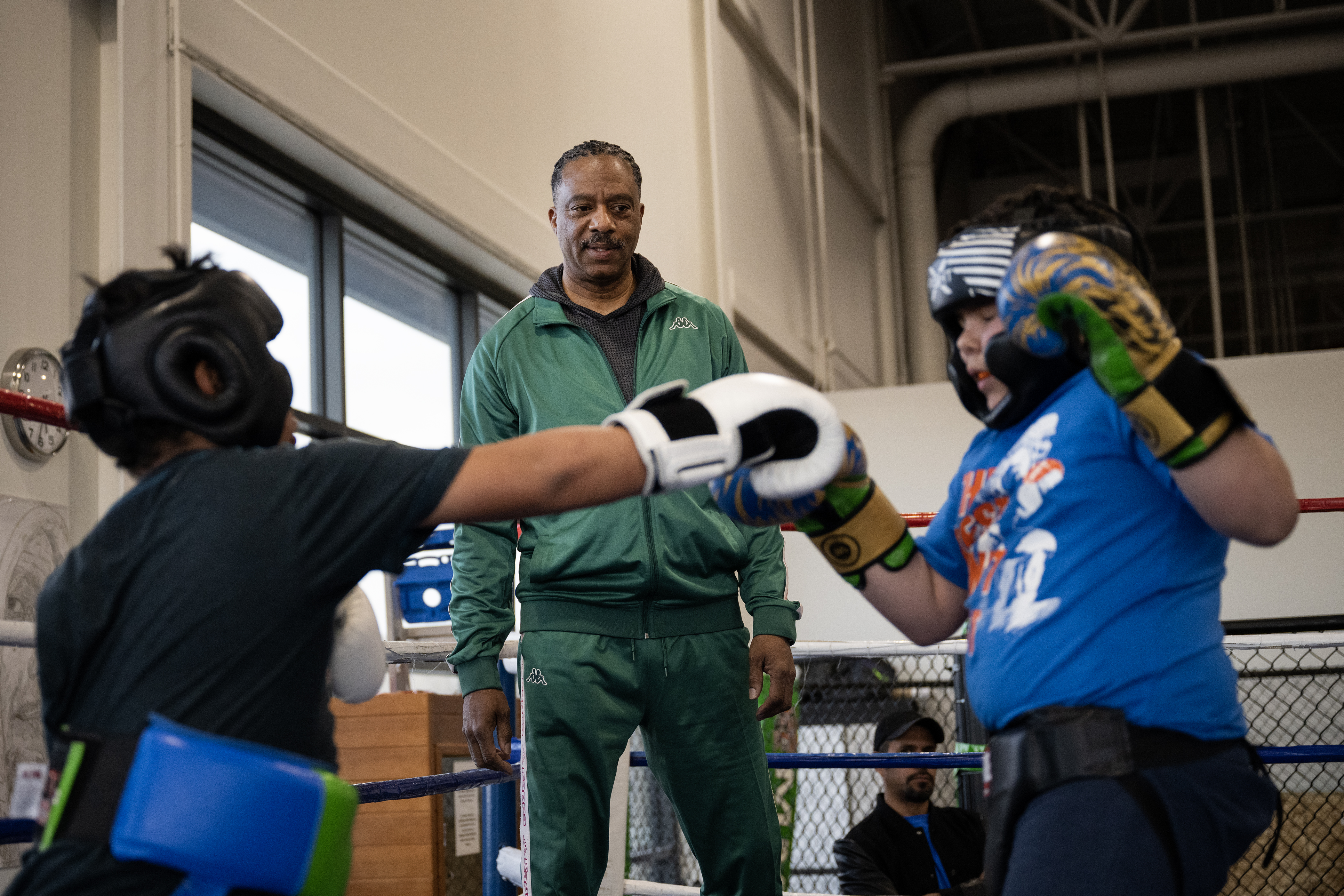
A1 Boxing’s owner Glenn Goodson used the $10,000 grant to sponsor 30 children with the money, covering membership fees, buying gloves, and for those who proved they were ready for competition, extra equipment.

He prioritized the funding on children 13 and older. Parents come to him looking for a way to keep their children “off the street in a safe haven place,” he said. Lessons are in the evening, starting at 6 p.m. Kids can go home from school, grab dinner, then come to the gym. They leave tired and ready for bed, he said.
Parents tell him they notice less back-talking at home, and that A1 boosts accountability. As kids spend more time at the gym, parents spend less time worrying about where they are in the evenings, he said.
“A lot of people think that boxing is violent. No, boxing is discipline,” Goodson said.
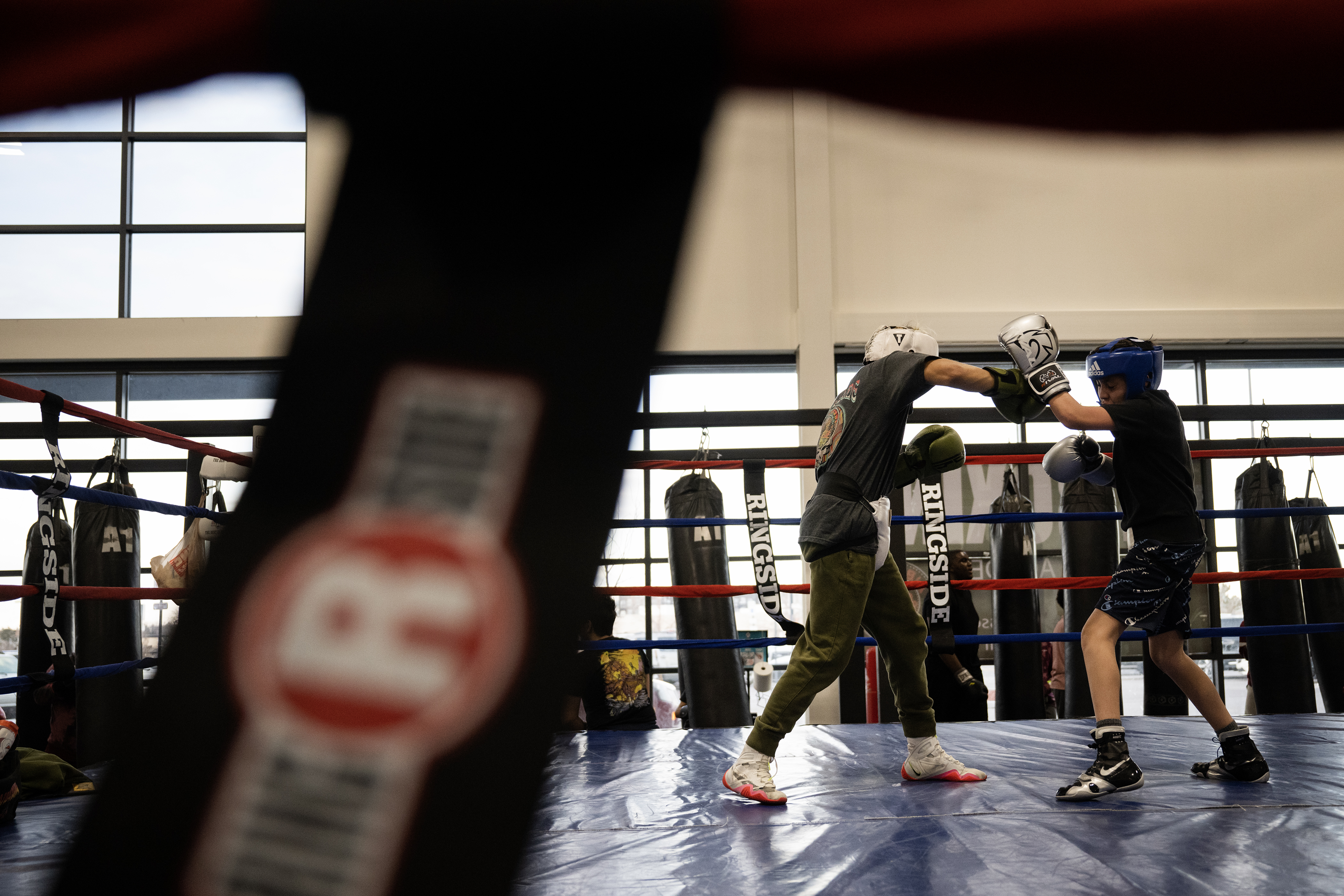
It’s a structured sport, he said, being a part of a team. Going to competitions is earned by displaying dedication to practicing. If boxers’ grades don’t stay up, they get pulled from the ring, Goodson said.
“What I have seen over the years is that having a gym full of kids is that many off the street,” he said.
Prevention versus intervention
At Aurora city hall, officials are in the midst of revamping the city’s youth violence prevention program. Relatively new, the program has shown inconsistent progress, according to some council members and others.
The city is helping lead a regional youth violence prevention network bringing together youth, city and community leadership to mold youth violence reduction strategies.
The city’s youth violence prevention program awarded a total of $260,000 in grant dollars last year to organizations working on both intervention and prevention, with another round of grants being offered this year.
Joseph DeHerrera took over as program manager late last year, tasked with refocusing the program.
A common misconception about local youth violence is that “it’s an Aurora problem, or it’s a Denver problem, and really, it’s a community problem. It’s not isolated to city boundaries,” he said. The entire Denver metro area needs to collaborate more to drive down youth violence, he said.
As he stepped into the role, DeHerrera said he would work closely with Aurora police to look again at where youth crime is occurring and how community resources can be brought to bear.
A1’s Goodson hopes to continue his work with the city’s grant program, but not all 2022 grant recipients felt the same.

Reid Hettich has worked as a pastor in Aurora since 1985. He’s been to the funerals, commiserated with colleagues, and attended dozens of community meetings about curbing youth violence, he said.
Hettich thought as a church leader he would be well suited to help the city establish a Strengthening Families program and received grant funding to launch it.
Many people were excited when Aurora was forming its youth violence prevention program in 2020, he said, because “it seemed like the first time that the city was taking that problem seriously.”
The initiative began with a grassroots feel, an emphasis on prevention, agreements to collaborate regionally with Denver, “and then it seemed to go political,” Hettich said. Suddenly it felt as though the Youth Violence Prevention Program “was questioned about anything and everything.”
He believes the city program’s effectiveness has been “up and down” and appeared to crumble when all of the program’s staff left. A youth advisory council that supported the program seemed to go inactive as well, he said.
City records show all nine of the city employees who worked within the youth violence prevention departed between the spring of 2021 and late 2022 before DeHerrera took over.
In evaluating the 2023 grant applicants, DeHerrera would be deciding how many resources Aurora should focus on prevention versus intervention, DeHerrera said.
Prevention work done well is not just providing a program to children for a few months but “long-term community building for these youth and for these families,” Hettich said.
Debating solutions
Councilmembers have debated placing more youth in detention, along with swifter and stricter consequences, versus better re-entry programs and more robust prevention strategies.
Councilmember Dustin Zvonek struggles to understand why some of the city’s youth so easily turn to gun violence. Kids got into fist fights, not gun fights, when he was in school, he said.
“When you see the body worn camera and you see the face of these little kids,” he said, “and to know that these are kids who were involved in violent crimes, it’s devastating.”
He wants a tougher stance. Zvonek has called for the state to eliminate its cap on juvenile beds, similar to a hotly-contested resolution he sponsored at city hall. Zvonek is frustrated the cap has slowly reduced the number of youth detention beds in Colorado. The state had 327 such beds in 2021 and is down to 215.
That happened concurrently with an increase in juveniles committing homicides, said Pete Schulte, an attorney with the city. Judges are being forced to pick the most violent offender on their day’s docket for placement in detention, while releasing other juveniles suspected of violent crime on ankle monitors, he said.
Zvonek argues that releasing young people accused of violence back into “the environment they came from with an ankle monitor” and expecting them to avoid trouble is wishful thinking.
“We should be able to respond to the realities of our situation, even as unfortunate as our situation is,” he said.
Conversely, Councilmember Ruben Medina has expressed concern about having too great of a police presence within the city’s youth violence prevention efforts.
“Not that we don’t need police. We want police to be at the table,” he said.
Medina emphasized the need for youth violence prevention, “so we are not waiting until kids are in the system.” He admires organizations like GRASP, the Gang Rescue and Support Project, which connects with parents and works in the community to divert young people from joining gangs.
Many parents work two jobs, cutting into the time they can spend with their children, he said. .
Medina wants to prioritize youth centers that would provide teen mental health services, mentorship, job training, trades training and address one of the biggest obstacles to helping families access resources: transportation.
“I see the lack of support for kids,” he said.
Those on a fraught path lack resources — a job, or activities they love outside school.
Same forecast each year
Youth advocates and those who have worked in gang reduction for years say they’re fatigued. Each summer is forecast to be a “hot summer,” GRASP Executive Director Johnnie Williams said.
The same questions about youth violence prevention pop up, the same root causes are reiterated, and solutions are debated, but years continue going by without local governments enacting widespread and effectively permanent solutions, he said.
That’s why longtime youth advocate Jason McBride is disheartened but not surprised when he sees the ages of youth violence victims and perpetrators, some as young as 12 and 13.
“You have young people that have no sense of who they are and no value, no worth. They don’t see that in anyone else,” McBride said. “And that’s why it’s so easy for them to take someone else’s life.”
McBride, also a candidate for Aurora city council, said he does not see more bed space or the police department’s new focused deterrence programs as the solution, instead urging better support for people struggling financially.
There’s another simple step to addressing youth violence that is repeatedly overlooked, McBride said.
“We don’t ask kids about it,” he said. “We have to include them in the solution, period.”
So each spring when McBride is asked how bad youth violence will be in the summer, he gives the same answer.
“This summer is going to be worse than the previous,” he said.
‘We don’t think sometimes’
R.J. does not know why the other teenager shot him at the bus stop.
In the weeks that followed, the sharp pain in his face would wake R.J. up in the night. He underwent four surgeries. Each added to his pain.
“Physically, I just let everything heal on its own. And mentally, I had to get myself together, and it took a few months, but I got it together,” the 15-year-old boxer maintains now.
The shooting left R.J. angry. If he had waited to walk to the bus stop by a few minutes, the shooting would not have affected him, he said. He was mad at the person who shot him.
“He had no reason to,” R.J. said.
The shooting left him with a sadness too, because for months he could not practice the sport he loved.
At the time, R.J. was training for his first competition. His heroes are athletes: Hank Davis, Mike Tyson, Sugar Ray and Muhammad Ali. Boxing had been the only thing on his mind. The journey to get back in the ring consumed it from that point on.
Although he can’t understand why bullets came his way, R.J. said he is not hugely surprised by the shooting.
“People my age, we don’t think sometimes,” he said. “We just, ‘Do.’”
The shooting tragedy also interrupted a pivotal milestone in R.J.’s life.
“I had so many things planned. I had just started high school,” he said.
He was ready to try new sports and explore different activities in his high school career. As a muscle car enthusiast, he’s eager to learn more about car design, something he’d love to do as a career one day.
Now after the shooting, he is a more serious person, he said, and feels pressure to be in constant awareness of his surroundings.
He also feels more resilient. With Graham’s counsel, he’s learned his mind is strong enough to overcome both mental and physical pain.
His ultimate goal with boxing is to keep progressing. He’s working on being “shifty” in the ring — faster, and smoother. He gives himself a pep talk before sparring, just like Lightning McQueen does before a race: I’m fast. I’m very, very fast.
“Sometimes, everything goes away,” he said, “and it’s just me in the ring.”
