




Aurora police provide update on apartment complex shooting, video tied to Venezuelan gang operation

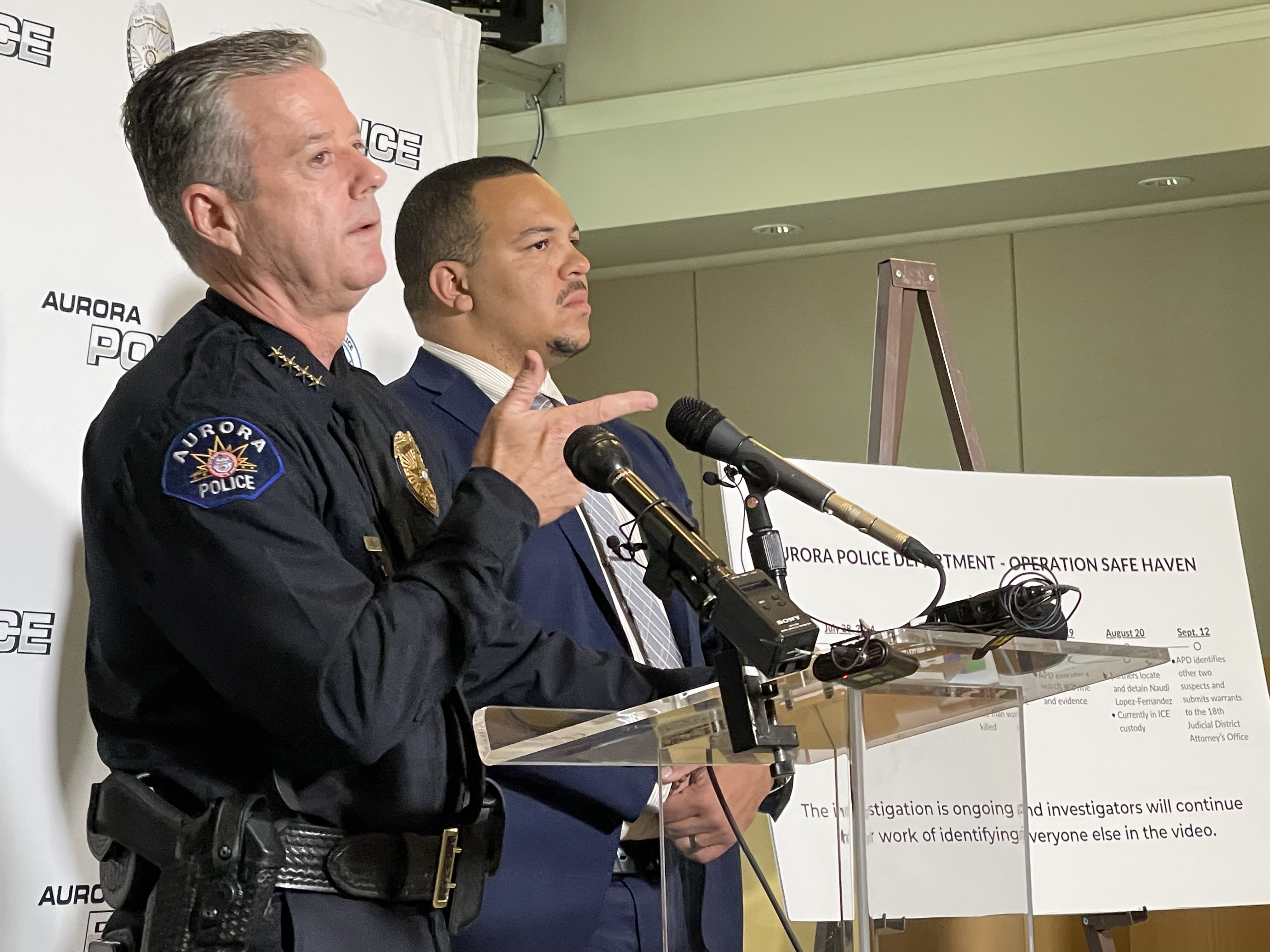
Aurora police officials on Friday disclosed that they were looking into three men they said were involved in an Aug. 18 shooting at an apartment complex the property owner has claimed was overtaken by a Venezuelan gang.
The shooting happened outside The Edge at Lowry at East 12th Avenue and Dallas Street at about 11:30 p.m.
Police said they obtained arrest warrants for
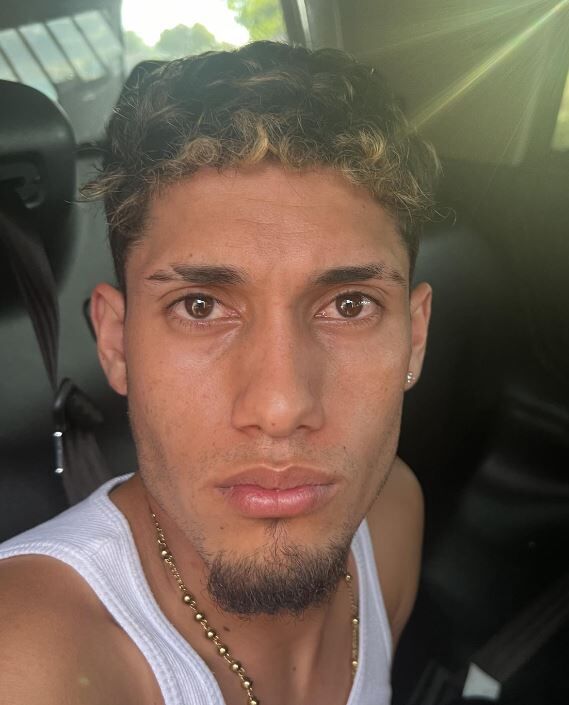
Anderson Zambrano-Pacheco, 25, Niefred Jose Serpa-Acosta, 20, and Naudi Lopez Fernandez, 21, on charges of first-degree burglary and menacing with a firearm.
Lopez-Fernandez is in custody, while police are searching for the two other suspects.
Aurora Police Chief Todd Chamberlain said the department is working to determine whether the men are members of the Tren de Aragua, the Venezuelan prison gang turned transnational criminal organization that is operating in the metro Denver region.
“We don’t want to misidentify an individual as a gang member,” Chamberlain said.
Verifying the gang affiliation of someone from Venezuela, which does not have a strong relationship with the United States, creates real challenges for law enforcement, Chamberlain said.
Venezuelan officials — Chamberlain said — don’t have a database on gang members to share.
“So, being able to identify these individuals as TDA gang members has been a struggle,” Chamberlain said.
Police may, Chamberlain suggested, have to rely on gang members self-identifying.
Authorities said about 10 minutes before the Aug. 18 shooting, six armed men “knocked” on the doors of two apartments, unlawfully entered the units and “threatened the residents.”
The encounter was captured on video, which went viral, putting a national spotlight on Aurora. The city also took center stage during the debate earlier this month between former President Donald Trump and Vice President Kamala Harris, when the Republican nominee talked about gang activities in the Colorado’s third most populous city.
If re-elected, Trump has vowed to begin deporting illegal immigrants, starting in Aurora.
Police officials deliberately did not directly tie the August shooting to the Venezuelan gang in the news briefing.
“This is a focus on criminal behavior,” Chamberlain said. “This is not a focus on immigration status.”
And, as such, Chamberlain assured the public that the Aurora Police Department would not target certain communities.
“We are not going to over police a population based on their race or ethnicity,” Chamberlain said.
Chamberlain also repeated the refrain by other city officials: “Gangs are not in control of the city of Aurora.”
City officials recently finally admitted they knew about the Venezuelan gang’s presence in Aurora months ago, though they insisted those activities were limited to a few areas.
The gang is linked to criminal activities that include human trafficking — particularly of immigrant women and girls — drug trafficking, kidnapping, and money laundering, among others. In metro Denver, the gang’s members have been accused of a jewelry heist, a beating, shootings, and barging into apartment units with rifles.
Initially, the local officials dismissed the assertion by a property management company that the presence of gang members precluded it from doing its work at an apartment complex and that it feared for the safety of its staffers and residents. The city called it an “alternative narrative” to the numerous code violations and the poor condition of the building.
Officials began walking back their statements after the video of armed men barging into apartment units surfaced and a cache of letters from a law firm representing CBZ Management — written a month before the federal government acknowledged TDA had extended its tentacles into Denver — became public.
Each new revelation — and there have been several — only served to raise public safety concerns and amplify election-year questions about the border crisis and illegal immigration.
More recently, a national law firm that investigated the claims said that, through violence and intimidation, the gang took over the Whispering Pines and sought to collect up to half of the rent from leaseholders, drying up collections for the landlord, according to a law firm’s investigation.
Aurora officials also admitted that authorities had arrested people suspected — though not yet confirmed at the time of their apprehensions — of being members of a Venezuelan gang operating in the metro Denver long before the media spotlight on the city.
The gang’s activities also “significantly affected” apartment complexes in the city, officials acknowledged.
The Edge at Lowry — and its sister property that city officials boarded up in August, Aspen Grove — are owned by CBZ Management, a Brooklyn-based business that operates rental apartments in New York and Colorado.
CBZ Management has 11 properties in Denver, Aurora, Colorado Springs and Pueblo. The owners also own Whispering Pines in Aurora.
Like Aspen Grove — which has a history of health and safety violations — The Edge at Lowry has been the subject of more than 19 code enforcement complaints since 2019, according to Aurora officials.
Federal officials have confirmed the gang’s presence in the Denver metro region.
It’s unclear when the gang first came to the U.S. In July, the Biden Administration identified TDA as a transnational criminal organization and sanctioned the group, believing it to be behind a spree of kidnappings, extortion and other crimes tied to immigrants from South and Central America.
An estimated 8 million Venezuelans have fled the economic and political chaos under President Nicolás Maduro.
At first, Venezuelans immigrated to countries in the region such as Columbia, Peru, Brazil, Chili and Ecuador. But after the economic contraction in these countries following the COVID-19 pandemic, many Venezuelan immigrants lost their jobs and started heading further north to the United States.
Nearly 43,000 alone have come to Denver.
Plane, train and bus tickets purchased for immigrants to travel elsewhere suggest about half have remained in the Denver metro area.
The economic uncertainty in Venezuela also meant gangs like TDA needed to branch out and diversity, said Francisco Rodriguez, an economist and University of Denver professor.



Get OutThere
Signup today for free and be the first to get notified on new updates.
PREV
PREVIOUS
Texas Secretary of State requests citizenship data from feds to secure voter rolls
(The Center Square) – Texas Secretary of State Jane Nelson has requested information from the Biden administration “to provide citizenship data to help Texas maintain secure voter rolls.” “Texas demands this information. The federal government must stop hiding the ball. We must have clean elections where only eligible voters cast votes,” Gov. Greg Abbott said […]
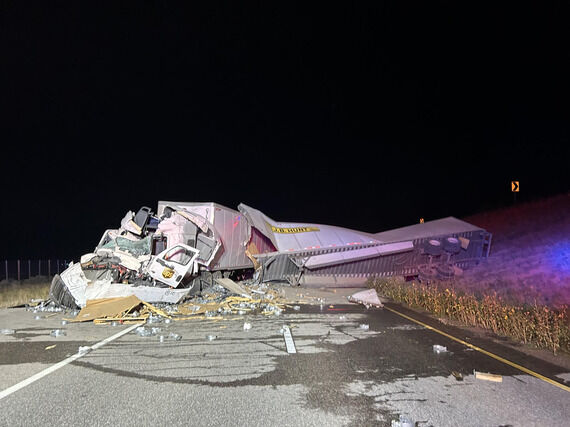
Two semi-trucks crash, shut down I-70
Two semi-trucks crashed on Interstate 70 around mile marker 163 at 4:30 a.m. Friday, the Colorado State Patrol said. One of the trucks was going westbound when it went through the left shoulder barrier near Avon, which is just west of Vail, crossed into the eastbound lanes and collided with the other truck, authorities said. […]