




Finger pushing
weather icon 81°F


Solar eclipse in Colorado: Best places to watch

Denver will max out at 65% totality during the solar eclipse on April 8, 2024
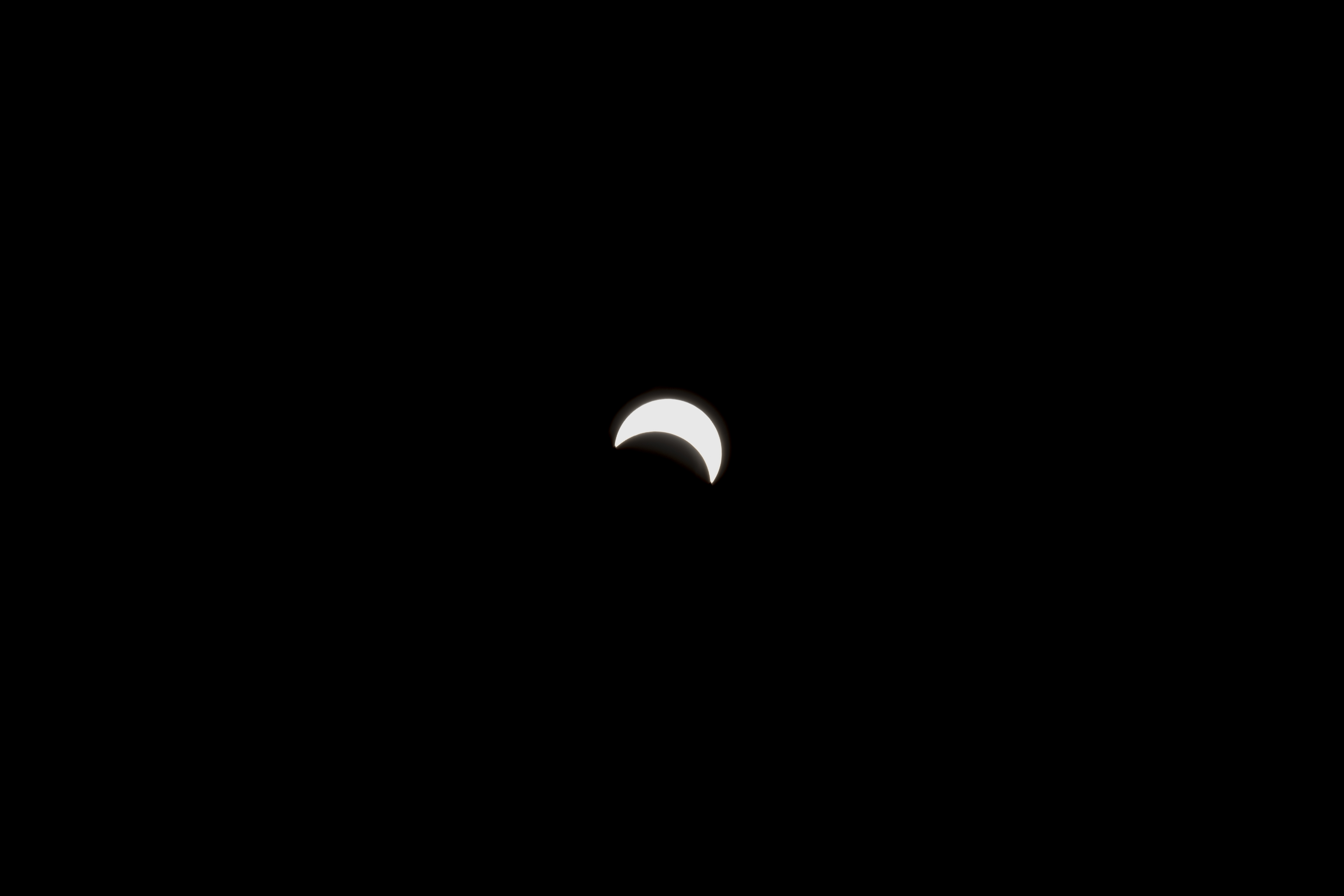
Today’s the day for Coloradans and millions of Americans to watch the first total solar eclipse since 2017, with Colorado residents experiencing a partial eclipse from late morning to early afternoon.

The sun is blocked by the moon partially during a total solar eclipse, as seen around 12:30 p.m., Monday, April 8, 2024 from Lakewood, Colorado. The totality of he eclipse around the Denver metro area was 60-65%. (JonathanIngrahamDigital Strategistjonathan.ingraham@denvergazette.comhttps://denvergazette.com/content/tncms/avatars/c/dd/7f0/cdd7f086-b693-11ec-b373-bba598953eb6.fc0f5608a6f1144f64f080f771bd904d.png)
The sun is blocked by the moon partially during a total solar eclipse, as seen around 12:30 p.m., Monday, April 8, 2024 from Lakewood, Colorado. The totality of he eclipse around the Denver metro area was 60-65%. (JonathanIngrahamDigital [email protected]://denvergazette.com/content/tncms/avatars/c/dd/7f0/cdd7f086-b693-11ec-b373-bba598953eb6.fc0f5608a6f1144f64f080f771bd904d.png)

A total solar eclipse occurs when the moon passes between the Sun and Earth, completely blocking the face of the sun.

Although Colorado is not in the direct path of totality, the path of the 2024 total solar eclipse will cross North America, starting in Mexico, then travel northeastward through the United States and into Canada.
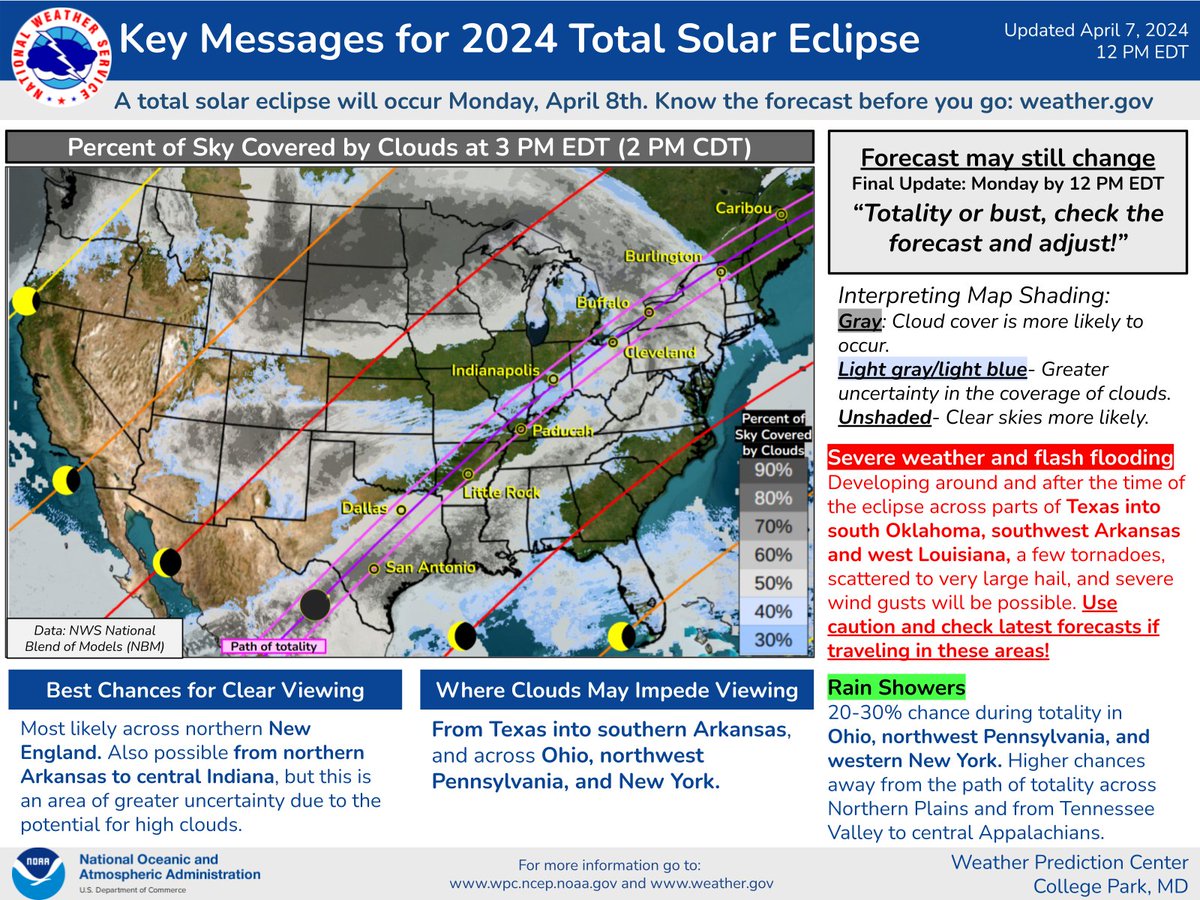
Forecasted cloud cover over the contiguous United States for the April 8 total solar eclipse. (National Weather Service)

Coloradans will experience approximately between 55% to 78% totality during the two-hour event. All 48 contiguous states on that date will experience at least a partial solar eclipse.

The path of totality will reach communities from Texas to Maine. Durations longer than 4 minutes will stretch from Texas as far north as Economy, Indiana, according to NASA.
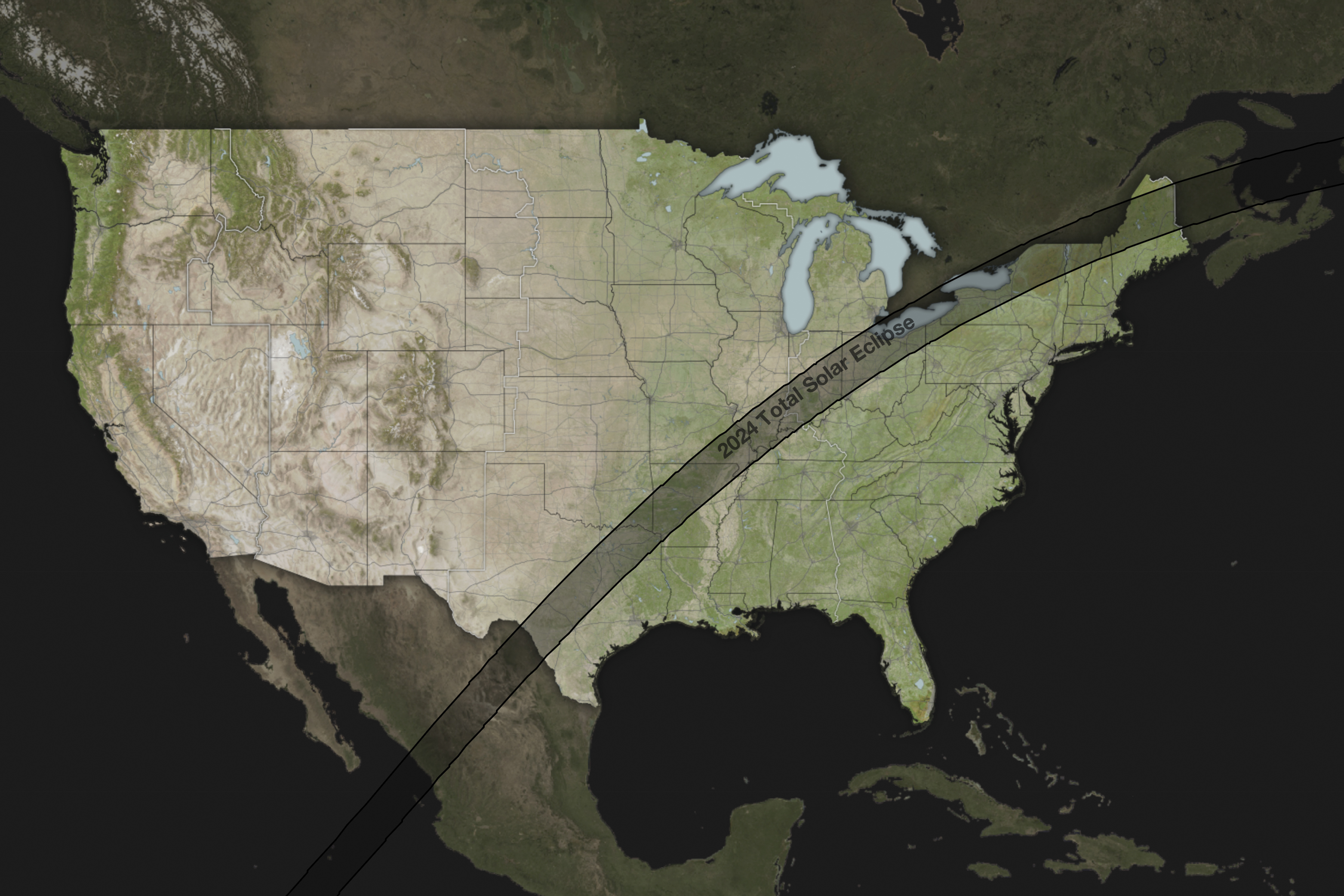
This image from the NASA Eclipse Explorer website shows the path of the April 8, 2024 total solar eclipse over North America. An estimated 44 million people live inside the 110-mile-wide (180-kilometer-wide) path of totality stretching from Mazatlán, Mexico to Newfoundland. (NASA via AP) (HOGP)

An estimated 31.6 million people live in the path of totality for 2024’s eclipse compared to 12 million in the path of the 2017 eclipse, according to NASA. Totality in April’s eclipse will also last longer than it did in 2017.

In 2024, the maximum totality will last up to 4 minutes, 28 seconds, in an area northwest of Torreón, Mexico, whereas the longest period of totality in 2017 was near Carbondale, Illinois, at 2 minutes, 42 seconds.
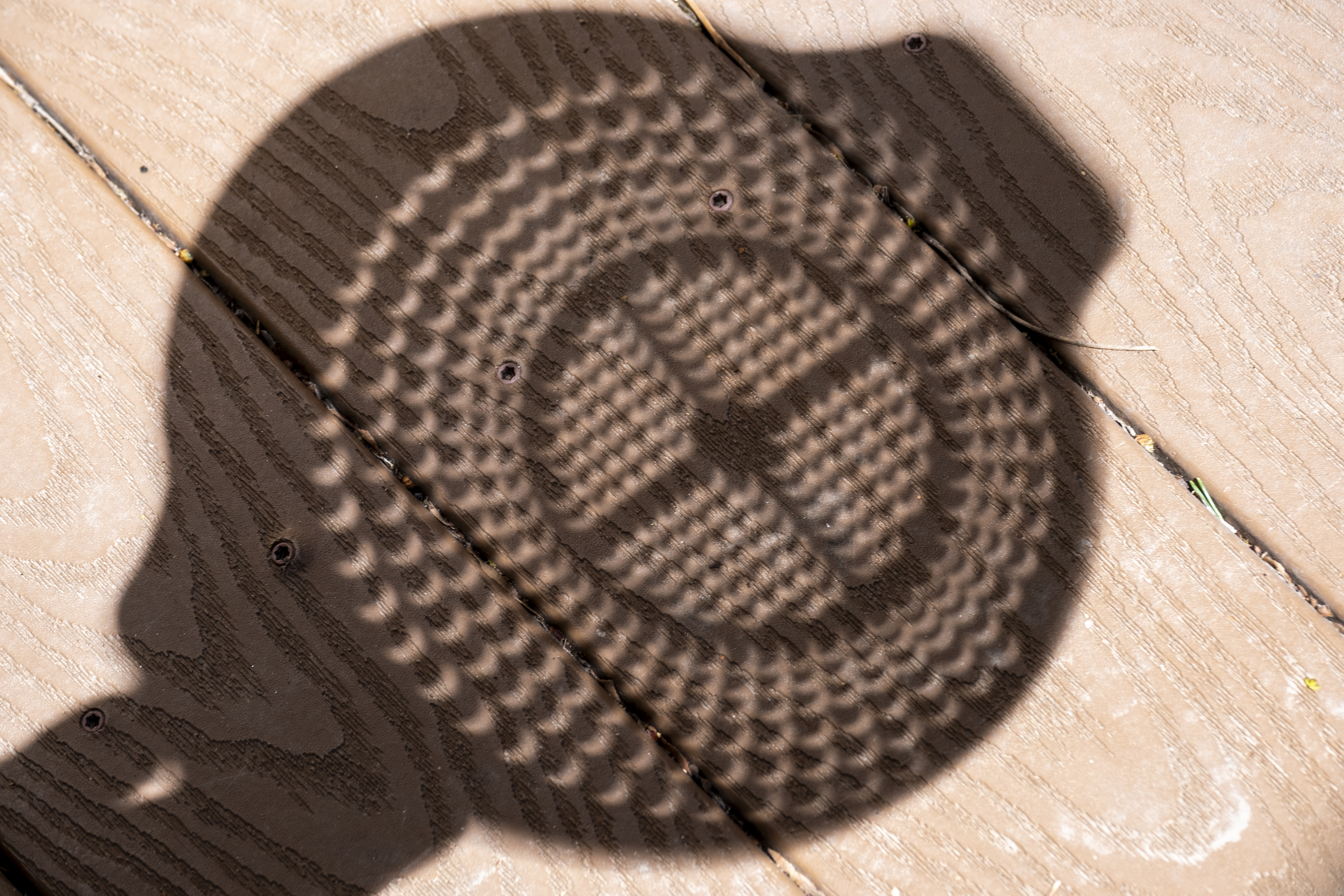
Crescent shapes can be seen of the moon blocking the sun through a pasta strainer during the total solar eclipse, as seen around 12:30 p.m. Monday, April 8, 2024 in Lakewood, Colorado. The Denver metro area experienced approximately 60-65% totality during the eclipse, that stretched across a long path on North America. (JonathanIngrahamDigital Strategistjonathan.ingraham@denvergazette.comhttps://denvergazette.com/content/tncms/avatars/c/dd/7f0/cdd7f086-b693-11ec-b373-bba598953eb6.fc0f5608a6f1144f64f080f771bd904d.png)
Crescent shapes can be seen of the moon blocking the sun through a pasta strainer during the total solar eclipse, as seen around 12:30 p.m. Monday, April 8, 2024 in Lakewood, Colorado. The Denver metro area experienced approximately 60-65% totality during the eclipse, that stretched across a long path on North America. (JonathanIngrahamDigital [email protected]://denvergazette.com/content/tncms/avatars/c/dd/7f0/cdd7f086-b693-11ec-b373-bba598953eb6.fc0f5608a6f1144f64f080f771bd904d.png)

Best places to watch the solar eclipse in Colorado:

• In the southeast corner of Colorado you will see the greatest amount of totality with viewing around Springfield, Trinidad and Lamar where 75% totality will happen during the solar eclipse.

• In the northwest part of Colorado, including Grand Junction, Dinosaur, Craig and Steamboat Springs, you will see the least amount of the partial solar eclipse, approximately 54-58% totality.

• Around Denver, residents will see approximately 65% totality, with the partial eclipse officially beginning at 11:28 a.m., and ending at 1:53 p.m. The max eclipse will occur at 12:40 p.m. at 65% totality, with the partial eclipse lasting 2 hours, 25 minutes in Denver.

• Colorado’s weather is forecast to be mostly sunny on Monday, April 8, when the eclipse begins, with clear skies in the central and eastern mountains, I-25 corridor and southeastern plains. Some clouds begin to roll in around totality, but viewing should still be possible the farther east and southeast one travels.
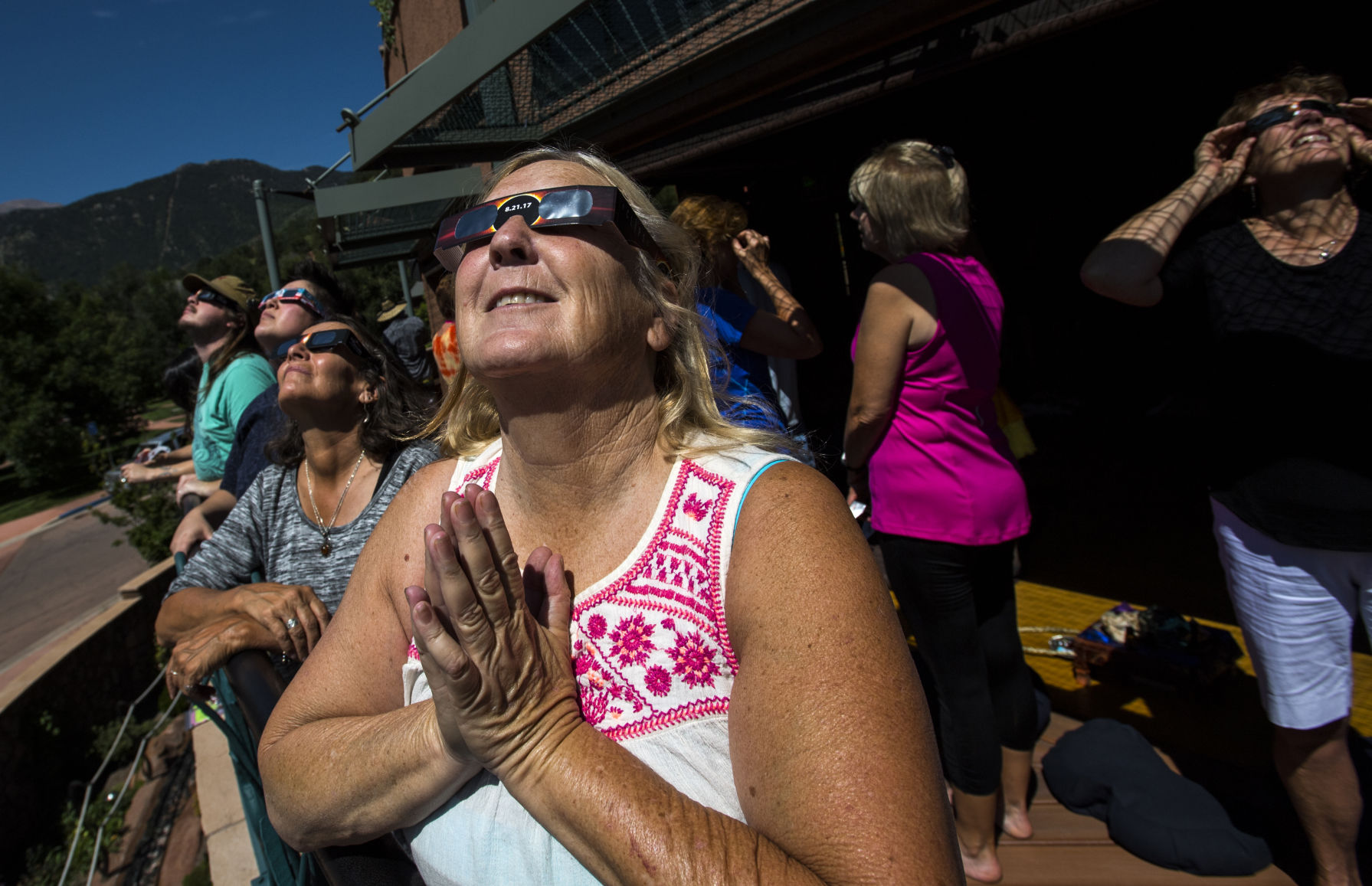
Merril Spielman watches as the moon begins to cover the sun at SunWater Spa in Manitou Springs during the solar eclipse Monday, Aug. 21, 2017. The Colorado Springs area experienced an eclipse of about 90 percent. (The Gazette, Christian Murdock) (CHRISTIAN MURDOCK, THE GAZETTE)

Percentage totals for the solar eclipse totality in Colorado:

  • Springfield – 76%
  • Lamar – 74%
  • Limon – 69%
  • Alamosa – 68%
  • Colorado Springs – 67%
  • Denver – 65%
  • Durango – 64%
  • Boulder – 63%
  • Greeley – 63%
  • Leadville – 63%
  • Fort Collins – 62%
  • Grand Junction – 59%
  • Steamboat Springs – 59%

If you wish to view the eclipse, wearing properly certified solar glasses are a must for safety concerns. Even though Monday’s eclipse is a partial eclipse in Colorado, you still must wear properly certified solar glasses to avoid damage to your eyes.

Look for the International Organization for Standardization (ISO) emblem on glasses when purchasing for viewing of the partial solar eclipse.


Welcome Back.

Streak: 9 days i

Stories you've missed since your last login:

Stories you've saved for later:

Recommended stories based on your interests:

Edit my interests