





Night hiker lost on 14,271-foot peak flees trail and loses shoe after rescue arrives
Colorado’s snowpack might be low, but that doesn’t mean dangerous winter conditions won’t be present in backcountry terrain – and it especially doesn’t mean that now is the time to bag a summit of a 14,000-foot peak without the right gear or preparation.
A recent rescue mission out of Summit County puts multiple winter hiking mistakes on full display in a way that’s sure to have experienced outdoorspeople let out a groan.
According to a report from the Summit County Sheriff’s Office, deputies along with personnel from Summit County Rescue Group responded to a call for help in recent days on 14,271-foot Quandary Peak.
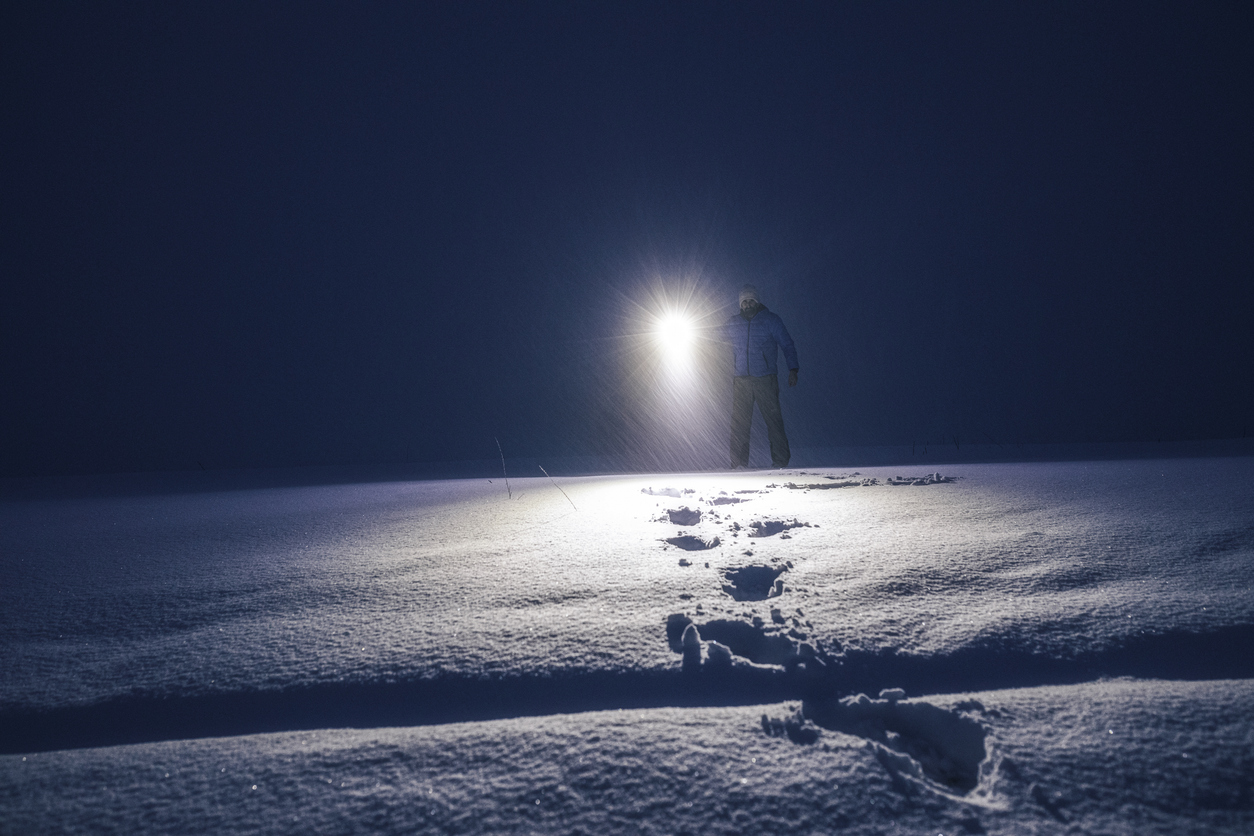
The situation involved a solo hiker who had set out to summit the mountain at night. Risks of frigid nighttime winter temperatures aside, the hiker didn’t bring a headlamp or flashlight along for the excursion, instead opting to use his phone to guide the way.
This decision quickly drained the battery of his cell phone. Unable to tell if he was still on the trail or not, he used the battery he had left to call for help. It’s also worth noting that the hiker was already getting cold, too, which may indicate that he was lacking proper gear for the hike, as well.
Thankfully, rescue teams were able to respond, with a deputy utilizing a drone to locate the man and drop off a headlamp. Meanwhile, Summit County Rescue Group got a team together to search for the hiker on the trail.
Once the hiker received the headlamp, however, he made the call to abandon the trail altogether, instead deciding to sprint downslope, losing a shoe in the process. Given that he was no longer close to the trail, this resulted in the boots-on-the-ground team being unable to track him down.
Eventually, the hiker emerged off of the peak uninjured and was given a ride to a hotel for the night.
The number of lessons to be learned from this situation are plentiful. Here’s a quick list:
- If hiking at night, bring proper lighting. This includes a main headlamp, as well as at least one backup. Relying on a phone for light is never a good idea for three key reasons – your hands won’t be free, your phone’s light isn’t great outside of a close range, and this also means draining the battery of a key means of communication. When it comes to packing headlamps, remember this saying: If you’ve got one light, you’ve got none. If you’ve got two lights, you’ve got one. And if you’ve got three lights, you’ll probably be alright.
- The hiker set out to hike above treeline at night… in the winter. Winter hiking is dangerous enough in itself, but hiking at night can make it difficult to assess numerous risks that may be encountered. Plus, winter weather at night can get extreme in Colorado, as temperatures above treeline often dip to deadly levels. Nighttime winter hiking above treeline in Colorado is something that’s best reserved for only the most experienced backcountry users.
- The hiker didn’t stay put once located by search and rescue. Staying put typically expedites being found and in this case, the hiker failed to stay on a predictable route altogether.
- The hiker started running down the mountain while not staying on the established trail. Trails are located where they’re at for a reason, and in the winter, established routes may be designed to avoid hidden cliff falls, deep snow, or avalanche risk.
- It sounds like the hiker didn’t have adequate clothing, as he reported that he was cold. Hiking above treeline in the winter tends to mean using specialized gear to stay warm. Without it, disaster can strike. Always bring multiple pairs of gloves, too, in case one gets blown away in a brief moment that it’s taken off. If you’re using goggles, having an extra set is also a good idea – goggles tend to fog in extreme conditions and precipitation from breathing can freeze on the lens, making them unusable.
- The hiker was solo. As a general rule, it’s always safer to enter the backcountry with another person. Of course, many people do prefer to hike solo, but when it comes to risky situations, it’s typically best to have a partner with you.
Do people hike Colorado’s mountains at night in the winter? Sure, it’s likely they do. After all, Colorado is home to some of the best athletes in the world as well as plenty of mountain enthusiasts looking to push the limits of what’s possible. But should YOU hike Colorado’s mountains at night in the winter? Probably not. Not unless you’re highly experienced and prepared with the right gear, and even then, this can pose a serious risk, especially if you’re out there alone.
STAY INFORMED: Get free Colorado news with our daily newsletter (Click here)
Get OutThere
Signup today for free and be the first to get notified on new updates.

PREV
PREVIOUS

Motorcyclist arrested for vehicular homicide 9 months after crash resulting in cyclist's death
A 61-year-old motorcyclist has been arrested as a suspect in a case involving the 2025 death of a 68-year-old bicyclist in Larimer County. On April 27, 2025, Colorado State Patrol responded to a crash that involved a motorcyclist and a bicyclist on Larimer County Road 38E near Milner Mountain Ranch Road. The initial investigation into […]
Colorado city dubbed best place to live in American West, 5 more ranked among 'top 25'
Livability recently released a ranking of the 25 ‘best places to live in the Western U.S.’ and multiple cities in Colorado got a nod, including one that snagged the top spot. Livability utilized a data-driven approach to create the ranking, comparing 2,000 cities nationwide across dozens of data points that focused on measuring various factors […]