




In 1863, ‘America’s first serial killers’ are believed to have murdered 32 people across Colorado
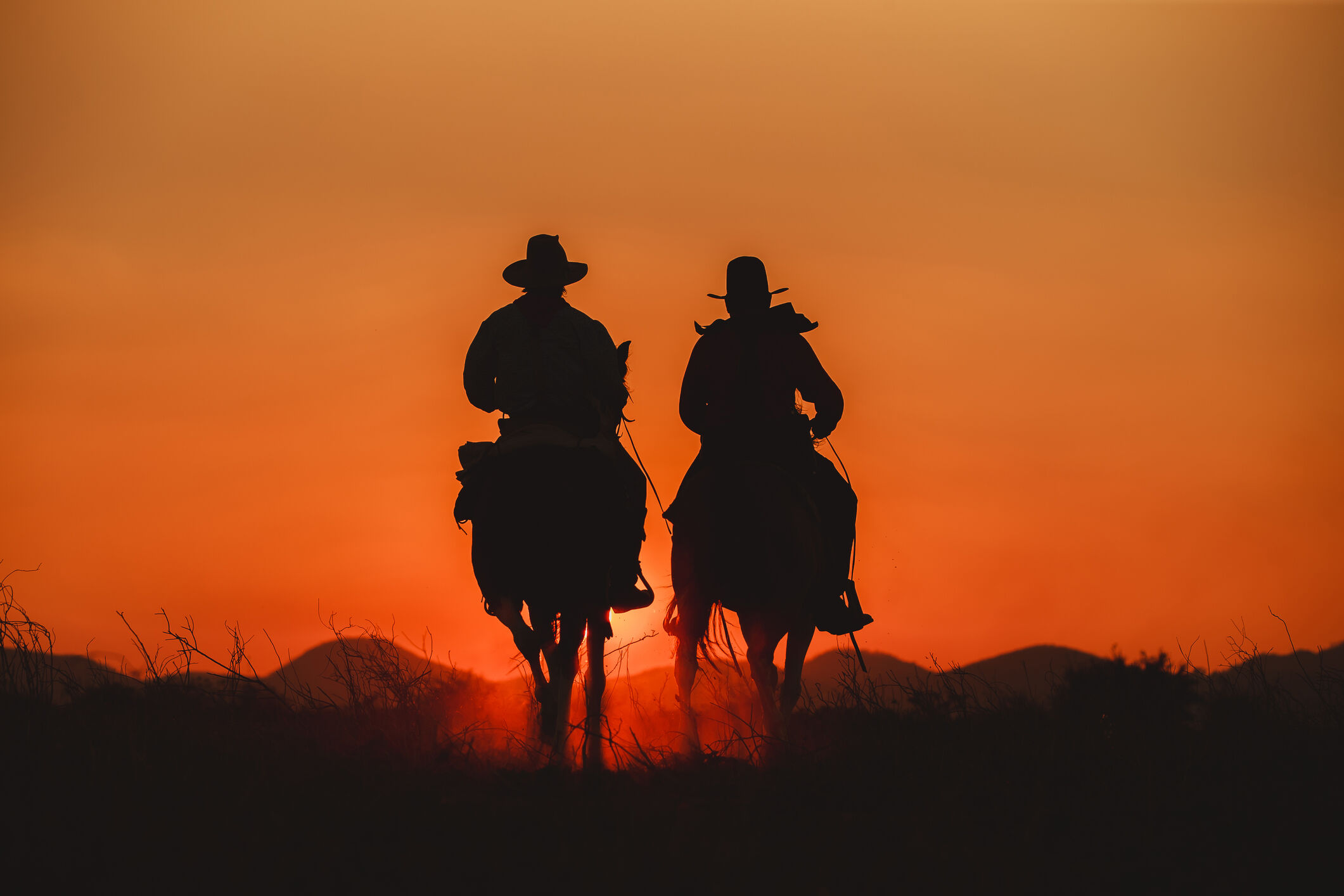
While many historians seem to consider H. H. Holmes to be ‘America’s first serial killer,’ a murderous spree involving dozens of victims that took place in rugged and remote Colorado just two years after Holmes was born belies that claim. The story starts with the 1828 birth of Felipe Nerio Espinosa, born in the New Mexico Territory about 35 miles west of Taos. Three years later, his brother, José Vivian Espinosa, entered the world and the pair would go on to earn the nickname of ‘The Bloody Espinosas’ as two of America’s most notorious murderers along with a nephew who joined their cause.
Before digging into this story, it’s important to note that its details vary quite a bit depending on the source, but all sources seem to agree that a high number of killings took place, often referencing a journal entry made by one of the brothers who was involved in the crimes. Even Felipe’s place of birth is debated, with some sources putting it in the aforementioned town of El Rito near Taos while others claim he was born in Veracruz, Mexico. This piece makes an effort to pin down what details are consistent across various accounts while also noting when they’re not and how they vary. Without further ado, here’s the tale of the ‘Bloody Espinosa Brothers.’
According to Colorado Encyclopedia, the older of the two brothers, Felipe, got married in 1854, soon to leave his family behind in 1858 for San Rafael – a town located about two miles west of Conejos on the western edge of Colorado’s San Luis Valley. While his parents had two daughters and three sons, including him, it would be only his brother Vivian Espinosa who would soon join him in the move to help with farming, sheep herding, and rustling horses.
To provide some additional context, Felipe’s move to the San Luis Valley took place in years that followed the Mexican-American War (1846-1848), in which a lot of land that makes up the modern day American West was ceded to the United States from Mexico. While Mexican inhabitants living in the area of this ceded land were initially told they could keep their land following the treaty, this often proved to not be the case. Instead, settlers were claiming land and displacing Mexican populations. Life was rough and poverty became rampant, resulting in some long-time inhabitants of the land turning to thievery to make ends meet. According to Legends of America, the Espinosas fell victim to this situation when a land grant in Conejos County wasn’t honored and numerous settlers started squatting on their property.
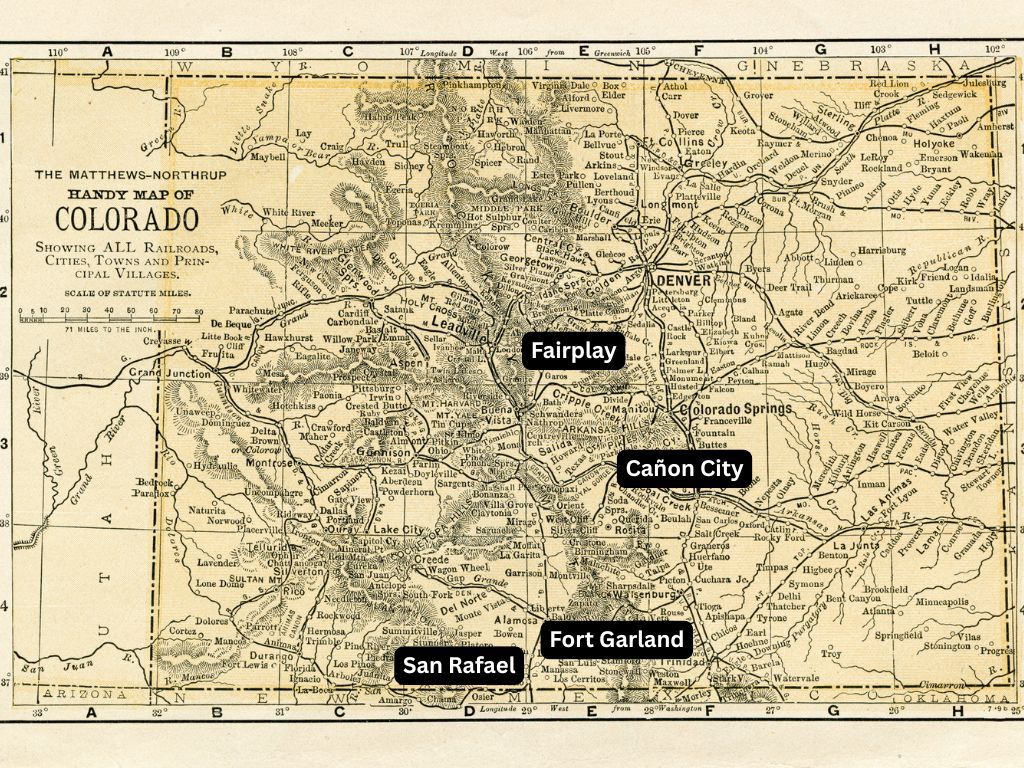
Not long after the arrival of Vivian in the San Luis Valley, the brothers robbed a wagon that was carrying goods to a priest who occupied a trading post in land that’s now New Mexico. When this theft was reported, a military response helmed by U.S. Marshal George Austin ensued. Following a stand-off on the Espinosa property in San Rafael and a shootout that left a Mexican corporal dead, the brothers went on the run with Felipe vowing “revenge on the Anglos,” per reporting from Colorado Encyclopedia.
According to the Legends of America report, the situation wasn’t quite as simple as the military showing up to arrest the brothers for the robbery and seizing the land. This report cites a claim from a direct descendant of the Espinosas that soldiers had committed atrocities that resulted in the death of Felipe’s wife in 1861, then showing up to commit similar acts in 1863. Either way, it sounds like the Espinosa brothers lost their land and went on the run with a killing spree soon to follow.
Per Colorado Encyclopedia, the first victim of the Espinosas brothers was a man from the Cañon City area, found to have been shot through the heart while he was in transit to a local sawmill, his gun still holstered. The second victim was a man found shot in the head around Little Fountain Creek – an axe wound on his head and two on his chest, as well. Legends of America further describes this victim’s body as mutilated, with his “heart hacked out of his chest.”
Law enforcement traced the still-unknown killers of the second man to Colorado City then to Manitou Springs then up Ute Pass and toward Fairplay, at which point a third body was found – shot through the head at a remote ranch on Ute Pass road. Not much later, two men were found murdered near a Fairplay mining camp, and the following day, another man was found killed near Alma. Two days after that, two more were found dead near Fairplay.
In the span of the few weeks that followed the Espinosa brothers leaving their San Luis Valley home behind, it would appear that they had eight victims, though their identities as killers remained unknown. Keep in mind that this was the ‘Wild West’ era – law enforcement was relatively disorganized and spread across vast terrain. On top of that, the brothers didn’t leave many clues behind.
“In the spring of 1863, residents and travelers through Colorado Territory feared for their lives as account after account of vicious murders was reported, and lone riders disappeared, only for their bodies to be later found in a remote gulley or hidden in the brush of the mountainsides,” reads a report from Legends of America. “The murders were a mystery. No one knew who was responsible, as the perpetrators left no clues. Numerous lookouts were posted throughout the regions of the killings, but they had no idea who to look for — Indians, a gang, or a lone vagabond desperado.”
According to Colorado Encyclopedia, a break in the case came when a would-be murder victim escaped an attack in Park County, able to provide a description of the suspects to a makeshift posse with a connection made between that description and the Espinosa brothers who had escaped capture in the San Luis Valley weeks prior.
Despite the brothers’ efforts to stay hidden, a volunteer posse led by John McCannon caught up with the duo at the mouth of Four Mile Creek upon spotting two grazing horses. Vivian Espinosa was shot and killed, and on his body, authorities found a note related to the goal of killing “600 whites” to avenge the loss of the property in San Rafael, plus 50 additional murders as a sort of gruesome tribute to their father.
Much like other aspects of this story, there’s a bit of debate in regard to whether or not the motive for the killings was solely due to the San Rafael property loss, with Legends of America reporting that motive was also tied to how six Espinosa family members had been killed during the U.S. Navy’s shelling of the town of Veracruz during the Mexican-American War. The same report goes on to address a local legend that describes how Felipe had a vision from Virgin Mary after his family members were killed in which she instructed him to kill 100 Anglos for each family member who died. Per Legends of America, the killings may have also been, in part, motivated by pioneers claiming land in the west, displacing Mexican families.
Motive aside, there doesn’t seem to be debate that the killings were taking place. Despite his brother getting shot near the mouth of Four Mile Creek, Felipe was able to escape capture or death in the encounter, heading south toward Cañon City to kill two more men before returning to bury his brother – keeping his brother’s foot as a “memento,” as well, per Colorado Encyclopedia.
Vivian’s death wouldn’t bring an end to the killings, either. Felipe pulled his 16-year-old nephew into the mix – José Vincente Espinosa – and the two hit the road to continue the gruesome mission. A fisherman was killed near Conejos in late June, bringing the total number of killings to 11 plus the corporal from the San Rafael stand-off (though some sources put the number of people killed throughout the summer of 1863 at 26 – more on that later).
As public fear grew, the brother and nephew requested a pardon and restoration of property from Governor John Evans at the risk of Evans being added to their kill list, as well, though neither the pardon nor Evans’ murder would come to fruition.
In October of 1863, a Mexican woman traveling with a man near Fort Garland was captured and assaulted by Felipe and his nephew, but freed, as the Espinosas were targeting white men. This woman and a man she had been with (who had fled amid the attack) were reunited at Fort Garland and able to provide a description of the Espinosa pair – which now included José Vincente instead of the deceased Vivian.
In an effort to put an end to the attacks, authorities brought famed tracker Tom Tobin onboard, per Colorado Encyclopedia. Tobin was reportedly able to able to find the Espinosas in a single day and with relative ease near present-day La Veta Pass. With a group of 18 in tow, Tobin saw birds circling above – a clue that led him to the Espinosa campsite. Both Felipe and José Vincente were killed and beheaded, with their heads brought to Fort Garland on October 16, 1863.
The events that led up to the deaths of the Espinosas is another part of the story that gets debated. While some sources point to a shoot-out, that’s not always the case. According to Legends of America, Tobin was actually a cousin of the Espinosas, using established trust to approach their camp alone and without issue before drinking them to sleep and then slitting their throats. Per this telling of the story, Tobin received a reward of $1,500 for the heads of the two.
After the duo was killed, Tobin reportedly found a diary penned by Felipe, in which the admission to 32 killings were said to be recorded.
While this gruesome story comes with a bit of murkiness and debate, one aspect seems agreed upon – the Espinosa brothers (and their nephew) were involved in numerous killings in Colorado. Given that multiple killings occurred in multiple events, the killings seem to fit the description of ‘serial killing,’ too. With these crimes taking place in 1863 and H. H. Holmes – ‘America’s first serial killer’ – being just two years old at the time, it indeed seems like the History Colorado claim that the Espinosa brothers were ‘America’s first serial killers’ is accurate.
Read the full breakdown of this story from Colorado Encyclopedia and Colorado History here and find the reporting from Legends of America here. There’s also a book on the topic called ‘Season of Terror: The Espinosas in Central Colorado.’
STAY INFORMED: Get free Colorado news with our daily newsletter (Click here)
Get OutThere
Signup today for free and be the first to get notified on new updates.
PREV
PREVIOUS
State Forest State Park: A guide to visiting this massive 70,000-acre state park, known for wildlife and jagged peaks
As the state’s largest state park and often referred to as ‘Little Rocky Mountain National Park,’ State Forest State Park is known as the moose-viewing capital of Colorado, as it provides great opportunities to spot the animals, and other wildlife. The park consists of 70,932 acres of forest, jagged peaks, alpine lakes, and miles of […]
"If you care, leave them there": CPW tells public not to 'help' baby animals
With Mother’s Day coming in hot, Colorado Parks and Wildlife issued a reminder to the public not to interfere with wildlife younglings they encounter this spring. “The public can support wildlife families by respecting natural behaviors and allowing animal mothers to do what they do best — care for their young in the wild,” reads […]