




‘Mysterious’ crater unexplained in Colorado, despite multiple theories
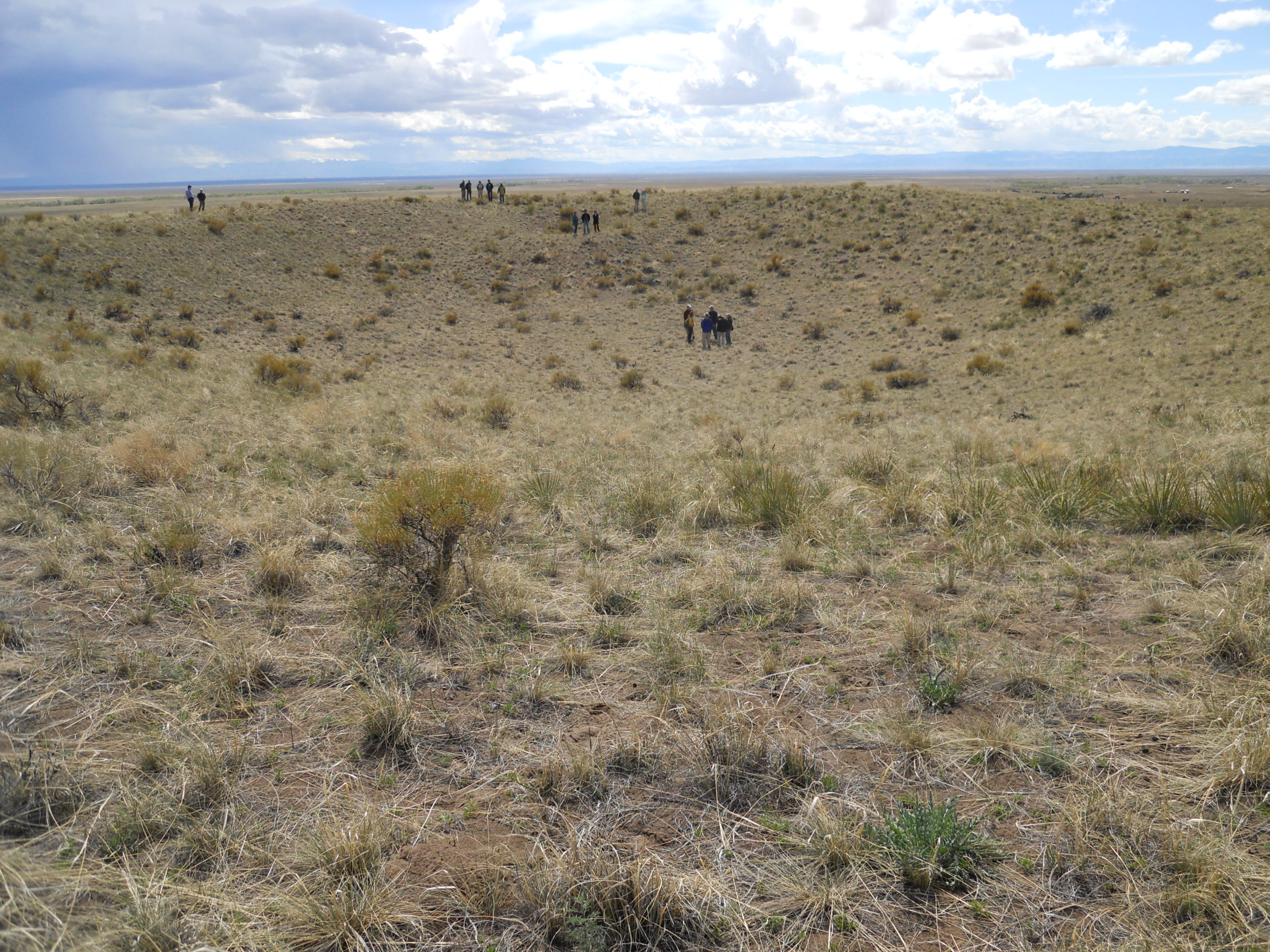
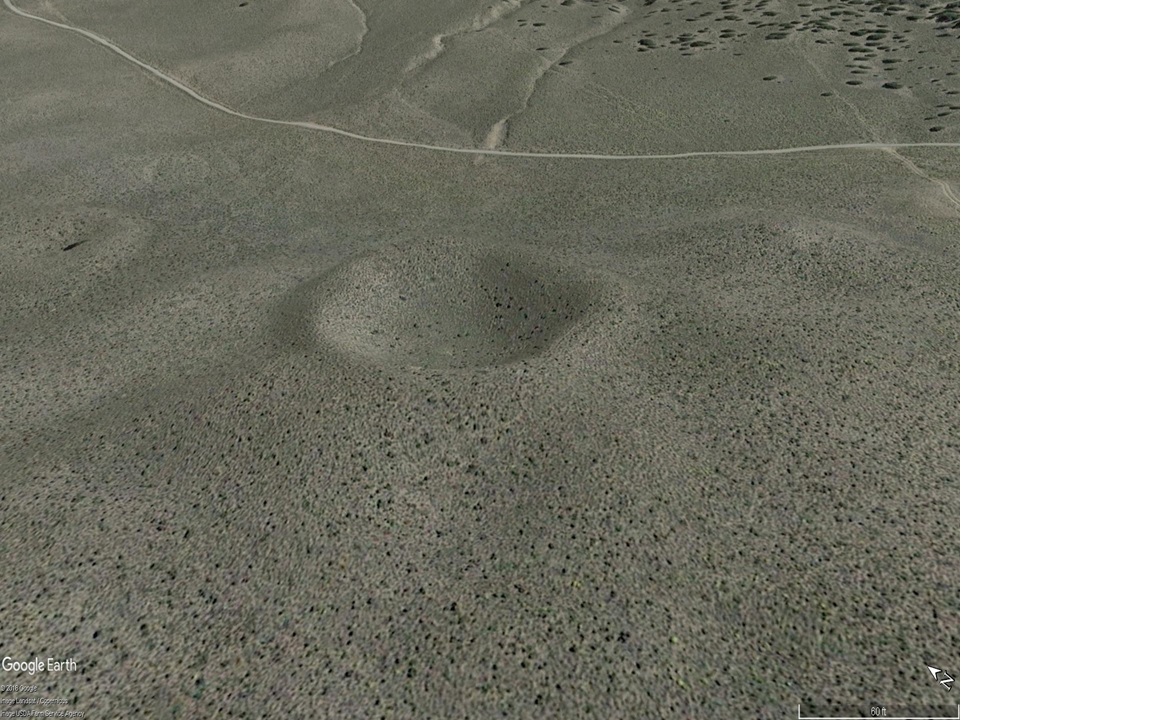
Dubbed the “Crestone Crater,” one Colorado mystery that continues to intrigue scientists and outdoor enthusiasts today certainly looks like a meteor impact, but any tangible evidence of extraterrestrial rock has yet to be found.
The Crestone Crater is located on the north side of the Great Sand Dunes National Park and Preserve in southern Colorado’s San Luis Valley. According to a study conducted in 1963, the Crestone Crater is an elliptical bowl that measures 355 feet by 246 feet with a mean depth of 23 feet.
Historical documents detail several eye-witness reports of a fireball crashing to the ground in 1892, though the crater was discovered years later, in 1934 by a resident of nearby Crestone.
The first scientific study of the Crestone Crater was conducted by Denver geologist Dr. H. H. Nininger in 1941. He concluded that the crater was caused by a meteorite.
However, a later 1963 geologic investigation by Ursula Marvin and T. C. Marvin revealed no obvious signs of a meteorite impact. The study showed only trace amounts of nickel-iron spherules, but “no rock flour, impact glass or other signs” of a meteorite. The two scientists concluded that the sunken feature in the land was likely formed by wind.
More recent observations by the National Park Service acknowledge the possibility of a meteorite impact and consider that the evidence was likely collected at the time of the meteor crash or could still be buried deep beneath the ground.
A study by students of Colorado School of Mines defines the crater as a “unique geophysical signature in the subsurface that is correlated with the surface expression.” The study shows evidence that contradicts the theory that the crater was caused by wind and that the crater’s underground characteristics “may be consistent with the effects of an impact.”
If the mysterious land feature is indeed an impact crater, it is unique because of its small size and its preservation in the sand, the students reported. The study suggests many of the characteristics of this crater are “anomalies.”
Current research by the park service utilizes ground penetrating radar and a magnetometer to look for evidence of a meteor. Another theory by the park service is that the crater is actually the result of a ‘sand boil’, which is formed as watery sand deposits squeeze and push up along a fault line.
Of course, it’s also worth noting that many bizarre incidents that have occurred in the San Luis Valley are thought by some to be less than terrestrial. Could this mysterious “Crestone Crater” actually be an imprint of an alien aircraft? See the site yourself near the Liberty Gate Trailhead at the Great Sand Dunes National Park and Preserve.
Get OutThere
Signup today for free and be the first to get notified on new updates.
PREV
PREVIOUS
Race your car across this frozen mountain town lake in Colorado
A decades-old ice racing tradition continues to bring excitement to one of Colorado’s most charming mountain towns, located at 8,530 feet above sea-level. ‘Our Gang 4 Wheelers’, an ice racing club, is kicking off its 2021 Ice Racing Season at Georgetown Lake in Colorado on Saturday, January 9th. Drivers are gearing up for the high […]
12 places to experience and learn about Native American culture in Colorado
Here’s a look at a few places around Colorado where parts of the local and historical Native American culture can be experienced.